Golden seared chicken breasts in a mushroom cream sauce earn their place on the table fast, mostly because the skillet does two jobs at once: it builds a deep, savory base, then turns that base into a sauce that clings instead of pooling thinly on the plate. The chicken stays juicy, the mushrooms get browned instead of steamed, and the sauce comes out thick enough to coat a spoon without feeling heavy.
The difference here is in the order. The mushrooms need time in the pan before the garlic goes in, or they’ll stay pale and waterlogged. Then the broth deglazes all the browned bits from the chicken and mushrooms, which is where most of the flavor lives. Once the cream and Parmesan go in, the heat drops low so the sauce thickens gently instead of breaking or turning grainy.
Below you’ll find the exact skillet timing that keeps the chicken from drying out, plus a few smart swaps and fixes for the most common sauce problems. It’s a straightforward dinner, but the details matter.
The sauce thickened up perfectly and the mushrooms browned instead of turning soggy. I served it over mashed potatoes and my husband asked if we could have it again the next night.
Save this creamy mushroom chicken for nights when you want a silky skillet sauce and tender seared chicken without a pile of dishes.
The Reason the Chicken Stays Juicy Instead of Drying Out
The chicken in this skillet cooks best when you treat the sear and the sauce as two separate jobs. If the pan is crowded or the heat is too low, the breasts will leak moisture before they brown, and then you’ve got pale chicken and a thin sauce. A hot skillet and enough space give you that deep golden crust on the outside while the inside stays tender.
Pulling the chicken once it reaches 165°F keeps it from overcooking while the sauce comes together. It goes back into the pan at the end for just long enough to warm through and pick up the sauce. That short finish is what keeps the chicken from turning stringy.
What the Mushrooms, Cream, and Parmesan Are Each Doing
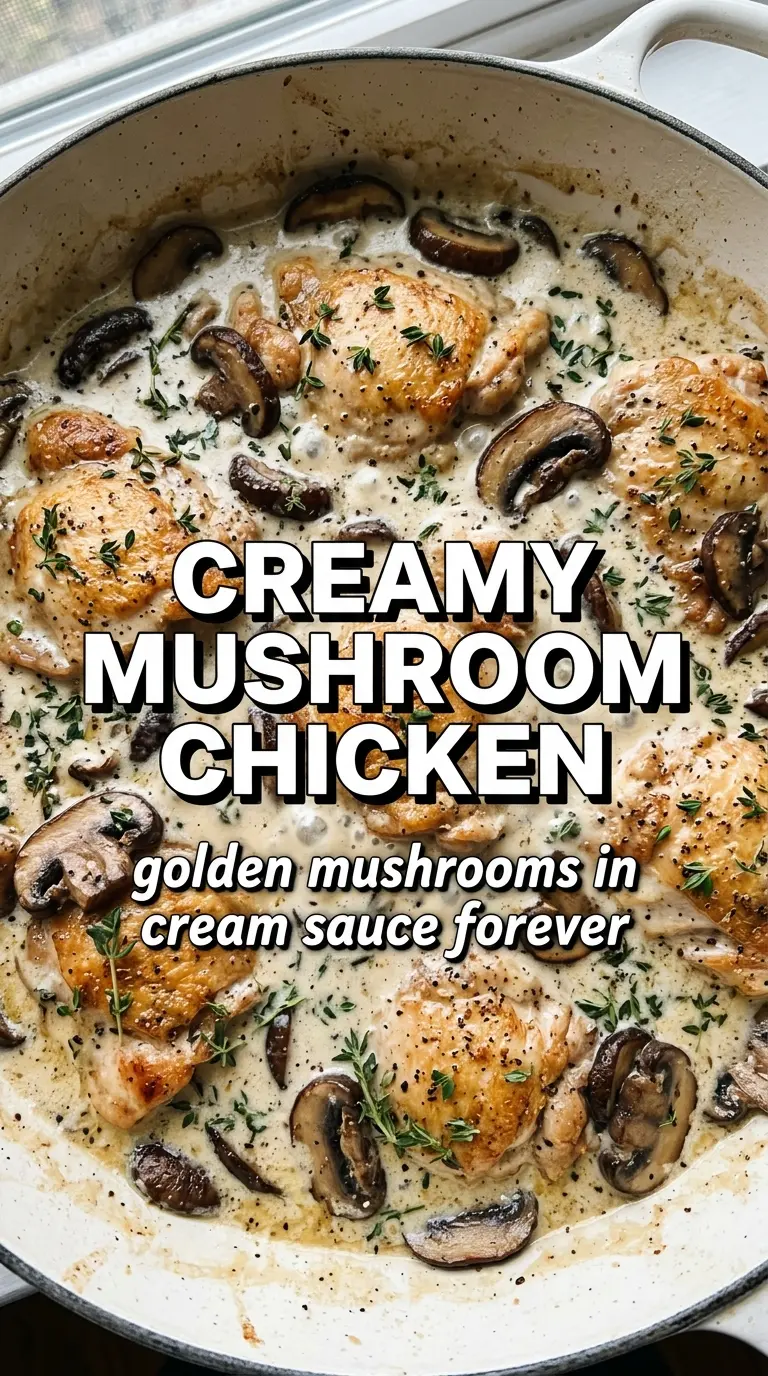
- Cremini mushrooms — These bring the best savory flavor here because they brown well and hold their shape in the sauce. White button mushrooms work if that’s what you have, but they taste milder and give you less depth.
- Heavy cream — This is what gives the sauce its silkiness and keeps it stable over a gentle simmer. Half-and-half can work in a pinch, but the sauce will be thinner and a little more fragile.
- Parmesan cheese — The Parmesan thickens and seasons the sauce at the same time. Grate it fresh if you can; pre-shredded cheese often melts less smoothly and can leave the sauce grainy.
- Chicken broth — This loosens the pan drippings and helps you scrape up the browned bits without diluting the final sauce too much. If your broth is salty, go easier on the seasoning at the start because the cheese adds its own salt.
- Butter and olive oil — The oil handles the high-heat sear, and the butter adds flavor when the mushrooms go in. Using both gives you better browning than butter alone, which can burn before the chicken is ready.
Building the Sauce in the Same Pan Without Breaking It
Season and Sear the Chicken
Season the chicken generously on both sides, then lay it into a hot skillet with the oil shimmering. You want a steady sizzle the moment it hits the pan. If it sounds weak or sticky, the pan isn’t hot enough and the chicken will steam instead of sear. Give it 5 to 6 minutes per side, depending on thickness, until the outside is deeply golden and the center reaches 165°F.
Brown the Mushrooms Hard
After the chicken comes out, add the butter and mushrooms to the same skillet. Don’t stir constantly. Let the mushrooms sit long enough to release their liquid, then keep cooking until that liquid cooks off and the edges turn dark gold. That browning is what gives the sauce its backbone, and if the mushrooms look wet when you add the garlic, they’re not ready yet.
Deglaze, Then Simmer Gently
Pour in the broth and scrape the bottom of the pan with a wooden spoon until the browned bits lift cleanly. That’s the flavor base. Stir in the cream, Parmesan, thyme, and Italian seasoning, then lower the heat and let the sauce bubble lazily for 4 to 5 minutes. If it boils hard, the cream can separate and the cheese can turn gritty.
Return the Chicken and Finish
Slide the chicken back into the skillet and spoon the sauce over the top. Let it warm through for a couple of minutes, just until the sauce clings to the chicken and the whole pan looks glossy. Fresh thyme and parsley at the end brighten everything up and keep the sauce from feeling heavy.
How to Adapt This Skillet for Different Kitchens and Different Nights
Make It Dairy-Free
Use a dairy-free butter substitute and replace the heavy cream with full-fat coconut cream or an unsweetened cooking cream. The sauce won’t taste exactly the same, and coconut cream brings a faint coconut note, but it still turns rich and spoonable. Skip the Parmesan or use a dairy-free Parmesan-style alternative.
Use Chicken Thighs Instead
Boneless skinless thighs work well and stay juicier if you like a richer result. They need a few extra minutes in the pan, and the final dish tastes a little deeper and more savory. Keep the same sauce method, but cook until the thighs hit 165°F in the thickest part.
Make It Gluten-Free
This recipe is naturally gluten-free as written if your broth and Parmesan are certified gluten-free. That’s the quiet advantage of a skillet sauce built from scratch: there’s no flour needed to thicken it. The cream and cheese do the work on their own.
Stretch It for More Servings
Double the mushrooms and add a splash more broth if you want extra sauce for mashed potatoes, rice, or pasta. The chicken can be crowded if your skillet is too small, though, and crowding steals the sear. Cook in batches if needed, then build the sauce in the same pan.
Storage and Reheating
- Refrigerator: Store leftovers in an airtight container for up to 3 days. The sauce will thicken as it chills.
- Freezer: I don’t recommend freezing this one. Cream sauces often separate after thawing, and the mushrooms lose their nice texture.
- Reheating: Warm it gently in a skillet over low heat with a splash of broth or cream. High heat can break the sauce, and the chicken will dry out before the center is hot.
Answers to the Questions Worth Asking
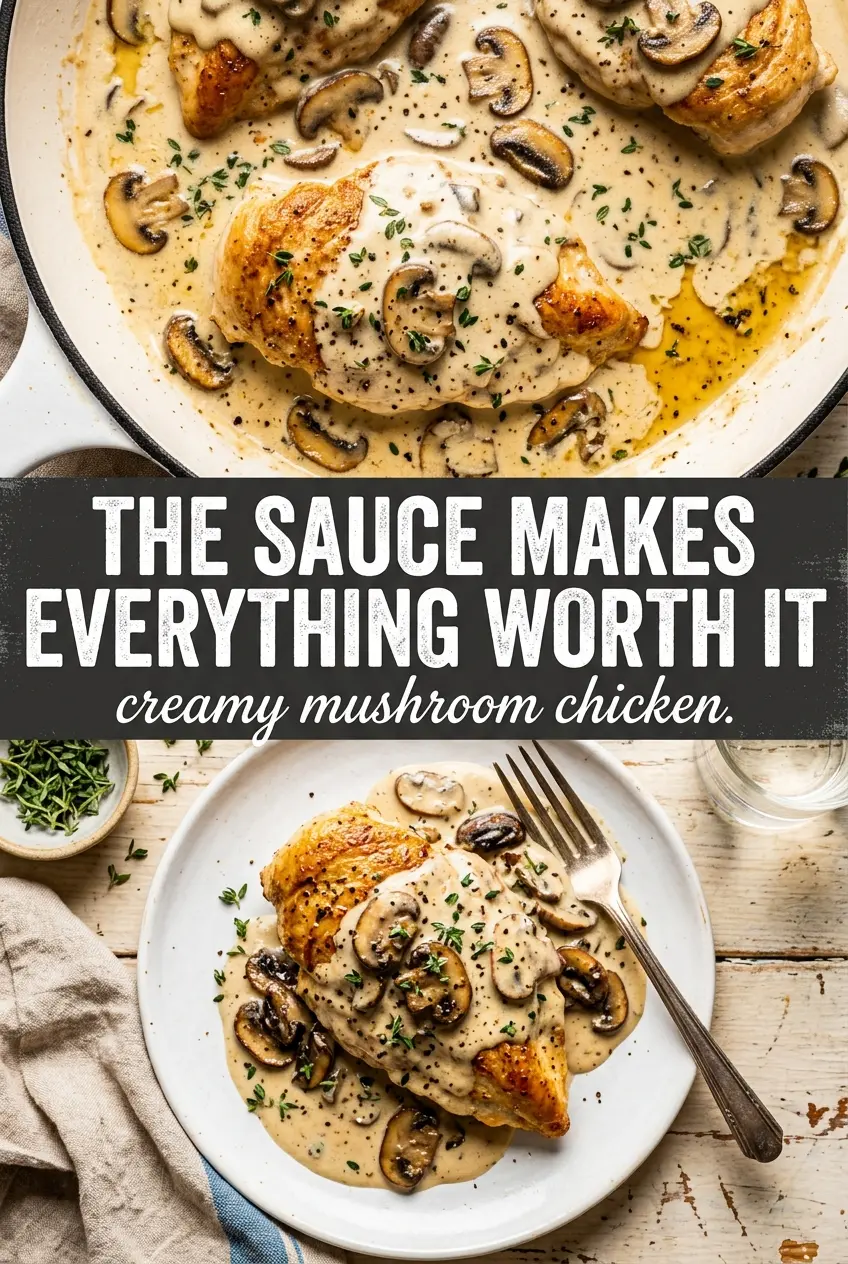
Creamy Mushroom Chicken
Ingredients
Equipment
Method
- Pat the chicken breasts dry, then season generously on both sides with salt, pepper, garlic powder, and onion powder.
- Heat the olive oil in a large skillet over medium-high heat; sear chicken for 5-6 minutes per side until golden and the internal temperature reaches 165°F, then remove to a plate.
- Melt the butter in the same skillet, then cook the sliced cremini mushrooms for 4-5 minutes until deeply golden.
- Add the minced garlic and cook for 1 minute, stirring until fragrant and lightly golden.
- Pour in the chicken broth and deglaze, scraping up browned bits from the pan as it simmers.
- Stir in the heavy cream, grated Parmesan, dried thyme, and Italian seasoning, then simmer for 4-5 minutes until the sauce thickens and looks glossy.
- Return the chicken to the skillet and spoon the mushroom cream sauce over each breast so the sauce pools around the edges.
- Garnish with fresh thyme and fresh parsley, then serve hot.