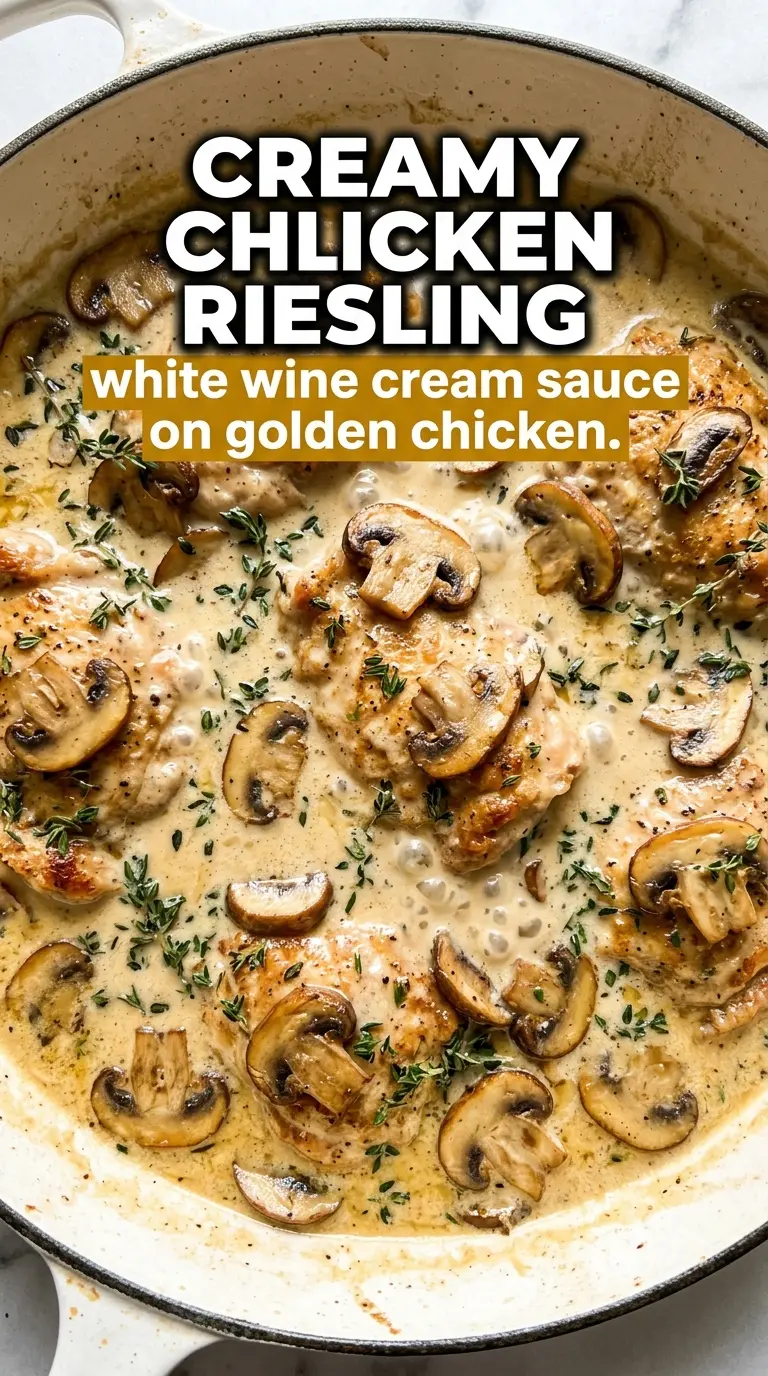
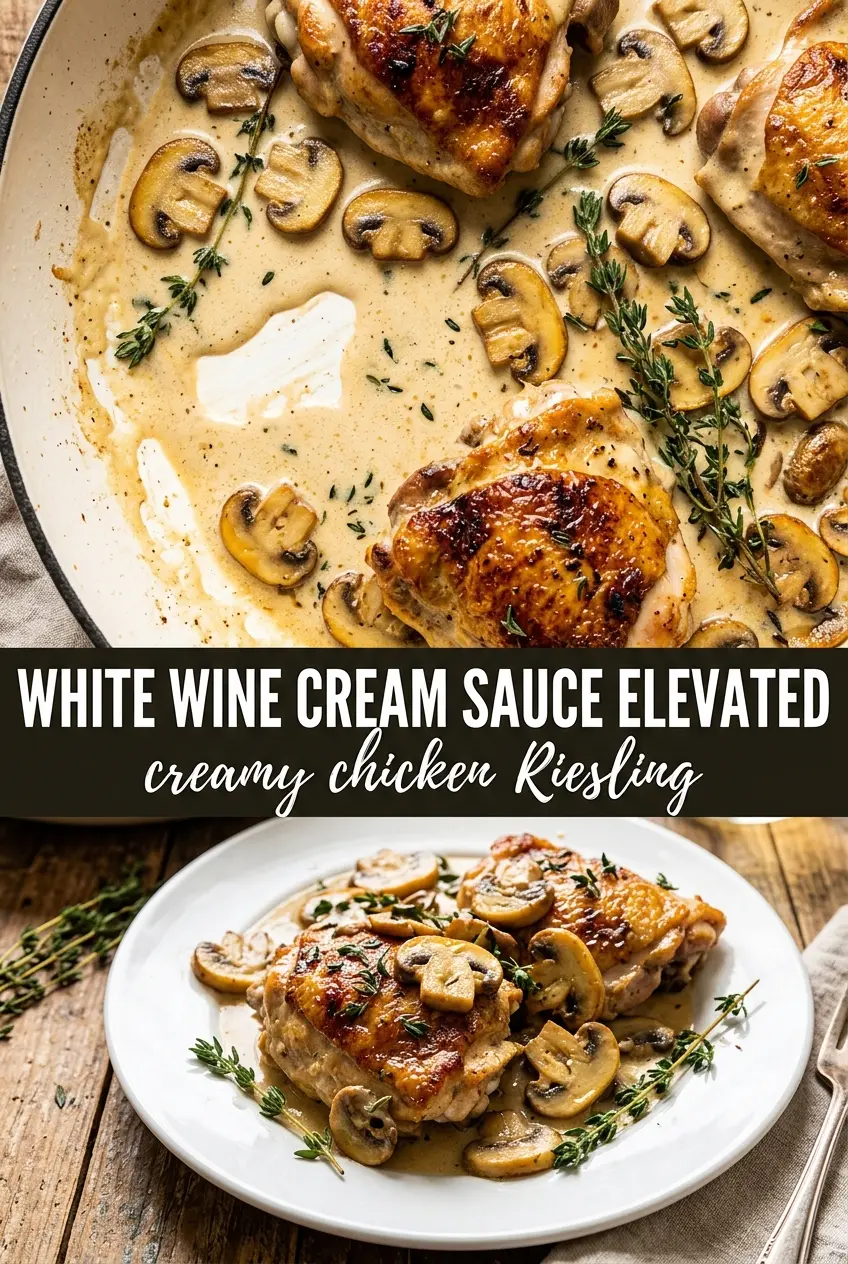
Golden chicken thighs in a Riesling cream sauce hit that sweet spot between cozy and elegant. The skin stays crisp enough to give the sauce some contrast, while the wine, shallots, mushrooms, and tarragon turn into a pale, fragrant pan sauce that tastes like it took far more effort than it did.
What makes this version work is the order. The chicken gets a hard sear first, which builds flavor and gives the skin a chance to hold up under the sauce. Then the mushrooms and shallots cook until their moisture is gone and they start to color, so the finished sauce tastes deep instead of flat. Riesling adds a gentle fruitiness without turning the dish sweet, and Dijon keeps the cream from tasting one-note.
Below, you’ll find the small details that matter most: how dark to let the chicken skin get, when the wine needs a minute longer on the heat, and how to keep the cream sauce glossy instead of dull. A few simple moves make this one dinner-party worthy without making it fussy.
The chicken skin stayed crisp under the sauce, and the Riesling gave the cream sauce this light, almost fruity finish that didn’t taste heavy at all. I followed the simmer time exactly and the thighs were perfect.
Save this Creamy Chicken Riesling for the nights when you want a silky wine sauce, crisp chicken skin, and dinner that feels a little special.
The step people skip that keeps the sauce from tasting thin
The biggest mistake with a dish like this is rushing the pan. If the chicken doesn’t get properly browned first, the sauce has to do all the work, and cream alone can’t create depth. The same goes for the mushrooms and shallots. They need enough time to lose their moisture and take on some color, or the finished sauce tastes more steamed than layered.
Riesling is doing more than adding wine flavor here. It lifts the richness of the cream and gives the sauce a clean finish, but only if you let it bubble for a few minutes before the dairy goes in. That brief reduction cooks off the sharp alcohol edge and leaves behind the part that tastes rounded and fragrant.
- Chicken thighs — Bone-in, skin-on thighs are the right cut here because they stay juicy through the simmer and give you enough fat to flavor the skillet. Boneless thighs will work, but the sauce won’t have the same body from the drippings.
- Riesling — Use a dry or off-dry Riesling with good acidity. A very sweet bottle makes the sauce clingy instead of balanced, while a bland cooking wine leaves the whole dish flat.
- Heavy cream — This is what gives the sauce its silky finish and stable texture. Half-and-half can split more easily when it simmers, so stick with heavy cream if you want the sauce to stay glossy.
- Dijon mustard — A small amount makes the sauce taste sharper and keeps the cream from feeling heavy. It won’t make the dish taste mustardy; it just wakes everything up.
- Fresh tarragon — Tarragon is one of the flavors that makes this recipe taste distinctly German-American rather than just generic wine chicken. Dried tarragon can work, but use less because it reads stronger once it hydrates in the sauce.
What Each Ingredient Is Actually Doing in This Creamy Chicken
- Chicken (the protein foundation) — Cut into uniform pieces so they cook evenly. Room temperature chicken cooks more evenly than cold.
- Butter or oil (the cooking medium) — This browns the chicken and creates pan flavor. Don’t skip browning or the sauce tastes flat.
- Wine or spirit (the flavor depth) — This adds complexity and prevents the sauce from tasting one-dimensional. Use quality wine you’d drink.
- Cream or broth (the sauce base) — This creates the luxurious sauce. Balance richness with acid so it doesn’t taste heavy.
- Cheese (the umami and binding) — This adds depth and helps the sauce cling to pasta. Add off heat so it melts smoothly.
- Aromatics (garlic, shallot, herbs) — Cook these with oil first to bloom flavors. They become the foundation of the sauce.
- Acid (lemon or vinegar) — This prevents creamy sauces from tasting flat. Add at the end to preserve brightness.
- Proper heat (low simmer, not boil) — This keeps the sauce smooth instead of breaking. High heat can cause separation.
How to build a glossy Riesling cream sauce in one skillet
Getting the skin deeply golden
Season the chicken well before it goes into the pan, then place it skin-side down in hot oil and leave it alone. The skin should sizzle hard and turn deep golden, not pale blond. If it sticks when you try to move it, it isn’t ready yet. Once it releases cleanly, flip it and cook the second side just long enough to pick up a little color before taking it out. The chicken finishes in the sauce, so don’t cook it through at this stage or the meat can turn dry.
Cooking the mushrooms and shallots down properly
Add the shallots and mushrooms to the same skillet and let them cook until the mushrooms shrink and the edges start to brown. That browning matters because it turns the sauce savory instead of watery. If the pan looks dry before the mushrooms have colored, a small splash of oil is fine, but don’t crowd the pan or they’ll steam. Garlic goes in at the end for just a minute; any longer and it can turn bitter once the wine hits the pan.
Reducing the wine before the cream goes in
Pour in the Riesling and let it bubble for a few minutes until the sharp alcohol smell softens. You’re looking for a pan that smells fruity and concentrated, not harsh. This is the point where the sauce starts to taste like itself. Once the wine has reduced a bit, stir in the cream, broth, tarragon, and Dijon, then return the chicken skin-side up so the top stays above the sauce as much as possible.
Finishing without breaking the sauce
Cover and simmer gently until the chicken reaches 165°F at the thickest part. Keep the heat low enough that the sauce moves in small lazy bubbles, not a hard boil. When the chicken comes out, swirl in the butter off the heat or with the burner on low; that last bit of fat gives the sauce a polished sheen. If the sauce ever looks grainy, it usually means it boiled too hard after the cream went in.
How to adapt this Riesling chicken when you need a different version
Use boneless chicken thighs for a faster dinner
Boneless thighs cook faster and are easier to serve, but they won’t add quite as much richness to the sauce as bone-in thighs. Cut the simmer time down and start checking early so they stay tender. The sauce will still be creamy and fragrant, just a little lighter in body.
Make it dairy-free with coconut cream
Full-fat coconut cream can stand in for heavy cream if you need a dairy-free version, but the sauce will taste a little sweeter and less classic. Keep the Dijon in place to balance that sweetness. The texture stays plush, though the final flavor moves away from the traditional Riesling profile.
Swap the wine for chicken broth if you don’t want alcohol
Chicken broth will still give you a savory skillet dinner, but you’ll lose the bright, slightly fruity edge that Riesling brings. Add a small splash of white wine vinegar or lemon juice at the end to replace some of that lift. It’s not the same dish, but it keeps the sauce from tasting heavy.
Storage and Reheating
- Refrigerator: Store for up to 3 days. The sauce may thicken as it chills, but the flavor holds well.
- Freezer: Cream sauces don’t freeze beautifully, and this one can separate when thawed. If you must freeze it, cool it completely first and rewarm it slowly, but expect a less silky sauce.
- Reheating: Reheat gently over low heat with a splash of broth or cream. A hard boil is what usually causes the sauce to break, so warm it slowly until the chicken is hot through.
Answers to the questions worth asking
Creamy Chicken Riesling
Ingredients
Equipment
Method
- Season the chicken thighs with salt, pepper, and garlic powder to taste. Heat olive oil in a large skillet over medium-high heat, then sear skin-side down for 7-8 minutes until deeply golden with visible crisping.
- Flip the chicken and sear for 4 minutes more until the second side is browned. Remove the chicken from the skillet and set aside.
- Add shallots and sliced mushrooms to the skillet and cook for 5-6 minutes until golden. Stir in the minced garlic and cook for 1 minute until fragrant and lightly sizzling.
- Pour in the Riesling wine and let it simmer for 3 minutes so the alcohol cooks off. Add heavy cream, chicken broth, fresh tarragon (or dried), and Dijon mustard, stirring to combine.
- Return the chicken to the skillet, placing it skin-side up. Cover and simmer over gentle heat for 15-18 minutes until the internal temperature reaches 165°F.
- Remove the chicken from the skillet. Swirl in butter into the sauce until glossy and slightly thickened.
- Return the chicken to the skillet. Garnish with fresh tarragon sprigs and serve with the pale golden sauce.