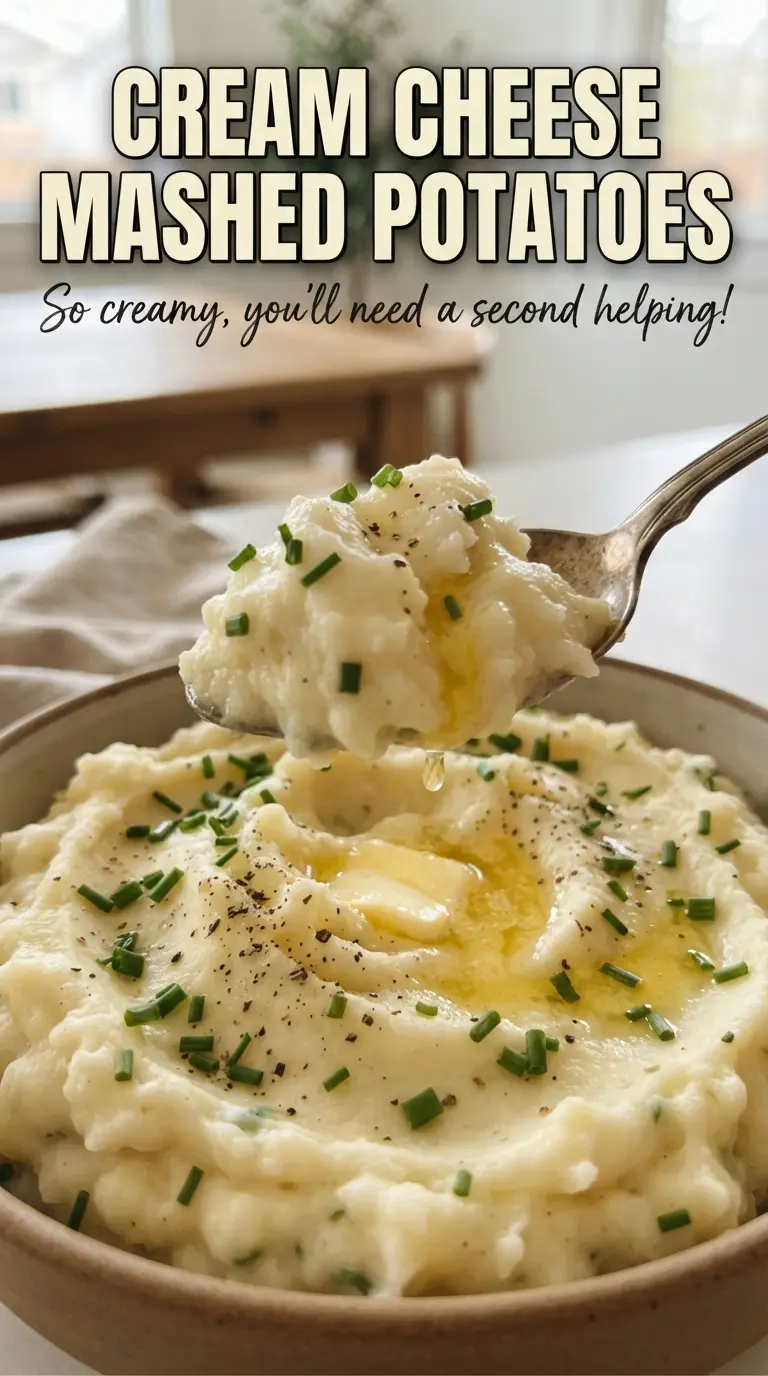
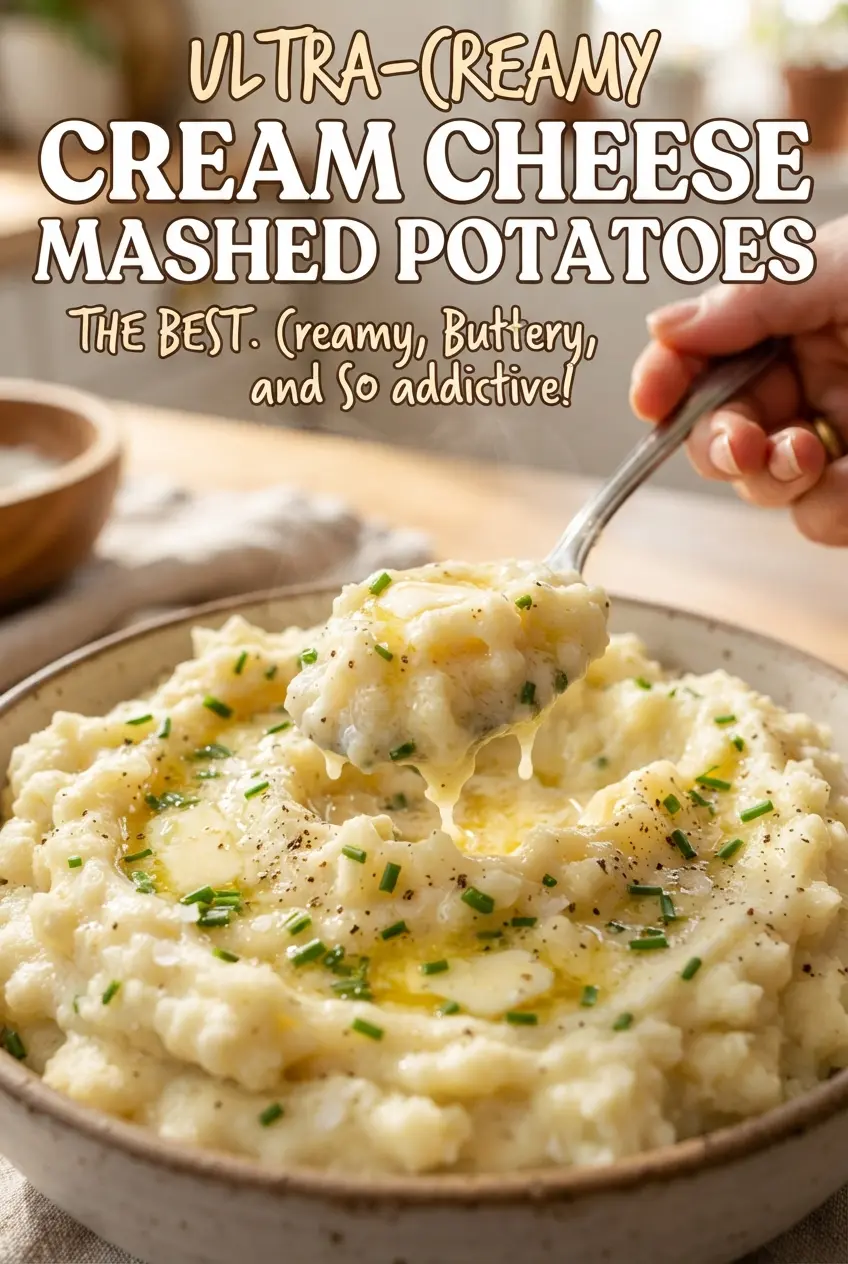
Cream cheese mashed potatoes land on the table with a plush, spoon-coating texture that regular mashed potatoes never quite reach. The cream cheese gives them body and a subtle tang, so the flavor stays rich without tasting flat or heavy. They hold their shape on the plate, but when you stir them, they fall in soft, silky folds.
The trick is treating the potatoes like a blank canvas and building the texture in layers. Yukon golds bring a naturally buttery flavor and a smoother mash than starchy russets, while warm milk helps everything blend without cooling the pot down and tightening the mixture. Softened cream cheese matters here, too, because cold cream cheese leaves little bits behind and tempts you to keep mashing, which makes potatoes gluey.
Below, you’ll find the small moves that keep these mashed potatoes extra smooth, plus a few ways to adapt them when you need to work ahead or change the flavor slightly.
The cream cheese melted in completely and the potatoes stayed fluffy instead of turning gummy. My husband kept sneaking spoonfuls straight from the pot.
Save these cream cheese mashed potatoes for the side dish that turns out silky, tangy, and fluffy every time.
The Reason Cream Cheese Makes These Mashed Potatoes Stay Velvety
Mashed potatoes can go wrong fast when the dairy goes in too cold or the potatoes are overworked. This version avoids both problems by warming the milk first and beating the cream cheese in after the butter, while the potatoes are still hot enough to melt everything smoothly. That order matters. If the dairy goes in cold, you end up smashing the potatoes longer than you should, and that’s how mashed potatoes turn paste-like.
Yukon gold potatoes help because they mash into a naturally creamy texture without needing a lot of aggressive mixing. They have enough moisture and starch to hold a soft structure, which means the cream cheese can enrich the potatoes instead of trying to fix a dry base. The end result is dense in the best way: smooth, rich, and still light on the tongue.
What Each Ingredient Is Actually Doing Here
- Yukon gold potatoes — These are the right potatoes for a creamy mash because they break down into a soft, buttery texture without getting dry or chalky. Russets work in a pinch, but they’re starchier and can turn fluffy in a more fragile way, which makes them easier to overmix.
- Cream cheese — This is the ingredient that gives the potatoes their body and faint tang. It needs to be softened so it melts in without stubborn little lumps; cold cream cheese will fight the potatoes and tempt you to keep mashing.
- Butter — Butter brings richness and helps the potatoes look glossy instead of matte. Add it first so it melts directly into the hot potatoes and creates a smoother base before the cream cheese and milk go in.
- Warm milk — Warm milk loosens the mash without cooling everything down. Cold milk slows the blending process and can make the potatoes feel stiff, so warming it is worth the extra minute.
- Garlic powder — This adds a gentle savory note without changing the texture or bringing extra moisture into the bowl. Fresh garlic would need cooking and can taste sharp here; garlic powder blends in cleanly.
How to Keep the Potatoes Smooth Instead of Gluey
Boiling Until the Centers Give Without Falling Apart
Start the potatoes in well-salted water and cook them until a knife slides through with no resistance. If they’re undercooked, you’ll leave little firm pieces behind and keep mashing long after the texture should have been finished. If they’re cooked until they’re breaking apart in the water, they’ll absorb too much water and the mash can turn loose and flat. Drain them well so the potatoes don’t carry extra water into the pot.
Mashing While the Potatoes Are Still Hot
Return the drained potatoes to the warm pot and mash them right away. The residual heat helps evaporate surface moisture and lets the butter melt in evenly. A potato masher gives you more control than a blender or food processor, which can turn hot potatoes into a sticky paste in seconds. Stop mashing as soon as the big chunks are gone and the texture looks even.
Adding the Dairy in the Right Order
Work in the butter first, then the cream cheese, then the warm milk. That sequence gives you the smoothest finish because the fat coats the potato starch before you loosen the mixture. If the potatoes seem too thick after the cream cheese goes in, add the milk a splash at a time instead of dumping it all in at once. You’re looking for a texture that holds soft peaks, not one that pours.
Seasoning at the End, Not Before
Salt and pepper should go in after the dairy is fully blended. Dairy softens the edges of seasoning, so potatoes that taste perfect before the milk goes in can taste dull afterward. Taste once everything is combined, then adjust until the potatoes taste full and rounded. A final sprinkle of chives gives you a fresh onion note that cuts through the richness.
How to Adapt These Cream Cheese Mashed Potatoes Without Losing the Texture
Dairy-Free Version With Olive Oil and Plant Milk
Swap the butter for olive oil or a dairy-free butter and use unsweetened oat milk in place of whole milk. You’ll lose the tangy richness that cream cheese brings, so the potatoes will taste cleaner and a little lighter. Add a touch more salt and a small splash of lemon juice if you want brightness to replace that missing tang.
Make Them Ahead for a Crowd
These hold well when made a few hours ahead. Keep them covered in a warm spot or in a low oven with a splash of milk stirred in just before serving. If they sit too long uncovered, the top will dry out and form a skin, which makes them feel thicker than they really are.
Garlic and Herb Upgrade
Stir in roasted garlic or a spoonful of chopped fresh herbs if you want a more savory side dish. Roasted garlic melts in softly and deepens the flavor without changing the texture, while herbs bring freshness at the end. Add them after the milk so they stay evenly distributed instead of clumping.
Freezing Isn’t the Best Move
Mashed potatoes with cream cheese can be frozen, but the texture gets a little grainy after thawing. If you have leftovers, refrigerate them instead and reheat gently with a splash of milk. That gives you a much smoother result than freezing and trying to rescue the texture later.
Storage and Reheating
- Refrigerator: Store in an airtight container for up to 4 days. The potatoes will firm up as they chill, which is normal.
- Freezer: You can freeze them for up to 1 month, but the texture may turn slightly grainy after thawing. Freeze in a shallow container for faster cooling.
- Reheating: Reheat gently on the stove or in the microwave with a splash of milk, stirring between bursts. High heat dries them out and can make the dairy separate.
Answers to the Questions Worth Asking
Cream Cheese Mashed Potatoes
Ingredients
Equipment
Method
- Bring the cubed Yukon gold potatoes to a boil in salted water and cook for 15-18 minutes until tender. Visual cue: a fork should slide easily into the cubes.
- Drain the potatoes and return them to the pot. Visual cue: the steam should dry off any excess water before mashing.
- Set the pot over low heat and mash with the unsalted butter. Visual cue: the mash should look unified and glossy with no dry chunks.
- Beat in the softened cream cheese until fully smooth. Visual cue: the texture becomes thick, creamy, and lump-free.
- Stir in the warmed whole milk and garlic powder. Visual cue: the mash loosens slightly and turns silky.
- Season with salt and black pepper, then garnish with fresh chives and serve. Visual cue: chives sit on top as a bright green finish.