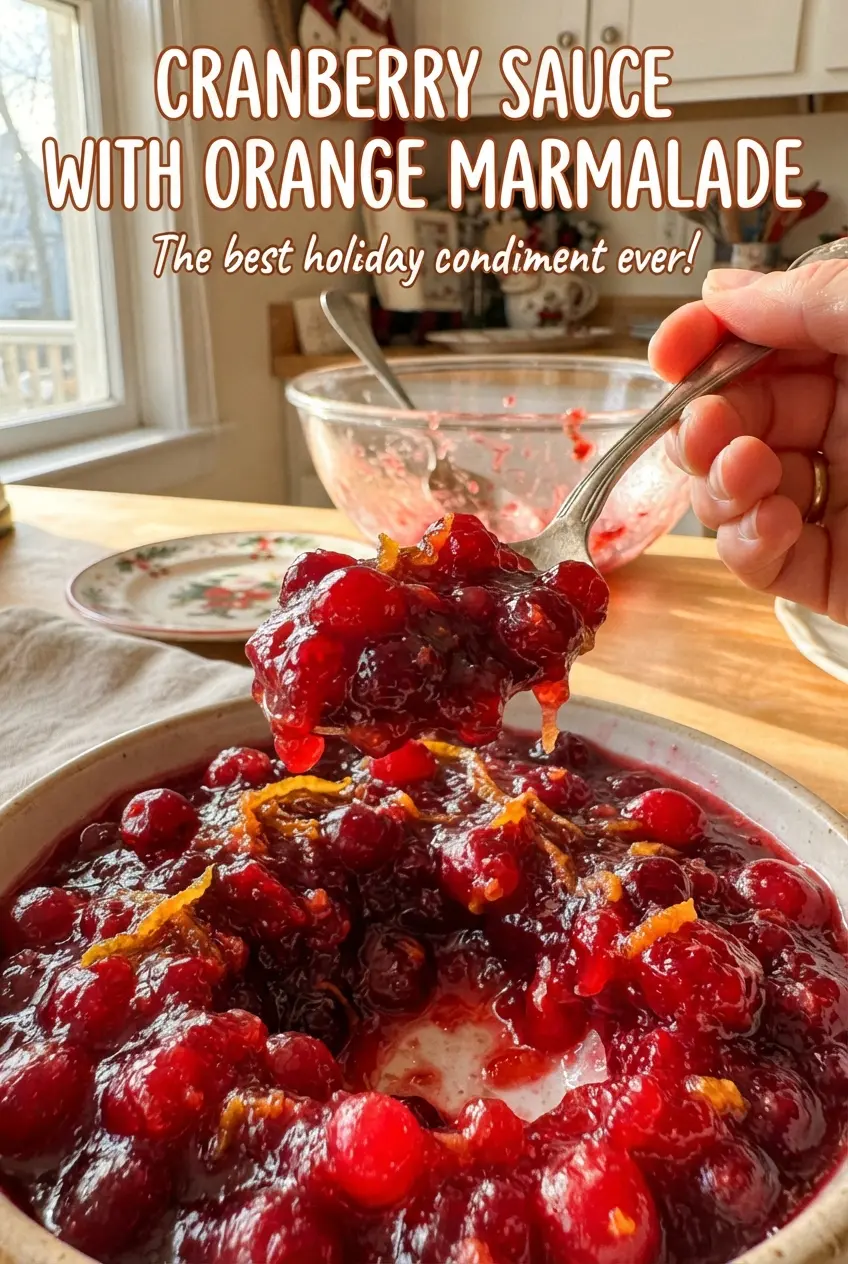
Glossy cranberry sauce with orange marmalade lands on the table with a brighter, more layered flavor than the usual holiday version. The cranberries keep that sharp pop and ruby-red color, while the marmalade slips in with orange peel, gentle bitterness, and enough body to make the sauce feel polished instead of one-note. It’s the kind of side that cuts through richer food and still tastes good straight from the spoon.
The trick is letting the cranberries burst first in the sugar syrup before the marmalade goes in. That order keeps the marmalade from getting cooked down too long, so the citrus flavor stays lively instead of fading into the background. A splash of lemon juice sharpens everything at the end, and the sauce sets up as it cools without needing any pectin or fancy technique.
You’ll find the timing that gives you a spoonable sauce without overcooking the fruit, plus a few useful swaps for when you want it a little sweeter, a little more tart, or made ahead for a busy menu.
The marmalade gave it this glossy finish and the orange peel came through without making it taste candy-sweet. It thickened beautifully after chilling, and I loved that the cranberries still had a little texture.
Love this cranberry sauce with orange marmalade? Save it for the glossy, citrusy side that wakes up a holiday plate.
The Reason This Sauce Stays Bright Instead of Turning Flat
The difference here is the order of operations. Cranberries need a little sugar syrup first so they can burst cleanly and release their natural pectin, which gives you that soft, spoonable set. If you dump in the marmalade too early, the peel can overcook and the citrus notes get muddy before the sauce even thickens.
This version also uses just enough water to keep the sugar from scorching at the start, but not so much that the sauce takes forever to reduce. The end result should coat a spoon lightly when hot and thicken more once chilled. If it looks loose in the pan, that’s normal; cranberry sauce firms up as it cools.
What Each Ingredient Is Doing in the Bowl
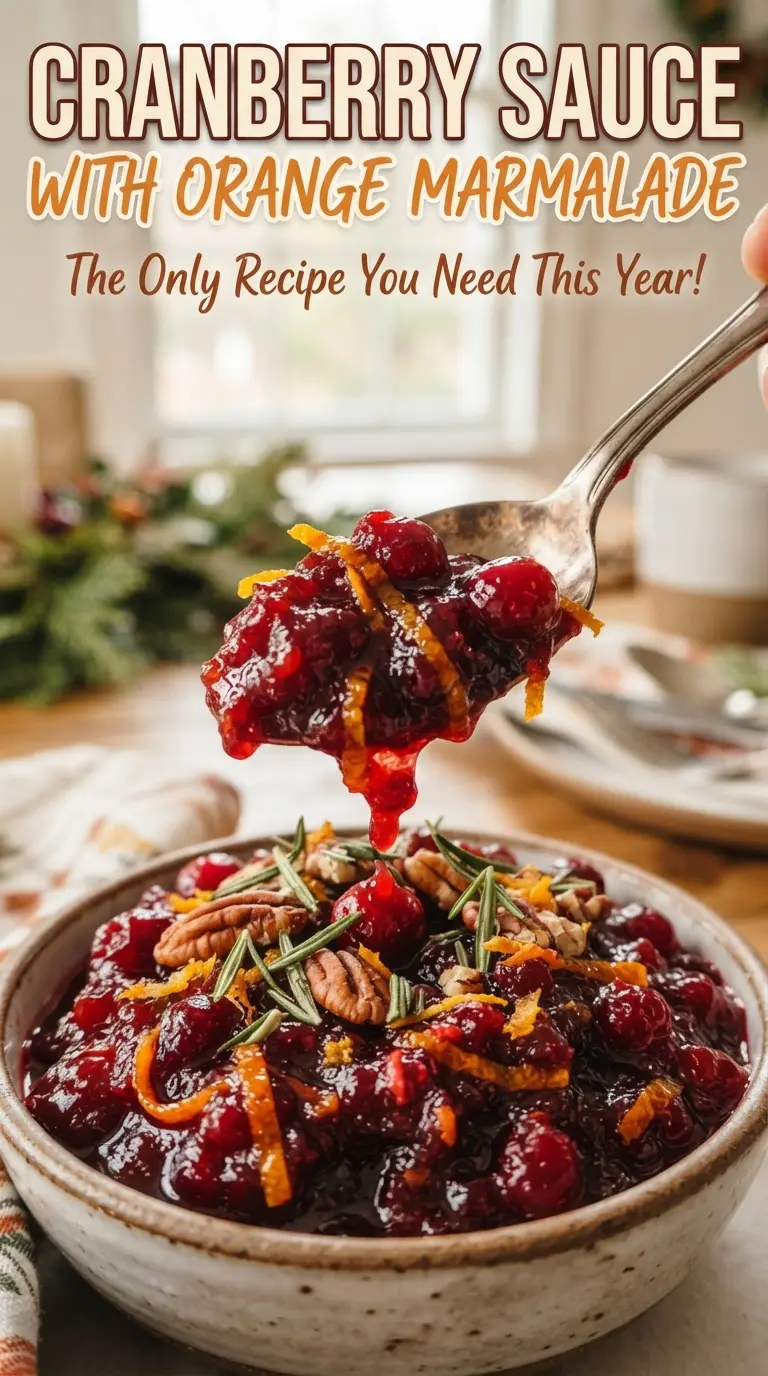
- Fresh cranberries — These are the whole point. They burst as they cook and give the sauce its body, tartness, and color. Frozen cranberries also work; add them straight from the freezer and give the sauce a minute or two more on the stove.
- Orange marmalade — This adds sweetness, citrus peel, and a little bitterness from the zest and peel, which keeps the sauce from tasting one-dimensional. Use a marmalade you’d actually eat on toast, because the flavor comes through clearly. A coarse-cut marmalade gives the most texture.
- Sugar — It balances the cranberries’ sharp bite and helps the sauce come together into a glossy finish. You can reduce it slightly if your marmalade is very sweet, but don’t cut it too far or the sauce turns harsh.
- Lemon juice — A small amount wakes up the fruit and keeps the orange flavor from feeling heavy. Bottled lemon juice works in a pinch, but fresh tastes cleaner here.
- Salt — Just a pinch, but it matters. It rounds out the sweetness and makes the cranberry and citrus flavors taste more complete.
Cook the Cranberries First, Then Let the Marmalade Finish the Job
Building the Sugar Syrup
Bring the sugar and water to a full boil in a medium saucepan, stirring just until the sugar disappears. The liquid should look clear before the cranberries go in. If you start with the berries too soon, the sugar can sit undissolved and the sauce ends up grainy at the bottom.
Letting the Berries Burst
Add the cranberries and keep the mixture at a steady simmer for about 10 minutes. You’ll hear the berries pop, then the sauce will turn thicker and more jammy as the fruit breaks down. Stir now and then so the bottom doesn’t catch, especially once more than half the berries have burst.
Finishing with Marmalade and Lemon
Stir in the marmalade, lemon juice, and salt, then simmer for 2 to 3 minutes more. This is just long enough to blend the flavors and melt the marmalade into the sauce without cooking off the orange peel’s brightness. Pull it off the heat when it looks glossy and slightly loose; it will set up as it cools.
Cooling to the Right Consistency
Transfer the sauce to a bowl and let it cool before chilling. If you serve it hot, it will seem thinner than it really is. Once cold, the pectin from the cranberries does its job and the sauce thickens into that clean, sliceable spoonful you want next to turkey, ham, or roast chicken.
Three Ways to Adjust This Cranberry Sauce Without Losing the Balance
Less Sweet, More Tart
Cut the sugar back by 2 to 3 tablespoons and keep the rest of the recipe the same. The sauce will taste sharper and a little more cranberry-forward, which works well if your marmalade is already sweet. Don’t remove the sugar entirely unless you want a very puckery sauce.
A Smooth Sauce Instead of a Chunky One
After cooking, mash the berries more aggressively with a spoon or pulse the cooled sauce briefly with an immersion blender. That gives you a silkier texture and spreads the orange peel more evenly through the sauce. Stop before it turns completely puréed if you still want a little character from the cranberries.
Dairy-Free, Gluten-Free, and Vegetarian by Default
This recipe already fits all three, which is part of why it’s such a useful side dish. If you’re serving guests with different needs, the only thing to watch is the marmalade label; choose one without added unexpected ingredients if that matters for your table. The texture and set stay the same.
Make-Ahead for a Busy Menu
Cook it up to 4 days ahead and chill it in a covered container. The flavor gets better after a day in the fridge, and the texture tightens into a neater spoonful. If it seems too firm straight from the fridge, let it sit at room temperature for 15 to 20 minutes before serving.
Storage and Reheating
- Refrigerator: Store in an airtight container for up to 1 week. It will thicken noticeably as it chills.
- Freezer: Freezes well for up to 2 months in a sealed container, with a little headspace for expansion. Thaw overnight in the refrigerator.
- Reheating: Cranberry sauce is usually served cold or at room temperature, but you can warm it gently over low heat if you want it looser. Don’t boil it again or the marmalade can taste dull and the texture can turn overly loose once it cools.
Answers to the Questions Worth Asking
Cranberry Sauce with Orange Marmalade
Ingredients
Equipment
Method
- Bring the sugar and water to a boil in a saucepan over medium-high heat, stirring until the sugar dissolves. Watch for active bubbling across the surface.
- Add the fresh cranberries and simmer for 10 minutes, stirring occasionally, until the berries burst. You should see skins split and the sauce thicken slightly.
- Stir in the orange marmalade, lemon juice, and salt until fully combined. The mixture will turn streaked with golden orange as it warms through.
- Simmer for 2-3 minutes, stirring, until glossy. The sauce should look smooth and shiny rather than grainy.
- Cool the cranberry sauce to room temperature, then cover and chill until set before serving. Chilling helps it thicken to a spoonable consistency.