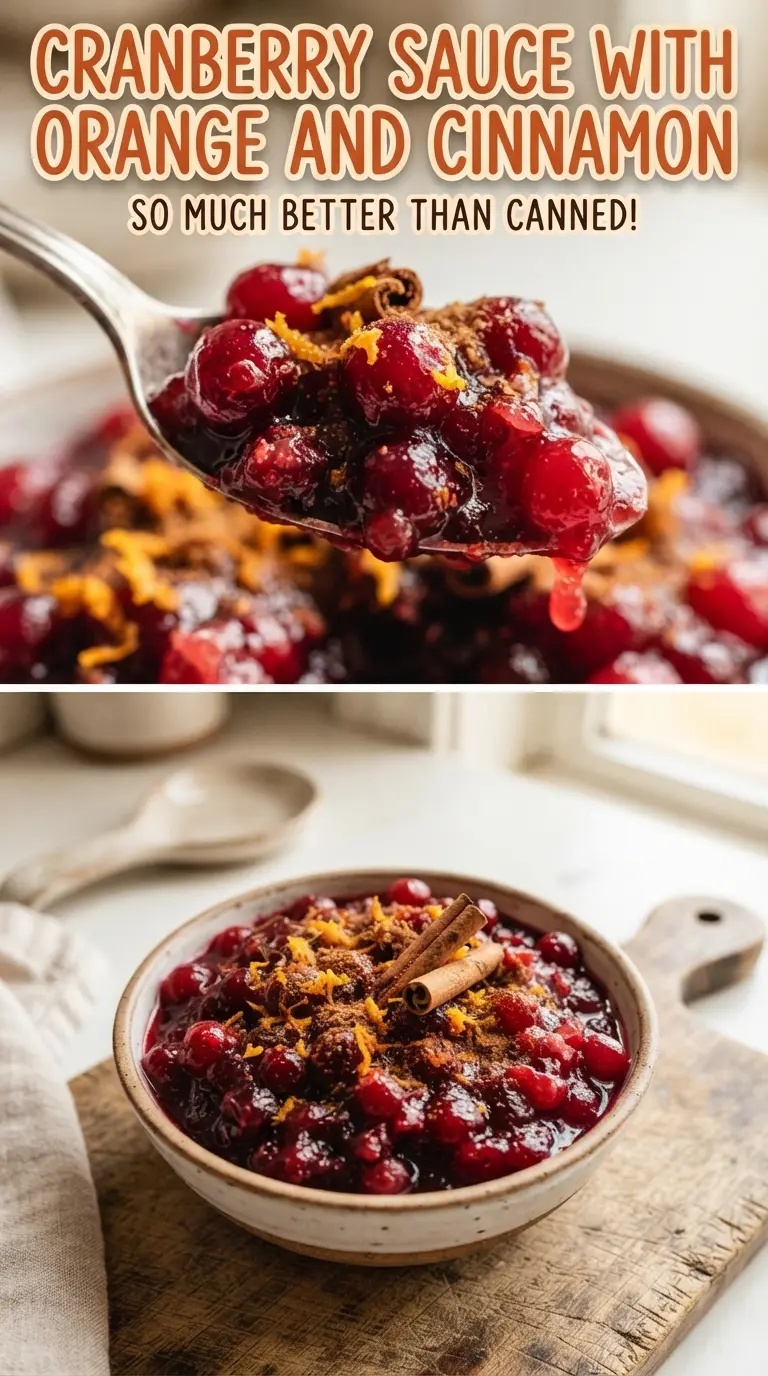
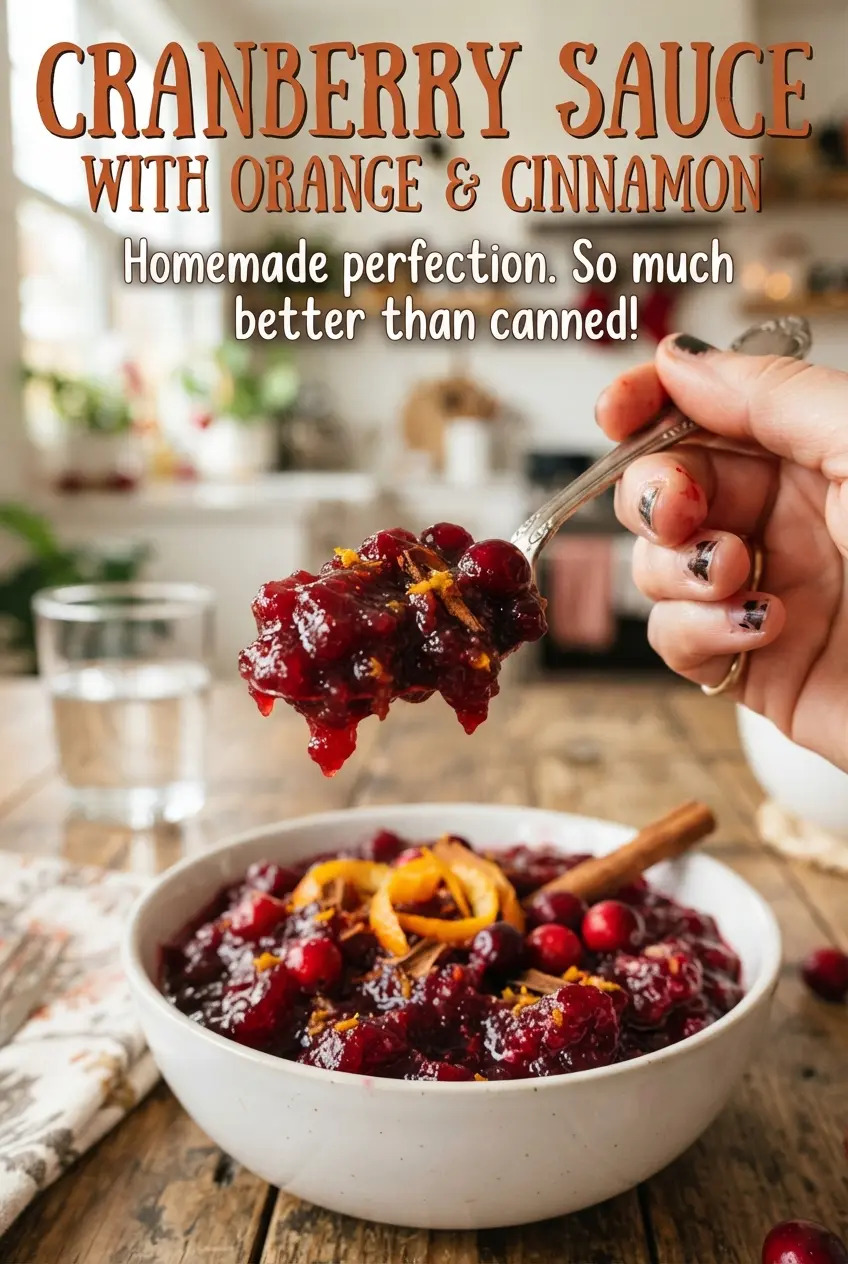
Thick, jewel-bright cranberry sauce with orange and cinnamon earns its place on the table because it doesn’t taste like an afterthought. The berries burst into a glossy spoonable sauce that lands between tart and sweet, with orange rounding out the sharp edges and cinnamon giving it a warm finish that lingers just long enough. It’s the kind of side that wakes up everything next to it, from roasted turkey to leftovers piled into a sandwich.
The trick is building flavor in the liquid before the cranberries go in. Orange juice does more than add sweetness; it carries the citrus aroma through the whole batch, while both cinnamon sticks and a little ground cinnamon give the sauce depth without making it taste dusty or flat. A short simmer is all this needs. Push it too long and the berries collapse into a paste, but stop too soon and you miss that naturally thick, glossy texture that happens as the sauce cools.
Below, you’ll find the small details that make this cranberry sauce dependable: when to add the zest, why the cinnamon sticks stay in until the end, and how to adjust the balance if your oranges are especially sweet or sharp.
The sauce thickened up beautifully as it cooled, and the orange zest kept it from tasting too sweet. I made it a day ahead and the cinnamon flavor was even better the next morning.
Save this cranberry sauce with orange and cinnamon for the next holiday meal — it sets up thick, bright, and perfectly spoonable.
The Difference Between Glossy Sauce and Watery Cranberries
Cranberry sauce looks simple, but the texture changes fast once the berries split. The mistake most people make is stopping the simmer while the sauce still looks loose in the pan. Cranberries carry a lot of natural pectin, and that thickens as the mixture cools, so what looks thin on the stove often sets up exactly right after chilling.
The other key is heat management. A hard boil at the start dissolves the sugar and infuses the cinnamon, but once the cranberries are in, you want a steady simmer, not a furious bubble. That keeps the berries intact long enough to pop and release their juice without turning the whole pot cloudy and mushy.
- Cranberries — Fresh berries give the best bright flavor and the cleanest set. Frozen cranberries also work without thawing; just add a minute or two to the simmer.
- Orange juice — This adds sweetness and acidity at the same time. Bottled juice works, but fresh juice gives the sauce a cleaner citrus note.
- Cinnamon sticks — These infuse the syrup with warmth in a way ground cinnamon can’t match on its own. Leaving them in while the sauce cools deepens the spice without making the texture gritty.
- Orange zest — Add it after cooking so the aroma stays bright instead of fading in the heat. If your orange is especially large and fragrant, use a little less and taste before adding more.
What Each Ingredient Is Actually Doing in This Recipe
- Primary ingredient (the star) — Quality matters most. Choose the best you can find.
- Cooking medium (oil, butter, or broth) — This carries flavors and prevents dryness.
- Seasonings (salt, pepper, spices, herbs) — Layer flavors so nothing overpowers. Build depth gradually.
- Aromatics (garlic, onion, herbs) — Cook with fat to bloom flavors. Become the foundation.
- Supporting ingredients — Complement the main ingredient without overpowering it.
- Sauce or liquid (if applicable) — Brings flavors together. Balance richness with acid.
- Acid (lemon, vinegar, wine, or other) — Brightens and prevents flat-tasting results.
- Final finish (garnish, glaze, or sauce) — Prevents one-dimensional taste and adds visual appeal.
Building the Syrup Before the Berries Go In
Starting With the Orange and Spice
Combine the sugar, orange juice, water, cinnamon sticks, ground cinnamon, and salt in a saucepan and bring it to a boil. You’re looking for the sugar to dissolve completely and the liquid to smell warm and citrusy before the berries go in. If the heat is too low, the sugar can sit at the bottom and make the sauce grainy later. Once the liquid boils, the flavor base is ready.
Cooking the Cranberries Just Until They Burst
Add the cranberries and let the mixture simmer for 10 to 12 minutes. The berries will pop with little bursts and the liquid will turn from thin and red to thick and glossy. Stir now and then, but don’t mash them unless you want a smoother sauce. When most of the cranberries have burst and a few still hold their shape, pull the pan off the heat.
Finishing With Zest and Rest Time
Stir in the orange zest once the pan is off the burner. That keeps the citrus aroma fresh instead of cooked down. Leave the cinnamon sticks in as the sauce cools if you want a stronger spice note, then remove them before chilling. The sauce will look looser than it should at first, but it tightens in the fridge to that spoonable texture you want.
How to Adapt This for Different Tables and Different Diets
Less Sweet, More Tart
Drop the sugar to 1/2 cup if you want a sharper cranberry flavor. The sauce will taste brighter and a little less jammy, which works well alongside rich main dishes. If your oranges are very sweet, this swap helps keep the whole batch balanced.
Honey or Maple Syrup Instead of Sugar
Use 1/2 to 2/3 cup honey or maple syrup in place of the sugar for a deeper, rounder sweetness. Honey makes the sauce taste a little floral, while maple gives it a darker finish. Either one softens the tartness faster than granulated sugar, so taste before adding extra.
Vegan and Gluten-Free by Default
This cranberry sauce is naturally vegan and gluten-free as written. The only thing to watch is cross-contamination if you’re serving someone with celiac disease, especially if the sauce is made in a shared pot or stored next to gluten-containing leftovers.
Make It Ahead for a Holiday Spread
This sauce is better after a night in the fridge because the cinnamon and orange settle into the cranberries. The texture gets thicker and the flavor turns smoother, which takes the edge off the raw tartness. If it thickens more than you want, stir in a spoonful of orange juice before serving.
Storage and Reheating
- Refrigerator: Store covered for up to 10 days. The sauce will continue to thicken as it chills.
- Freezer: It freezes well for up to 2 months. Pack it in a freezer-safe container with a little headspace, then thaw overnight in the fridge.
- Reheating: Serve it cold or let it sit at room temperature for about 20 minutes. If you warm it, do it gently on low heat with a splash of orange juice; boiling can loosen the set and dull the fresh citrus flavor.
Answers to the Questions Worth Asking
Cranberry Sauce with Orange and Cinnamon
Ingredients
Equipment
Method
- Combine sugar, orange juice, water, cinnamon sticks, ground cinnamon, and salt in a saucepan. Bring to a boil over medium-high heat with a visible rolling bubble.
- Add fresh cranberries to the boiling liquid. Return to a simmer and cook for 10-12 minutes until the berries burst and the sauce thickens.
- Remove the saucepan from the heat and stir in orange zest. Mix until the zest disperses and the sauce looks evenly speckled.
- Leave the cinnamon sticks in as it cools for extra spice, then remove. Let the sauce cool slightly so the flavor concentrates as it thickens.
- Chill the cranberry sauce before serving. Refrigerate until cold and spoonable, about 60 minutes, for the best thick texture.