Bright cranberry relish hits the table with a sharp, clean pop that cuts straight through rich holiday food. The texture is the part that keeps people going back: chunky cranberries, soft citrus, and just enough sweetness to take the edge off without turning it into jam. It tastes fresh, not cooked, which is exactly why it wakes up roast turkey, ham, and leftover sandwiches the next day.
The trick is keeping the fruit coarse instead of turning it into a puree. The cranberries break down fast, so they only need a few pulses, and the orange goes in with the peel on for extra fragrance and a little bitter balance. Sugar doesn’t just sweeten here; it pulls juice from the fruit as the relish chills, which is what mellows the tartness and gives you that glossy spoonable texture.
Below, you’ll find the small details that matter most: how fine to chop the fruit, when to add the pecans, and what to expect after the overnight chill. If cranberry relish has ever turned out harsh or watery for you, this version fixes both problems.
I liked that the cranberries stayed chunky instead of turning mushy, and the orange peel gave it a fresh bite after the overnight chill. I served it with pork and it was even better the next day.
Save this chunky cranberry relish for roast turkey, pork, and make-ahead holiday meals.
The Reason Cranberry Relish Needs a Coarse Chop, Not a Purée
Most cranberry relish goes wrong when the fruit gets chopped too fine. The texture turns slushy, the juice separates, and the final bowl tastes flat instead of bright. Coarsely chopping the cranberries keeps enough structure in the mix that the relish still looks and eats like fruit, not sauce.
The second key is the chill time. Right after mixing, the sugar feels grainy and the citrus tastes sharp. After a few hours in the fridge, the sugar dissolves into the fruit juices and the whole thing tightens up. That resting time is what gives you a balanced relish with a glossy spoonable texture.
- Chopping the cranberries coarsely — This keeps little bursts of tartness in every bite. If you process them past the point of texture, the relish turns pasty.
- Leaving the orange peel on — The peel adds fragrance and a little bitterness that keeps the relish from tasting one-note sweet.
- Chilling before serving — The sugar needs time to dissolve, and the fruit needs time to soften just enough to hold together without collapsing.
What Each Ingredient Is Actually Doing in This Relish
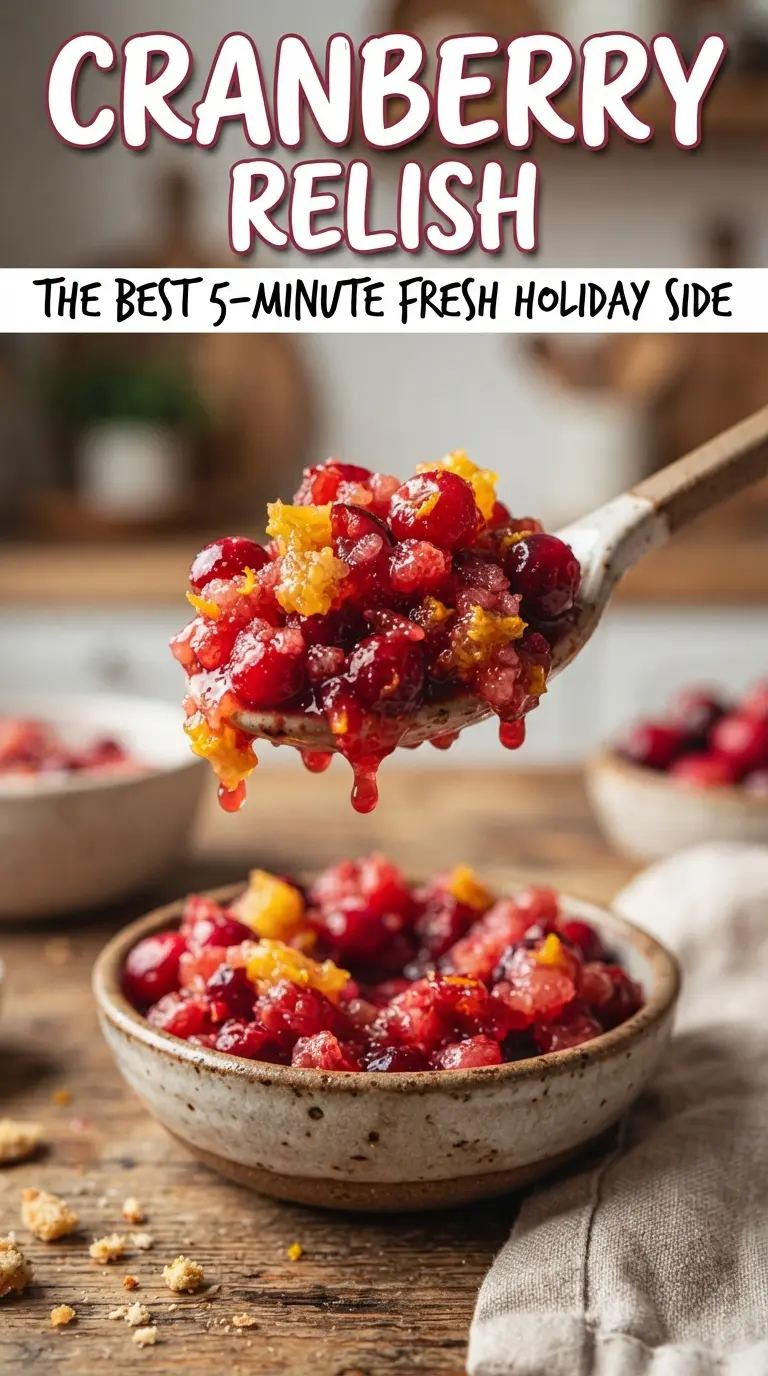
- Fresh cranberries — These bring the sharp, tart backbone. Fresh is the right choice because the berries hold their shape better than dried or cooked versions, and they release just enough juice as they sit with the sugar.
- Orange, unpeeled — The peel is part of the recipe, not an extra. It brings oils, perfume, and slight bitterness that make the relish taste lively instead of sugary. Seed it well so you don’t end up with a bitter bite from the pith or seeds.
- Apple — The apple softens the cranberry edge and adds body. A firm, crisp apple works best because it chops cleanly and won’t disappear into mush after chilling.
- Sugar — This is what turns the raw fruit mixture into relish. It pulls out juices and smooths the sharpness, so don’t cut it too far unless you want an aggressively tart result.
- Pecans, optional — Add these at the end if you want a little crunch. If they go in early, they soften in the juice and lose the contrast that makes them worth adding.
Building the Relish So It Stays Fresh and Chunky
Pulse the Cranberries First
Use a food processor and stop as soon as the cranberries look coarsely chopped. You want small pieces, not a smooth paste, and the sound changes once the berries start to break down. If you keep going after that, the relish turns wet and loses its clean bite.
Give the Orange and Apple Their Own Turn
Pulse the orange and apple until finely chopped, then stop before the mixture turns soupy. The orange rind needs enough chopping to spread through the relish, but it shouldn’t vanish completely. If there’s a lot of liquid in the processor, the fruit was overworked and the final relish will be looser than it should be.
Mix, Chill, and Let Time Do the Work
Stir the fruit and sugar together until everything looks evenly coated, then cover and chill for at least 4 hours. The mixture will look wetter after resting, and that’s correct; the sugar is drawing out juice and blending the flavors. Add the pecans just before serving so they stay crisp and don’t soften in the syrupy juices.
How to Adapt This Relish for Different Tables
Make it nut-free
Leave out the pecans entirely and serve the relish as written. You lose the crunch, but the fruit stays front and center, which is often the cleaner version for a holiday table anyway.
Reduce the sugar for a tarter relish
Cut the sugar back a little if you want a sharper, more mouth-puckering relish, but expect the fruit to taste less rounded after chilling. The sugar isn’t only there for sweetness; it also helps create the softer, spoonable texture.
Use a firmer apple for more texture
A crisp apple like Honeycrisp, Fuji, or Granny Smith holds its shape best. Softer apples blend in more and make the relish looser, which changes the finish even if the flavor still works.
Storage and Reheating
- Refrigerator: Store covered for up to 5 days. The flavor gets softer and better after the first day, though the relish will release a little more juice over time.
- Freezer: It freezes well, though the fruit softens slightly after thawing. Freeze in a sealed container for up to 2 months and thaw overnight in the refrigerator.
- Reheating: No reheating needed. Serve it cold or at cool room temperature, and stir before serving if liquid has collected at the bottom.
Answers to the Questions Worth Asking
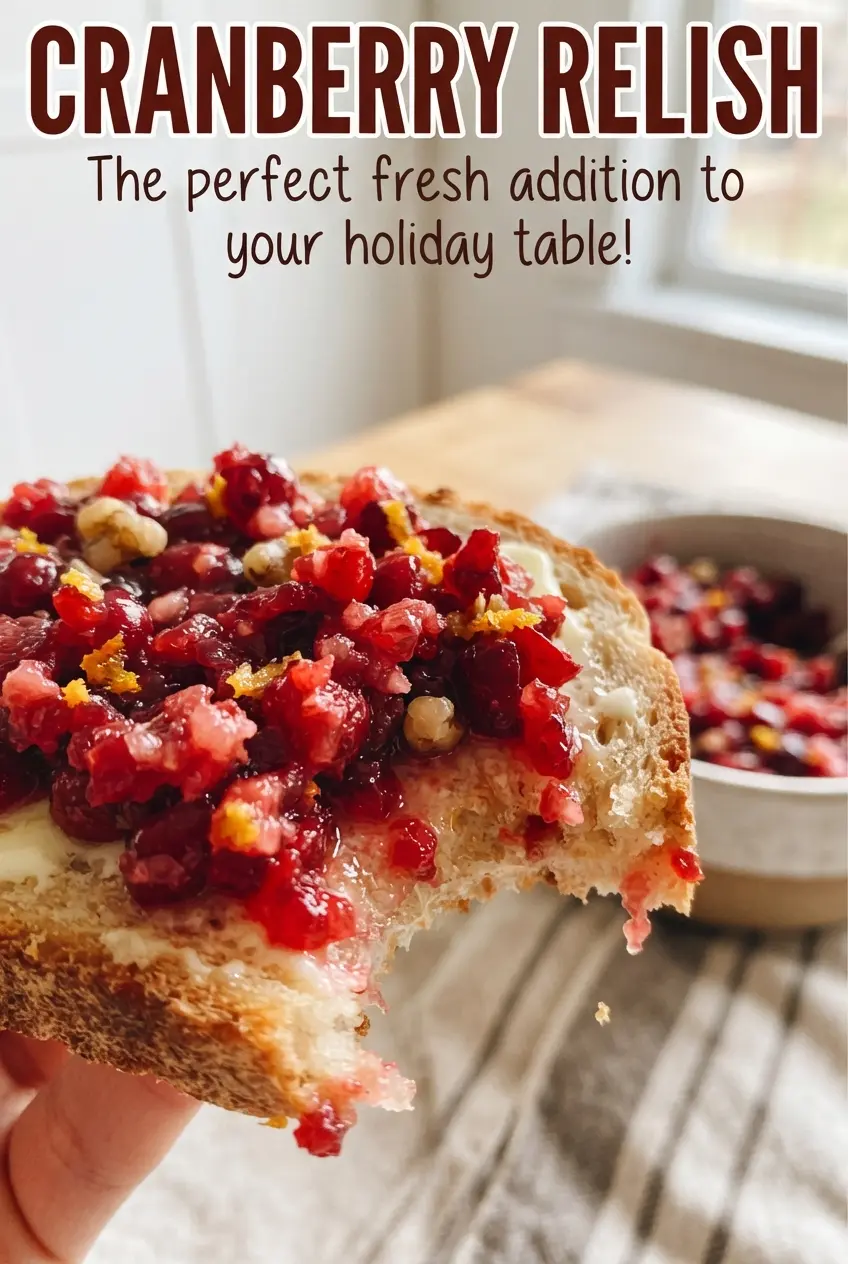
Cranberry Relish
Ingredients
Equipment
Method
- Pulse the fresh cranberries in a food processor until coarsely chopped, then transfer them to a bowl with visible chunks.
- Pulse the orange and apple in the food processor until finely chopped, so the pieces are small and even.
- Stir the orange, apple, and sugar into the cranberries until the mixture looks evenly coated and slightly glossy.
- Cover and chill for at least 4 hours or overnight, until the sugar dissolves and the flavors meld.
- Stir in the chopped pecans just before serving for a fresh, crunchy bite.