Penne coated in a thick ranch cream cheese sauce is the kind of dinner that disappears fast, and this version has the balance that keeps it from turning heavy. You get tender shreds of chicken in every bite, crispy bacon for salt and crunch, and just enough cheddar to pull the sauce into something rich without making it gluey. It lands in that sweet spot where the pasta tastes indulgent, but the sauce still clings to the noodles instead of pooling at the bottom of the bowl.
The key is building the sauce in stages. Cream cheese melts more cleanly when it starts with broth, and the ranch seasoning needs that little bit of simmer time to lose its powdery edge. Once the pasta goes in, the sauce should look loose at first; it thickens as the cheddar melts and the starch from the penne helps everything settle together.
Below, I’ve included the timing that keeps the sauce smooth, the ingredient swaps that actually work, and a few fixes for the most common problem with bacon ranch pasta: a sauce that gets too thick before the noodles are fully coated.
The sauce thickened up perfectly and stayed creamy even after I added the pasta. My husband went back for seconds before I even sat down.
Like this ranch chicken penne? Save it to Pinterest for the nights when you want creamy pasta, crispy bacon, and dinner on the table fast.
The Sauce Breaks When You Rush the Cream Cheese
The mistake most people make with cream cheese pasta is adding the cheese to a pan that’s too hot, then fighting little lumps until the chicken is already overcooked. Here, the broth goes in first, which gives the cream cheese something to loosen into before the heat has a chance to tighten it up. That’s what keeps the sauce smooth instead of grainy.
The ranch seasoning also needs a short simmer after it goes in. If you skip that part, it can taste dusty or overly sharp. A few minutes of gentle bubbling gives the powder time to dissolve fully and lets the sauce thicken enough to coat penne without turning into paste.
- Chicken broth — This is what helps the cream cheese melt without seizing. Water works in a pinch, but the sauce will taste flatter and won’t have the same savory base.
- Cream cheese — Use it softened and cut into cubes so it melts evenly. Cold blocks take longer to break down and are the main reason a sauce turns bumpy.
- Heavy cream — This gives the sauce body and a clean finish. Half-and-half can work, but it won’t thicken as well and is more likely to look thin once the cheese goes in.
- Penne — The tube shape traps sauce inside and between the ridges. If you use a smoother pasta, the sauce won’t cling as well and the dish can feel less substantial.
What Each Ingredient Is Doing in the Pan
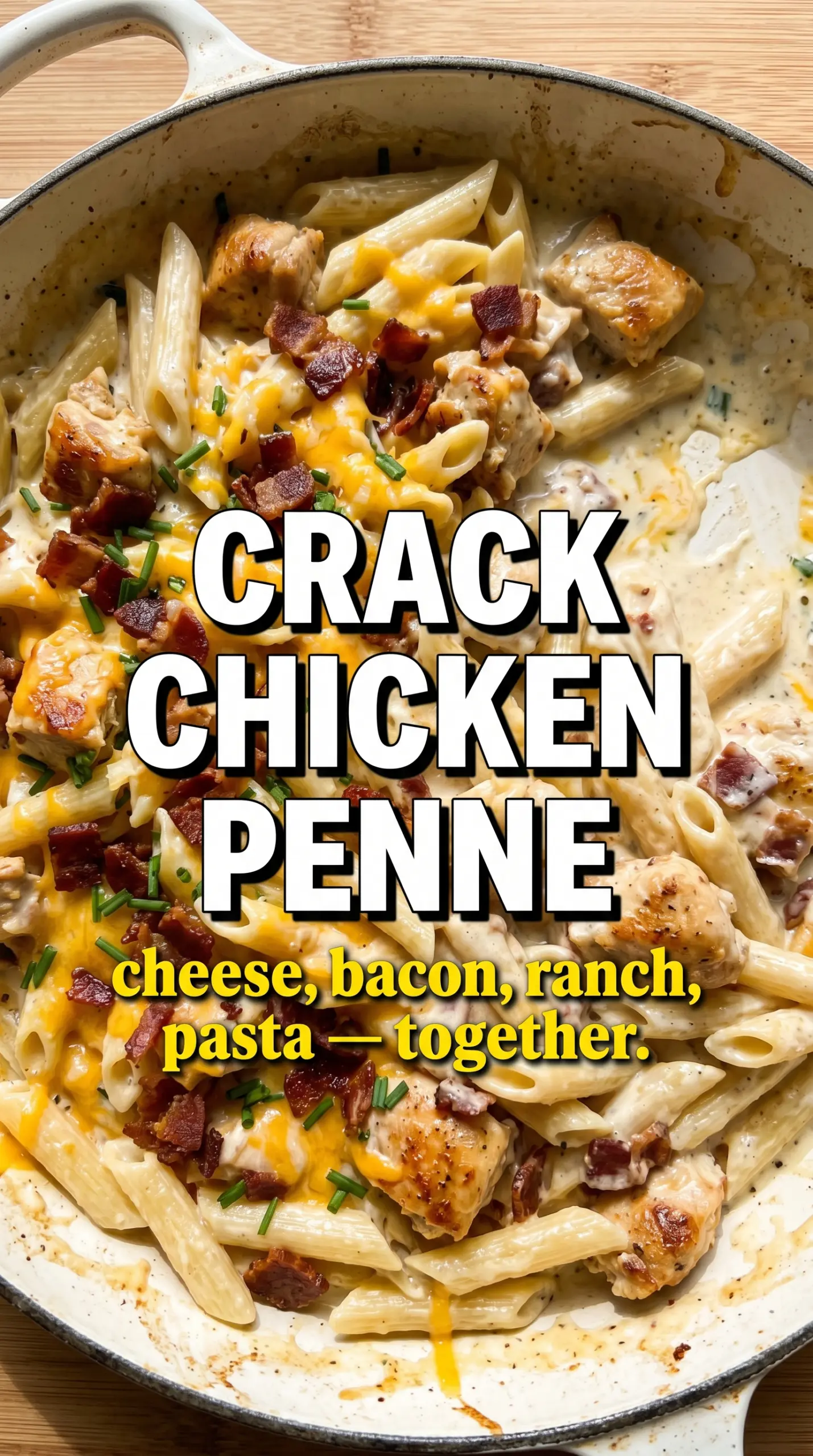
- Bacon — Crisp bacon brings salt, smoke, and crunch. Cook it until it’s truly crisp, not just browned, because it softens a little after it hits the hot pasta.
- Ranch seasoning — This is the backbone of the flavor, so use the packet rather than trying to improvise from pantry herbs unless you already know exactly how you want it to taste. It’s what gives the dish that ranch-pasta identity.
- Cheddar cheese — Cheddar finishes the sauce and makes it cling. Shred it yourself if you can, because pre-shredded cheese has anti-caking starch that can make the sauce less silky.
- Garlic — One minute in oil is enough. If it browns, it turns bitter fast and gets buried under the dairy instead of supporting it.
Building the Creamy Ranch Base Before the Pasta Goes In
Waking Up the Garlic
Start the garlic in olive oil over medium heat just until it smells fragrant, about a minute. You’re not trying to brown it; you’re giving the oil a little garlic flavor before the dairy goes in. If the garlic starts taking on color, pull the pan back immediately, because browned garlic can make the whole sauce taste harsh.
Melting the Cream Cheese the Right Way
Add the broth and cream cheese cubes next, then stir over medium-low heat until the cream cheese disappears into the liquid. The mixture may look separated at first, and that’s normal. Keep the heat gentle and keep stirring until it turns smooth, because high heat here can make the dairy look broken before it has a chance to come together.
Finishing the Sauce and Coating the Pasta
Stir in the ranch seasoning and heavy cream, then let the sauce simmer for 3 to 4 minutes until it looks slightly thicker and glossy. Add the chicken, most of the bacon, and the cooked penne, then toss until every piece is coated. If the pan seems too tight, add a splash of broth to loosen it; the sauce should cling to the pasta, not sit in clumps.
Melting the Cheddar on Top
Scatter the cheddar over the top, cover the pan, and let it sit just until the cheese melts. That short covered rest gives you a smooth top layer without overcooking the pasta underneath. Finish with the remaining bacon and chives, then serve it right away while the sauce is still creamy and the cheese is soft.
How to Bend This Pasta Without Losing the Good Part
Make it gluten-free with the right pasta
Use a sturdy gluten-free penne and cook it just to al dente, because it softens a little more once it hits the sauce. The sauce itself is naturally gluten-free if your ranch seasoning packet is, but check the label before you start.
Make it lighter without losing the creamy finish
Swap the heavy cream for half-and-half and use a little less cheddar on top. The sauce will still be rich, but it won’t thicken quite as much, so don’t let it reduce too far before the pasta goes in.
Use rotisserie chicken to save time
Rotisserie chicken works perfectly here and cuts the active prep down to almost nothing. Stir it in at the end just long enough to warm through, since it’s already cooked and can dry out if it stays in the sauce too long.
Make it a little less rich
Cut the bacon back to 4 strips and keep the full amount of chicken so the dish still feels hearty. You’ll lose some smoky crunch, but the ranch cream sauce will read a little cleaner and less heavy.
Storage and Reheating
- Refrigerator: Store leftovers in an airtight container for up to 4 days. The sauce will thicken as it chills, and the pasta will absorb some of the cream.
- Freezer: It freezes, but the texture changes a bit because dairy sauces can turn grainy after thawing. If you do freeze it, let it cool completely, portion it tightly, and thaw overnight in the fridge.
- Reheating: Warm it gently on the stovetop or in the microwave with a splash of chicken broth or cream to loosen the sauce. High heat is what makes the cheese separate, so reheat slowly and stir often.
Answers to the Questions Worth Asking

Crack Chicken Penne
Ingredients
Equipment
Method
- Heat the olive oil in a large skillet over medium heat, then cook the minced garlic for 1 minute until fragrant and lightly sizzling.
- Add the chicken broth and cubed cream cheese, and stir over medium-low heat until the cream cheese melts completely and the base looks smooth.
- Stir in the ranch seasoning mix and heavy cream, then simmer for 3-4 minutes until the sauce is slightly thickened and glossy.
- Add the shredded chicken, most of the crumbled bacon, and the cooked penne, then toss until every piece is evenly coated in the sauce.
- Top the pasta with shredded cheddar, cover the skillet, and cook 2-3 minutes until the cheddar is fully melted.
- Garnish with the remaining bacon and fresh chives, then serve immediately.