Cowboy stew lands in that sweet spot between hearty and easy, with smoky sausage, tender potatoes, beans, and tomatoes all simmered together until the broth tastes like it cooked all day. It’s the kind of one-pot dinner that eats like a full meal and still feels laid-back enough for a busy night. The beef gives it structure, the sausage brings the smoke, and the potatoes soak up every bit of seasoning.
What makes this version work is the layering. Browning the beef and sausage first builds a deeper base, and blooming the chili powder and smoked paprika in the pot for a minute wakes them up before the liquids go in. The ranch packet is doing more than adding “ranch” flavor; it rounds out the broth and gives the stew that familiar ranch-style savory finish without making it taste like dressing.
Below, I’ve included the small details that keep the potatoes tender, the broth balanced, and the stew from turning muddy. There are also a few smart swaps if you need to stretch it, lighten it up, or work with what’s already in the pantry.
The potatoes stayed tender without falling apart, and the broth had this smoky, ranchy depth that got even better the next day. My husband went back for seconds and asked if I could make it again with cornbread.
Save this hearty Cowboy Stew for nights when you want smoky sausage, tender potatoes, and a broth that tastes even richer the next day.
The Browning Step That Gives Cowboy Stew Its Backbone
Most stew recipes get flat because everything goes straight into the pot without giving the meat a chance to develop flavor first. Here, the beef and sausage both need a quick sear so the bottom of the pot picks up those browned bits. That’s what gives the broth depth instead of just tasting like seasoned water.
The other place people lose the thread is the spice step. Chili powder and smoked paprika need a minute in the hot fat before the broth goes in, or they can taste dusty instead of rounded. You’re not trying to fry them hard, just wake them up enough to darken and smell fragrant.
- Ground beef — Use an 85/15 or 80/20 blend if you can. Leaner beef works, but the little bit of fat helps carry the spices and gives you a better base.
- Smoked sausage — This is where the smoky backbone comes from, so don’t swap in plain fresh sausage unless you’re willing to lose that campfire-style flavor. Kielbasa works well if that’s what you have.
- Baby potatoes — Their thin skins hold together better than russets in a simmering stew. Halve any larger ones so they cook at the same pace.
- Rotel and diced tomatoes — The mix of diced tomatoes and Rotel gives you both body and a little heat. If you only have plain diced tomatoes, add a small pinch of cayenne or extra chili powder.
- Ranch seasoning — This is the shortcut ingredient that makes the broth taste finished. Don’t skip it unless you’re ready to replace it with extra garlic, onion powder, dill, and a little dried parsley.
What Each Ingredient Is Actually Doing in This Recipe

- Primary ingredient (the star) — Quality matters most. Choose the best you can find.
- Cooking medium (oil, butter, or broth) — This carries flavors and prevents dryness.
- Seasonings (salt, pepper, spices, herbs) — Layer flavors so nothing overpowers. Build depth gradually.
- Aromatics (garlic, onion, herbs) — Cook with fat to bloom flavors. Become the foundation.
- Supporting ingredients — Complement the main ingredient without overpowering it.
- Sauce or liquid (if applicable) — Brings flavors together. Balance richness with acid.
- Acid (lemon, vinegar, wine, or other) — Brightens and prevents flat-tasting results.
- Final finish (garnish, glaze, or sauce) — Prevents one-dimensional taste and adds visual appeal.
Building the Pot in the Right Order
Brown the Meat First
Start with the ground beef in a large pot over medium-high heat and break it up as it cooks. When it’s no longer pink and the edges have some color, drain off the excess fat so the stew doesn’t turn greasy. Brown the sausage slices briefly in the same pot and pull them out; you want their surface color, not to cook them through. If you rush this stage and steam the meat instead, the finished stew will taste one-note.
Wake Up the Spices
Add the onion and cook until it softens and turns translucent, then stir in the garlic for just a minute. Add the chili powder and smoked paprika next and let them cook briefly in the hot pot. They should smell deeper and a little sweeter, not burnt. If the garlic starts to brown too fast, lower the heat; scorched garlic will make the whole pot taste bitter.
Simmer Until the Potatoes Turn Tender
Once the tomatoes, broth, ranch seasoning, potatoes, and beans go in, bring the pot to a boil and then drop it to a steady simmer. You want the potatoes to be tender all the way through but still holding their shape, which usually takes 15 to 18 minutes depending on their size. Stir now and then so nothing sticks on the bottom. If the broth looks too thick before the potatoes are done, add a splash more broth or water instead of turning up the heat.
Finish With the Sausage and Corn
Stir the corn and browned sausage back in near the end and simmer for another 5 minutes. That keeps the corn sweet and the sausage juicy instead of overcooked. Taste before serving and adjust with salt and pepper only at the end, because the ranch packet and sausage already bring plenty of seasoning. Top bowls with cheddar, jalapeños, and green onions while the stew is still hot so the cheese melts into the broth.
How to Adapt Cowboy Stew Without Losing the Heart of It
Make It Gluten-Free
Check the sausage and ranch seasoning packet first, since those are the two places gluten tends to hide. If both are certified gluten-free, the stew itself is naturally a good fit. The texture stays the same, and you won’t lose any flavor by making that swap.
Skip the Beef and Keep It Hearty
You can leave out the ground beef and use an extra 8 to 12 ounces of sausage instead. The stew will be a little less thick and meaty, but the smoke and spice still carry it well. Add an extra handful of beans if you want to keep the same bulk in the bowl.
Use What’s in the Pantry
Black beans can stand in for pinto beans, and frozen corn works just as well as canned corn. If you only have regular diced tomatoes, add a small spoonful of tomato paste for more body. The stew will still taste right as long as you keep the smoky sausage, potatoes, and ranch seasoning in place.
Storage and Reheating
- Refrigerator: Store in an airtight container for up to 4 days. The broth thickens a bit as it sits, and the potatoes soak up more seasoning.
- Freezer: It freezes well for up to 3 months, though the potatoes soften slightly after thawing. Cool it completely before freezing, and leave a little space at the top of the container.
- Reheating: Warm it gently on the stove over medium-low heat with a splash of broth or water. Don’t boil it hard or the potatoes can break apart and the sausage can turn rubbery.
Questions I Get Asked About This Recipe
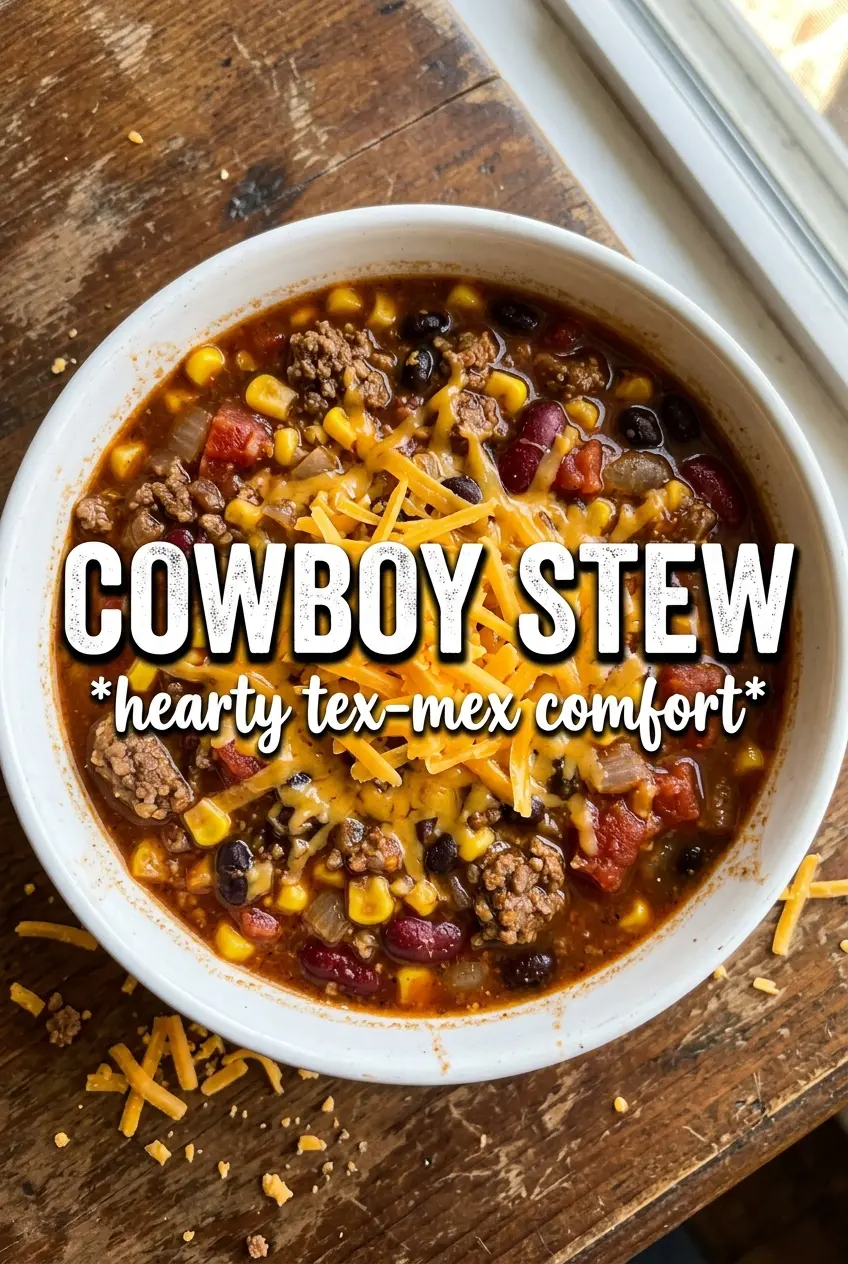
Cowboy Stew
Ingredients
Equipment
Method
- Brown the ground beef in a large pot over medium-high heat, breaking it up until no longer pink, then drain the excess fat.
- Brown the sliced smoked sausage briefly in the same pot, then remove it to a plate.
- Sauté the diced onion for 3 minutes over medium heat until softened.
- Add the minced garlic and cook for 1 minute, stirring until fragrant.
- Add the chili powder and smoked paprika and cook for 1 minute to bloom the spices.
- Add the Rotel tomatoes, diced tomatoes, beef broth, ranch seasoning, baby potatoes, and drained pinto beans, then bring the mixture to a boil.
- Simmer for 15-18 minutes, stirring occasionally, until the potatoes are tender.
- Add the drained corn and the browned sausage back into the pot, then simmer for 5 more minutes.
- Season with salt and pepper to taste, then simmer 1-2 minutes until the flavors come together.
- Ladle the cowboy stew into bowls and top with shredded cheddar, jalapeños, and green onions.