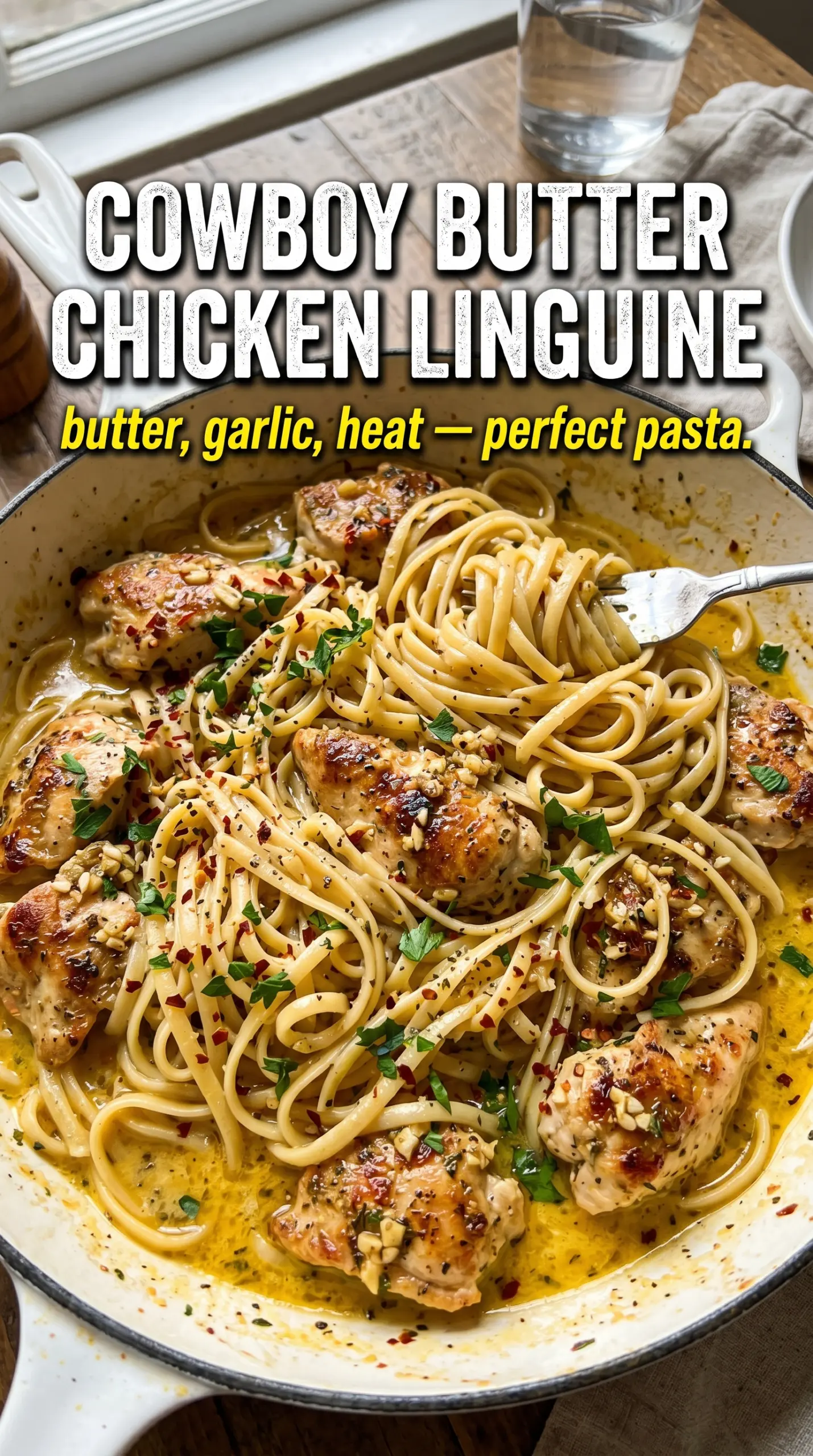
Linguine coated in cowboy butter hits that sweet spot between bold and comforting: glossy noodles, seared chicken, a little heat, and enough lemon to keep the butter from feeling heavy. What makes this version worth making again is the way the sauce clings to the pasta instead of pooling at the bottom of the bowl, with the Cajun seasoning on the chicken echoing the smoked paprika and red pepper flakes in the butter.
The trick is building the sauce in the same skillet you used for the chicken. Those browned bits add depth without any extra work, and a splash of pasta water turns the butter into something silky instead of greasy. The lemon goes in at the end for brightness, not in the beginning where it gets muted.
Below, I’ll walk through the one step that keeps the sauce smooth, the ingredient swaps that still keep the dish balanced, and a few practical variations for changing up the heat level or making it gluten-free.
The sauce clung to every strand of linguine and the chicken stayed juicy even with the high-heat sear. I added a little extra pasta water at the end and it turned silky instead of oily.
Save this cowboy butter chicken linguine for the nights when you want spicy, glossy pasta with a seared chicken finish.
The Mistake That Makes Cowboy Butter Pasta Turn Greasy
The biggest problem with butter-based pasta sauce is heat. If the pan is too hot when the butter goes in, the milk solids can separate and the sauce starts to look slick instead of silky. This recipe avoids that by using the residual flavor from the chicken pan, then dropping the heat before the garlic and butter have a chance to scorch.
The other thing that matters is the pasta water. Butter and pasta water need each other here: the starch in the water helps the sauce coat the linguine, while the butter adds body. Add the water a splash at a time and toss hard; if you dump in too much at once, the sauce can get thin before it emulsifies.
- Butter — Use real butter here. It’s the base of the sauce, and there isn’t a substitute that gives the same rich finish. If you need a dairy-free version, use a good plant butter that melts cleanly, but expect a slightly flatter flavor.
- Dijon mustard — This is the quiet ingredient that helps the sauce hold together and adds just enough sharpness to balance the fat. Yellow mustard won’t taste the same, and whole grain mustard changes the texture too much.
- Smoked paprika, red pepper flakes, and cayenne — These build the cowboy butter heat. The paprika brings depth, the flakes give you visible heat, and the cayenne finishes the burn. If you want it milder, cut the cayenne first and keep the paprika.
- Lemon juice — Fresh lemon keeps the sauce from tasting heavy. Bottled juice works in a pinch, but it tastes flatter, and this dish needs that bright edge at the end.
- Parsley and chives — Add them off the heat so they stay fresh and green. Dried herbs won’t give the same finish here; this sauce depends on that fresh, herbal contrast.
- Chicken breasts — Slice them into strips so they sear quickly before the pasta overcooks. Thighs work too if you want a juicier, slightly richer result, but you’ll need a minute or two longer in the pan.
What Each Ingredient Is Actually Doing in This Chicken Pasta Dish
- Pasta or rice (the vehicle) — Cook to al dente so it doesn’t turn mushy. Reserve water/broth for sauce adjustment.
- Chicken (the protein) — Cut into uniform pieces so they cook evenly. Don’t overcook or the chicken becomes dry.
- Butter or oil (the cooking medium) — This carries flavors and browns the chicken. Don’t skimp or the dish tastes incomplete.
- Cream or sauce (the richness base) — This brings everything together and coats the pasta. Balance richness with acid.
- Cheese (optional umami and binding) — This adds depth and helps the sauce cling to pasta. Add off heat so it melts smoothly.
- Garlic, herbs, and seasonings (the flavor layers) — Cook aromatics with oil to bloom the flavors. These define the dish’s personality.
- Acid (lemon, wine, or vinegar) — This prevents heavy cream sauces from tasting flat. Add at the end to preserve freshness.
- Final toss (the emulsification) — Toss gently so pasta stays al dente and every piece gets coated evenly.
How to Keep the Sauce Glossy While the Pasta Soaks It Up
Searing the Chicken First
Season the chicken well before it hits the pan. You want a hard sear on high heat so the outside gets browned while the center stays juicy, and that usually takes 4 to 5 minutes for strips. Don’t crowd the skillet or the chicken will steam instead of char. Pull it out as soon as it’s cooked through; it finishes later when it goes back on top of the pasta.
Waking Up the Cowboy Butter
After the chicken comes out, lower the heat before the butter goes in. Add the garlic and cook just until fragrant, about a minute, then stir in the Dijon, paprika, red pepper flakes, and cayenne. If the garlic browns, the sauce turns bitter fast, so keep it moving and stay close to the skillet.
Tossing the Linguine
Add the cooked linguine straight into the sauce with a splash of pasta water. Toss until the noodles look evenly coated and the sauce clings in a thin glossy layer instead of sliding off. If it seems loose, keep tossing for another 30 seconds before adding more water. If it seems thick and sticky, the fix is more pasta water, not more butter.
Bringing It to the Table
Finish with the lemon juice, parsley, and chives, then top with the chicken and serve right away. The herbs should look fresh, not wilted, and the sauce should still shine. This dish waits on no one; once the noodles sit, they soak up the butter and lose that silky finish.
How to Adapt This for More Heat, Less Heat, or No Gluten
Milder Cowboy Butter Pasta
Cut the cayenne in half or leave it out completely, then keep the smoked paprika and red pepper flakes for flavor without the full burn. The dish stays bold, but the heat sits in the background instead of leading the bite.
Gluten-Free Version
Swap in your favorite gluten-free linguine and cook it just shy of fully tender, since it can soften quickly once it hits the hot sauce. Save extra pasta water if your brand tends to dry out; that starch helps the sauce cling without getting pasty.
Chicken Thigh Swap
Boneless thighs work beautifully if you want a richer, juicier result. They take a bit longer to cook and pick up even more color, which adds depth, but the final dish will taste a little heavier than the breast version.
Dairy-Free Adjustment
Use a high-quality plant butter and keep the heat low when it melts so the sauce stays smooth. You’ll still get the garlic, lemon, and spice, but the sauce won’t have quite the same round, rich finish that dairy butter gives.
Storage and Reheating
- Refrigerator: Store leftovers in an airtight container for up to 3 days. The sauce thickens as it chills, and the pasta will absorb some of the butter.
- Freezer: Freezing isn’t ideal for this one. Butter sauces can separate after thawing, and the pasta turns soft.
- Reheating: Warm gently on the stove over low heat with a splash of water or broth, tossing until the sauce loosens again. Microwaving on high can make the chicken dry and the sauce split, so low and slow works better.
Questions I Get Asked About This Recipe
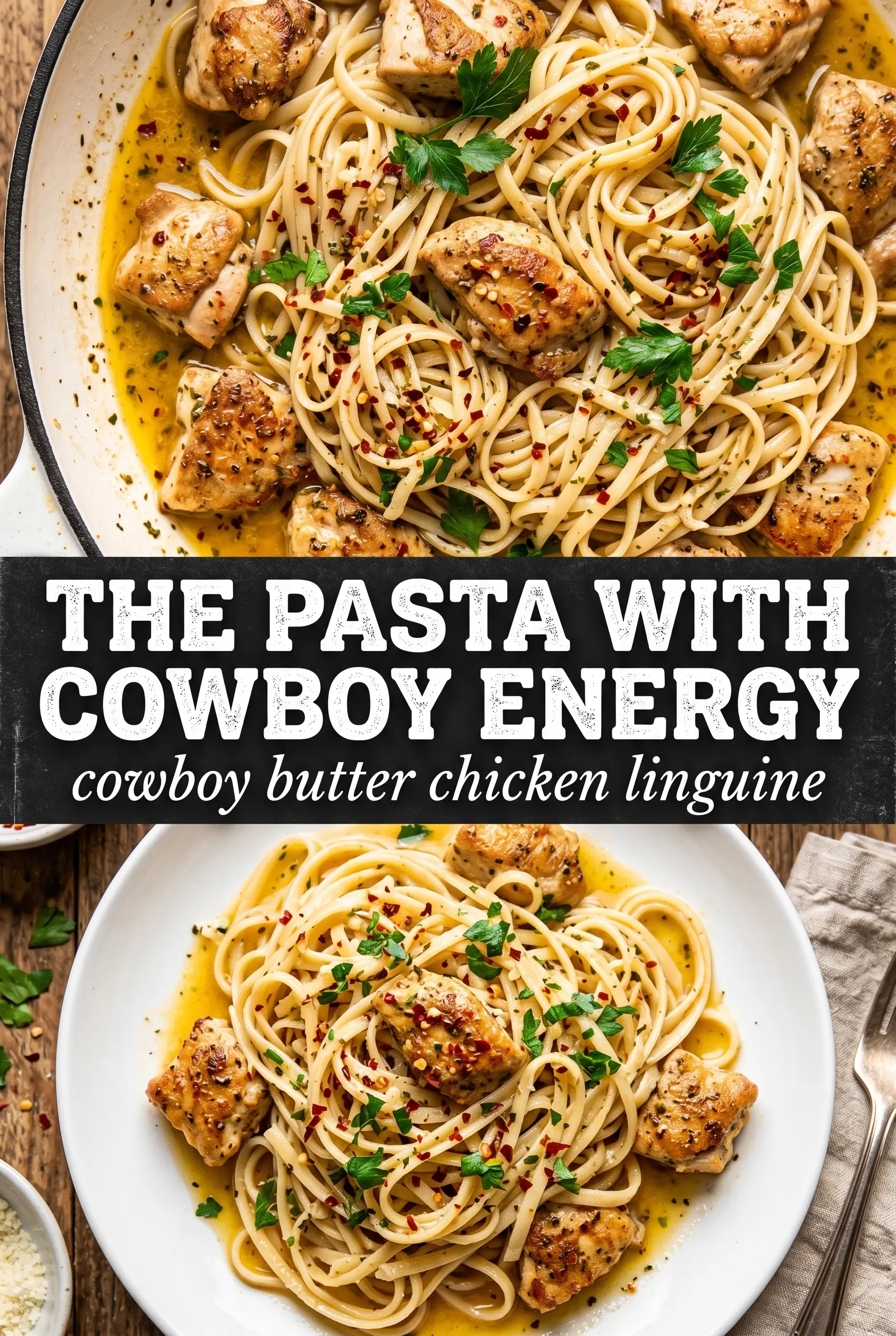
Cowboy Butter Chicken Linguine
Ingredients
Equipment
Method
- Season the chicken strips with salt, pepper, and Cajun seasoning. Heat olive oil in a large skillet over high heat and cook the chicken for 4-5 minutes until charred and cooked through, then remove to a plate.
- Melt butter in the same skillet over medium heat. Add the garlic and cook for 1 minute.
- Stir in Dijon mustard, smoked paprika, red pepper flakes, and cayenne pepper. Cook for 30 seconds.
- Add fresh lemon juice, parsley, and chives. Toss the cooked linguine in the cowboy butter sauce, adding reserved pasta water as needed to make it glossy and clinging.
- Top the pasta with the seared chicken strips. Serve immediately so the sauce stays vivid and aromatic.