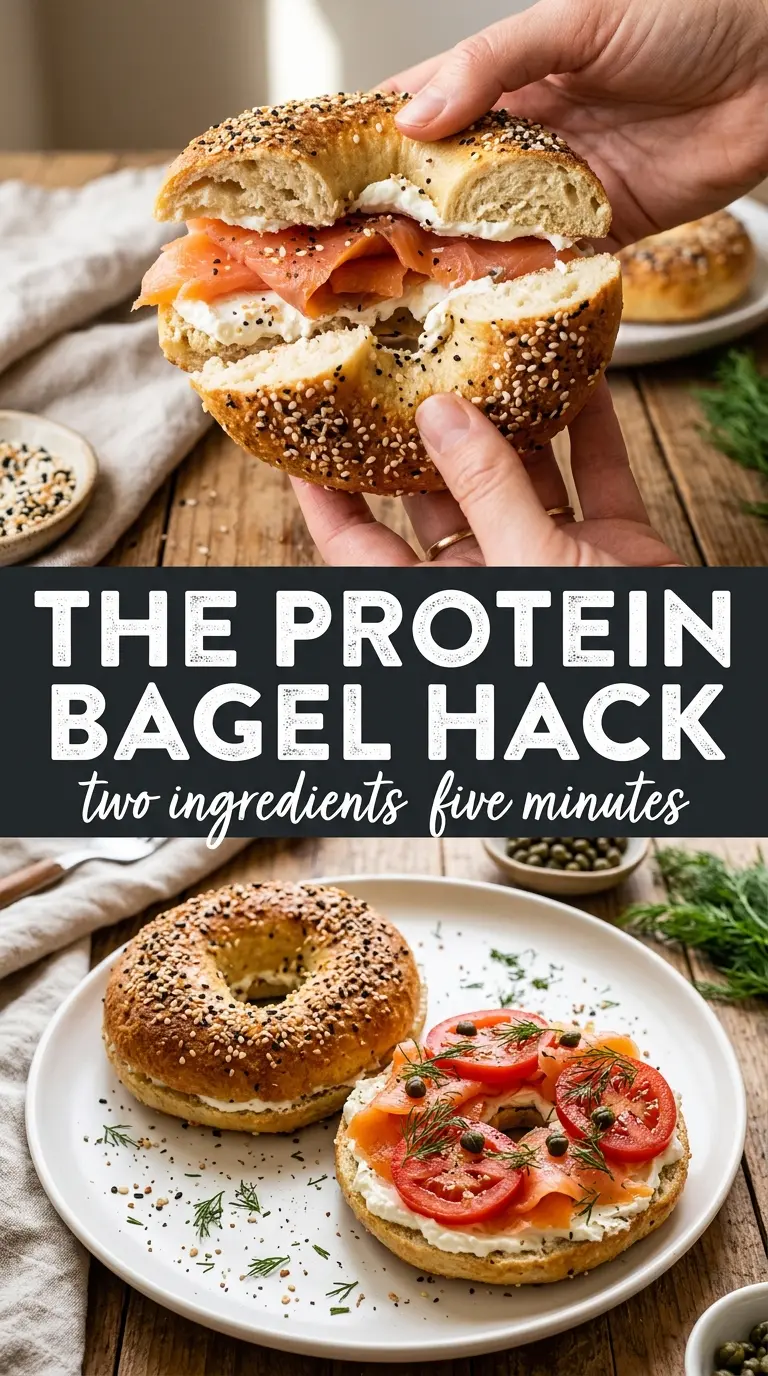
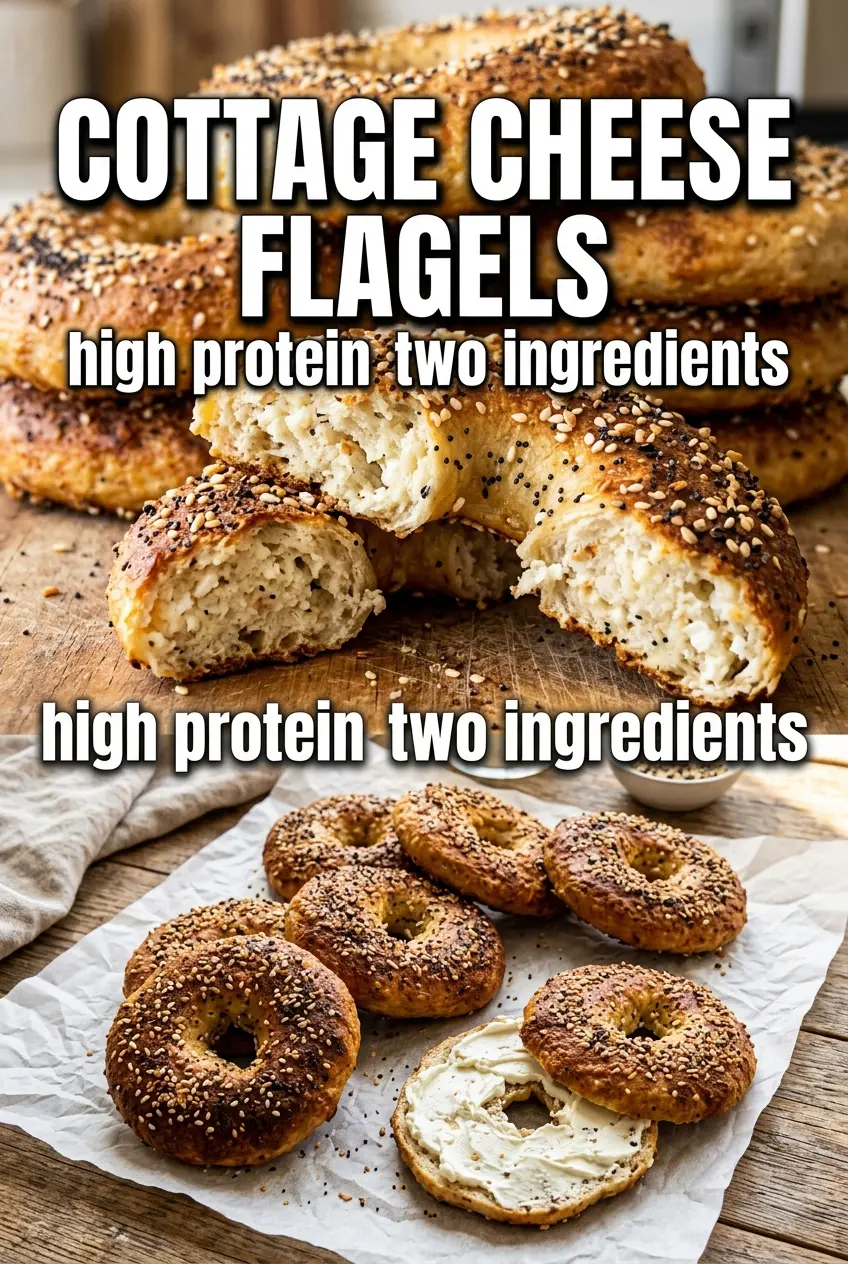
Golden cottage cheese flagels land somewhere between a bagel and a breakfast roll: chewy on the outside, tender and dense in the middle, with enough structure to hold cream cheese without turning heavy. They bake up with that familiar bagel-style crust, but because the dough is flatter and quicker to handle, you get the same satisfying bite without the long boil-and-proof routine.
The trick is keeping the dough just sticky enough to stay moist, then shaping it into a short, thick disc instead of a tall ring. Cottage cheese brings protein and softness, while self-rising flour gives the lift and the egg wash helps the seasoning cling and the tops turn glossy and deeply golden. If you’ve ever had homemade bagels go dry or bready, this version fixes that by keeping the dough simple and the bake time tight.
Below, I’m walking through the texture cues that matter, the best flour swap if you don’t keep self-rising flour around, and a few variations that make these work for different breakfasts without losing that chewy flagel bite.
The dough came together fast and baked into the chewiest little flat bagels. I loved that they were done in under 30 minutes and still had that bagel bite in the middle.
Cottage cheese flagels bake up chewy and golden fast, with all the bagel crunch and none of the fuss.
The Secret to Chewy Flagels Without a Boil
Bagel texture usually comes from two things: a firm dough and a hot, fast bake. What makes these flagels different is that the cottage cheese adds moisture and tenderness, but the self-rising flour keeps the dough sturdy enough to hold its shape. If the dough is too wet, the rounds spread and bake up flat in the wrong way. If it’s too dry, they turn crumbly instead of chewy.
The shape matters more here than it does with a standard muffin-style quick bread. A thick disc gives you that dense center and browned top while keeping the bake time short. Don’t chase a perfectly smooth dough; a slightly rough, tacky surface is what you want. That little bit of stickiness is what helps the interior stay soft while the outside firms up.
- Cottage cheese — Full-fat cottage cheese gives the best balance of richness and moisture. Low-fat works in a pinch, but the inside won’t be as plush. If your curds are large or watery, give them a quick stir before measuring so the dough doesn’t end up uneven.
- Self-rising flour — This is doing the lift work. It keeps the recipe fast and keeps the texture closer to a bagel than a biscuit. If you’re using all-purpose flour, the baking powder and salt have to be mixed in evenly or you’ll get patchy rise and bland spots.
- Egg wash — The egg wash gives the flagels their glossy top and helps the seasoning stick. Skip it and the surface looks dry and the toppings fall off after baking.
- Everything bagel seasoning — This is the boldest flavor finish, and it tastes best when it’s applied generously before baking. Sesame seeds alone work too, especially if you’re serving these with smoked salmon or a savory spread.
What Each Ingredient Is Actually Doing in This Recipe
- Primary ingredient (the star) — Quality matters most. Choose the best you can find.
- Base ingredient or binder (if applicable) — This provides structure or holds everything together.
- Seasonings (salt, pepper, spices, herbs) — Layer flavors so nothing overpowers. Build depth gradually.
- Cooking medium (oil, butter, or other) — This carries flavors and prevents dryness. Don’t skimp.
- Aromatics (garlic, onion, herbs) — These add depth and complexity. They become part of the dish foundation.
- Supporting ingredients — These complement the main ingredient without overpowering it.
- Acid (lemon, vinegar, wine, or other) — This brightens and prevents flat-tasting results.
- Final finish (garnish, glaze, or pan sauce) — These prevent one-dimensional taste and add visual appeal.
Getting the Dough, Shape, and Bake Time Right
Mixing the Dough
Stir the cottage cheese and flour together until a shaggy dough forms, then stop. Overmixing makes the dough tighter and can push out some of the moisture that gives these their soft center. If it looks a little uneven, that’s fine. The dough should hold together when pressed but still feel slightly sticky on your fingers.
Shaping the Discs
Divide the dough into four equal pieces and pat each one into a thick, flat round about 1/2 inch thick. A floured hand helps, but don’t bury the dough in extra flour or you’ll dry out the tops and lose the chew. Keep the edges neat enough that they bake evenly, but don’t worry about perfection. These are meant to look rustic and hearty.
Watching for the Right Bake
Bake until the tops are deeply golden and the centers feel set when lightly pressed. That usually takes 22 to 25 minutes, but ovens vary, and the real clue is color plus firmness. If you pull them too early, the middle can feel damp and gummy once they cool. Let them rest for a few minutes before slicing so the crumb finishes setting.
Make Them Gluten-Free With a Reliable Blend
A 1:1 gluten-free baking flour works best here, but the texture will be a little more tender and less chewy than the original. Add the flour gradually until the dough holds together, because some blends absorb more liquid than others. The result is still satisfying, just a touch softer at the edges.
Use All-Purpose Flour When That’s What You Have
Mix in 1 1/2 teaspoons baking powder and 1/4 teaspoon salt for every cup of all-purpose flour. That swap keeps the lift in the right place and prevents the flagels from baking up flat and dense. The texture lands a little less bakery-style than self-rising flour, but it still works well.
Change the Topping, Not the Method
Everything bagel seasoning gives the strongest savory finish, but sesame seeds, poppy seeds, or a little flaky salt all work. The egg wash is what matters most because it anchors the topping to the dough. Without it, the surface bakes up drier and the seasoning tends to slide off.
Storage and Reheating
- Refrigerator: Store in an airtight container for up to 4 days. They firm up a little in the fridge, which actually helps the bagel-style chew.
- Freezer: Freeze well for up to 2 months. Wrap individually so they don’t stick together, then thaw at room temperature or in the toaster oven.
- Reheating: Split and toast them for the best texture. Microwaving makes the crust soft and the center a little rubbery, which is the fastest way to lose the bagel feel.
Questions I Get Asked About This Recipe
Cottage Cheese Flagels
Ingredients
Equipment
Method
- Preheat the oven to 400°F and line a sheet pan with parchment paper.
- Mix the full-fat cottage cheese and self-rising flour until a dough forms; it will be slightly sticky.
- Divide the dough into 4 equal pieces and shape each into a flat disc about 1/2 inch thick.
- Place the discs on the prepared sheet pan.
- Brush the tops with the beaten egg, then sprinkle generously with everything bagel seasoning or sesame seeds.
- Bake at 400°F for 22–25 minutes, until the flagels are golden and cooked through.
- Slice the warm flagels and serve, with cream cheese and your preferred toppings.