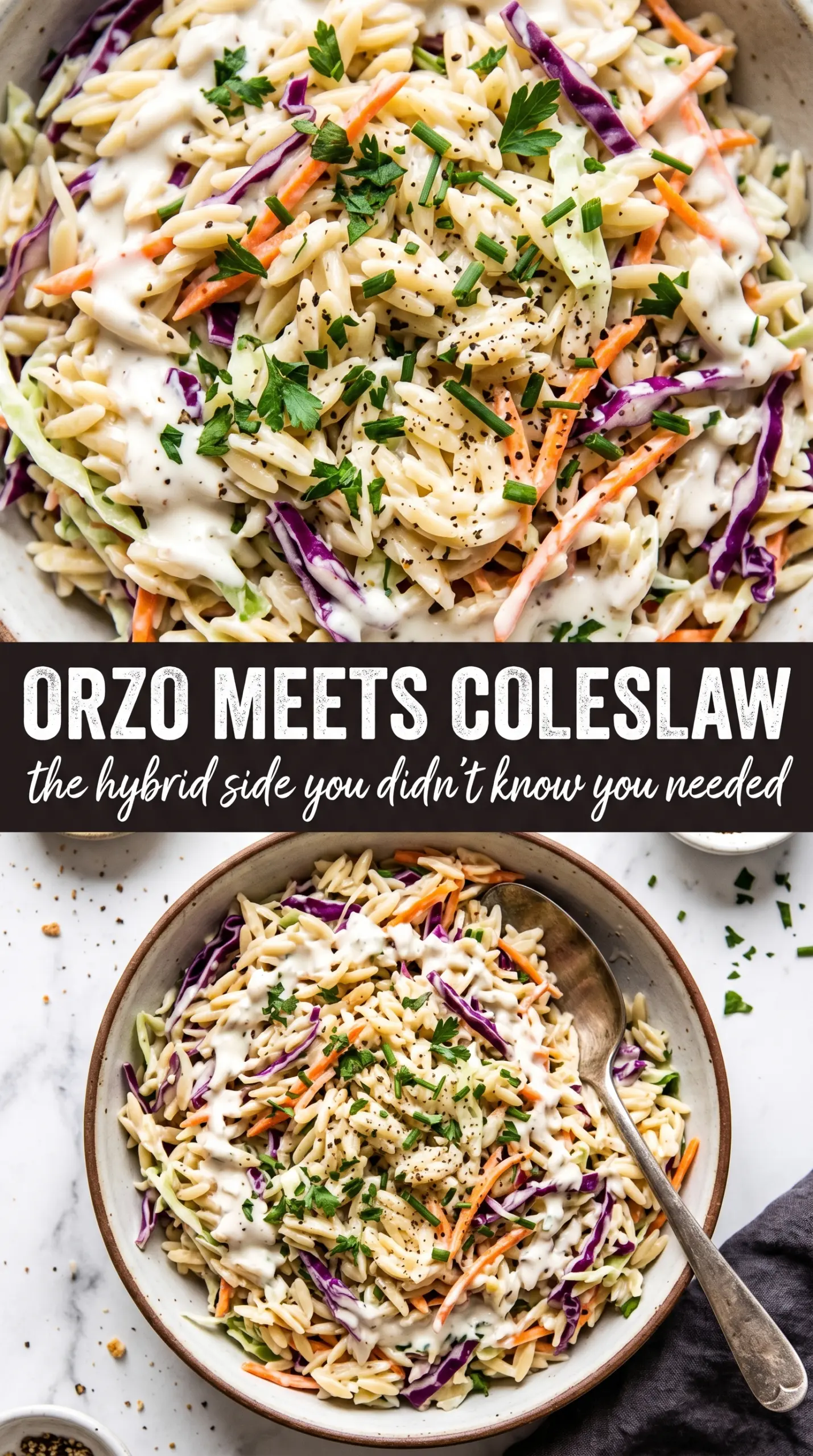
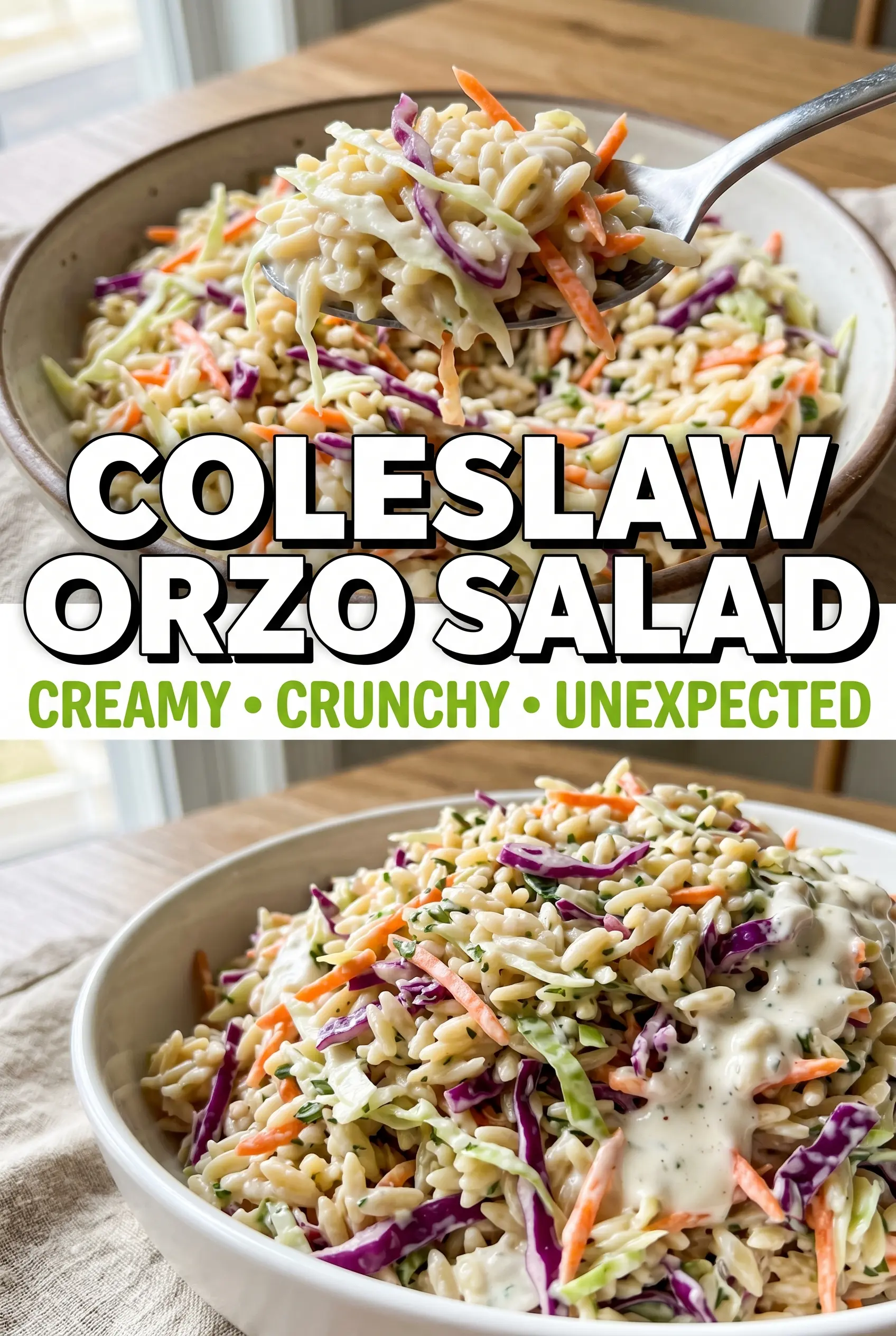
Coleslaw orzo salad is the kind of side dish that disappears fast because it gives you two textures at once: tender pasta and a fresh, crunchy slaw bite in every forkful. The dressing coats the orzo without turning the cabbage limp, so you still get that clean snap from the vegetables even after chilling. It eats like a pasta salad, but it feels lighter and sharper than the usual mayo-based bowl.
The trick is balancing the creamy dressing with enough vinegar and mustard to keep the whole salad awake. Orzo is small, which means it grabs dressing in a way bigger pasta shapes don’t, and that makes every bite taste seasoned instead of just sauced. I also like using both green and purple cabbage here because the mix gives you better texture and a little extra color without adding any extra work.
Below, you’ll find the timing that keeps the cabbage crisp-tender instead of soggy, plus a few smart swaps if you want to make it dairy-free or stretch it for a bigger crowd.
The dressing coated everything evenly and the cabbage stayed crunchy after chilling. I added the sunflower seeds right before serving and it gave the whole bowl the best little salty crunch.
Love the creamy crunch of this coleslaw orzo salad? Save it to Pinterest for potlucks, cookouts, and easy make-ahead lunches.
The Part That Keeps the Cabbage Crisp Instead of Watery
The biggest mistake with a creamy slaw pasta salad is tossing everything together while the orzo is still warm. Heat softens cabbage fast, and once that moisture starts moving, the dressing gets thin and the whole bowl turns loose. Cooling the pasta first gives the vinaigrette a chance to cling instead of sliding off.
The second detail that matters is seasoning in two directions: the dressing should taste a little stronger than you’d want on its own, and the salad should be checked again after chilling. Orzo absorbs salt and acid as it sits, so the first taste isn’t the final taste. If it seems flat after resting, it usually needs a pinch more salt or a small splash of vinegar, not more mayonnaise.
What Each Ingredient Is Actually Doing Here
- Orzo — This is the bridge between pasta salad and coleslaw. Its small shape traps the dressing in all the right places, but it needs to be cooked just to tender so it doesn’t turn mushy after chilling. Rinse and cool it well before mixing so it doesn’t warm the vegetables.
- Green and purple cabbage — This is the crunch and structure of the salad. Freshly shredded cabbage holds up better than bagged shreds that have been sitting too long, though pre-shredded cabbage is fine if it still smells clean and crisp. The purple cabbage is mostly for color, but it also brings a slightly firmer bite.
- Mayonnaise — This gives the dressing its body and helps the vinegar cling to the pasta and vegetables. Use a mayo you like the taste of, because there isn’t much here to hide behind. If you want a lighter version, half mayo and half plain Greek yogurt works, but the dressing will be tangier and less silky.
- Apple cider vinegar, Dijon, and honey — These three keep the salad from tasting heavy. The vinegar sharpens the cabbage, the Dijon steadies the dressing, and the honey rounds off the edges so it doesn’t taste harsh. If your dressing tastes flat, it’s almost always missing acid.
- Celery seed — This is the ingredient that makes the salad taste like coleslaw instead of just creamy pasta with vegetables. It has a distinct savory note that you can’t fake with regular celery. Don’t skip it unless you have to.
- Sunflower seeds or sliced almonds — Add these at the end, not ahead of time. They bring the last layer of crunch and keep the salad from feeling too soft. If you’re making this for guests with nut allergies, sunflower seeds are the safer pick and still give you that finishing texture.
How to Assemble It So the Dressing Clings to Every Bite
Cooking and cooling the orzo
Cook the orzo in salted water until it’s just tender, then drain it well and cool it completely. If it sits warm in the bowl, it starts softening the cabbage before the dressing has a chance to do its job. A quick rinse under cold water helps stop the cooking, but drain it thoroughly after so the salad doesn’t turn watery.
Whisking the dressing until it tastes a little sharp
Mix the mayonnaise, vinegar, honey, Dijon, celery seed, salt, and pepper until the dressing is smooth and glossy. Taste it now, before it touches the vegetables. It should seem slightly bolder than you’d expect, because the cabbage and orzo will mellow it once everything chills together.
Bringing the salad together without crushing the texture
Add the cooled orzo, cabbage, carrots, celery, and green onions to a large bowl and pour the dressing over the top. Toss with a big spoon or spatula until every piece looks lightly coated, not buried. If the salad looks dry at first, keep folding; the dressing will settle in as the orzo and cabbage absorb it.
Chilling and finishing for the best bite
Refrigerate the salad for at least 30 minutes before serving. That rest gives the cabbage time to soften just enough and the flavors time to come together. Add the sunflower seeds or almonds right before serving so they stay crisp instead of soaking up the dressing.
How to Adapt This for Different Tables and Diets
Make it dairy-free without changing the texture
This recipe is already dairy-free as written, which makes it easy to bring to mixed crowds. Just double-check your mayonnaise if you use a specialty brand, since a few versions sneak in dairy-based ingredients. The salad keeps its creamy texture without any swap at all.
Swap the mayo for Greek yogurt if you want a tangier bowl
Use half mayonnaise and half plain Greek yogurt for a lighter dressing with more bite. The salad will taste brighter and less plush, so keep the honey in and season carefully with salt. This swap works best when the salad will be eaten the same day.
Turn it into a fuller lunch with protein
Fold in chopped rotisserie chicken, diced ham, or chickpeas if you want this to eat like a main dish. Chicken keeps the same creamy profile, ham adds salt, and chickpeas make it vegetarian while giving the salad more heft. Add protein after tossing the vegetables so it doesn’t break apart.
Storage and Reheating
- Refrigerator: Keep in an airtight container for up to 3 days. The cabbage softens a little as it sits, but the salad stays tasty and crunchy enough for leftovers.
- Freezer: I don’t recommend freezing this one. Mayonnaise and cabbage both change texture in the freezer, and the salad comes back watery and broken.
- Reheating: Don’t reheat it. Serve it cold straight from the fridge, and if it looks a little tight after sitting, stir in a spoonful of mayo or a splash of vinegar to loosen it back up.
Answers to the Questions Worth Asking
Coleslaw Orzo Salad
Ingredients
Equipment
Method
- Whisk mayonnaise, apple cider vinegar, honey, Dijon mustard, celery seed, salt, and pepper until smooth, ensuring no streaks remain.
- Set the vinaigrette aside so it’s ready to coat the orzo and cabbage.
- Combine cooled orzo pasta, green cabbage, purple cabbage, carrots, celery, and green onions in a large bowl.
- Pour the creamy vinaigrette over the orzo slaw and toss until everything is evenly coated, with cabbage and carrot shreds glossy from the dressing.
- Taste and adjust vinegar, honey, or salt to balance tangy and sweet notes to your preference.
- Refrigerate for at least 30 minutes so the cabbage softens slightly and the flavors meld.
- Top with sunflower seeds or sliced almonds just before serving for a crunchy finish.