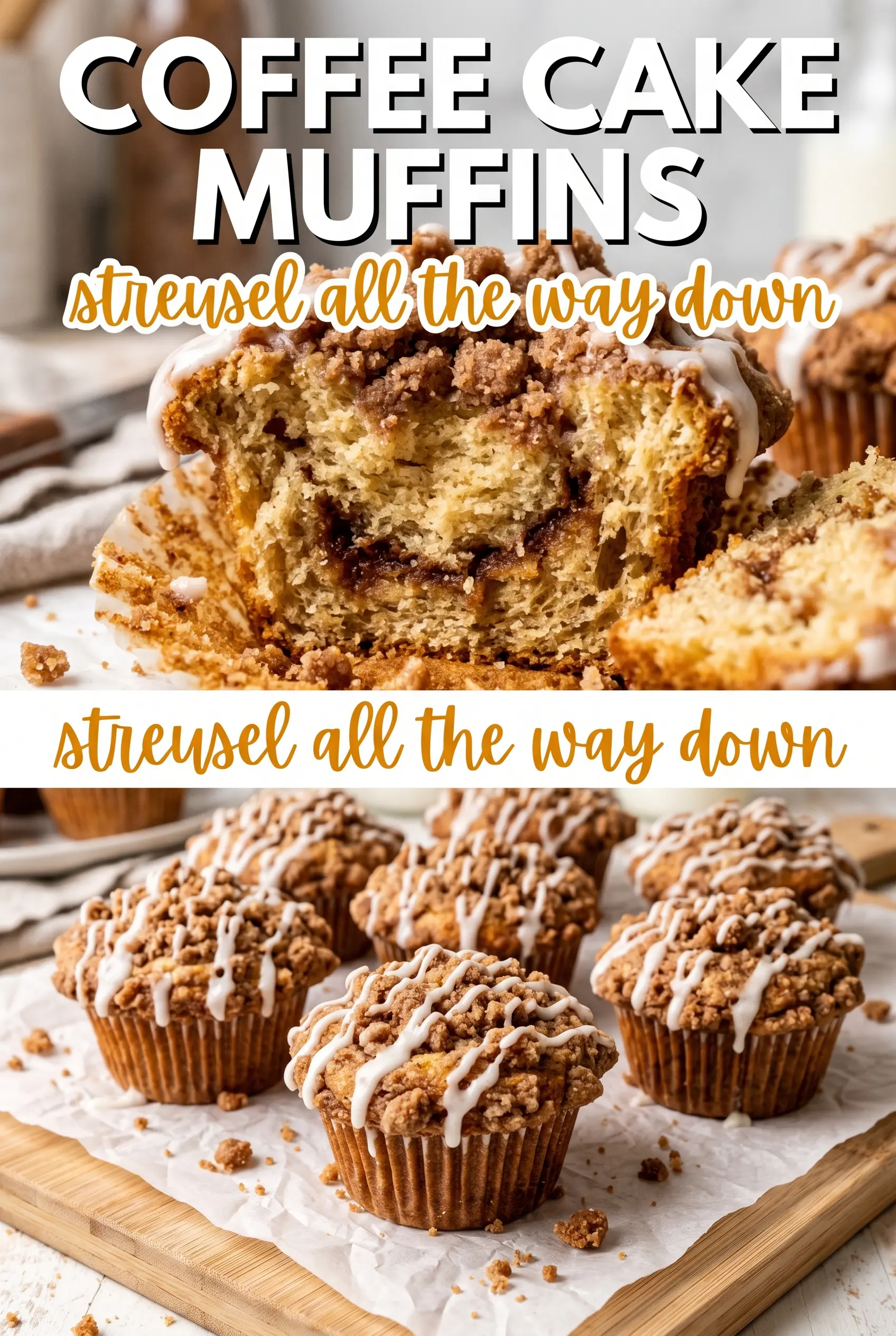
Bakery-height coffee cake muffins earn their spot fast when the top bakes into a thick cinnamon streusel crown and the center stays tender with a little ribbon of brown sugar running through it. The first bite gives you crunch, soft crumb, and that warm cinnamon hit that makes these feel a lot more special than a standard muffin.
The trick is in the balance. Sour cream brings the kind of moisture that keeps the crumb plush, while the oil keeps it tender even after the muffins cool. The streusel needs cold butter cut in until it looks sandy with pea-size crumbs, and the batter should be mixed just enough to come together. Overmixing turns the crumb tough, and warm butter in the topping melts into a paste instead of staying craggy and crisp.
Below, I’ll walk through the small details that keep the muffins domed, the swirl from disappearing, and the topping from sinking. There’s also a couple of smart swaps if you need to adjust the dairy or make them ahead.
The streusel stayed crumbly and the muffins baked up with that tall bakery dome I always hope for. The cinnamon swirl in the middle was the best part.
Like these coffee cake muffins? Save the bakery-style streusel crown and cinnamon swirl for your next breakfast bake.
The Reason the Streusel Stays Crumbly Instead of Melting In
Streusel fails for one simple reason: the butter got too warm. Once that happens, the topping turns pasty in the bowl and bakes into a smooth layer instead of a crisp, craggy crown. Cold butter cut into the flour-sugar mixture keeps little pockets of fat in place, and those pockets steam as the muffins bake, which is what gives you that sandy, crunchy finish.
The other thing that matters is the order. Mix the streusel first and put it aside while you make the batter. If it sits in a warm kitchen after the butter has already started softening, you lose the texture before it even hits the oven. I like mine to look like damp crumbs with a few larger pieces still hanging on.
What Each Ingredient Is Actually Doing in This Baked Good

- Sugar (the sweetness and structure) — Sugar tenderizes baked goods and creams with butter to create air. Don’t reduce too much.
- Butter (the richness and crumb) — Proper creaming adds air and creates tender texture. Use room temperature butter.
- Eggs (the binder and lift) — These create structure and help baked goods rise. Beat eggs in gradually for volume.
- Flour (the structure base) — Don’t overmix or the baked good becomes tough. Mix just until combined.
- Leavening (baking powder or soda) — This creates rise and light crumb. Too much makes it taste bitter and dome-shaped.
- Flavoring (vanilla, spices, chocolate, fruit) — These define the personality. Use quality flavorings.
- Liquid (milk or other) — This hydrates the flour and carries flavors. Too much makes it dense; too little makes it dry.
- Final finish (glaze, frosting, or topping) — This adds moisture, flavor, and visual appeal. Don’t skip it.
What the Sour Cream and Oil Are Doing in These Muffins
- Sour cream — This is what gives the crumb its plush, bakery-style texture. Plain Greek yogurt works in a pinch, but it’s a little tangier and a touch thicker, so the crumb can bake up slightly tighter.
- Vegetable oil — Oil keeps the muffins soft even after they cool. Melted butter can work, but the texture shifts from tender to more cake-like and you lose that stay-moist quality.
- Brown sugar — This matters most in the swirl and streusel, where you want a deeper, caramel note instead of plain sweetness. Light or dark brown sugar both work; dark brown sugar gives a stronger molasses flavor.
- Cinnamon — There’s cinnamon in every layer for a reason. It needs to be in the batter, the swirl, and the topping so the muffin tastes like coffee cake all the way through instead of just on top.
How to Build the Batter So the Tops Rise High and the Centers Stay Tender
Mix the Streusel First
Combine the flour, brown sugar, and cinnamon, then cut in the cold butter until the mixture looks like coarse crumbs with a few pea-size bits. Those larger pieces are what bake into the best crunchy topping. If the butter smears into the flour, stop and chill the bowl for a few minutes before going on.
Whisk the Dry Ingredients Separately
Stir the flour, baking powder, baking soda, salt, and cinnamon together before you add any wet ingredients. This keeps the leavening and spice evenly distributed, so you don’t get one muffin that tastes flat or another with a pocket of bitter baking soda. A quick whisk is enough; you’re not trying to aerate it.
Bring the Batter Together Without Beating It
In the second bowl, whisk the sugar, eggs, sour cream, milk, oil, and vanilla until smooth, then fold that mixture into the dry ingredients. Stop as soon as the last streaks of flour disappear. If you keep stirring, the muffins bake up dense and tunneled instead of soft and domed.
Layer the Swirl and Streusel in the Tin
Fill each liner about one-third full, add a pinch of the cinnamon-sugar swirl, then cover with more batter until each cup is about two-thirds full. Sprinkle the streusel generously over the top and press lightly so it clings without sinking. That layering keeps the swirl visible in the middle instead of dissolving into the batter.
Bake Until the Tops Spring Back
Bake at 375°F until the tops are golden and the centers spring back when touched, usually 20 to 22 minutes. A toothpick should come out with a few moist crumbs, not wet batter. If the streusel is browning too fast before the centers are done, tent the pan loosely with foil for the last few minutes.
How to Adapt These Muffins Without Losing the Coffee Cake Feel
Dairy-Free Version
Use a thick unsweetened dairy-free yogurt in place of the sour cream and an unsweetened non-dairy milk for the milk. The texture stays tender, though the crumb will be a little less rich. Keep the oil in place, since that’s what helps the muffins stay soft.
Gluten-Free Swap
A good 1:1 gluten-free baking blend can replace the all-purpose flour in both the muffins and the streusel. The muffins may bake up a little more delicate, so let them cool for at least 10 minutes before moving them. Don’t use a single-ingredient flour like almond flour here; it won’t give the same structure.
Make Them Ahead for Busy Mornings
Bake the muffins the day before and keep them covered at room temperature once fully cooled. They hold onto their texture better than most muffins because of the sour cream and oil, and the streusel stays crisp enough for the next day. Warm them briefly before serving if you want the center soft again.
Storage and Reheating
- Refrigerator: Store in an airtight container for up to 5 days. The streusel softens a little, but the crumb stays moist.
- Freezer: These freeze well. Wrap each muffin tightly and freeze for up to 2 months. Thaw at room temperature while still wrapped so the topping doesn’t get soggy from condensation.
- Reheating: Warm in a 300°F oven for 6 to 8 minutes or microwave for 10 to 15 seconds. The common mistake is blasting them too long, which makes the crumb tough and the streusel chewy.
Answers to the Questions Worth Asking
Coffee Cake Muffins
Ingredients
Equipment
Method
- Preheat the oven to 375°F and line a muffin tin with paper liners, so the batter goes in right away.
- Mix all-purpose flour, brown sugar, and cinnamon, then cut in cold cubed butter until the mixture looks crumbly and clumps slightly.
- Mix brown sugar and cinnamon together until evenly combined into a thick cinnamon-sugar blend.
- Whisk all-purpose flour, baking powder, baking soda, salt, and cinnamon in a bowl to distribute the leaveners and spices evenly.
- Beat sugar, eggs, sour cream, milk, vegetable oil, and vanilla extract in another bowl until smooth, then fold into the flour mixture until just combined.
- Fill each muffin cup to about 1/3 full, add a pinch of the cinnamon swirl in the center, then fill to about 2/3 with more batter.
- Sprinkle streusel over each muffin, then bake at 375°F for 20–22 minutes until golden and domed.