Coconut curry pumpkin soup comes out silky, savory, and deeply comforting, with enough brightness to keep the pumpkin from tasting flat. The coconut milk gives it body, the curry paste brings warmth and color, and the lime at the end wakes everything up so the bowl tastes balanced instead of heavy. It’s the kind of soup that feels polished enough for company, but it still comes together fast enough for an ordinary night.
What makes this version work is the order. The onion softens first, then the garlic, ginger, and curry paste get a minute in the oil so the spices bloom before the liquid goes in. That short step gives the soup a fuller, rounder taste than if everything were dumped into the pot at once. I also keep the soup smooth and finish it with lime juice and a little maple syrup, which sharpens the squash flavor and keeps the curry from tasting one-note.
Below, I’ve included the few details that matter most: how to keep the curry flavor from getting dull, what to use if you only have canned pumpkin, and how to adjust the heat without throwing off the balance.
The soup turned out ultra smooth and the curry paste flavor stayed bright after simmering. I loved that the lime and maple were added at the end — it tasted balanced, not sweet.
Save this coconut curry pumpkin soup for a silky, curry-bright bowl with lime, coconut, and toasted pumpkin seeds.
The Reason This Soup Stays Bright Instead of Flat
Pumpkin soup can go dull fast if the curry paste never gets a chance to toast. The quick sauté with onion, ginger, garlic, and curry paste pulls the raw edge out of the aromatics and pushes the soup toward a deeper, more layered flavor before the pumpkin puree ever hits the pot. That matters because pumpkin itself is mild; it needs help, not just salt.
The other thing that saves this soup is the finish. Lime juice cuts through the coconut milk, and a little maple syrup rounds out the curry without making the bowl taste sweet. If the soup tastes heavy, it usually means the acid is missing or was added too early and cooked off.
- Red curry paste — This is the main flavor engine. Brands vary a lot, so start with the amount listed and add more only after the soup simmers, since heat builds once the coconut milk and pumpkin mellow it out.
- Coconut milk — Full-fat coconut milk gives the soup its silky body. Light coconut milk works in a pinch, but the soup will be thinner and less plush.
- Pumpkin puree — Canned puree is the easiest path and gives a smooth, reliable texture. If you use roasted pumpkin, blend it well before adding it so you don’t end up with stringy bits.
- Fish sauce or soy sauce — This adds the savory backbone the soup needs. Soy sauce keeps it vegan, and either one should be added at the end so you can adjust the salt more precisely.
What Each Ingredient Is Actually Doing in This Recipe

- Primary ingredient (the star) — Quality matters most. Choose the best you can find.
- Cooking medium (oil, butter, or broth) — This carries flavors and prevents dryness.
- Seasonings (salt, pepper, spices, herbs) — Layer flavors so nothing overpowers. Build depth gradually.
- Aromatics (garlic, onion, herbs) — Cook with fat to bloom flavors. Become the foundation.
- Supporting ingredients — Complement the main ingredient without overpowering it.
- Sauce or liquid (if applicable) — Brings flavors together. Balance richness with acid.
- Acid (lemon, vinegar, wine, or other) — Brightens and prevents flat-tasting results.
- Final finish (garnish, glaze, or sauce) — Prevents one-dimensional taste and adds visual appeal.
How to Build the Soup So It Turns Silky, Not Grainy
Softening the Aromatics First
Start with the onion in coconut oil and cook it until it turns translucent and smells sweet, about 4 minutes. That base keeps the finished soup from tasting sharp. Add the garlic, ginger, and curry paste after the onion has softened, not before, or the garlic can scorch and the curry paste won’t bloom evenly.
Letting the Curry Paste Wake Up
Cook the curry paste for about 2 minutes in the oil with the aromatics. You want it fragrant and darker in color, not stuck or dry. If the pan starts looking tight, lower the heat and stir more often; curry paste needs contact with fat, not aggressive heat, to open up.
Blending for a Smooth Finish
Once the pumpkin, coconut milk, and broth have simmered together, blend until completely smooth with an immersion blender. Keep the blender head fully submerged so the hot soup doesn’t splash. If you don’t blend long enough, the texture will stay a little coarse, which is fine for rustic soup but not for the velvety bowl this recipe is going for.
Balancing the Last Minute Seasoning
Stir in the lime juice, maple syrup, and fish sauce after the heat comes down a little. This is where the soup comes alive. Taste it after those additions, then add salt only if it still feels muted, because the broth and fish sauce usually carry more salt than people expect.
What to Change When You’re Missing One Key Ingredient
Make It Fully Vegan
Use soy sauce instead of fish sauce and keep the coconut milk full-fat for the best body. The result is still savory and balanced, but it loses that tiny briny depth fish sauce brings, so a little extra salt or a touch more curry paste may help.
Use Roasted Pumpkin for a Deeper, Less Sweet Soup
Roasted pumpkin gives the soup a more earthy, caramelized flavor than canned puree. Blend it thoroughly before adding it to the pot, and expect a slightly thicker texture, which you can loosen with a splash more broth.
Dial the Heat Up or Down
Use less curry paste for a gentler soup or add a small extra spoonful at the end for more heat. The best time to adjust spice is after blending, because coconut milk softens the burn and gives you a truer read on the final flavor.
Storage and Reheating
- Refrigerator: Store for up to 4 days. It thickens as it chills, so expect a denser texture the next day.
- Freezer: Freezes well for up to 3 months. Cool it completely first, then freeze in airtight containers with a little room at the top.
- Reheating: Warm it slowly on the stove over low to medium-low heat, stirring often. Don’t boil it hard or the coconut milk can separate and the texture turns oily.
Answers to the Questions Worth Asking
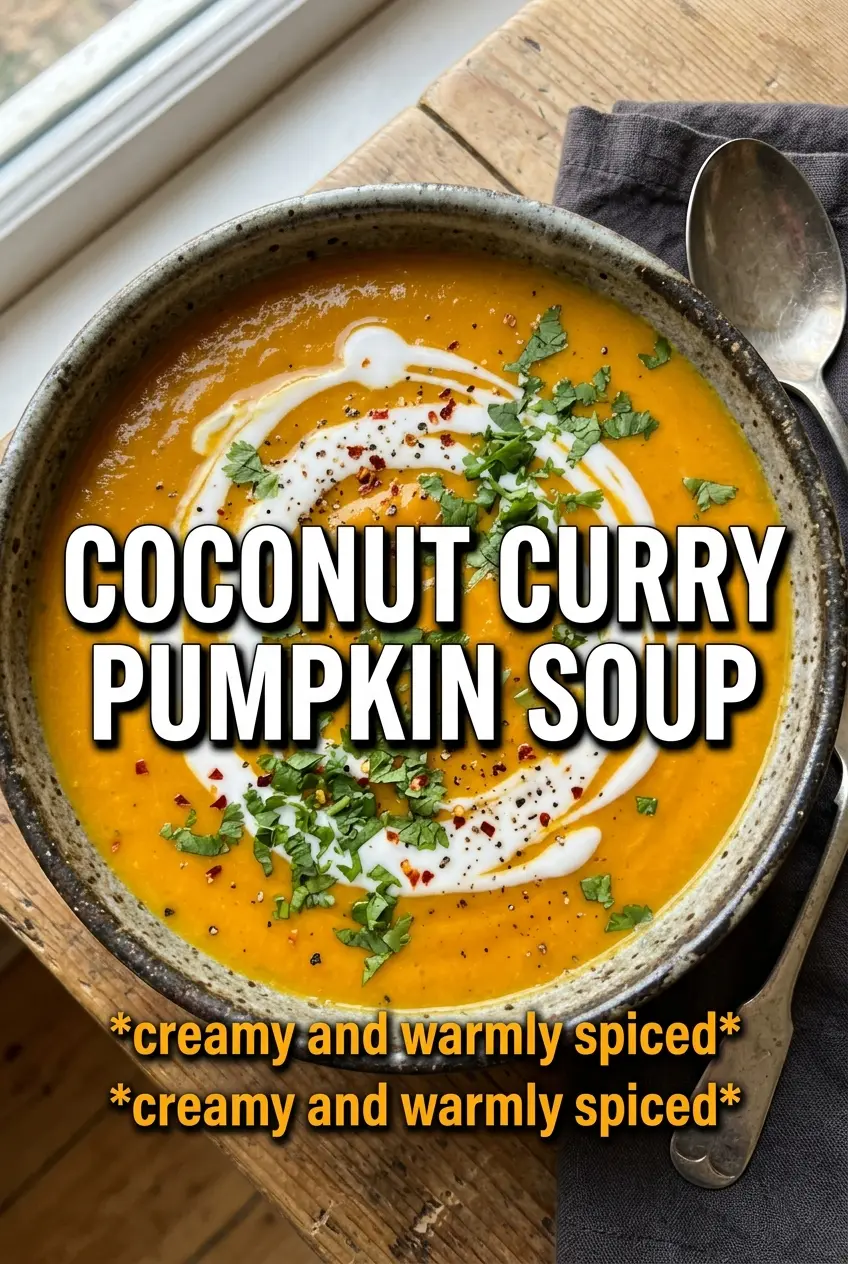
Coconut Curry Pumpkin Soup
Ingredients
Equipment
Method
- Heat the coconut oil in a large pot over medium heat, then sauté the onion for 4 minutes, until softened and fragrant.
- Add the garlic, ginger, and red curry paste to the pot and cook for 2 minutes, stirring, until the paste darkens slightly and smells toasted.
- Add the pumpkin puree, coconut milk, and vegetable broth, then bring to a simmer over medium-high heat.
- Reduce to a steady simmer and cook for 15 minutes, stirring occasionally, until the flavors meld.
- Blend the soup with an immersion blender until completely smooth, then briefly return it to low heat if needed to stay hot.
- Stir in the lime juice, maple syrup (or brown sugar), and fish sauce (or soy sauce), then season with salt to taste.
- Ladle the soup into bowls and top with a coconut cream swirl, pumpkin seeds, red chili slices, and fresh cilantro.