Classic German goulash lands at the table with tender beef, a deep paprika-onion gravy, and the kind of slow-cooked richness that clings to spaetzle instead of sliding off it. The onions don’t disappear here. They melt down into the sauce and give it body, sweetness, and that dark, almost jammy backbone that makes each spoonful taste finished.
What makes this version work is restraint and patience. Sweet paprika brings the round, earthy base, while a smaller amount of hot paprika keeps the stew from tasting flat. The vinegar goes in early enough to sharpen the sauce without turning it sour, and the flour slurry at the end thickens the broth into a gravy that coats the beef instead of turning gluey.
Below, I’ll show you how to brown the beef without crowding the pan, how to cook the onions until they’re properly golden, and how to avoid the most common mistake with paprika-based stews: scorching the spices before the liquid goes in.
The onions broke down into the gravy just like you said, and the beef was fall-apart tender after the full simmer. Serving it over spaetzle made the sauce taste even richer.
Save this German goulash for the nights when you want a paprika-rich beef stew with a thick onion gravy.
The Reason the Paprika Waits Until the Pan Is Off the Heat
Paprika burns fast. Once it scorches, the whole pot tastes bitter and dusty, and there is no fixing it later. That’s why the spices go in after the onions have softened and right before the liquid, so they bloom in the oil and onion juices for just a minute without taking on harsh color.
The other thing that makes this goulash different from a plain beef stew is the onion load. Two pounds sounds excessive until you see what happens after a long cook: the onions melt into the broth and give you that dark, velvety gravy without needing cream or a heavy flour base from the start. Brown the beef first, and don’t rush the onions. Those two moves are where the flavor comes from.
What the Beef, Onions, and Paprika Each Need to Do Here
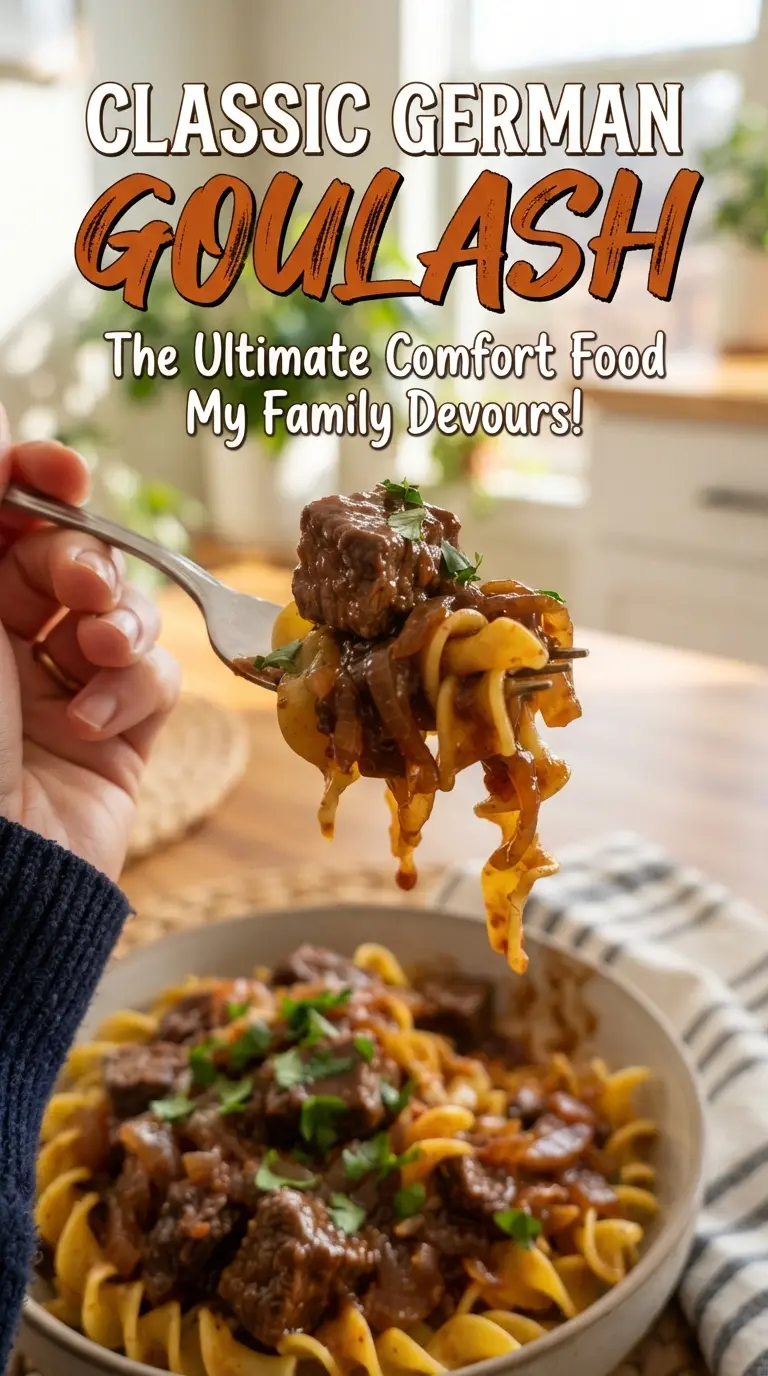
- Beef chuck — This cut needs the long simmer. It has enough connective tissue to turn silky instead of dry, which is why stew meat is a weaker choice if it comes from leaner trimmings. Cut it into large cubes so it holds together through the cook.
- Onions — They are the body of the sauce. Yellow onions work best because they soften and sweeten without losing all backbone. If you try to shorten the onion time, the stew tastes thinner and sharper.
- Sweet paprika and hot paprika — Sweet paprika gives the stew its color and roundness; hot paprika adds lift. If you only have smoked paprika, use a small amount mixed with sweet paprika, but don’t replace all of it or the flavor moves too far from classic German goulash.
- Tomato paste and vinegar — Tomato paste deepens the gravy, and vinegar keeps it from tasting heavy. Stir both in long enough to cook off the raw edge before the broth goes in, or the sauce can taste tinny.
- Flour slurry — This thickens the final gravy without clumping. Mix it smooth before adding it, then let the pot simmer long enough for the starch taste to cook out and the sauce to turn glossy.
How to Build the Gravy Without Breaking the Stew
Browning the Beef First
Season the beef and brown it in batches in hot oil. You want a deep brown crust on the outside and enough space in the pan that the meat sears instead of steams. If the pan looks wet or crowded, the beef will gray out and the finished goulash will taste flatter. Take your time here, because those browned bits on the bottom are the base of the gravy.
Cooking the Onions Down to Sweetness
Add the onions to the same pot and cook them until they are soft, golden, and starting to collapse, which takes about 15 to 20 minutes. Stir often and lower the heat if they threaten to catch, because you want color, not bitterness. Once the garlic goes in, it only needs about a minute before the paprika follows. That short window keeps the garlic from burning and the paprika from turning harsh.
Blooming the Paprika and Finishing the Simmer
Stir in the sweet paprika, hot paprika, caraway, and tomato paste, then move right into the vinegar, broth, marjoram, bay leaves, and beef. The pot should come up to a steady, lazy simmer, not a hard boil. Cover it and cook until the beef is fork-tender, then stir in the flour slurry and simmer about 10 minutes more until the gravy turns thick and glossy. Pull the bay leaves before serving and spoon it over buttered spaetzle or egg noodles.
How to Adapt This Pot of Goulash for Different Tables
Gluten-Free Version
Skip the all-purpose flour slurry and thicken the finished stew with a cornstarch slurry instead. Mix 1 tablespoon cornstarch with 1 1/2 tablespoons cold water, stir it in near the end, and simmer until the gravy thickens. Serve it with gluten-free noodles, rice, or mashed potatoes.
A Little Richer and Creamier
Stir in a spoonful of sour cream at the table instead of cooking it into the pot. That keeps the sauce smooth and gives each bowl a tangy finish without risking curdling. If you add it directly to the simmering stew, it can split and turn grainy.
Lighter Beef Option
If chuck isn’t available, use another well-marbled braising cut like boneless short rib. Lean beef won’t give you the same silky texture after a long simmer, so the stew will taste firmer and a little less luxurious. Keep the cook time long enough for the meat to relax and soften.
Storage and Reheating
- Refrigerator: Store in an airtight container for up to 4 days. The gravy thickens as it chills, and the flavor gets deeper by the next day.
- Freezer: It freezes well for up to 3 months. Cool completely, portion it into freezer-safe containers, and leave a little headspace so the sauce can expand.
- Reheating: Warm it gently on the stove over low heat with a splash of broth or water. Don’t boil it hard, or the beef can tighten up and the sauce can turn too thick before the center is hot.
Answers to the Questions Worth Asking
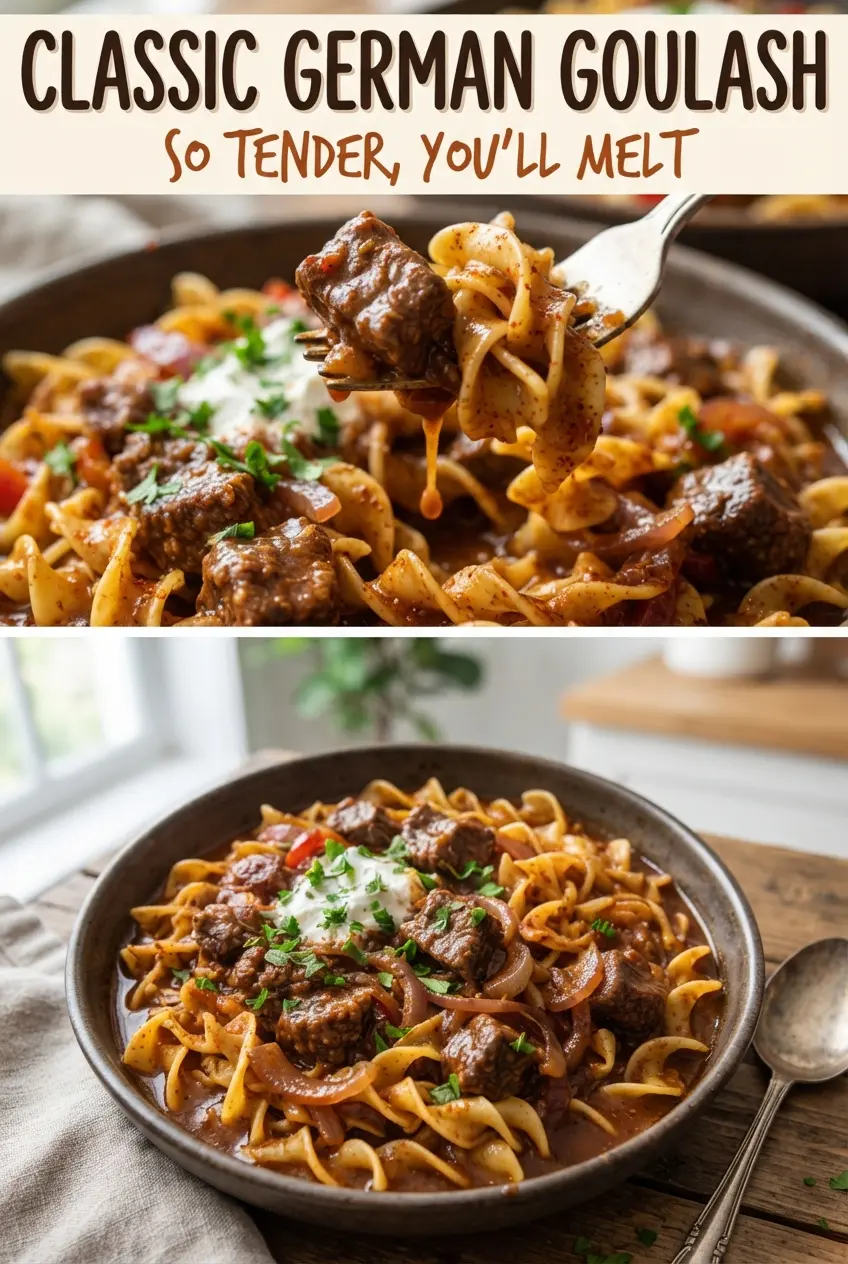
Classic German Goulash
Ingredients
Equipment
Method
- Season the beef chuck cubes with salt and black pepper. Heat the vegetable oil in a Dutch oven and brown the beef in batches.
- Brown the beef until deeply browned on the outside, then transfer to a plate. Avoid overcrowding so the cubes sear instead of steam.
- Add the sliced onions to the same Dutch oven and cook for 15-20 minutes, stirring until soft and golden. Add the minced garlic and cook for 1 minute, just until fragrant.
- Stir in the sweet paprika, hot paprika, caraway seeds, and tomato paste. Cook for 1 minute to bloom the spices.
- Pour in the red wine vinegar, beef broth, dried marjoram, and add the bay leaves, then return the browned beef to the pot. Cover the Dutch oven and bring to a gentle simmer, then simmer for 2 hours (bubbling but not boiling over).
- Check occasionally to keep the stew at a steady simmer and ensure the beef stays submerged. Look for the sauce to turn thick, dark, and paprika-rich around the beef cubes.
- Stir the flour mixed with water into a slurry, then pour it into the stew while stirring. Simmer for 10 minutes until the gravy thickens to a spoon-coating consistency.
- Remove the bay leaves and serve the goulash over buttered spaetzle or egg noodles. The final cue is a thick dark gravy that clings to the noodles and beef cubes.