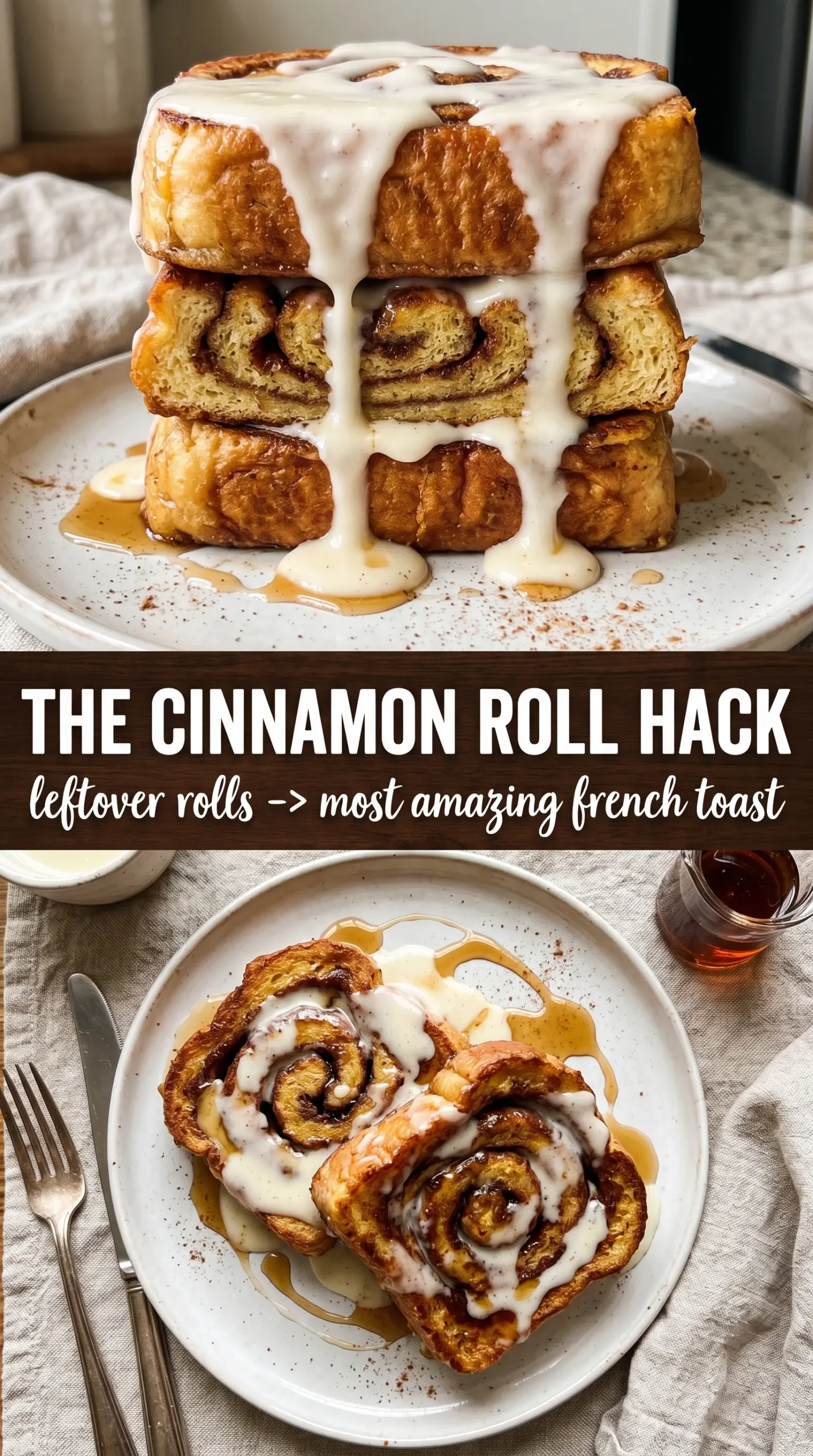
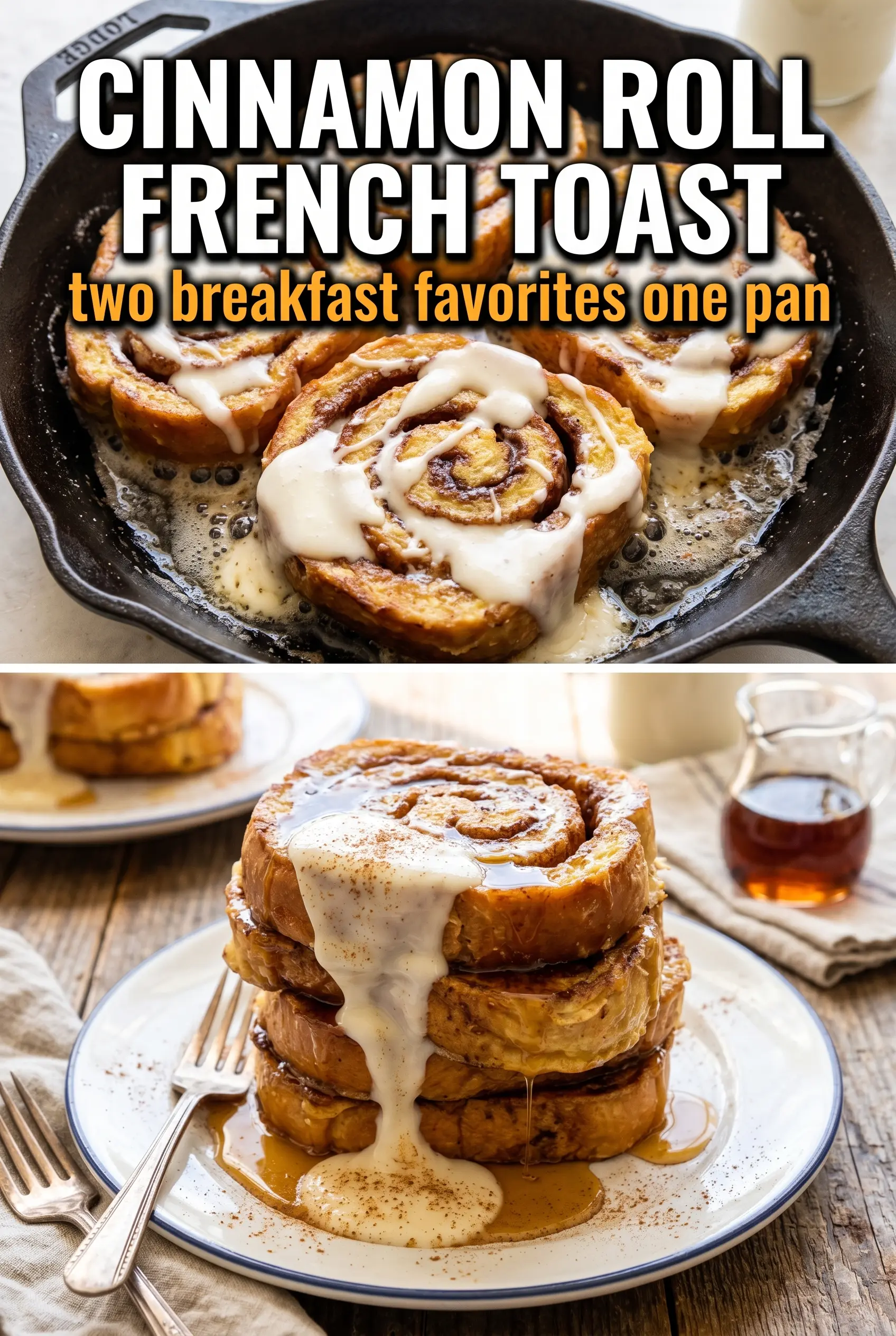
Thick cinnamon roll slices turn into something halfway between French toast and bakery pastry: crisp at the edges, custardy in the middle, and coated with enough cinnamon sugar to taste like the best part of a weekend brunch plate. The icing melts into the warm crevices and settles into a glossy glaze that makes every bite feel rich without needing much else on the table.
What makes this version work is the balance. The egg mixture is thin enough to soak into the cut sides of the cinnamon rolls without turning them soggy, and the slices are cooked long enough to caramelize before the sugar starts to burn. Using large refrigerated rolls matters here because they hold their shape better after slicing, and the reserved icing gives you that classic cinnamon roll finish without having to make a separate glaze.
You’ll find the exact timing that keeps the centers tender, a quick way to keep the slices from breaking in the skillet, and a few smart variations if you want to make this breakfast a little more your own.
The slices held together beautifully, and the edges got this caramelized crust while the middle stayed soft. I was worried they’d fall apart in the pan, but they flipped cleanly and the cream cheese icing melted right into the swirls.
Save these caramelized cinnamon roll French toast slices for a brunch that tastes like bakery rolls with a crisp, custardy finish.
The Reason These Slices Stay Custardy Instead of Turning Mushy
The difference here is surface area. Once you slice the cinnamon rolls into rounds, the egg mixture can coat the edges and seep into the swirl without flooding the center, which gives you a soft middle and a browned crust at the same time. If you leave the rolls whole, the outside overcooks before the inside has a chance to absorb anything.
The other thing that matters is heat. Medium heat lets the butter brown gently and gives the sugar in the dough time to caramelize. If the pan is too hot, the outside darkens before the egg sets, and you end up with a scorched shell around a doughy center.
- Slice size matters — Three rounds per roll gives you enough structure to flip without the pieces collapsing. Thinner slices soak too fast and break.
- The soak is brief on purpose — Twenty to thirty seconds per side is enough. Longer than that and the dough gets heavy instead of custardy.
- Butter does two jobs — It keeps the slices from sticking and helps the cinnamon sugar on the dough caramelize into a crisp crust.
- The icing goes on warm, not hot — Drizzle it after cooking so it melts into the swirls instead of disappearing into the pan.
What Each Ingredient Is Actually Doing In This Dish
- Refrigerated cinnamon rolls — These are the base, the structure, and the built-in cinnamon sugar all in one. Large rolls hold together best after slicing, and the canned icing gives you the classic finish without extra work.
- Eggs — They set the custard coating and help the exterior brown. There isn’t a good shortcut here; the eggs are what turn the dough into French toast instead of just warmed pastry.
- Whole milk — This loosens the eggs enough for even dipping. You can swap in 2% milk in a pinch, but avoid heavier cream because it makes the coating too rich and slows browning.
- Vanilla and cinnamon — Vanilla rounds out the sweet dough, and the extra cinnamon pushes the flavor further than the rolls alone. If your rolls are already heavily spiced, keep the cinnamon light.
- Butter — Use real butter here. It gives the best caramelized edges and the right flavor in the pan. Neutral oil will cook the slices, but it won’t give you that bakery-style finish.
- Reserved icing and powdered sugar — The icing gives sheen and sweetness, while the powdered sugar adds the final snow-like finish right before serving. Dusting too early can dissolve into the glaze, so wait until the very end.
Getting the Swirl Set Before the Pan Gets Too Hot
Slicing the Rolls Cleanly
Cut each cinnamon roll into three rounds while it’s still cold from the can. A sharp knife keeps the spiral intact, and that matters because the swirl gives you both structure and those pretty caramelized ridges. If the dough starts stretching under the knife, wipe the blade clean and use a gentle sawing motion instead of pressing down.
Whisking the Custard
Beat the eggs, milk, vanilla, and cinnamon in a shallow dish until the mixture looks completely smooth and evenly colored. You don’t want streaks of egg white floating around because they cook unevenly and leave bland patches on the finished slices. A shallow dish makes dipping quick, which keeps the dough from over-softening.
Cooking to a Golden Edge
Melt the butter over medium heat, then lay in the slices with a little space between them. Cook until the first side is deep golden and releases easily, then flip and cook the other side until the center feels set when pressed lightly with a spatula. If the pan runs hot and the outsides brown too fast, pull it off the burner for a minute before continuing.
Finishing While the Slices Are Warm
Drizzle on the reserved icing right after the slices leave the pan so it melts into the swirls instead of sitting on top in a thick blob. A light dusting of powdered sugar gives the plate that bakery look, but don’t overdo it if the icing is already generous. These are best served right away while the edges are crisp and the center is still tender.
How to Adapt These Cinnamon Roll French Toast Slices Without Losing the Good Part
Make Them Extra Rich With Cream
Swap half the milk for half-and-half if you want a more custardy center and a slightly thicker coating. The tradeoff is a softer crust, so keep the heat steady and don’t soak the slices any longer than the recipe already calls for.
Dairy-Free Version That Still Browns Well
Use an unsweetened non-dairy milk like oat or almond milk and cook with a neutral oil or plant-based butter. You’ll lose a little of the classic buttery finish, but the cinnamon roll flavor still comes through, and oat milk gives the best browning of the non-dairy options.
Gluten-Free Shortcut
If you find gluten-free cinnamon rolls that can be sliced cleanly, they’ll work here, but they usually need a little less soaking time because they can get fragile fast. Keep the dip brief and lift each slice carefully with a spatula so the spiral doesn’t fall apart.
Storage and Reheating
- Refrigerator: Store leftovers in an airtight container for up to 2 days. The crust softens as it sits, but the flavor stays good.
- Freezer: These can be frozen, but the texture is never quite as crisp after thawing. Freeze the cooked slices in a single layer, then rewarm from frozen for the best shot at keeping the edges intact.
- Reheating: Warm them in a 325°F oven or toaster oven until heated through. Skip the microwave if you want any crust left; it turns the coating soft and can make the centers gummy.
Answers to the Questions Worth Asking
Cinnamon Roll French Toast
Ingredients
Equipment
Method
- Slice each cinnamon roll into 3 rounds from the can, keeping the swirl intact.
- Whisk eggs, whole milk, vanilla extract, and cinnamon together in a shallow dish until smooth.
- Dip each cinnamon roll slice in the egg mixture for 20–30 seconds per side, letting excess drip off.
- Melt butter in a skillet over medium heat, then place dipped slices in the pan in a single layer.
- Cook each slice for 2–3 minutes per side until golden and caramelized.
- Drizzle the reserved cream cheese icing over the warm slices.
- Dust with powdered sugar and serve immediately.