Creamy churro cheesecake hits the sweet spot between a classic baked cheesecake and the warm cinnamon-sugar bite people love in a churro. The crust stays crisp enough to give each slice some structure, while the filling bakes up dense, smooth, and just tangy enough to keep all that sweetness from turning flat. The chopped churros add little pockets of chew and crunch throughout, which makes every slice taste a little different in the best way.
The trick here is treating the cheesecake batter gently once the eggs go in. Overmixing adds too much air, and that’s how you end up with a puffed top that cracks as it cools. The dulce de leche swirl doesn’t need to be fancy; a loose ribbon through the middle is enough to leave caramel pockets without sinking straight to the bottom. Churro pieces can be fresh or store-bought, but if they’re very soft, dry them out for a few minutes so they hold their texture instead of melting into the filling.
Below you’ll find the small details that keep the filling smooth, the crust sturdy, and the finished slices clean enough to drizzle with chocolate at the table.
The cheesecake came out unbelievably creamy, and the churro pieces stayed chewy instead of disappearing into the filling. I chilled it overnight, and the dulce de leche swirl set up just enough to make every slice look bakery-style.
Save this churro cheesecake for the nights when you want a creamy baked dessert with cinnamon sugar, dulce de leche, and chocolate drizzle in every slice.
The Crust Needs a Short Bake Before the Filling Goes In
The biggest mistake with cheesecake crusts is treating them like a formality. This cinnamon sugar graham cracker base needs that 8-minute bake so the butter can set and the crumbs can firm up before the batter lands on top. Skip that step and the crust stays sandy underneath, which makes slices collapse instead of holding together cleanly.
Another thing worth knowing: the crust should be packed firmly, especially around the edges of the springform pan. A loose crust lifts and crumbles when you cut into the cheesecake. Press it down with the bottom of a measuring cup until it feels dense and even, then let it cool just enough to stop steaming before you add the filling.
What the Cream Cheese, Sour Cream, and Churros Each Bring to the Pan
Cream cheese is the backbone here. Use full-fat blocks, not tub cream cheese, because the tub version carries extra moisture and gives you a softer, less stable bake. It should be fully softened so it blends without lumps, but not warm enough to look oily.
Sour cream loosens the filling just enough to keep it lush instead of heavy. It also adds the gentle tang that keeps the dessert from tasting like straight sugar. Churro pieces are the texture payoff, and they matter most if they’re dry enough to stay distinct in the batter. Fresh churros work, but day-old or store-bought pieces hold up better because they don’t melt into the cheesecake as quickly. If you only have very soft churros, toast them briefly at low heat before chopping.
- Dulce de leche — This is the ribbon that gives the center those caramel pockets. Warm it just enough to loosen, then drizzle it in a loose swirl so it doesn’t all disappear into one layer.
- Cinnamon and nutmeg — Cinnamon does the obvious work, but the nutmeg keeps the filling from tasting one-note. Don’t overdo it; a small amount reads as warmth, not spice cake.
- Chocolate sauce — Add it after chilling. If it goes on warm, it runs too fast and blurs the clean slices.
Building the Batter Without Cracking the Top
Start with a Smooth Base
Beat the cream cheese and sugar until the mixture looks satiny and no little lumps cling to the bowl. Scrape down the sides often, because dry pockets of cream cheese hide there and show up later as grainy spots in the finished cheesecake. Once the sour cream, vanilla, cinnamon, and nutmeg go in, mix just until the batter looks uniform.
Add the Eggs One at a Time
This is the point where cheesecake either stays elegant or turns tough. Add each egg separately and mix on low speed only until it disappears. If the batter starts looking fluffy, you’ve gone too far and built in air that can puff, crack, and sink as it cools.
Layer the Filling and Swirl the Caramel
Fold in the chopped churros by hand so they stay in chunks instead of breaking apart. Pour in half the batter, drizzle on the dulce de leche, then top with the rest of the filling. A few gentle swirls are enough; if you stir too much, the caramel disappears into the batter and the center loses that layered look.
Bake Until the Middle Still Moves
Bake at 325°F until the edges look set and the center still gives a slight jiggle when you shake the pan. That wobble is what you want. The cheesecake keeps cooking from residual heat as it cools, and if you wait until the center is firm in the oven, it will end up dry after chilling.
Ways to Adjust This Without Losing the Churro Cheesecake Character
Gluten-Free Version with the Same Texture
Swap the graham cracker crumbs for a gluten-free cinnamon cookie crumb or certified gluten-free graham-style crumb. Keep the butter amount the same so the crust still packs firmly, and use gluten-free churros if you want the whole dessert to stay on track. The texture stays close, but the crumb may be a little more delicate when sliced.
Dulce de Leche to Caramel Sauce
If you don’t have dulce de leche, use a thick caramel sauce instead. It won’t have the same milkier depth, but it still gives you that sweet ribbon through the middle. Thin caramel sauces tend to sink, so choose one that pours slowly off the spoon.
Chocolate-Free Finish
If you want a cleaner cinnamon-forward dessert, skip the chocolate drizzle and finish the chilled cheesecake with a dusting of cinnamon sugar instead. You lose the contrast of the chocolate, but the churro flavor comes through more clearly and the top stays neat for a dessert platter.
Make-Ahead Storage That Actually Helps the Texture
Refrigerator: Store covered for up to 5 days. The texture tightens and gets cleaner after a full chill, so this dessert often slices better on day two. Freezer: Freeze whole or in slices, wrapped well, for up to 1 month; thaw in the refrigerator overnight so condensation doesn’t water down the top. Reheating: Don’t reheat the cheesecake itself. Serve it cold or let individual slices sit at room temperature for 15 to 20 minutes before plating so the filling softens slightly without losing structure.
Questions I Get Asked About This Recipe
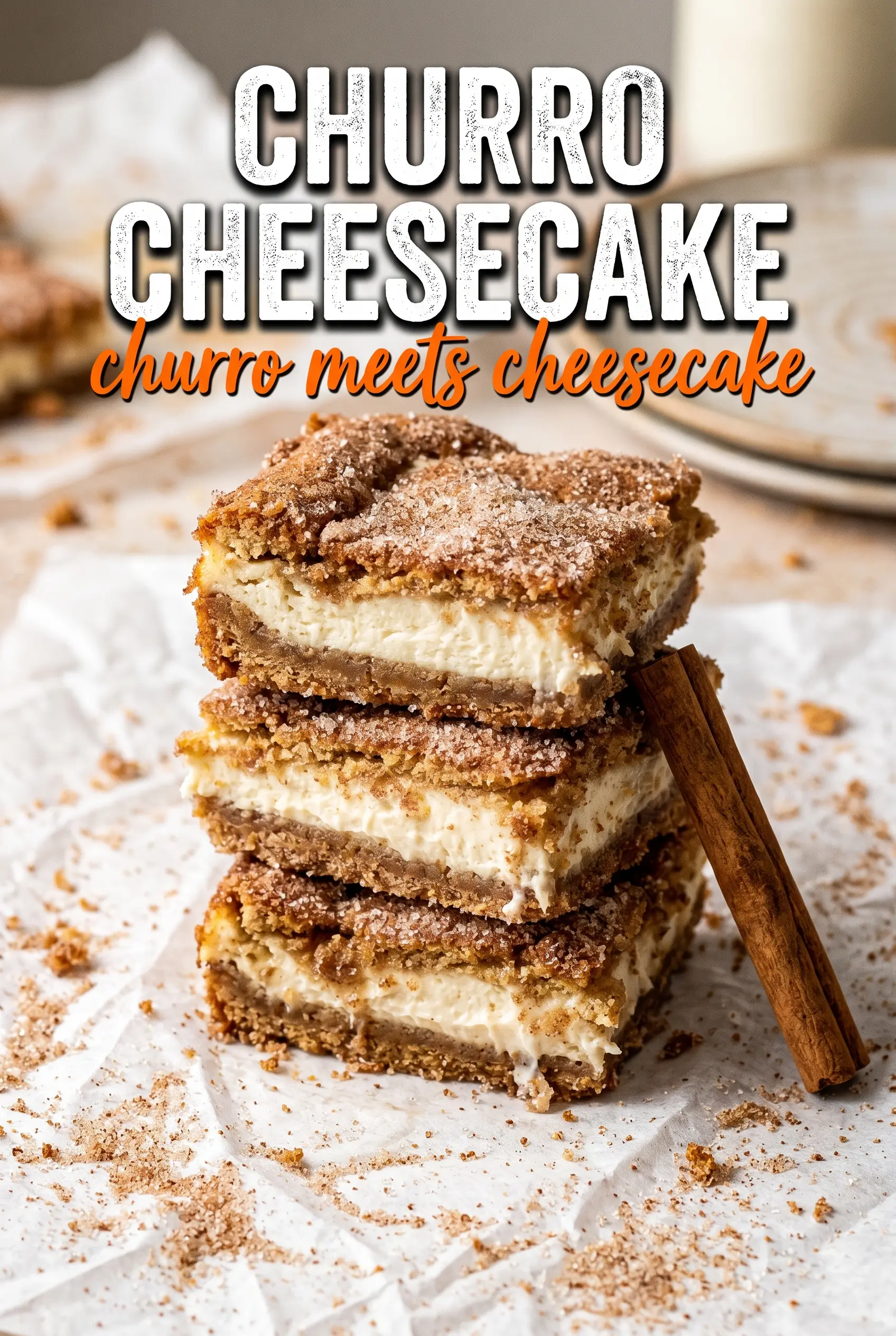
Churro Cheesecake
Ingredients
Equipment
Method
- Preheat the oven to 325°F. Mix cinnamon sugar graham cracker crumbs with melted butter until evenly coated, then press firmly into the bottom of a 9-inch springform pan.
- Bake the crust for 8 minutes. Let it cool slightly so it won’t melt the first layer of batter.
- Beat cream cheese and granulated sugar until smooth. Scrape the sides as needed for an even, creamy texture.
- Add sour cream, vanilla extract, cinnamon, and nutmeg to the mixer. Beat until combined and no streaks remain.
- Add eggs one at a time, beating on low speed after each addition. Stop when the batter looks uniform.
- Fold in chopped churros (fresh or store-bought). Mix just until distributed throughout the batter.
- Pour half the cheesecake batter over the crust. Spread it into an even layer.
- Drizzle dulce de leche over the batter in a swirl pattern. Keep the swirl visible before covering.
- Top with the remaining cheesecake batter. Smooth the surface so the center bakes evenly.
- Bake at 325°F for 40 to 50 minutes. The cheesecake should be set around the edges with the center still jigging slightly when gently shaken.
- Cool the cheesecake completely at room temperature. Avoid covering while it’s still warm.
- Refrigerate for at least 4 hours. Chill until firm enough to slice cleanly.
- Drizzle chocolate sauce before serving. Serve slices and watch for the creamy interior with chocolate on top.