Char siu should come out sticky, glossy, and carved with those little caramelized edges that make people reach for a second slice before the platter even lands on the table. The best versions balance sweet, salty, and fragrant without tasting heavy, and the pork stays tender enough to slice thin while still holding onto a deep red lacquer. When it’s done right, the glaze clings instead of pooling, and every bite has that hit of honeyed char followed by pork that’s still juicy in the middle.
This version leans on hoisin, soy, honey, and a little oyster sauce to build depth fast, then finishes with a high-heat roast that gives you the sticky exterior char siu is known for. The rack setup matters here: it keeps the pork out of its own drippings so the edges caramelize instead of steaming. I also like brushing on reserved marinade mixed with a little honey near the end, because that last layer gives the surface its shine and helps the broiler catch those crisp, dark spots without drying out the meat.
Below, you’ll find the small details that make a big difference, including how to keep the glaze from burning and how to adapt the marinade if you want a darker color, a sweeter finish, or a gluten-free version.
The marinade turned out perfectly balanced and the pork caramelized instead of drying out. I brushed on the honey at the end like you said, and the glaze got that glossy, sticky finish my husband kept sneaking from the cutting board.
Like this char siu? Save it for the next time you want sticky, lacquered Chinese BBQ pork with caramelized edges and a tender pink center.
The Reason Char Siu Needs High Heat at the End
Char siu fails in two common ways: it stays pale and wet, or it burns before the center gets tender. The fix is to start with a hot oven, then finish with a short broil only after the pork has already cooked through and the glaze has tightened. That last blast of heat is what gives you the dark lacquered spots without turning the sugars bitter.
The other detail that matters is airflow. Pork strips roasted directly on a baking sheet sit in their own juices and lose that crisp edge, which is why a wire rack changes the whole dish. The drips fall away, the glaze stays concentrated on the meat, and the surface can caramelize instead of blanching.
- Pork shoulder gives you richer, juicier char siu with a little more forgiveness. Tenderloin cooks faster and stays leaner, but it needs closer attention so it doesn’t dry out under the broiler.
- Hoisin sauce brings the deep sweet-salty base that defines the marinade. There isn’t a perfect substitute, though in a pinch you can combine barbecue sauce with a little extra soy sauce and five spice for something close.
- Chinese rice wine or dry sherry keeps the marinade from tasting flat. If you skip it, the pork still works, but it loses some of that restaurant-style complexity.
- Red food coloring is optional and only affects the color. The flavor doesn’t depend on it, so leave it out if you’d rather keep the glaze natural.
What Each Ingredient Is Actually Doing in the Marinade
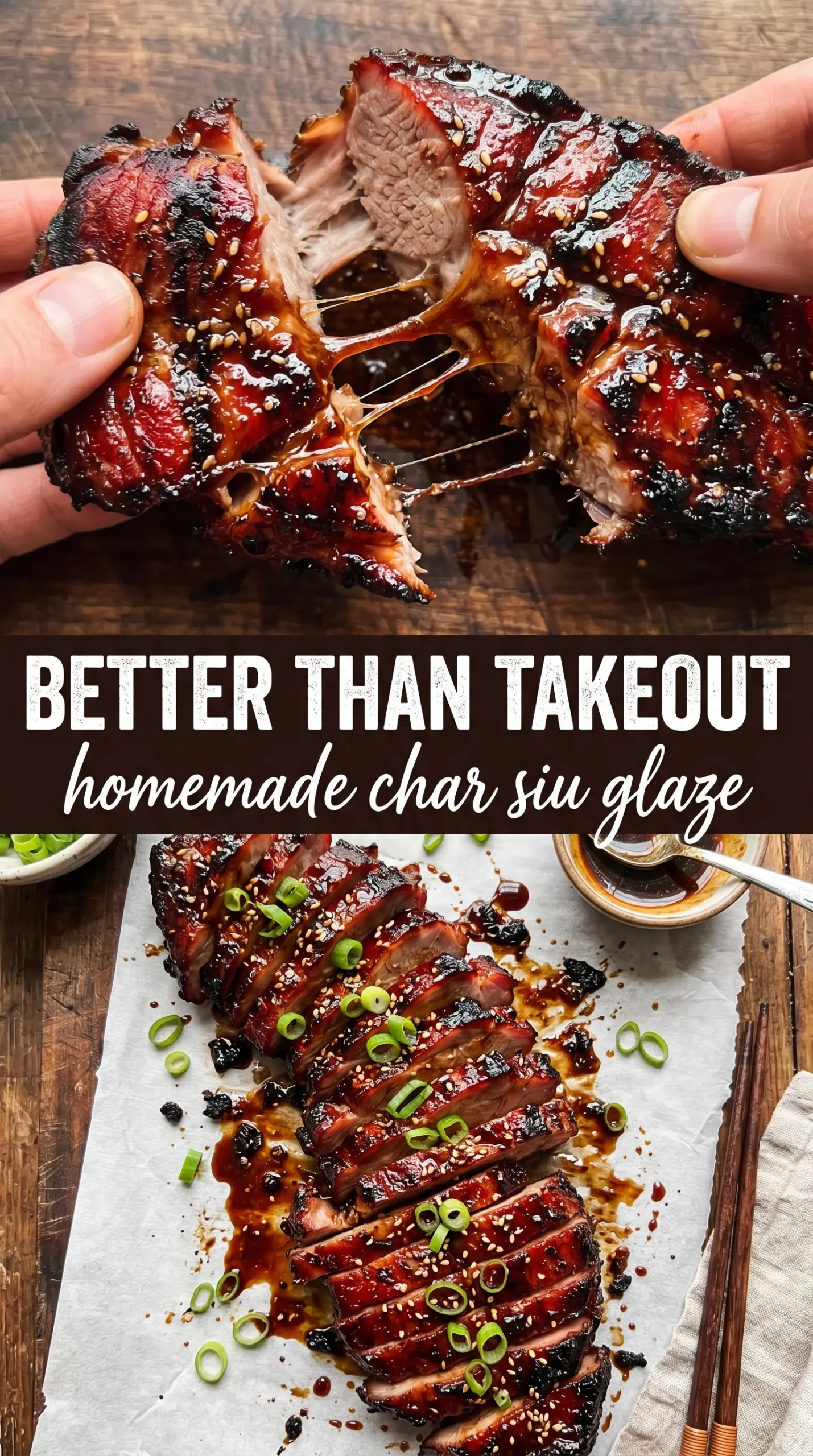
- Hoisin sauce gives the marinade its thick, sticky backbone. It clings to the pork better than a thin sauce, which is what helps build that shiny exterior in the oven.
- Soy sauce supplies salt and depth. Use regular soy sauce here; low-sodium works if that’s what you keep, but the final glaze will taste a little softer.
- Honey and brown sugar do two jobs at once: they sweeten and they caramelize. Honey helps with shine, while brown sugar adds a darker, rounder sweetness that holds up during roasting.
- Oyster sauce deepens the savory side of the marinade. It doesn’t make the pork taste fishy; it just makes the glaze taste fuller and more finished.
- Five spice powder is the signature note. Don’t overdo it, or the pork can start to taste perfumed instead of balanced.
- Garlic should be minced fine so it perfumes the marinade and doesn’t burn in big pieces on the rack.
- Sesame oil is tiny in amount but important for aroma. A little goes a long way.
The Part Where the Glaze Turns Sticky Instead of Burning
Mixing the Marinade Until It’s Smooth
Stir the marinade until the honey and sugar dissolve and the sauce looks glossy, not grainy. If you see sugar stuck in the bottom of the bowl, keep stirring for another minute; those undissolved bits can scorch later and leave harsh spots on the pork. Coat the pork strips thoroughly, cover them well, and let them marinate long enough for the surface to absorb that color and seasoning. Four hours is the minimum I’d use, but overnight gives you the best depth.
Setting Up the Oven for Caramelization
Heat the oven to 425°F and put a foil-lined baking sheet on the rack below the pork to catch drips. Set the pork on a wire rack so hot air can move around all sides. If you skip the rack, the underside steams and the glaze goes dull before it ever gets a chance to crisp. Reserve the marinade before the pork goes in; once it’s touched raw meat, it’s only useful for brushing after it’s cooked and boiled separately if you want to use it as sauce.
Roasting, Brushing, and Broiling
Roast the pork for 15 minutes, then flip it and brush on reserved marinade mixed with a spoonful of honey. That second coating is what builds the lacquer, so don’t rush it. Roast another 12 to 15 minutes until the edges are deeply caramelized and the pork has taken on a dark mahogany sheen. If you want the signature char siu finish, broil for 2 to 3 minutes at the end, but stay right there and watch it; the line between caramelized and burnt is thin when sugar is involved.
Let the pork rest briefly before slicing so the juices settle. Slice across the grain for the tenderest bite and you’ll get those clean, glossy pieces that look as good on a board as they taste on a plate.
How to Adjust Char Siu for the Pork You Have on Hand
For richer, juicier char siu
Use pork shoulder. It has more fat, so it stays tender even if the edges get dark in the oven. You’ll get a slightly more rustic slice, but the flavor is deeper and the meat is less likely to dry out.
For a leaner version that cooks faster
Use pork tenderloin and start checking it early. It gives you a cleaner, milder bite, but it can go dry if you leave it under the broiler too long, so focus on color and temperature, not just the clock.
For a gluten-free version
Use gluten-free soy sauce or tamari and check your hoisin and oyster sauce labels carefully. The flavor stays close to the original, but the salt level can shift a little, so taste the marinade before it goes on the pork.
For a darker, more traditional look
Keep the red food coloring if you want that classic restaurant-style hue. It doesn’t change the taste, but it does give the finished pork that familiar char siu color people expect when the slices hit the plate.
Storage and Reheating
- Refrigerator: Store leftovers in an airtight container for up to 4 days. The glaze will thicken as it chills, which is normal.
- Freezer: Char siu freezes well for up to 2 months. Slice it first or freeze the whole piece tightly wrapped, then thaw in the refrigerator before reheating.
- Reheating: Warm it in a 300°F oven covered loosely with foil until heated through. High heat dries the edges fast, so avoid blasting it in the microwave unless you don’t mind losing that sticky finish.
Answers to the Questions Worth Asking
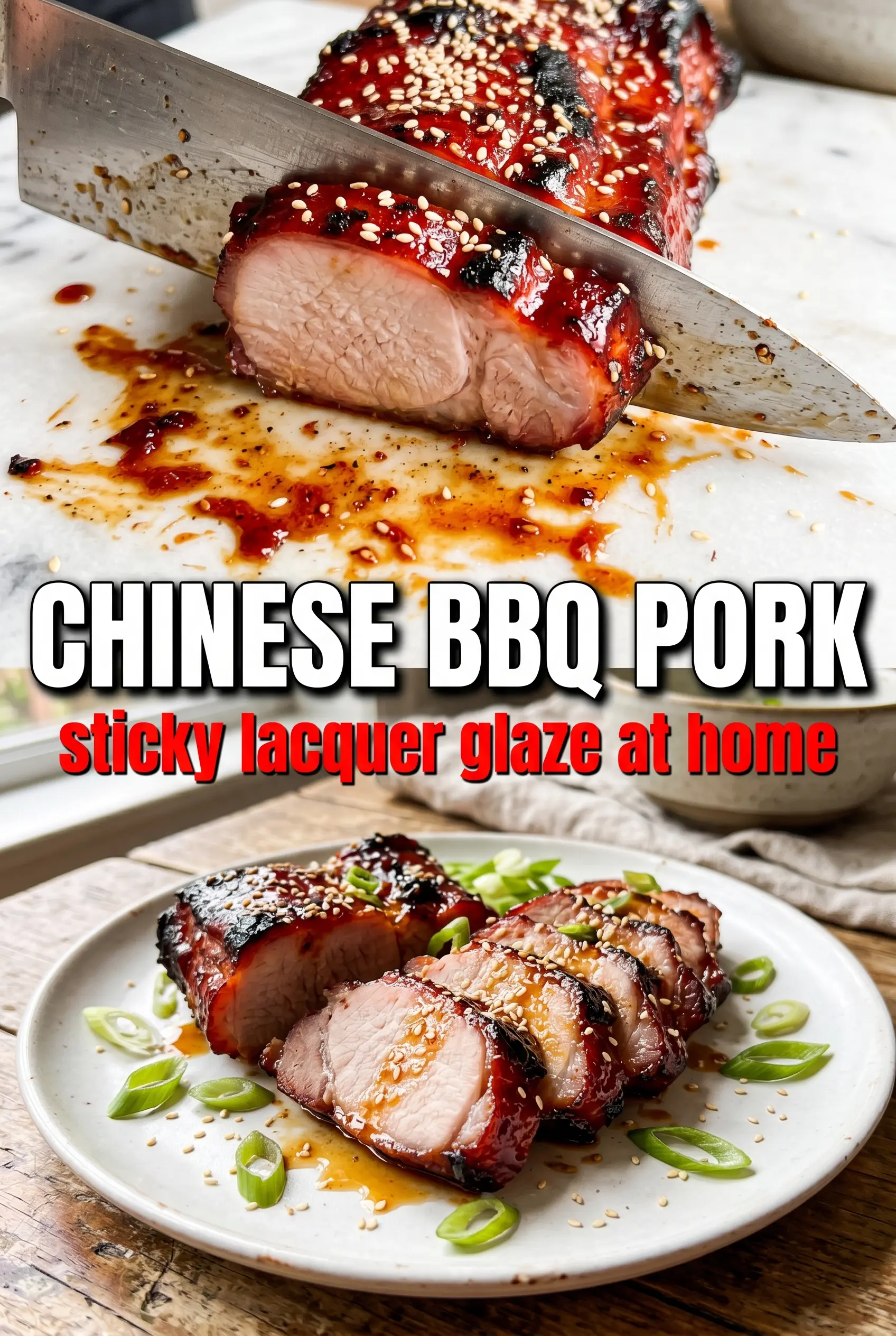
Chinese BBQ Pork (Char Siu)
Ingredients
Equipment
Method
- Mix hoisin sauce, soy sauce, honey, Chinese rice wine (or dry sherry), oyster sauce, brown sugar, sesame oil, five spice powder, red food coloring (if using), and minced garlic until smooth.
- Reserve a portion of the marinade for glazing later.
- Coat the pork strips thoroughly in the marinade, cover, and refrigerate for 4–8 hours or overnight.
- Let the pork sit covered in the refrigerator until ready to roast so the glaze clings evenly.
- Preheat oven to 425°F with a rack in the upper third and a foil-lined baking sheet on the rack below to catch drips.
- Place the marinated pork strips on a wire rack over the sheet and reserve any remaining marinade.
- Roast for 15 minutes until the surface begins to look glazed and set.
- Flip the pork, brush with the reserved marinade mixed with a spoonful of honey, and return to roast for 12–15 more minutes until edges are caramelized.
- Broil for 2–3 minutes for deeper char, watching closely so the glaze turns glossy mahogany-red without burning.
- Slice the char siu and serve immediately, showing the tender pink interior with caramelized, lacquered edges.