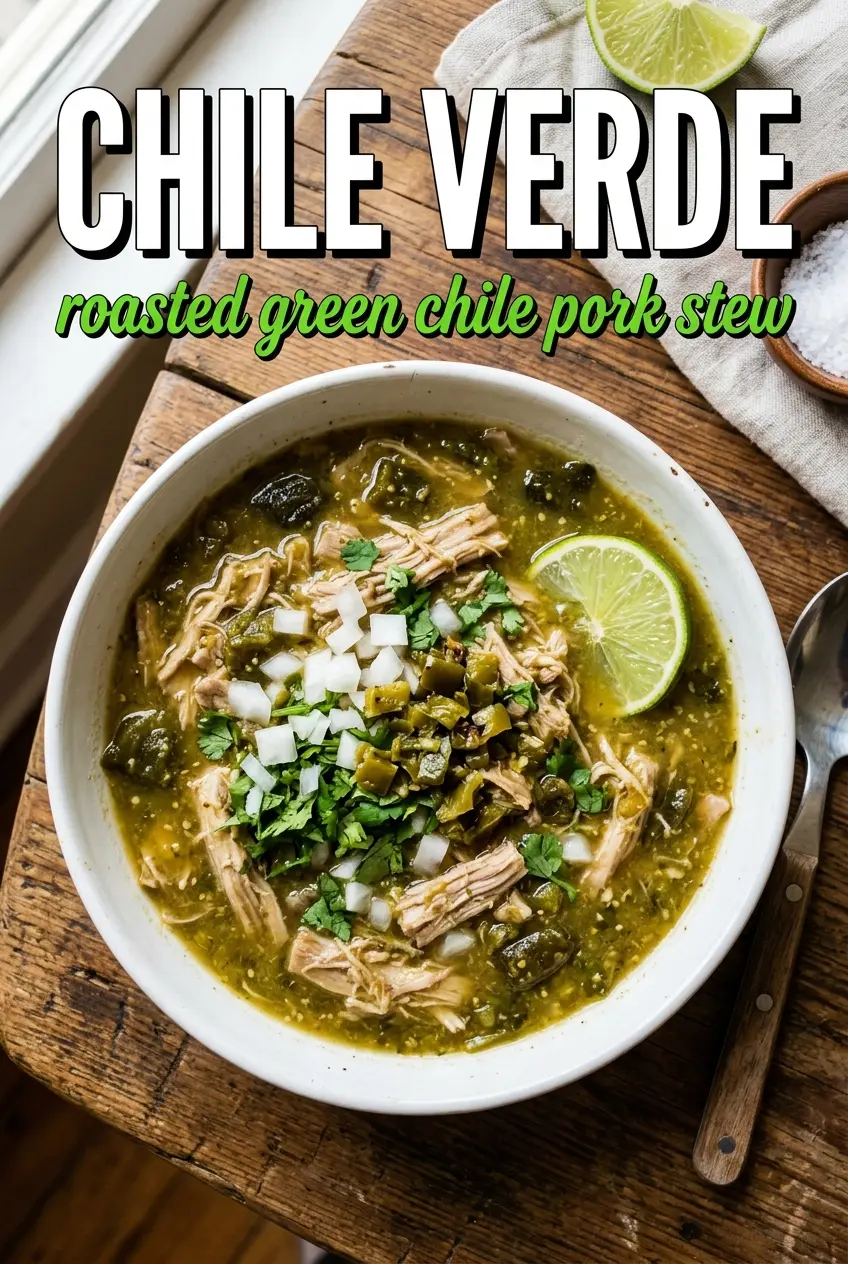
Chile verde earns its place on the dinner table because it lands in that perfect middle ground between bright and comforting: tangy tomatillo sauce, smoky poblano peppers, and pork that turns fork-tender without falling apart into mush. The sauce stays lively instead of heavy, and the shredded pork soaks up every bit of it.
What makes this version work is the balance in the blender and the pot. Roasting the poblanos first deepens their flavor, and searing the pork before the sauce goes in gives the finished stew a stronger, meatier base. Tomatillos need a little simmer time to lose their raw edge, but not so much that the sauce goes dull. The result is a bowl that tastes layered, not flat.
Below, you’ll find the small details that matter most here: how to keep the sauce green and vibrant, what to do if it tastes too sharp, and the easiest way to adjust the heat without losing the character of the dish.
The sauce thickened up beautifully and the pork shredded right in the pot. I loved how the tomatillo flavor stayed bright instead of turning heavy, and the tortillas on the side soaked it up perfectly.
Save this chile verde for tender shredded pork, bright tomatillo sauce, and warm tortillas on a weeknight table.
The Step That Keeps Chile Verde Bright Instead of Muddy
Chile verde can lose its edge fast if the tomatillos are cooked too hard or too long before the pork has a chance to simmer in them. The goal is a sauce that tastes green, tangy, and alive, not one that has been boiled into something flat. A gentle simmer is enough to soften the raw tomatillo flavor and let the pork richness round it out.
Searing the pork first matters here more than people think. Those browned bits give the sauce depth without darkening the color, and they keep the finished stew from tasting one-note. If you skip that step, the sauce still works, but it needs more seasoning at the end and never quite has the same backbone.
- Tomatillos — These bring the sharp, citrusy base that defines chile verde. Use firm, bright tomatillos and husk them just before cooking so they stay clean and lively.
- Poblano peppers — Roasting them first is what gives the sauce its smoky backbone. Skip raw peppers here unless you want a greener but flatter flavor.
- Pork shoulder — This cut holds up to a long simmer and shreds into tender strands instead of drying out. Leaner pork will cook faster, but it won’t give the same silky finish.
- Cilantro — Blended into the sauce, it sharpens the green color and adds freshness at the end. If you’re not a cilantro fan, leave it out, but the sauce will taste less bright.
Building the Green Sauce Around the Pork
Roasting the Poblanos
Roast the poblanos until the skins blister and blacken in spots, then let them steam under a bowl or in a covered container long enough for the skins to loosen. That steam step is what makes peeling them easy. If the peppers go into the blender with burnt skin still clinging to them, the sauce can turn bitter fast. Dice them after peeling so they blend smoothly and distribute evenly through the finished stew.
Blending the Base
Blend the tomatillos, onion, garlic, cilantro, and roasted poblanos until the mixture is smooth and bright green. You want a pourable sauce with no big chunks, because anything left too coarse will keep the pork from cooking evenly. If the blender struggles, add a splash of broth to help it move, but don’t thin it so much that the sauce turns watery.
Searing and Simmering
Heat the oil until it shimmers, then brown the pork in batches so the pieces actually sear instead of steam. Pour in the sauce and broth, add the cumin and oregano, then bring everything to a steady simmer before covering the pot. If the boil is too hard, the pork can tighten up and the sauce can splash down the sides instead of reducing into something silky. After 35 to 40 minutes, the pork should shred easily with a fork and the sauce should cling to it.
Shredding and Finishing
Shred the pork directly in the pot so every strand gets coated with sauce. Stir it back together and taste before serving, because this is the point where salt makes the biggest difference. If the chile verde tastes sharp, let it sit covered for 10 minutes off the heat; that resting time softens the edges and helps the sauce settle into the meat.
How to Adjust Chile Verde Without Losing Its Character
Make it milder
Remove the poblano seeds and any loose membrane before blending, and use only as much of the pepper as you want. That keeps the sauce green and smoky without adding extra heat. If you want even less bite, add a little more broth at the end and simmer uncovered for a few minutes so the sauce stays balanced.
Make it dairy-free and naturally gluten-free
This chile verde already fits both without any changes as long as you serve it with corn tortillas. The main thing to watch is broth labels if you’re using store-bought stock, since some brands include additives you may not want. The stew itself stays fully plant-friendly on the side dishes as long as you keep the accompaniments simple.
Swap the pork shoulder
Boneless chicken thighs can stand in for the pork shoulder if you want a faster version, but the sauce won’t have quite the same richness. Cut the simmer time down and stop as soon as the chicken is cooked through and easy to shred. It’s lighter, still satisfying, and the green chile sauce remains the star.
Store the leftovers for better flavor the next day
Let the chile verde cool, then refrigerate it in a covered container. The sauce thickens and the flavors meld overnight, which is one of the reasons this dish reheats so well. Add a splash of broth when warming it back up if the sauce tightens too much.
Storage and Reheating
- Refrigerator: Store in an airtight container for up to 4 days. The sauce thickens a bit as it sits, and the pork gets even more tender.
- Freezer: Freezes well for up to 3 months. Cool it completely first, then portion into freezer-safe containers so it thaws evenly.
- Reheating: Warm gently on the stovetop over low heat with a splash of broth. High heat can tighten the pork and dull the fresh chile flavor, so keep it at a slow simmer until heated through.
Questions I Get Asked About This Recipe
Chile Verde
Ingredients
Equipment
Method
- Blend tomatillos, poblano peppers, onion, garlic, and cilantro until smooth. Stop and scrape as needed until you have a pourable green sauce with no large chunks.
- Heat vegetable oil in a large pot over medium-high heat until shimmering. Add pork cubes in batches and sear on all sides until browned.
- Pour the blended tomatillo mixture over the pork and stir to coat. Add chicken broth, cumin, and oregano, then mix everything evenly.
- Bring the pot to a simmer, then cover and cook for 35-40 minutes until the pork is very tender. Look for steady bubbling around the edges throughout the cooking time.
- Shred the meat directly in the pot and stir well to distribute it through the sauce. Ensure the stew looks uniformly green with visible flecks of chile and softened tomatillo texture.
- Season with salt and pepper to taste. Taste and adjust until the flavors stand out without overpowering the green chile.
- Rest the chile verde, covered, for 10 minutes off the heat before serving. The sauce should thicken slightly as it sits.
- Serve hot with warm corn tortillas on the side. Ladle into rustic bowls so you can see the rich green sauce with tender shredded pork.