Sliced chicken over buttered noodles hits that sweet spot between comforting and practical: the noodles stay glossy, the chicken stays juicy, and the whole dish comes together in one skillet plus a pot for pasta. The butter coats every strand without turning heavy, and the Parmesan at the end gives the sauce just enough salt and body to taste finished.
What keeps this version from tasting flat is timing. The chicken gets seared first, then rests while the garlic butter comes together in the same pan, so every browned bit from the skillet ends up in the noodles. A little reserved pasta water helps the butter cling instead of slipping off the noodles, and the parsley goes in at the end so it still tastes fresh.
Below, I’ll walk through the one detail that keeps the sauce silky instead of greasy, plus a few smart swaps if you need to stretch the meal or adapt it for what’s already in your kitchen.
The noodles were silky, not greasy, and the garlic butter clung to every strand. I added a splash of the pasta water like you said and the sauce came together perfectly with the Parmesan.
Save these chicken with buttered noodles for a fast skillet dinner with silky garlic butter and Parmesan.
The Step That Keeps the Butter Sauce From Going Greasy
The mistake people make with chicken and buttered noodles is building the sauce over heat that’s too aggressive. Butter doesn’t need a hard simmer here. It needs gentle heat so the garlic can soften without browning and the noodles can be tossed until they look lacquered, not slick. If the pan is too hot, the butter separates and the pasta water turns cloudy instead of helping the sauce cling.
Using the same skillet after the chicken matters, because those browned bits dissolve into the butter and give the noodles more depth than plain melted butter ever will. The other quiet fix is the pasta water. That starchy liquid helps bind the butter and cheese to the noodles, so don’t drain the pasta and walk away before you’ve saved a little first.
- Salted pasta water — This is the easiest way to season the noodles from the inside out. If you forget to reserve some, a splash of hot water works in a pinch, but it won’t give the same silky finish.
- Parmesan — It adds salt, body, and a little nutty sharpness. Grate it finely so it melts into the butter instead of sitting in clumps on top.
- Fresh garlic — Garlic powder can season the chicken, but fresh garlic is what makes the noodles taste like a real finished dish. Cook it just until fragrant; once it starts turning brown, the flavor goes bitter fast.
What Each Ingredient Is Actually Doing in This Dish
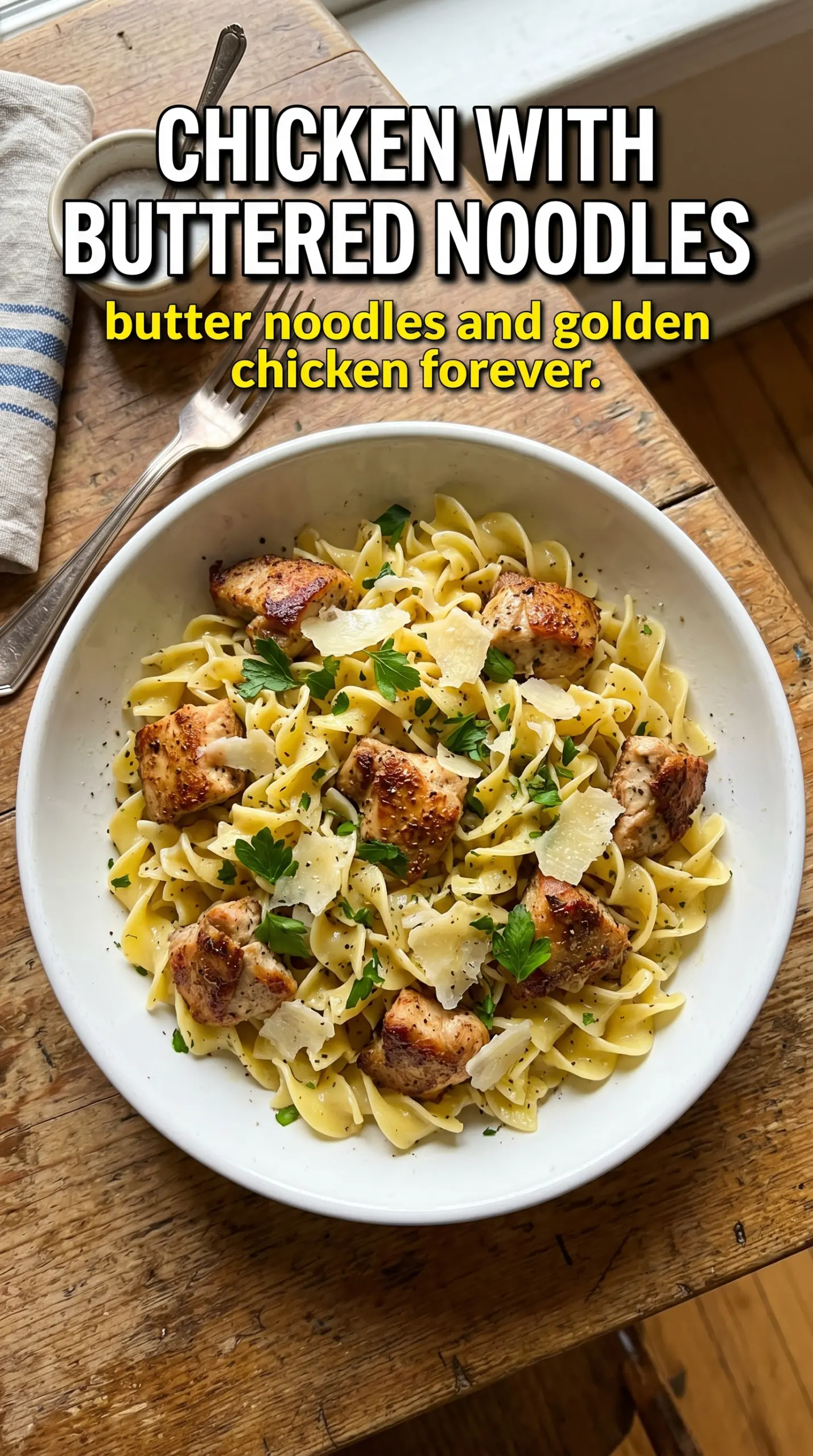
- Chicken breasts — Boneless, skinless breasts keep this dinner lean and quick. Slice them after resting so the juices stay in the meat instead of spilling onto the cutting board.
- Egg noodles — Their tender, slightly rich texture works better here than a firmer pasta shape because they soak up the butter sauce without fighting it. Cook them just to al dente so they don’t go mushy once they hit the skillet.
- Butter — This is the base of the sauce, so use real butter rather than a spread. It gives the noodles that glossy finish and carries the garlic flavor across every bite.
- Red pepper flakes — They don’t make the dish spicy; they just keep the butter from tasting one-note. Leave them out if you want a milder skillet dinner, or add a pinch more if you like a little warmth.
- Parsley — Fresh parsley brightens the butter and cuts through the richness. Dried parsley won’t do the same job, so this is one place where fresh matters.
Getting the Chicken Golden Before the Noodles Go In
Seasoning and Searing the Chicken
Pat the chicken dry before it hits the skillet, then season it well with salt, pepper, garlic powder, and Italian seasoning. Dry surface equals better browning. Cook it over medium-high heat until the outside turns deep golden and the center reaches 165°F, then let it rest before slicing. If you cut it too soon, the juices run out and the chicken turns dry.
Building the Garlic Butter
Use the same pan without wiping it clean. Add the butter, lower the heat, and stir in the garlic and red pepper flakes just until fragrant. The garlic should smell sweet and nutty, not toasted. If the butter starts foaming hard or the garlic darkens quickly, pull the pan off the burner for a moment and let the heat settle.
Tossing the Noodles Until They Shine
Add the cooked egg noodles straight into the skillet and toss until every strand is coated. Add reserved pasta water a splash at a time, just enough to turn the butter into a loose sauce that clings instead of pooling at the bottom. Stir in parsley, taste, then adjust salt and pepper. Parmesan goes on last so it melts over the hot noodles instead of turning stringy in the pan.
How to Adapt This for What’s in Your Kitchen
Dairy-Free Version
Use a good olive-oil-based dairy-free butter and skip the Parmesan, or finish with a dairy-free hard cheese if you have one that melts well. The sauce will still coat the noodles, but it won’t have the same rich, salty finish, so a little extra salt and garlic helps bring it back into balance.
Gluten-Free Swap
Use gluten-free egg noodles or another short pasta that holds sauce well. Cook them just until tender and reserve extra pasta water, because gluten-free noodles can dry out faster once they’re tossed in the skillet.
Chicken Thighs Instead of Breasts
Boneless thighs give you a juicier, deeper chicken flavor and they’re more forgiving if you cook them a minute too long. They may need an extra couple of minutes in the pan, but the tradeoff is a richer bite that stands up well to the butter and Parmesan.
Storage and Reheating
- Refrigerator: Store leftovers in an airtight container for up to 3 days. The noodles will absorb some of the butter sauce as they sit.
- Freezer: This dish freezes, but the noodles soften after thawing, so I only do it if I need to. Freeze in a tight container for up to 1 month.
- Reheating: Warm it gently on the stove or in the microwave with a splash of water or broth. High heat dries out the chicken and turns the noodles tight and sticky before the sauce loosens again.
Answers to the Questions Worth Asking
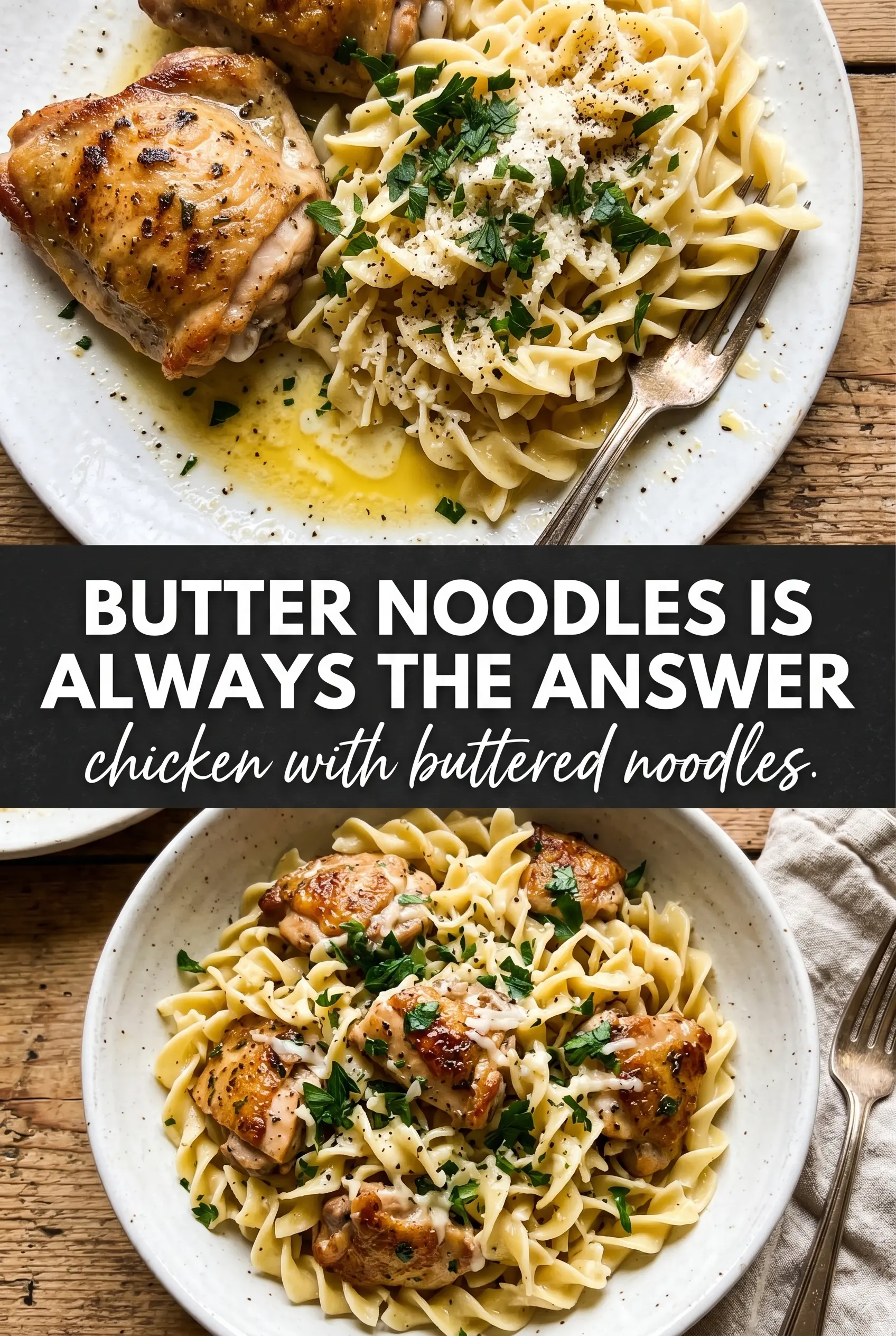
Chicken with Buttered Noodles
Ingredients
Equipment
Method
- Season the chicken breasts with salt, pepper, garlic powder, and Italian seasoning to taste, then heat olive oil in a skillet over medium-high heat. Sear for 5-6 minutes per side until golden and the internal temperature reaches 165°F, then rest and slice.
- Melt the butter in the same skillet over medium heat, then add minced garlic and red pepper flakes. Cook for 1-2 minutes until fragrant and glossy, stirring to prevent browning.
- Add the cooked egg noodles to the garlic butter and toss to coat thoroughly. Pour in the reserved pasta water as needed until the sauce looks silky and clings to the noodles.
- Season the noodles with salt and pepper to taste, then stir in the chopped fresh parsley. Plate the noodles and top each portion with sliced chicken for a layered look.
- Scatter Parmesan generously over the top and serve immediately while the butter glistens.