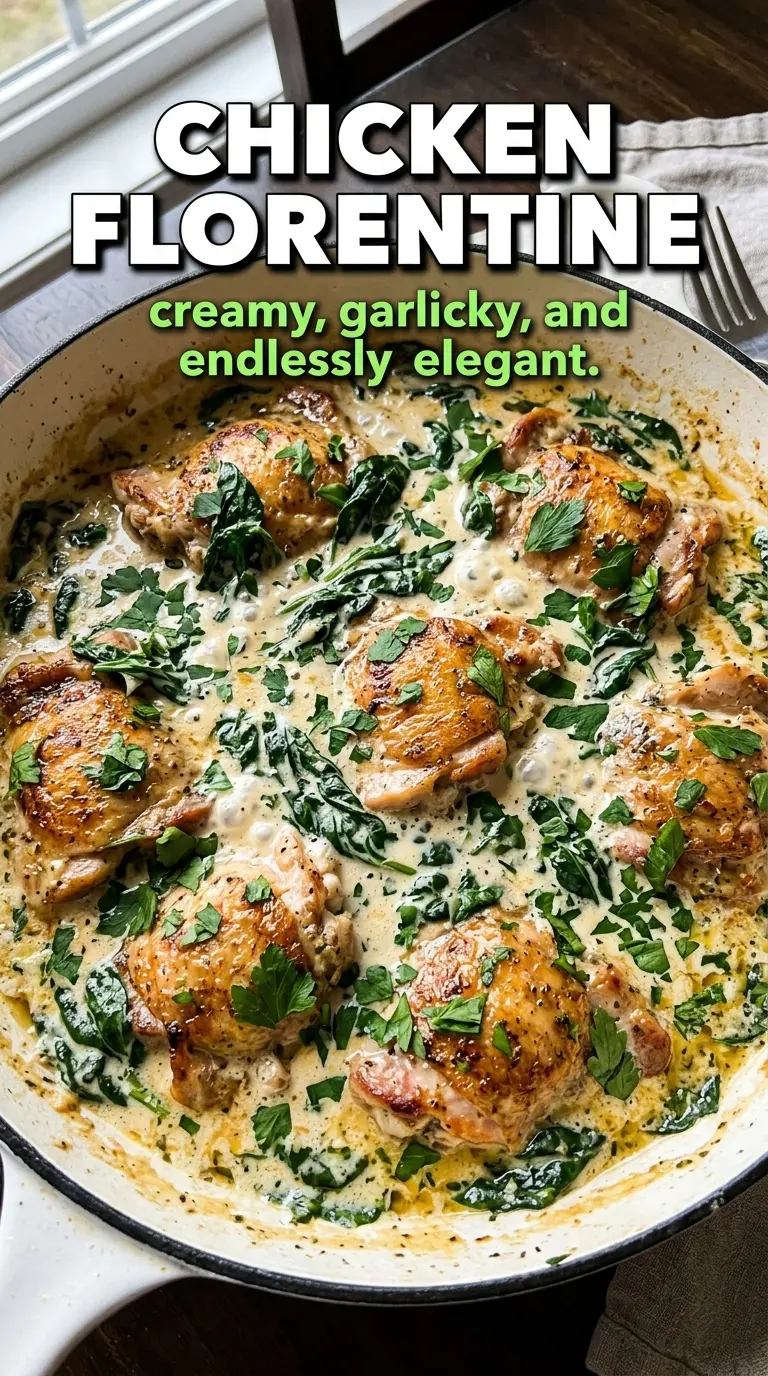
Golden seared chicken breasts in a silky cream sauce are the kind of dinner that earns its spot in the rotation fast. Chicken Florentine looks elegant on the plate, but what makes it worth making is the contrast: crisp edges on the chicken, a pale Parmesan sauce that clings instead of puddling, and spinach that softens into the sauce without turning swampy.
The key here is building the sauce in the same skillet you used for the chicken. Those browned bits at the bottom carry most of the flavor, and the white wine lifts them into the sauce before the cream goes in. Parmesan thickens the sauce as it melts, while lemon keeps the whole dish from tasting heavy. The spinach goes in at the very end so it stays bright and tender instead of losing its shape.
Below, I’ll show you how to keep the sauce smooth, what to watch for if your chicken breasts are thick, and the small finishing step that makes this taste like a restaurant-style skillet dinner instead of just another creamy chicken recipe.
The sauce thickened up beautifully and the lemon kept it from feeling too rich. I served it over pasta, and even my picky eater asked for the same skillet chicken again the next night.
Save this Chicken Florentine for a skillet dinner with golden chicken, lemony Parmesan cream, and spinach that stays bright.
The Pan Sauce Needs the Chicken Bits, Not a Clean Skillet
The biggest mistake with Chicken Florentine is moving the chicken out of the pan and then starting the sauce in a spotless skillet. Those browned bits from searing are the backbone of the dish. If the pan looks dark in spots, that’s a good sign, not a problem.
White wine does the first important job here: it loosens the browned flavor from the bottom of the pan and gives the sauce a little brightness. Let it simmer long enough to lose the raw alcohol edge before you add cream, or the sauce can taste sharp instead of rounded. The cream and broth should simmer gently until the sauce coats a spoon, not boil hard, which is how dairy sauces turn grainy or split.
What Each Ingredient Is Actually Doing in This Skillet
- Chicken breasts — Boneless, skinless breasts give you the cleanest, restaurant-style presentation here. If one side is much thicker than the other, pound it just enough to even the thickness so the chicken cooks through before the outside dries out.
- Dry white wine — This adds the flavor you taste as brightness, not sweetness. Use something dry enough to drink, like Sauvignon Blanc or Pinot Grigio. If you want to skip the alcohol, use more chicken broth with a small splash of lemon juice, but the sauce will lose some depth.
- Heavy cream — This is what gives the sauce its silky body. Half-and-half can work in a pinch, but it takes longer to thicken and is more likely to look thin at the end.
- Parmesan — Grate it fresh if you can. Pre-grated Parmesan often contains anti-caking starches that keep it from melting as smoothly, which matters in a sauce this simple.
- Baby spinach — Fresh baby spinach wilts fast and disappears into the cream without getting stringy. Add it right at the end so it stays tender and green.
- Lemon juice and zest — These keep the sauce from feeling flat. The zest brings aroma; the juice cuts through the cream. Don’t add too much liquid acid or the sauce can start to taste tangy instead of balanced.
Getting the Chicken Golden Before the Sauce Starts
Seasoning the Breasts
Coat the chicken generously with salt, pepper, garlic powder, and Italian seasoning before it hits the pan. The seasoning on the surface is what gives you flavor in the crust, and a light hand here leaves the whole dish tasting pale. Let the chicken sit for a minute after seasoning so the surface dries slightly, which helps it brown instead of steam.
Searing Without Crowding
Heat the olive oil until it shimmers, then lay the chicken in without crowding the skillet. If the pan is too packed, the chicken releases moisture and steams in its own juices instead of developing that golden exterior. Cook until the first side releases easily and has real color before you turn it; if it sticks, it usually needs another minute.
Building the Cream Sauce
After the chicken comes out, lower the heat before the garlic goes in. Garlic only needs about 30 seconds, just long enough to smell fragrant; if it browns, it turns bitter and the whole sauce starts out wrong. Add the wine and let it bubble for a couple of minutes, then pour in the cream and broth and simmer gently until the sauce looks slightly thickened and glossy.
Finishing with Cheese, Lemon, and Spinach
Turn the heat down before the Parmesan goes in. Cheese melts better in gentle heat, and high heat can make it seize or turn grainy. Stir in the lemon juice, zest, and spinach last so the sauce stays smooth and the greens wilt just enough to fold into the pan without overcooking.
Three Ways to Adjust Chicken Florentine Without Losing What Makes It Work
Make it gluten-free by serving it over rice or potatoes
The sauce itself is naturally gluten-free as long as your broth is certified gluten-free. Serve it over rice, mashed potatoes, or roasted potatoes instead of pasta and you won’t lose anything important from the dish.
Swap the white wine for extra broth if needed
If you don’t cook with wine, use an equal amount of chicken broth plus a small squeeze of lemon. You’ll lose a little of the sauce’s depth, but the broth still lifts the browned bits from the pan and keeps the flavor clean.
Use chicken cutlets for faster, more even cooking
Cutlets cook faster than full breasts and give you more surface area for browning. They’re the better choice when you want dinner on the table quickly, but they’ll need less time in the pan, so watch for a firm feel and opaque center rather than timing alone.
Make it dairy-light with half-and-half, not milk
Half-and-half gives you the closest texture to cream without going fully rich. Milk will work only in a pinch, and the sauce will be thinner and more likely to look broken if it boils too hard. Keep the heat low either way.
Storage and Reheating
- Refrigerator: Store leftovers in an airtight container for up to 3 days. The sauce will thicken as it chills, and the spinach will soften more, but the flavor stays good.
- Freezer: I don’t recommend freezing this one. Cream sauces can separate after thawing, and the spinach turns limp in a way that doesn’t recover well.
- Reheating: Warm it gently in a skillet over low heat with a splash of broth or cream. Don’t blast it in the microwave, or the sauce can split and the chicken can turn dry at the edges before the center heats through.
Answers to the Questions Worth Asking

Chicken Florentine
Ingredients
Equipment
Method
- Season chicken breasts generously on both sides with salt, pepper, garlic powder, and Italian seasoning. Heat olive oil in a large skillet over medium-high heat until shimmering, then cook for 5-6 minutes per side until golden and cooked through to 165°F; remove and set aside.
- In the same pan, cook minced garlic for 30 seconds over medium heat until fragrant. Deglaze with dry white wine and simmer for 2 minutes, scraping up browned bits from the bottom of the pan.
- Add heavy cream and chicken broth, then simmer for 4-5 minutes until slightly thickened. Keep the sauce at a gentle simmer so it remains silky, not curdled.
- Stir in grated Parmesan, fresh lemon juice, and lemon zest until smooth and pale. Add baby spinach and stir just until wilted, about 1-2 minutes.
- Return chicken to the pan and spoon the sauce over each breast until coated. Let it warm through briefly, then keep the sauce pooling around the chicken.
- Garnish with fresh parsley and lemon, then serve over pasta or rice. Plate so the spinach-flecked cream sauce is visible around the chicken.