Golden chicken, blistered peppers, and tender zucchini make this skillet dinner feel like it took more effort than it did. The vegetables keep their color and bite, the chicken stays juicy, and the light garlic herb sauce pulls everything together without turning the pan into soup.
What makes this version work is the heat. The chicken sears first, then the vegetables cook in the same pan long enough to pick up color at the edges. A splash of broth lifts the browned bits from the bottom, and the butter at the end gives the sauce enough body to coat every piece instead of pooling underneath.
Below, I’ll walk through the exact order that keeps the chicken from drying out and the vegetables from going limp. There’s also a practical note on what to swap if you’re short on one of the vegetables or want to stretch the pan for a bigger dinner.
The chicken got a gorgeous crust and the vegetables stayed crisp-tender instead of turning soft. I loved that the sauce picked up all the browned bits from the pan, and dinner was on the table fast.
Save this chicken and vegetables skillet for nights when you want a crisp-edged, one-pan dinner that still tastes fresh and bright.
The Sear That Keeps the Chicken Juicy Instead of Steaming
The biggest mistake in a chicken skillet like this is crowding the pan and hoping the pieces brown anyway. They won’t. If the chicken sits in a tight layer, it releases moisture and starts steaming before it ever has a chance to develop that deep golden color.
Use a large cast iron skillet and let the oil get hot before the chicken goes in. You want an active sizzle the second the strips hit the pan. Let them sit long enough to build color on the first side before turning them. Once the chicken is cooked through, pull it out. That keeps it from overcooking while the vegetables finish.
What the Broth, Butter, and Seasoning Are Doing in the Pan
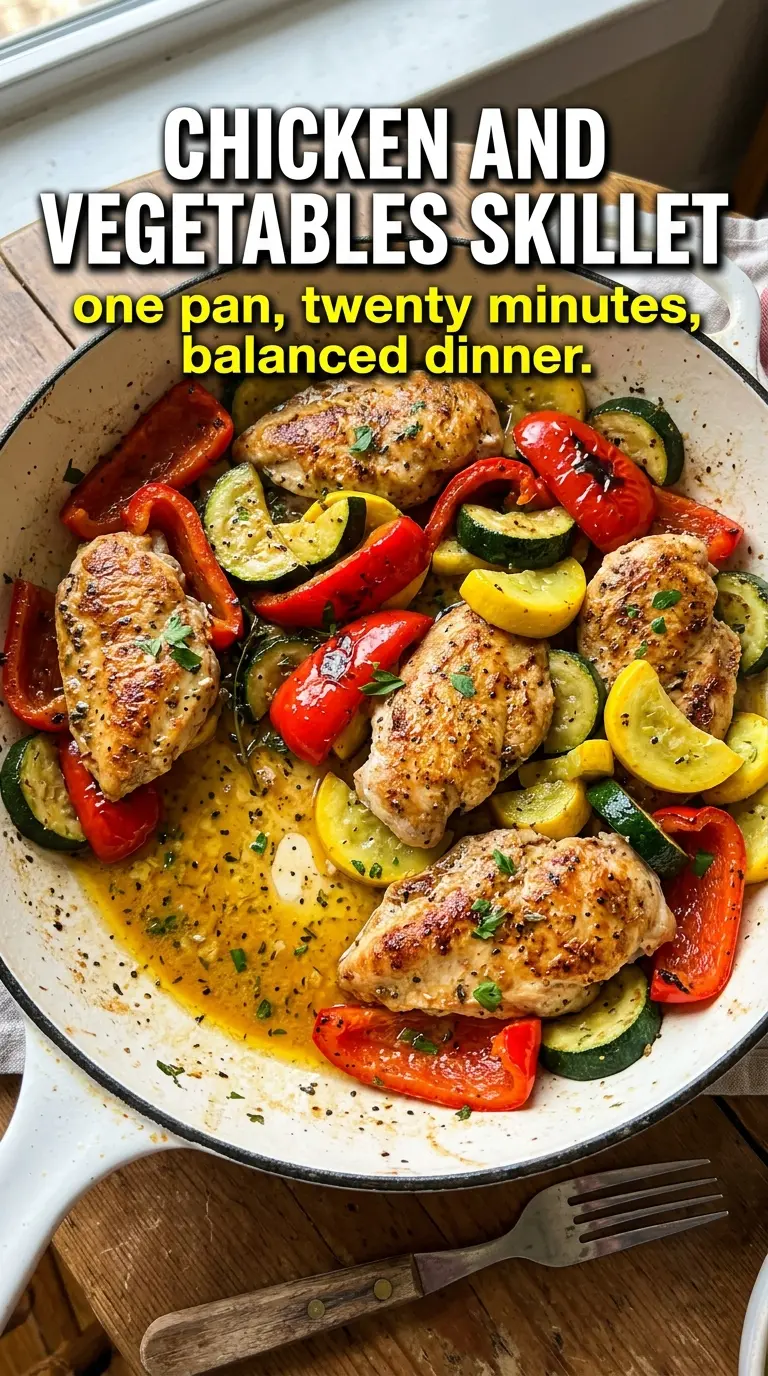
- Chicken breasts — Boneless, skinless breasts keep this light and quick, but they need to be cut into even strips so they finish at the same time. Thicker chunks will dry out before the thinner pieces catch up.
- Olive oil — This does the work of getting the chicken and vegetables properly browned. A neutral oil also works, but olive oil adds a little more flavor to the finished pan sauce.
- Bell peppers, zucchini, and red onion — This combination gives you sweet, soft, and crisp textures in one pan. If you swap the vegetables, keep one that softens quickly and one that holds shape, or the skillet can turn mushy.
- Chicken broth — Just a small amount is enough to deglaze the pan and loosen all the browned bits. Water will work in a pinch, but the broth gives the sauce a fuller savory base.
- Butter — Added at the end, it rounds out the sauce and helps it cling to the vegetables and chicken. If it goes in too early and cooks too hard, it won’t emulsify as nicely.
- Italian seasoning and smoked paprika — These seasonings build a quick herb-and-smoke backbone without needing a long marinade. Fresh herbs can finish the dish, but they won’t replace the depth these two bring during the sear.
Getting the Vegetables Charred Without Turning Them Soft
Season the Chicken First
Coat the chicken strips with the Italian seasoning, smoked paprika, salt, and pepper before they hit the pan. That early seasoning sticks better to the surface and helps the chicken brown with more flavor. If you wait until after searing, the seasoning lands on top instead of cooking into the crust.
Cook the Vegetables in a Hot, Empty Pan
After the chicken comes out, the pan should still be hot enough to make the peppers and onions sizzle right away. Add the vegetables and spread them out so they can blister instead of steaming in a pile. Stir only when you need to; if you keep tossing them too often, they’ll soften before you get those charred edges.
Finish With Broth and Butter
Once the garlic smells fragrant, pour in the broth and scrape the pan with a wooden spoon. That browned layer is where the flavor lives, and the liquid should loosen it quickly. Add the butter after the broth has reduced a little, then toss until the sauce turns glossy and lightly coats everything instead of running to the bottom of the skillet.
Make It Dairy-Free
Skip the butter and finish with another drizzle of olive oil. The skillet will still taste bright and savory, but the sauce won’t have quite the same silky finish. A squeeze of lemon at the end helps replace some of the richness.
Use Thighs Instead of Breasts
Chicken thighs stay juicier if you like a little more margin on the cook time. Cut them into the same size strips and give them a minute or two longer in the pan, since they’ll brown beautifully but need a little more time to cook through.
Swap the Vegetables for What’s in the Fridge
Broccoli florets, asparagus, mushrooms, or green beans all work here. Keep the total volume about the same and choose vegetables with a similar cook time, or the skillet will turn uneven. Mushrooms need a little more space to brown; green beans need a splash more broth to soften.
Storage and Reheating
- Refrigerator: Store leftovers in an airtight container for up to 3 days. The vegetables soften a bit after chilling, but the flavor holds well.
- Freezer: It freezes, but the zucchini softens after thawing. If you plan to freeze it, undercook the vegetables slightly so they don’t go limp when reheated.
- Reheating: Warm it in a skillet over medium-low heat with a splash of broth. The microwave works, but it tends to steam the vegetables and dull the sear, which is the whole point of this dish.
Questions I Get Asked About This Recipe
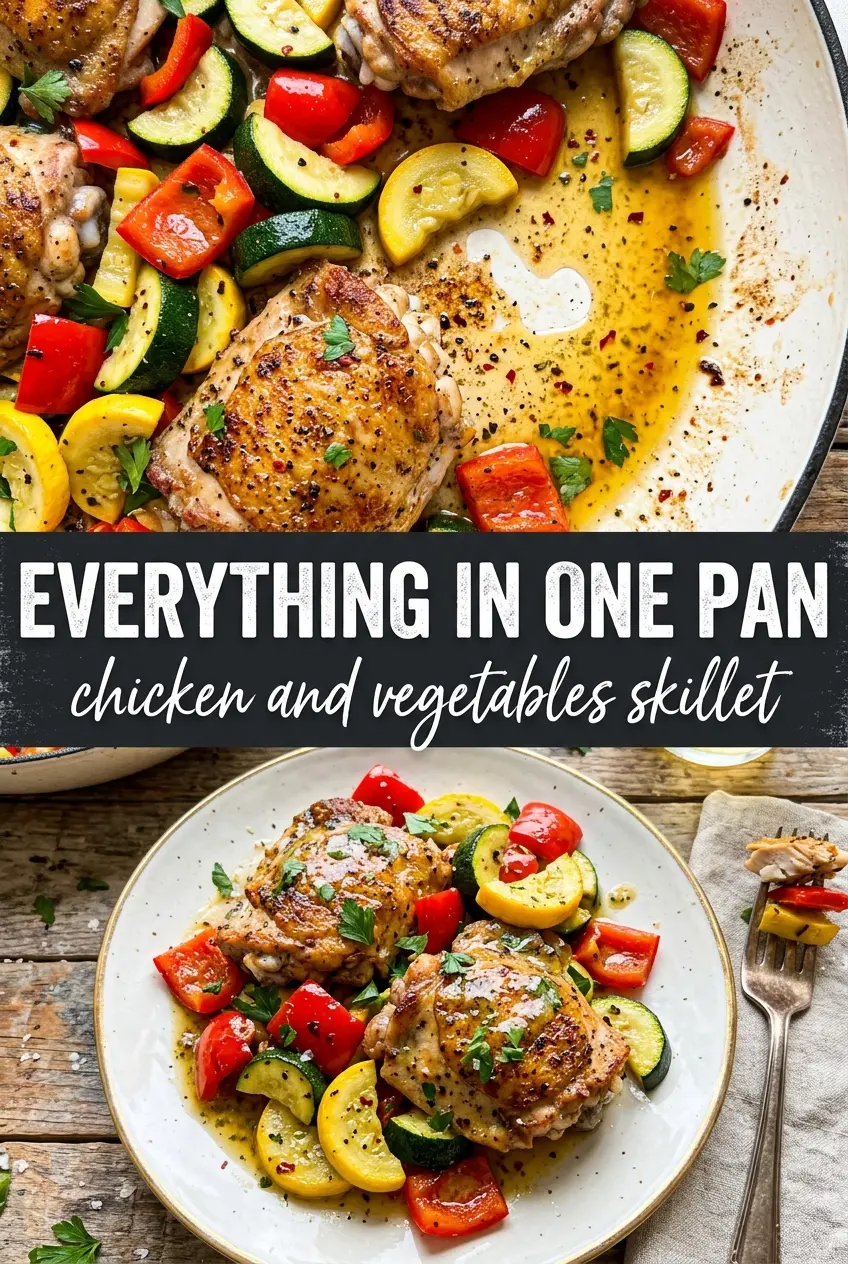
Chicken and Vegetables Skillet
Ingredients
Equipment
Method
- Season the chicken strips with Italian seasoning, smoked paprika, salt, and pepper. Make sure the strips are evenly coated for a golden crust.
- Heat olive oil in a large cast iron skillet over high heat and sear the chicken for 4-5 minutes until deeply golden and cooked through to 165°F; remove to a plate. Look for browned edges and juices running clear when pressed.
- Add bell peppers, zucchini, and red onion to the same pan and cook over high heat for 5-6 minutes until blistered and slightly charred. Stir occasionally so the vegetables char at the edges without steaming.
- Add the garlic and cook for 1 minute until fragrant. Keep it moving so it doesn’t brown too quickly.
- Pour in chicken broth and deglaze the pan, scraping up browned bits. Simmer briefly until the bubbling settles into a light herb garlic sauce.
- Return the chicken to the pan, add butter, and toss everything to coat. The skillet should look glossy as the butter emulsifies with the broth.
- Garnish with fresh parsley and serve with lemon wedges. Add a squeeze of lemon right before eating to brighten the flavors.