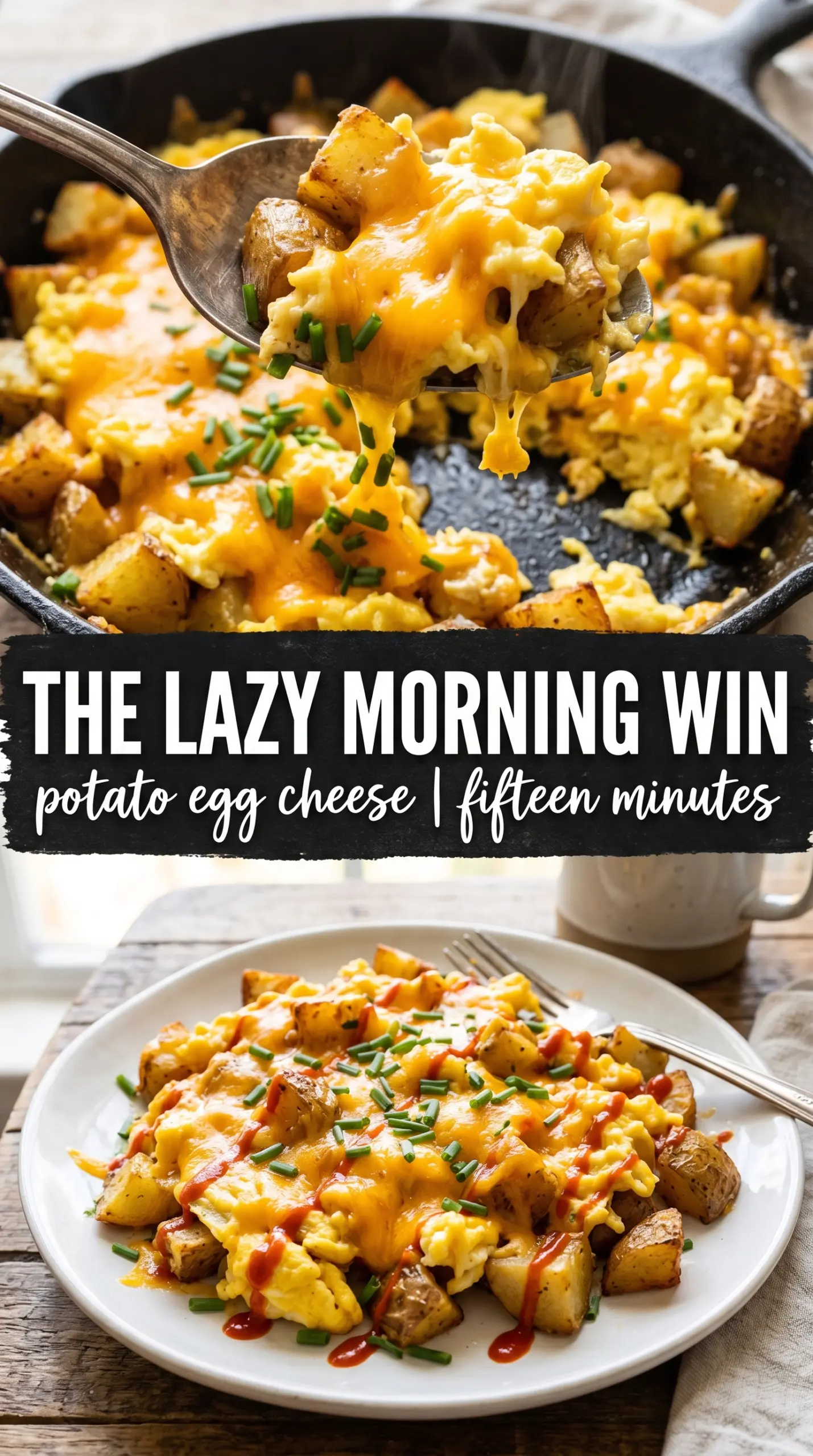
Golden potatoes and soft scrambled eggs belong together, but the difference between a heavy breakfast skillet and one you actually want to eat comes down to texture. Here, the potatoes turn crisp in the pan before the eggs go in, so every bite gives you a little crunch under the creamy eggs and melted cheddar. It eats like diner breakfast comfort, but it doesn’t sit there as a greasy heap.
The trick is giving the potatoes enough time to brown before the vegetables and eggs join the pan. Yukon golds hold their shape well and stay creamy inside, while the milk loosens the eggs just enough to keep them tender. Sharp cheddar melts into the hot eggs instead of disappearing, and a handful of chives at the end keeps the whole skillet tasting fresh.
Below you’ll find the exact timing that keeps the potatoes crisp, the eggs soft, and the cheese melty without getting stringy. If you’ve ever ended up with soggy potatoes or dry eggs in a breakfast scramble, this version fixes both.
The potatoes got that perfect crispy edge before the eggs went in, and the cheddar melted right through the scramble instead of clumping on top. I added hot sauce like you suggested and my husband went back for a second helping immediately.
Like this cheesy potato egg scramble? Save it for the mornings when you want crispy potatoes, fluffy eggs, and melted cheddar in one skillet.
Why the Potatoes Need a Head Start Before the Eggs Go In
The main mistake with a potato egg scramble is rushing the potatoes. If they aren’t browned before the eggs are added, they steam under the moisture and turn soft instead of giving you those crisp edges that make the skillet worth making. Medium-high heat and a little patience are what build the texture here.
Cutting the potatoes small matters, too. Smaller dice means more surface area, which means faster browning and a better chance of getting tender centers before the eggs join the pan. Stir them occasionally, not constantly; if you keep moving them, they never sit still long enough to color.
What Each Ingredient Is Actually Doing in This Skillet
- Yukon gold potatoes — These are the best pick here because they stay creamy inside while still browning well. Russets can work if that’s what you’ve got, but they’ll fall apart more easily and give you a drier, fluffier texture.
- Butter — Butter gives the potatoes flavor and helps them brown without sticking. If you’re using a very well-seasoned skillet, you can cut the amount slightly, but don’t swap it out entirely unless you’re okay losing some richness.
- Sharp cheddar — Sharp cheddar brings enough flavor to stand up to the potatoes and eggs. Pre-shredded cheese melts, but a block shredded fresh melts smoother and doesn’t have the same powdery coating.
- Whole milk — The milk lightens the eggs just enough to keep them tender. You can use half-and-half for a richer scramble, or skip it if you want a firmer, more classic egg texture.
- Onion and red bell pepper — These add sweetness and a little freshness after the potatoes have browned. Dice them small so they soften in time without making the skillet watery.
- Chives and hot sauce — The chives brighten the finished dish, and hot sauce cuts through the richness. Both matter more than they look on paper.
Getting the Eggs Soft Without Losing the Potato Crust
Brown the Potatoes First
Melt the butter in a large skillet and add the diced potatoes in a single layer if you can. Let them sit long enough to pick up color before stirring, then keep cooking until the edges look deep gold and a fork slips in with little resistance. If the pan is too crowded, the potatoes steam instead of crisp, so use a wide skillet or cook in batches if needed.
Soften the Vegetables in the Fat
Once the potatoes are browned, add the onion and red bell pepper and cook until they lose their raw bite and the onion looks glossy. This step pulls sweetness out of the vegetables and keeps the final scramble from tasting flat. Add the garlic powder, salt, and pepper here so the seasoning blooms in the fat instead of sitting on top of the eggs.
Set the Eggs Gently
Whisk the eggs with the milk until the mixture looks uniform, then pour it over the potato mixture. Stir slowly with a spatula, pushing the eggs from the edges toward the center, and stop when they look just barely set but still soft and shiny. If you cook them until they look fully dry in the pan, they’ll go rubbery by the time you plate them.
Finish With Cheese and Rest for a Minute
Scatter the cheddar over the top, cover the skillet, and let the trapped heat melt it for about a minute. That short covered rest gives you glossy melted cheese without overcooking the eggs underneath. Finish with chives and hot sauce right away so the top stays fresh and the skillet still feels lively.
How to Adapt This Skillet Without Losing the Texture
Make it dairy-free
Swap the butter for olive oil or a plant butter and skip the milk. The eggs will be a little less rich, but they’ll still set tender if you keep the heat moderate and don’t rush the stirring. Use a dairy-free shred that melts well, or finish with extra chives and hot sauce instead of cheese.
Make it meatier
Cook diced ham, crumbled breakfast sausage, or chopped bacon first, then build the potatoes in the rendered fat. That adds salt and smoky depth, but it also means you may need less butter and less added salt. The key is to keep the meat pieces small so they mix evenly through the eggs.
Use different cheese
Monterey Jack melts silkier than cheddar, while pepper jack adds a little heat. Mild cheeses work, but they won’t bring the same punch, so if you swap away from sharp cheddar, add a pinch more pepper or a dash of hot sauce to keep the skillet from tasting bland.
Storage and Reheating
- Refrigerator: Store leftovers in an airtight container for up to 3 days. The potatoes soften a bit, but the flavor holds up well.
- Freezer: It freezes, but the eggs and potatoes both lose some of their texture. If you do freeze it, cool it completely first and reheat only once for the best result.
- Reheating: Warm it in a skillet over medium-low heat with a small splash of water and a lid for a few minutes. Microwaving works in a pinch, but it tends to make the eggs tough and the potatoes soggy.
Questions I Get Asked About This Recipe

Cheesy Potato Egg Scramble
Ingredients
Equipment
Method
- Melt the butter in a large skillet over medium-high heat, then add the diced Yukon gold potatoes. Cook for 12–15 minutes, stirring occasionally, until the potatoes are golden and crispy (look for browned edges).
- Add the diced onion and red bell pepper to the skillet and cook for 4 more minutes until softened. Season with garlic powder, salt, and cracked black pepper, stirring to coat the potatoes.
- Whisk the eggs with the whole milk, then pour the mixture over the potato-vegetable base. Stir gently and cook for 3–4 minutes until the eggs are just set and still soft (no dry curds yet).
- Sprinkle the shredded sharp cheddar evenly over the scramble, then cover the skillet for 1 minute until the cheese is melted and pooling. Garnish with fresh chives and serve immediately with hot sauce.