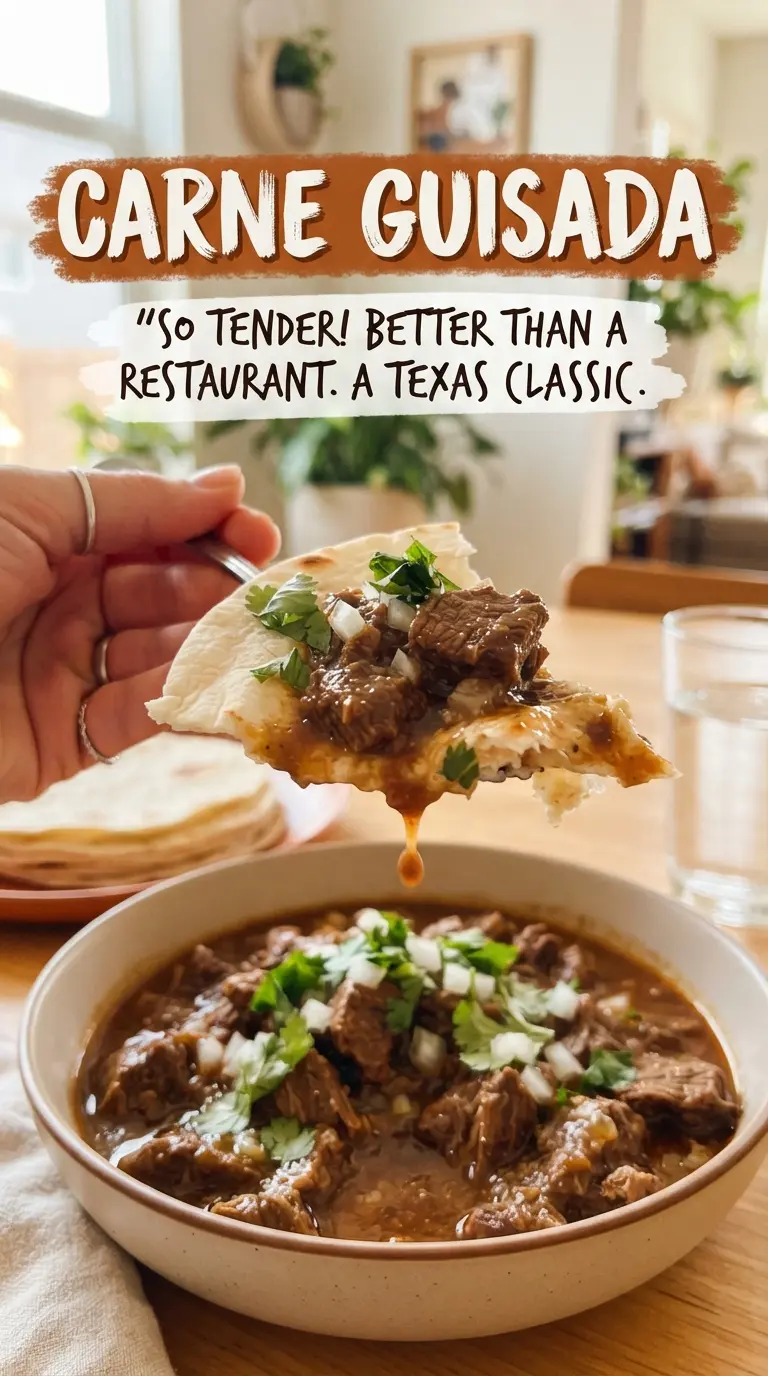
Carne guisada lands with the kind of deep, spoon-coating gravy that clings to every bite of beef and begs to be scooped into a warm tortilla. The beef turns fall-apart tender, the sauce thickens into something rich and savory, and the cumin, chili powder, and tomato base give it that unmistakable Tex-Mex comfort that keeps people coming back for seconds.
What makes this version work is the browning. Those browned bits at the bottom of the pot aren’t background noise; they’re the backbone of the gravy. The flour is stirred into the cooked vegetables and spices before the liquid goes in, which helps the sauce thicken evenly instead of turning gritty or lumpy. A long, low simmer gives the chuck roast time to relax into tenderness without drying out.
Below, I’m walking through the little details that matter: how dark to brown the beef, when the gravy is actually thick enough, and what to do if you want to stretch it into a bigger meal without losing that rich, slow-cooked feel.
The gravy thickened up beautifully, and the beef was tender enough to shred with a spoon after about two hours. I served it in tortillas with lime and my husband kept going back for more, which never happens with stew at our house.
Love that thick, cumin-spiced carne guisada gravy? Save it to Pinterest for tortilla nights and easy Tex-Mex dinners.
The Browning Stage That Gives Carne Guisada Its Real Depth
The difference between a flat stew and a rich carne guisada starts with the beef hitting a hot pan in batches. If you crowd the pot, the meat steams and turns gray before it ever has a chance to develop flavor. You want a deep brown crust on the cubes, not just a little color on the edges, because that crust dissolves into the gravy later and gives the whole dish its backbone.
The other place people lose flavor is rushing the simmer. Chuck needs time for its connective tissue to soften, and that means the gravy should stay at a lazy bubble, not a hard boil. A hard boil tightens the meat and can make the sauce taste thin even if it looks thick enough. If the liquid starts disappearing too fast, lower the heat and cover the pot a little more tightly.
What Each Ingredient Is Actually Doing in This Gravy
- Beef chuck — This is the cut that turns silky after a long simmer. It has enough connective tissue to melt into the gravy, which is why it tastes rich instead of stringy. A lean cut won’t give you the same texture, even if it seems easier to work with.
- Tomato sauce — This adds body and a gentle tang without making the gravy taste like spaghetti sauce. If you swap in crushed tomatoes, the sauce will be chunkier and a little looser; if that’s what you have, simmer a bit longer to concentrate it.
- Chili powder, cumin, and oregano — Together they build the Tex-Mex base, but cumin is the note that makes the whole pot smell like carne guisada. Fresh spices matter here because they’re standing in the front row, not hiding in the background.
- Flour — Stirring it into the cooked aromatics and spices gives the gravy a smoother finish than dumping it into the broth at the end. If you need a gluten-free version, use a 1:1 gluten-free flour blend and cook it in the fat the same way so it loses that raw taste.
- Jalapeno and bell pepper — They build the savory base and keep the gravy from tasting one-note. The jalapeno brings heat, but seeding it keeps the pot balanced; if you like more kick, leave some seeds in rather than adding extra chili powder.
Building the Pot so the Gravy Turns Thick and Tender
Getting Color on the Beef
Pat the beef dry before it goes into the oil, then brown it in batches without moving it too soon. It should release from the pan when the crust is formed. If it sticks hard, it needs another minute. The beef doesn’t need to be cooked through at this stage; it only needs a real sear on the outside.
Softening the Vegetables and Spices
Cook the onion, bell pepper, and jalapeno until the onion loses its sharp edge and the pan starts smelling sweet. Garlic goes in at the end of this stage for just a minute, because it burns fast and turns bitter. Once the flour and spices go in, stir until the mixture looks pasty and the raw flour smell fades.
Simmering Until the Beef Gives In
After the broth, tomato sauce, bay leaf, and beef go in, keep the heat low enough that the surface only blips now and then. The sauce should gradually tighten and darken as it cooks. If the gravy looks thin at the end, uncover the pot for the last 15 to 20 minutes so steam can escape and the liquid reduces without scorching.
How to Adapt This Carne Guisada Without Losing the Soul of It
Serve It Over Rice Instead of Tortillas
Spoon the carne guisada over steamed rice if you want a fuller dinner plate. The gravy will soak into the rice and make the dish feel a little more like a bowl meal, but you lose the hand-held softness of tortillas. Warm tortillas still give the best contrast against the thick sauce.
Make It Gluten-Free
Use a certified gluten-free all-purpose flour blend in place of the regular flour. Cook it with the spices for the same minute so the sauce still thickens smoothly, and check that your broth is gluten-free too. The texture stays close to the original when the roux step is handled the same way.
Turn Down the Heat Without Losing Flavor
Skip the jalapeno or use only a little of it if you want a mild version. The cumin, oregano, and browned beef still carry plenty of flavor, so the dish doesn’t turn bland. What you lose is the little spark of heat at the finish, which you can add back at the table with hot sauce if needed.
Storage and Reheating
- Refrigerator: Keeps well for 4 days. The gravy thickens as it chills, so expect it to look a little tighter the next day.
- Freezer: Freezes well for up to 3 months in an airtight container. Let it cool completely first, and leave a little room at the top so the sauce can expand.
- Reheating: Warm it slowly on the stovetop over low heat with a splash of broth or water. High heat is the mistake here; it can dry out the beef and make the gravy break around the edges before the center is hot.
Answers to the Questions Worth Asking

Carne Guisada
Ingredients
Equipment
Method
- Season the beef chuck cubes with salt and black pepper. Brown in hot vegetable oil in batches in a Dutch oven until browned on the outside, then transfer to a plate.
- Cook the diced onion, green bell pepper, and minced jalapeno for 5 minutes. Add the minced garlic and cook for 1 minute, stirring constantly to prevent burning.
- Sprinkle in the all-purpose flour, chili powder, ground cumin, and dried oregano, then stir for 1 minute to toast. Keep stirring until fragrant and lightly thickened.
- Add tomato sauce, beef broth, bay leaf, and the browned beef to the pot. Cover and simmer for 1 1/2-2 hours until the beef is very tender and the gravy is thick, stirring occasionally and adding a splash of broth only if needed for consistent simmering.
- Ladle the carne guisada into warm flour tortillas. Top with cilantro and serve with lime wedges on the side.