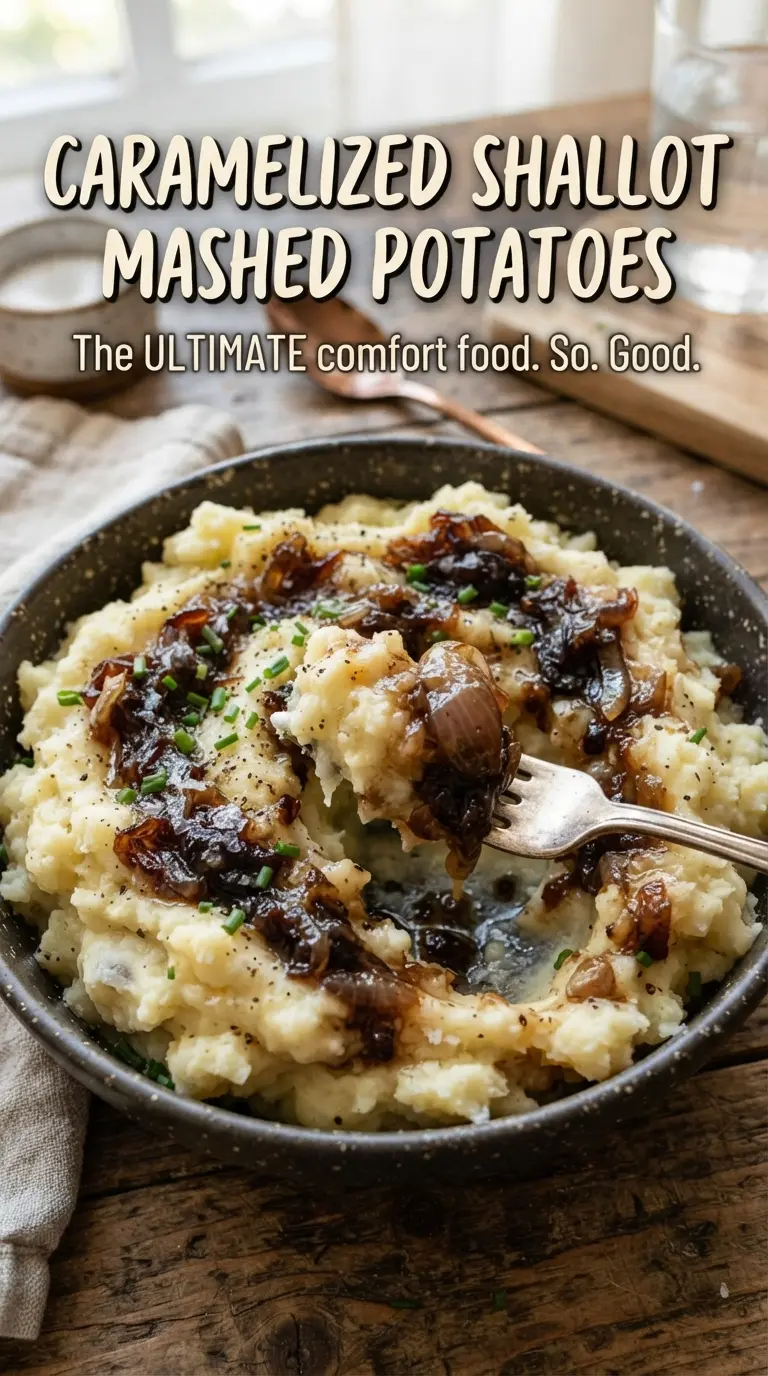
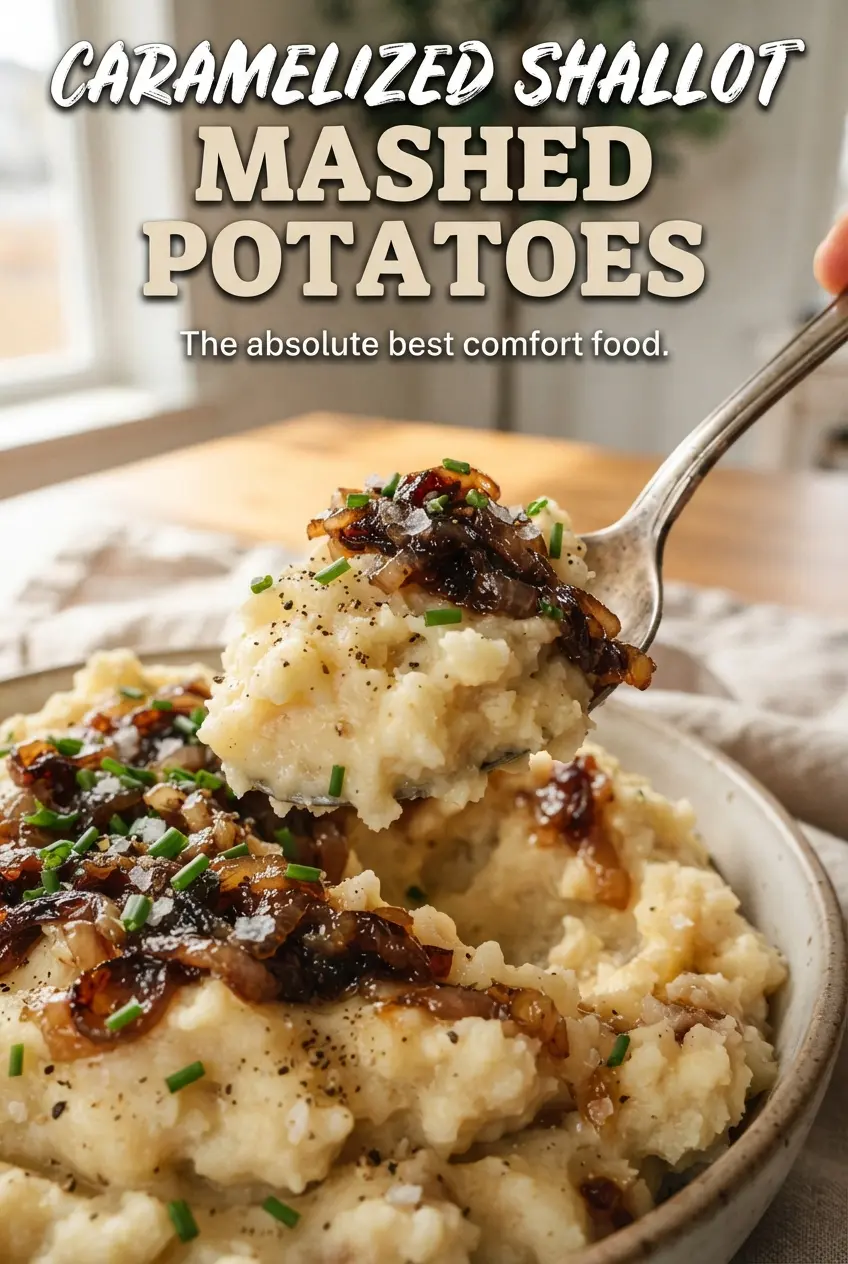
Silky mashed potatoes get a real upgrade when sweet, jammy caramelized shallots are folded through and piled on top. The potatoes stay rich and buttery, but the shallots bring a deep, savory-sweet edge that keeps each bite from tasting flat or one-note. This is the kind of side dish people keep hovering over at the table.
The trick is treating the shallots like their own recipe, not a quick add-in. They need time in butter over medium-low heat until they turn deeply golden and collapse into something almost spreadable. A splash of balsamic at the end sharpens that sweetness without making the dish taste sour. For the potatoes, warm dairy matters: cold cream can cool the pan down and leave the mash a little heavy instead of smooth and fluffy.
Below, I’ll walk through the small details that matter most, from drying the potatoes after draining to knowing exactly when the shallots are done. There’s also a simple way to make these ahead if you’re serving them for a bigger meal.
The shallots turned out jammy and sweet, and folding most of them into the potatoes made the whole dish taste layered instead of just buttery. I served it with roast chicken and everyone went back for seconds.
Save these caramelized shallot mashed potatoes for the dinner where you want a creamy mash with a sweet-savory topping that feels a little special.
The Shallots Need Their Own Time, or the Whole Dish Falls Flat
Caramelized shallots are the difference between mashed potatoes that taste finished and mashed potatoes that just taste rich. If you rush them, they stay sharp and oniony, which cuts right through the creamy base instead of melting into it. Cook them low and slow until they’re deep gold and glossy, and they’ll bring a round sweetness that makes the potatoes taste more buttery than they already are.
The other place people go wrong is draining the potatoes and stopping there. A minute back over low heat dries off surface water, which matters more than most people think. Wet potatoes take on extra cream like a sponge and turn heavy instead of fluffy. That short drying step gives you a smoother mash with a cleaner, lighter finish.
What the Potatoes, Cream, and Balsamic Are Each Doing Here
- Yukon Gold potatoes — These are the best choice here because they mash up naturally creamy and hold onto butter without turning gluey. Russets work in a pinch, but they give you a fluffier, drier mash that needs more fat to taste balanced.
- Shallots — This is where the sweetness comes from. Regular onions can work, but they’re stronger and less delicate, so the final dish loses that soft, almost jammy quality that makes these potatoes feel French-inspired instead of just oniony.
- Heavy cream and whole milk — Warming them first keeps the potatoes smooth and helps the butter stay emulsified. Cold dairy cools the pot too quickly and can make the mash feel dense.
- Balsamic vinegar — Use the teaspoon here; it’s enough to brighten the shallots without making them taste like a glaze. Leave it out and the onions can taste a little one-note, especially against all that butter.
Building the Mash So It Stays Creamy, Not Gluey
Cooking the shallots slowly
Melt the butter over medium-low heat and add the sliced shallots. They should soften first, then turn translucent, then slowly deepen to a rich golden color over 20 to 25 minutes. If they start browning in spots too fast, the heat is too high and the edges will taste bitter before the center turns sweet. Stir often and scrape the pan so the fond doesn’t scorch.
Getting the potatoes tender and dry
Boil the peeled potato cubes in salted water until a knife slides in with no resistance, usually 15 to 18 minutes. Drain them well, then return them to the pot over low heat for about a minute so the steam can escape. That extra minute keeps the mash from getting loose later when you add the dairy.
Finishing with butter and warm dairy
Mash the potatoes with the remaining butter first, then add the warm cream and milk. The butter coats the starch before the liquid goes in, which helps the potatoes stay silky instead of pasty. Stop mashing once they’re smooth; if you keep working them after that, they can turn stiff and tacky.
Folding in the shallots
Stir two thirds of the caramelized shallots into the mash along with the salt and pepper. The potatoes should taste balanced before they go to the bowl, not after. Spoon the rest of the shallots on top so every serving gets that sweet-savory finish and a little texture on the surface.
Three Ways to Make These Potatoes Fit the Meal in Front of You
Dairy-free version
Use a rich unsweetened plant butter and full-fat oat milk or cashew milk warmed on the stove. You won’t get the same depth as cream and butter, but the shallots carry enough flavor that the potatoes still taste full and satisfying.
Lighter finish
Replace part of the cream with extra milk if you want a looser, less rich mash. The texture will be a little softer and the sauce less plush, but the shallots still bring plenty of body.
Make-ahead for a crowd
You can make the shallots a day ahead and refrigerate them, then rewarm them gently before serving. The potatoes can also be made earlier in the day and held warm in a covered pot over very low heat with an extra splash of milk stirred in right before serving.
Storage and Reheating
- Refrigerator: Store in an airtight container for up to 4 days. The potatoes will firm up as they chill, and the shallots will settle into the mash.
- Freezer: They freeze fairly well for up to 1 month, though the texture gets a little less silky after thawing. Freeze in a shallow container and cool completely before sealing.
- Reheating: Rewarm gently on the stove over low heat or in the oven covered at 325°F, stirring in a splash of milk to loosen them. High heat is the mistake here; it can make the potatoes look greasy before they’re hot through.
Answers to the Questions Worth Asking
Caramelized Shallot Mashed Potatoes
Ingredients
Equipment
Method
- Melt 2 tablespoons butter over medium-low heat in a cast iron skillet. Cook shallots 20-25 minutes, stirring often, until deep golden.
- Stir thyme and balsamic vinegar into the shallots. Cook for 1-2 minutes until fragrant and glossy.
- Boil peeled, cubed Yukon Gold potatoes in salted water for 15-18 minutes until tender. Drain and dry 1 minute over low heat.
- Mash potatoes with the remaining butter until smooth. Gradually mash in warmed heavy cream and warm whole milk for a creamy texture.
- Fold in two thirds of the caramelized shallots. Season with salt and black pepper.
- Spoon the remaining shallots over the mashed potatoes. Serve warm.