Flaky puff pastry, deep amber onions, and tangy goat cheese turn into the kind of tart that disappears fast from a platter. The edges puff into crisp, buttery layers while the center stays soft and savory-sweet, with just enough honey at the end to make the onions taste even richer. These are small, but they eat like something from a café case.
The onions need time, not heat. Cook them low and slow until they collapse into a jammy tangle and pick up that dark, sweet edge that plain sautéed onions never get. A little balsamic and brown sugar helps, but the real flavor comes from patience. Puff pastry does the other half of the work, so keep it cold, score the borders, and let the oven do the lifting.
Below, I’ve included the detail that keeps the centers from turning soggy, plus a few smart swaps if you need them. These tarts are straightforward, but a couple of small choices make the difference between good and the kind people reach for first.
The onions came out sweet and jammy, and the pastry stayed crisp underneath even after I added the goat cheese. I served these warm with thyme on top, and they vanished from the tray in minutes.
Save these caramelized onion and goat cheese tarts for the appetizer tray that needs crisp pastry, sweet onions, and a little honey on top.
The Reason These Tarts Stay Crisp Instead of Turning Soft
The biggest risk with onion tarts is moisture. Caramelized onions hold onto a lot of liquid, and if you pile them onto pastry before they’ve cooled a bit, the center can go damp before the oven has time to set the layers. Let the onions rest briefly after cooking so the steam dies down, then spoon them onto the pastry in a modest layer rather than mounding them high.
Scoring the border matters here. It gives the pastry a frame that rises around the filling, while the fork-pricked center stays flatter and makes room for the onions and cheese. That contrast is what gives you a tart that looks neat and eats cleanly instead of collapsing into a greasy square.
What the Onions, Puff Pastry, and Goat Cheese Each Bring
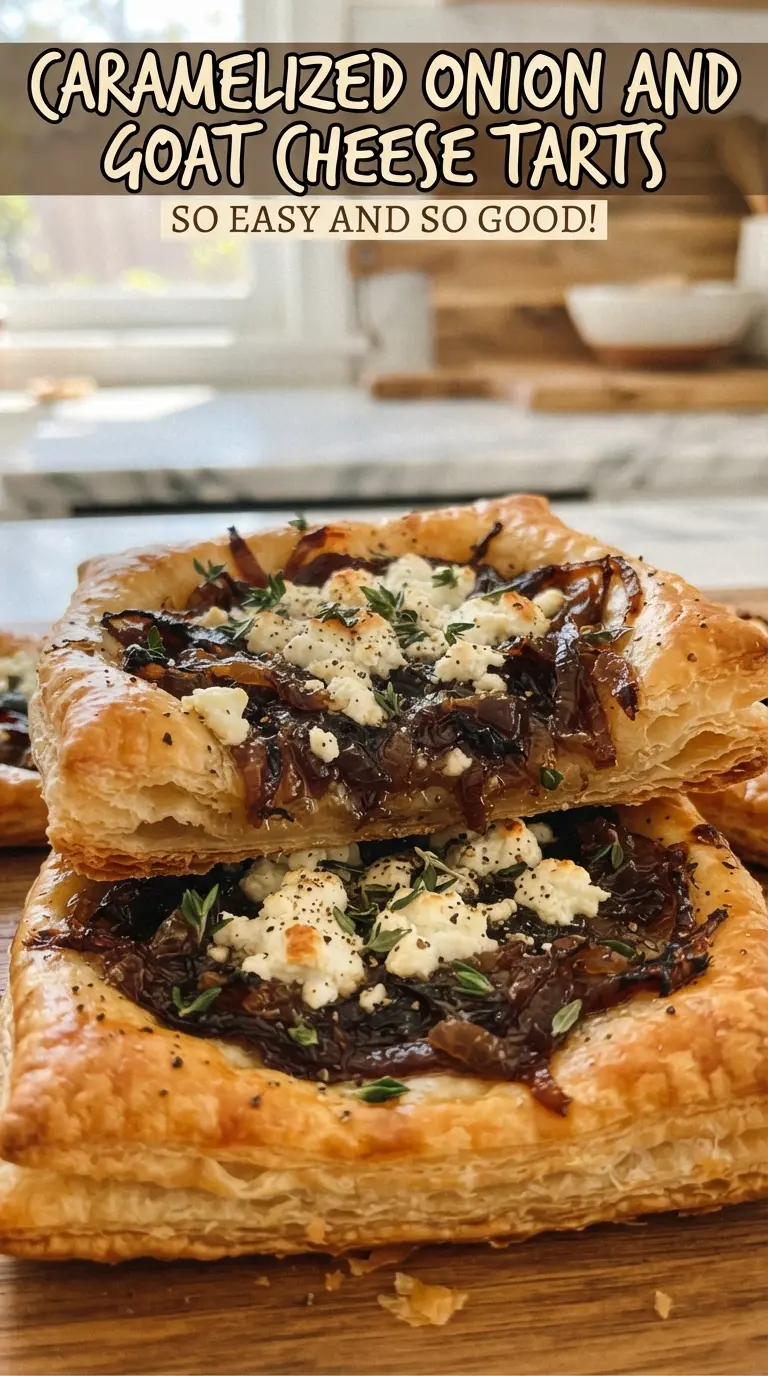
- Yellow onions — These are the backbone of the tart. They soften, sweeten, and eventually turn jammy in a way that red onions or sweet onions can mimic, but not quite replace. Slice them evenly so they cook at the same pace, and keep the heat low enough that they brown rather than scorch.
- Puff pastry — Store-bought puff pastry is the right shortcut here. It gives you the crisp, shattering base this recipe depends on, and there’s no good substitute that behaves the same way in the oven. Keep it thawed but cold; if it gets warm and sticky before baking, the layers won’t lift as well.
- Goat cheese — The tang cuts through the sweet onions and keeps the filling from tasting flat. Feta works if you want a saltier edge, but it brings a drier, sharper result. Crumble it by hand so it lands in small pockets instead of one heavy layer.
- Balsamic vinegar and brown sugar — These deepen the onions at the end without making them taste like dessert. If you skip both, the filling can still work, but it will taste less rounded and less glossy. A teaspoon of sugar plus the vinegar is enough; more starts to push the flavor too far.
Building the Filling and Baking It Until the Edges Lift
Cooking the Onions Low and Slow
Melt the butter with the olive oil over medium-low heat, then add the sliced onions and give them time. Stir often enough that they don’t catch, but not so often that they never pick up color. After 30 to 35 minutes, they should be soft, deep golden, and sticky at the edges; if they still look pale and watery, they need more time before anything else goes in.
Finishing the Onion Mixture
Stir in the thyme, balsamic vinegar, and brown sugar once the onions have already browned. Adding them too early can slow down the caramelization and make the onions stew instead of deepen. Season at the end with salt and pepper, then let the mixture cool slightly so it doesn’t melt the pastry before baking.
Shaping the Pastry
Cut the puff pastry into 12 squares and set them on a lined baking sheet with room between each one. Score a half-inch border around the edge of every square, then prick the center with a fork. That border is what rises into a frame, and the pricked center keeps the middle from ballooning under the filling.
Filling and Finishing in the Oven
Spoon the onions into the centers, then scatter the goat cheese over the top. Brush the borders with beaten egg so they bake shiny and deep golden. The tarts are done when the pastry is puffed all the way around and the bottoms look crisp, not pale; if the center still looks soft and underbaked, give them another minute or two instead of pulling them early.
How to Adapt These Tarts for Different Diets and Make-Ahead Needs
Dairy-Free Version with Olive Oil Only
Use all olive oil instead of the butter and swap the goat cheese for a dairy-free soft cheese that melts a little, not a firm block. The onions will still caramelize, but the filling tastes a bit less rich and a little brighter. If the substitute cheese is very soft, add it sparingly so it doesn’t flood the pastry.
Gluten-Free Puff Pastry Swap
Use a gluten-free puff pastry that’s meant for baking, not a pie crust. It won’t rise quite as high as standard pastry, but the scoring and egg wash still help it bake into crisp squares with defined edges. Keep an eye on browning, since some gluten-free versions color faster at the corners.
Storage and Reheating
- Refrigerator: Store cooled tarts in an airtight container for up to 3 days. The pastry softens a little, especially under the onions, but the flavor stays good.
- Freezer: Freeze baked tarts on a tray, then transfer to a freezer bag for up to 2 months. Reheat from frozen for the best texture instead of thawing first, which can make the pastry soggy.
- Reheating: Warm in a 375F oven or toaster oven until the pastry crisps again and the center is hot. The mistake to avoid is the microwave, which turns the crust leathery and softens the bottom too much.
Answers to the Questions Worth Asking
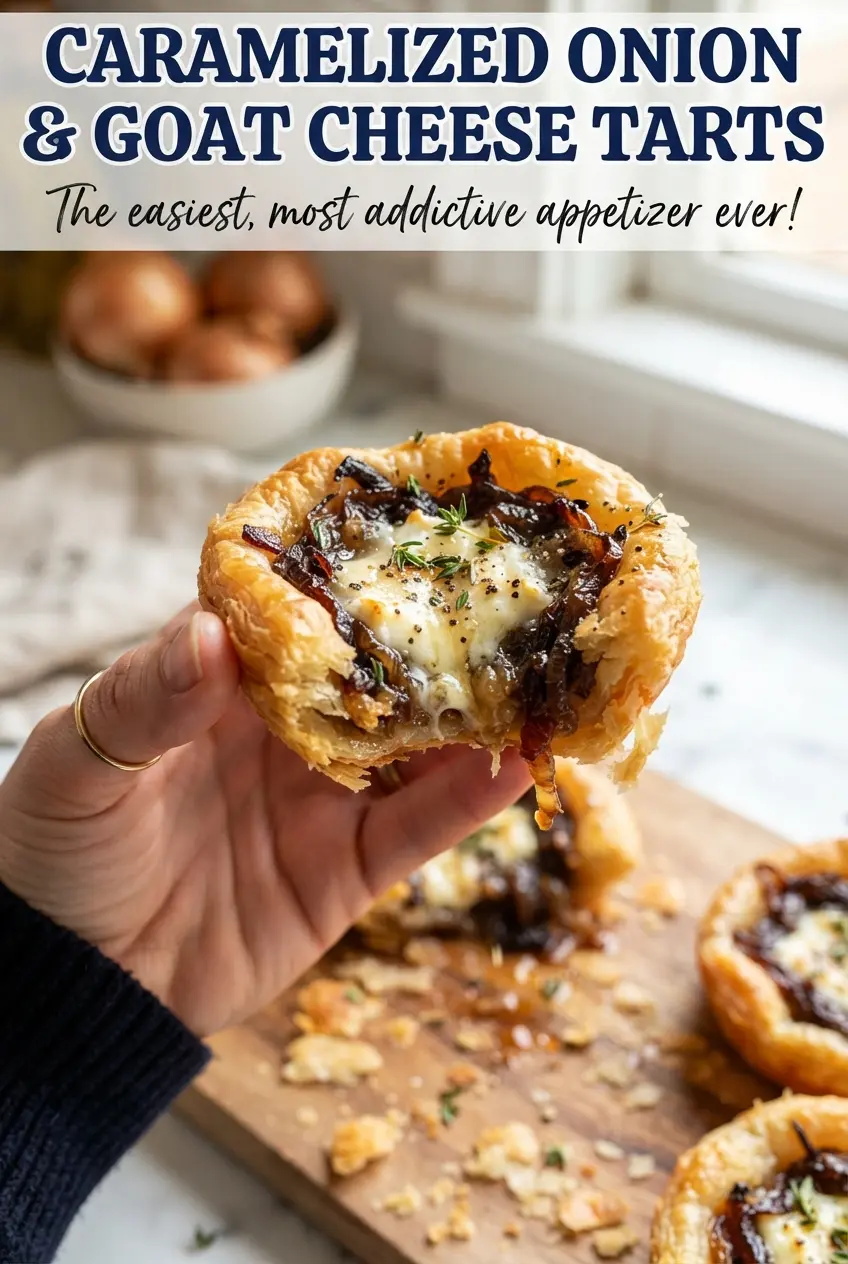
Caramelized Onion and Goat Cheese Tarts
Ingredients
Equipment
Method
- Heat butter and olive oil over medium-low heat. Cook the onions 30-35 minutes, stirring often, until deep golden and jammy.
- Stir in thyme, balsamic vinegar, and brown sugar. Season with salt and pepper and cool slightly.
- Preheat oven to 400°F. Cut puff pastry into 12 squares and place on a lined baking sheet.
- Score a 1/2-inch border around each square. Prick the centers with a fork and brush the borders with beaten egg.
- Spoon caramelized onions into the centers. Top each tart with crumbled goat cheese.
- Bake 15-18 minutes until pastry is puffed and golden. Watch for deep golden edges and center puffing.
- Drizzle with honey. Garnish with thyme and serve warm.