Campfire potatoes come out with tender centers, crisped edges, and that buttery onion flavor that tastes like it belongs beside open flames. The foil packet does the heavy lifting here: it traps heat and steam long enough to soften the potatoes, then the last few minutes over the fire give the edges just enough color to keep every bite interesting.
The trick is slicing the potatoes thin and evenly so they cook at the same pace. Heavy-duty foil matters too, because a thin packet tears easily when you flip it over the grate. Butter cubes scattered through the layers melt into the seasoning and coat everything from the bottom up, which keeps the potatoes from tasting flat or dry.
Below, I’ve added the timing cues that keep this from turning soggy, plus a few smart swaps if you want to change up the seasoning or make these without cheese.
The potatoes got those crisp little edges in the packet and the onions turned sweet and buttery. I flipped it once like you said and they were cooked through in right about 28 minutes.
Campfire potatoes with buttery onions and crisp foil-packet edges are worth bookmarking for your next cookout.
The Trick to Potatoes That Cook Through Before the Packet Burns
The biggest mistake with foil packet potatoes is cutting them too thick and leaving the packet over the fire long enough to char the outside before the centers soften. Thin slices solve most of that problem. They cook fast enough to stay in sync with the onion, and they pick up more butter and seasoning on every layer.
Heat matters too. Medium heat is the sweet spot here. If the fire is raging, the foil scorches before the potatoes get tender. If it’s too cool, the packet steams for too long and you lose the crisp edges that make this side dish worth repeating.
What Each Ingredient Is Actually Doing Here
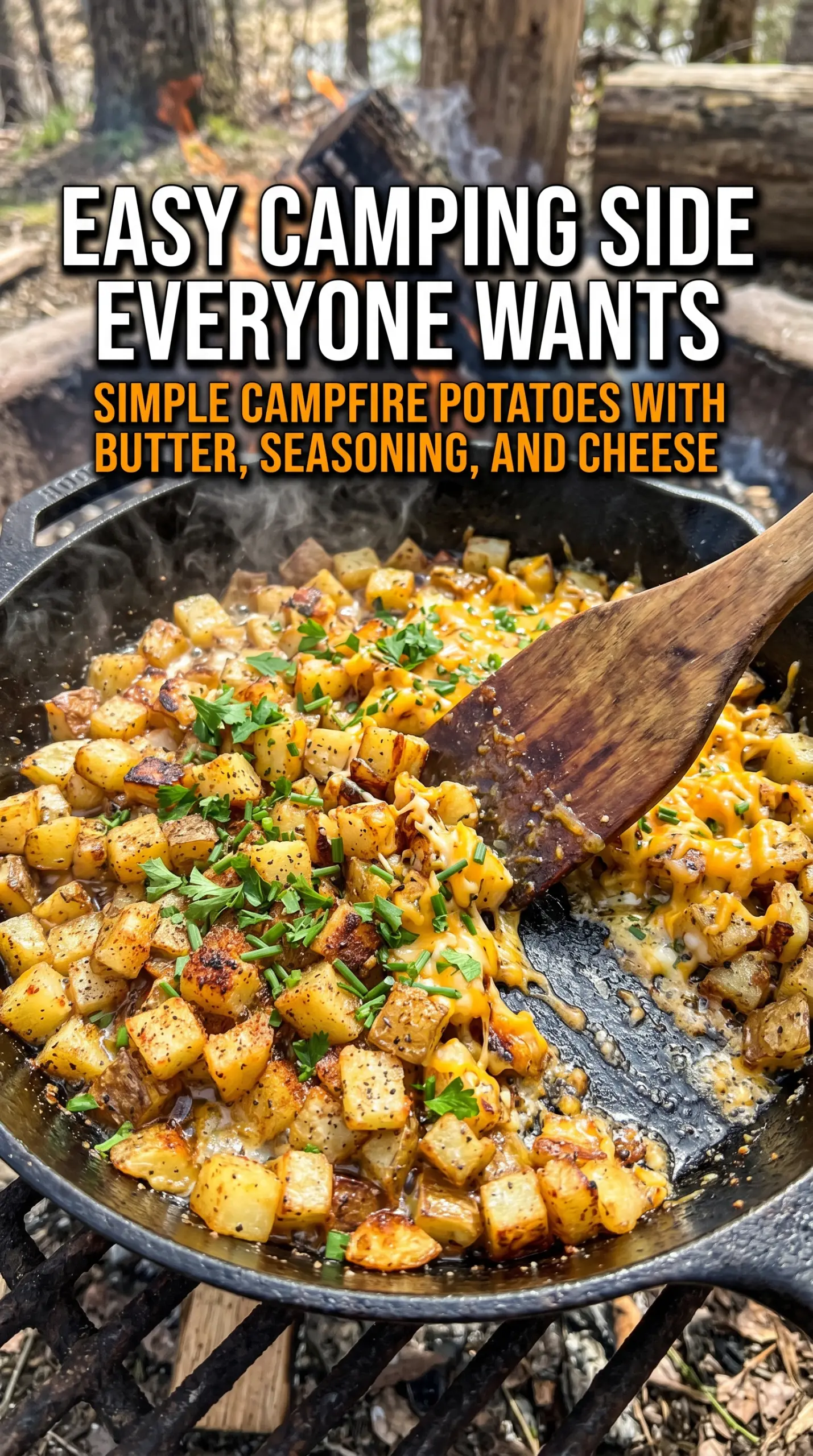
- Potatoes — Thin, even slices are the difference between a packet that finishes on time and one that still tastes raw in the middle. Russets go fluffier and soak up butter; Yukon Golds hold their shape a little better and stay creamy.
- Onion — The onion softens and turns sweet as it cooks, which keeps the potatoes from tasting one-note. Slice it fairly thin so it melts into the packet instead of staying crunchy.
- Butter — Cubed butter distributes better than melted butter here because it melts gradually and bastes the layers as the packet heats. Margarine works in a pinch, but it won’t give the same rich finish.
- Garlic powder and paprika — Garlic powder coats the potatoes evenly without burning the way fresh garlic can over open heat. Paprika adds color and a warm edge that reads as roasted, not just salty.
- Heavy-duty foil — This is not the place for flimsy foil. You need a packet that can handle flipping and steam without splitting open over the grate.
- Cheddar cheese — Optional, but it adds a salty finish and a little stretch if you reseal the packet for the last couple of minutes. Use it only after the potatoes are cooked through so it melts without turning greasy.
How to Build the Packet So Nothing Burns Before It Turns Tender
Layering the Potatoes and Onions
Lay down a double layer of foil, then spread the potatoes and onions in an even mound so the thinner pieces aren’t stuck at the edge of the packet. The goal is a flat, compact bundle rather than a loose pile, because a packed center cooks more evenly and holds onto the butter. If the pile is too thick, the middle steams slowly while the outside starts to dry out.
Seasoning and Buttering the Layers
Dot the potatoes with butter cubes before folding the foil, then sprinkle the seasoning over everything so it gets distributed as the butter melts. Tossing everything in a bowl works too, but the layered method lets the butter seep down through the potatoes as they cook. That slow melt is what gives you those glossy, seasoned edges instead of dry, dusty slices.
Sealing and Cooking Over the Grate
Seal the packet tightly, leaving a little room for steam but not enough for the butter to leak out. Set it over medium heat and flip it halfway through so the bottom doesn’t scorch. When the packet feels puffed and you can slide a fork through the potatoes without resistance, they’re done; if you feel firm centers, give them a few more minutes before opening.
Finishing With Cheese
If you’re using cheddar, open the packet carefully so the steam doesn’t rush out and burn your hand, then scatter the cheese over the hot potatoes and seal it again for a minute or two. The residual heat melts the cheese without cooking it hard. Skip this step if the potatoes are already browned the way you like them, because once the packet is open they’ll lose heat fast.
Make It Smokier With Chili Powder
Swap half the paprika for chili powder if you want a deeper, warmer seasoning with a little bite. It won’t make the potatoes spicy-hot, but it does pull them toward a more campfire-forward flavor that works well with burgers or grilled sausages.
Dairy-Free Campfire Potatoes
Use a plant-based butter that melts cleanly and skip the cheese, or add a dairy-free shredded topping at the very end. The texture stays close, but the flavor will be a little less rich, so season the packet a touch more assertively.
How to Scale It for a Crowd
Double or triple the ingredients, but keep each packet small enough that the potatoes sit in no more than two layers. Bigger packets take longer and cook unevenly, especially over live fire, so it’s better to make several medium packets than one oversized one.
Storage and Reheating
- Refrigerator: Store leftovers in an airtight container for up to 4 days. The potatoes soften a bit after chilling, but the flavor holds well.
- Freezer: They freeze, but the texture turns mealy once thawed, so I don’t recommend it.
- Reheating: Reheat in a skillet over medium-low heat with a small knob of butter, or warm them in a 375°F oven until hot. The common mistake is blasting them in the microwave, which makes the potatoes rubbery and dries out the edges.
Questions I Get Asked About This Recipe
Campfire Potatoes
Ingredients
Equipment
Method
- Layer the thinly sliced potatoes and sliced onion on a large double-layer of heavy-duty aluminum foil. Make sure the layers are even so the slices cook through at the same rate.
- Dot the potato and onion layers with cubed butter cubes and season with garlic powder, paprika, salt, and pepper. Spread the seasonings across the top so every forkful tastes well-seasoned.
- Fold the foil into a sealed packet, pressing seams shut to trap steam. Leave no gaps so the potatoes roast in their own heat.
- Place the sealed foil packet on a campfire grate over medium heat for 25-30 minutes. Cook until the potatoes are tender, watching for steady sizzling rather than burning.
- Flip the packet halfway through cooking for 12-15 minutes more. Reposition it so both sides brown and steam evenly.
- Open the packet, sprinkle with shredded cheddar cheese if desired, and reseal it. The opened steam should be visibly active before resealing.
- Set the resealed packet back on the campfire grate for 2 minutes to melt the cheese. Look for the cheese to soften and lightly cling to the potatoes.
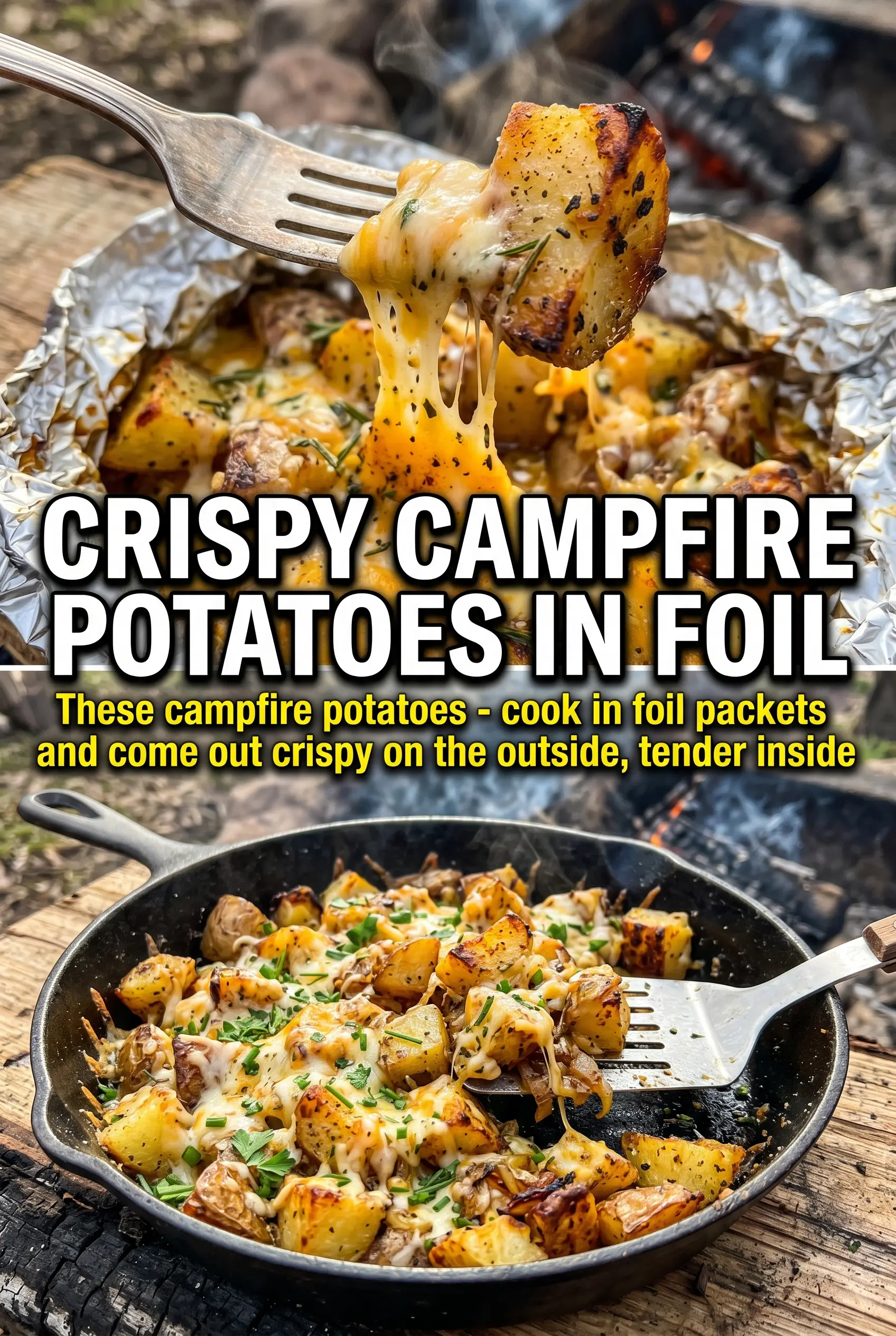
- Serve the campfire potatoes hot directly from the packet. Use a fork to lift the golden, seasoned potato slices and onions, just like a steaming reveal.