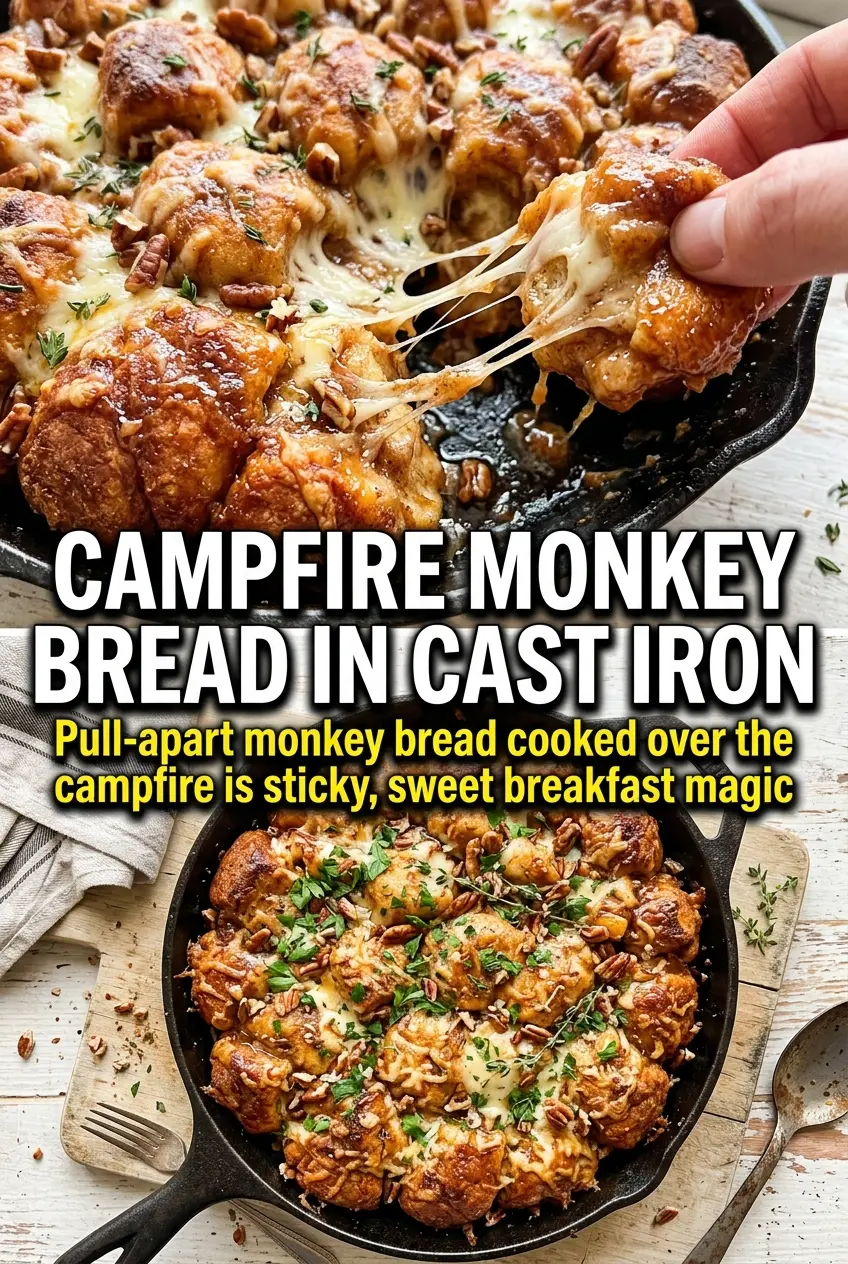
Golden campfire monkey bread comes out with crisp caramelized edges, a soft middle, and cinnamon sugar in every pull-apart piece. It’s the kind of dessert that disappears fast because everyone reaches in for “just one more” warm bite, then comes back again when the sticky glaze starts settling into the cracks.
The trick here is cutting the biscuits small enough that they bake through before the outside gets too dark. The cinnamon sugar coating gives each piece a dry, sandy finish before the butter and brown sugar soak down through the layers, which is what creates that glossy caramel top once the Dutch oven comes off the coals.
Below, I’ve included the exact campfire setup that keeps the bread from burning on the bottom, plus a few swaps and storage notes for when you want to make it at home instead of over the fire.
The biscuit pieces cooked all the way through and the caramel pooled in the bottom just enough to make every pull sticky and soft. I was worried about the center staying doughy, but 30 minutes over the coals was perfect.
Save this campfire monkey bread for your next Dutch oven dessert — it’s the sticky, pull-apart treat that bakes up golden over coals.
The Part That Keeps the Center from Staying Doughy
Campfire monkey bread fails for one reason more than any other: the outside races ahead while the middle stays raw. That happens when the biscuit pieces are too large or the heat is too aggressive. Cutting each biscuit into quarters gives you enough surface area for good caramelization without leaving a thick, uncooked center trapped inside.
The other thing that matters is where the heat comes from. A Dutch oven over coals needs heat from the bottom and the top, or the bread browns unevenly and stays pale in the middle. You want a steady bed of coals underneath and a layer on the lid so the dough bakes like an oven, not like a skillet with a hot spot.
What Each Ingredient Is Actually Doing in This Dutch Oven Dessert

- Refrigerated biscuit dough — This is the shortcut that makes the recipe work over a campfire. The dough is sturdy enough to hold up to the melted butter and still bake into soft, pull-apart layers. If you use a flakier biscuit style, expect a lighter, more pastry-like texture.
- Sugar and cinnamon — This dry coating clings to the biscuit pieces before they hit the butter, so every bite gets seasoned all the way through instead of just on top. A fresh cinnamon jar matters here because stale cinnamon tastes flat once it bakes.
- Brown sugar and melted butter — This is the caramel glaze. Brown sugar gives you that deeper, molasses-heavy finish that plain sugar can’t match, and the butter helps it melt into the spaces between the biscuit pieces. Don’t swap in margarine if you want the same flavor or the same glossy finish.
- Cooking spray — It keeps the caramel from welding itself to the Dutch oven. Use enough to coat the sides well, especially if your pot tends to grab.
Building the Coals, Layering the Dough, and Pulling It at the Right Time
Coating the Biscuit Pieces
Cut each biscuit into quarters before anything else. Smaller pieces bake more evenly and give you more edges for the cinnamon sugar to stick to. Toss them in the sugar-cinnamon mix until every surface looks dusty and coated, then shake off any big clumps so the glaze can work its way between the pieces later.
Loading the Dutch Oven
Spray the Dutch oven well, then layer in the coated dough pieces without packing them down. Crowding helps the bread hold together, but pressing it flat turns the center dense and gummy. Pour the melted butter and brown sugar over the top and let it sink naturally into the cracks; don’t stir once it’s in the pot or you’ll knock off the coating you just built.
Cooking Over Coals
Cover the Dutch oven and set it over hot campfire coals, then place coals on the lid too. That top heat is what cooks the center through while the bottom creates the caramelized crust. After 25 minutes, lift the lid and check for a deep golden color and no raw dough hiding in the center; if the middle still looks pale and soft, give it a few more minutes before you invert it.
Inverting and Serving
Let the monkey bread rest for 5 minutes before turning it out. That short rest helps the caramel settle so it doesn’t run everywhere the second you flip the pot. Invert onto a plate in one confident motion, then pull it apart while it’s still warm enough to stretch slightly and release the sticky glaze.
Three Ways to Adjust It for a Different Fire, a Different Crowd, or a Different Diet
Make it dairy-free
Use a plant-based butter that melts cleanly and tastes neutral. The bread will still caramelize, but the glaze will be a little less rich and a bit softer once it cools.
Bake it in the oven instead of over coals
Use the same Dutch oven and bake at 350°F for about 30 to 35 minutes. The texture stays nearly the same, but you’ll get a more even brown top and a little less campfire smoke flavor.
Add chopped pecans for a nutty crunch
Scatter a handful of chopped pecans between the biscuit layers or over the top before cooking. They toast in the caramel and add a crisp bite that plays well with the soft center.
Storage and Reheating
- Refrigerator: Store leftovers in an airtight container for up to 3 days. The caramel will firm up and the bread will lose some of its softness.
- Freezer: It freezes, but the texture turns less tender after thawing. Wrap portions tightly and freeze for up to 1 month if you want to save it anyway.
- Reheating: Warm individual portions in the microwave for 15 to 20 seconds, or reheat larger amounts in a 300°F oven until heated through. Don’t blast it on high heat or the sugar hardens before the center softens.
Questions I Get Asked About This Recipe
Campfire Monkey Bread
Ingredients
Equipment
Method
- Cut each refrigerated biscuit into quarters so all pieces are bite-size and cook evenly.
- Mix sugar and cinnamon, then add biscuit pieces and shake until every piece is coated in cinnamon sugar.
- Spray a Dutch oven with cooking spray to prevent sticking when you invert the monkey bread.
- Layer the coated biscuit pieces in the Dutch oven, spreading them out evenly.
- Mix melted butter and brown sugar, then pour over the biscuit pieces so they bake with a caramel glaze.
- Cover the Dutch oven and place it on campfire coals with extra coals on top of the lid for even heat.
- Cook for 25-30 minutes until golden brown and cooked through, watching for a set, caramelized top.
- Let cool for 5 minutes so the caramel firms slightly and releases cleanly.
- Invert onto a plate and pull apart to serve, exposing the golden pull-apart pieces.