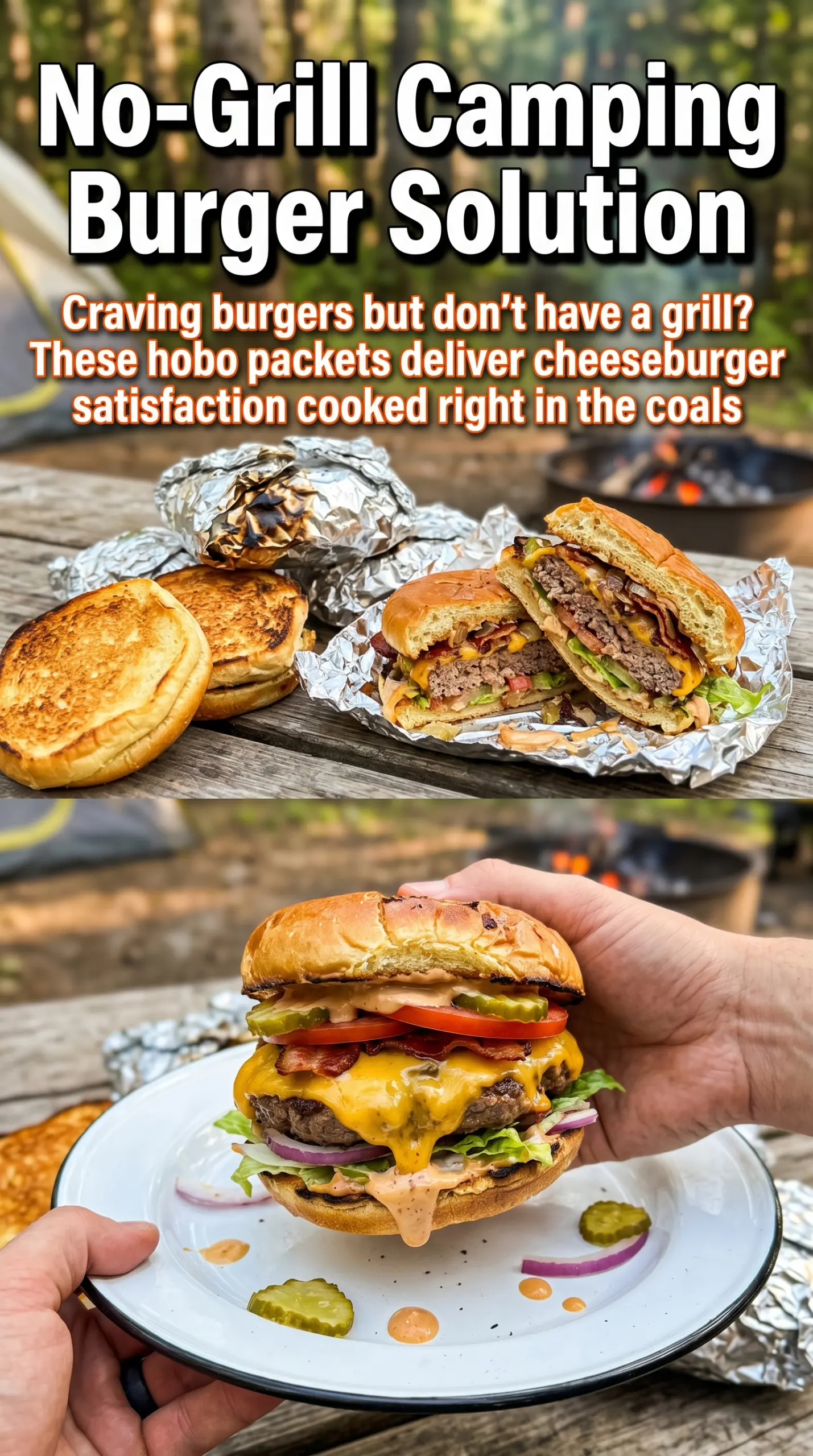
Campfire cheeseburger hobo packets turn a classic burger dinner into a smoky, hands-off meal with all the best parts in one foil bundle. The potatoes soften underneath the beef, the onions sweeten as they cook, and the cheese melts over the top right at the end so every bite feels complete instead of scattered across a bun and a plate.
This version works because the ingredients are layered in the right order. The potatoes go on the bottom so they get direct heat and finish tender, while the patty sits above them and seasons the vegetables as it cooks. Tomatoes wait until the top so they soften without disappearing, and the cheese is added after the main cook so it stays creamy instead of turning greasy or dry. Heavy-duty foil matters here, too. Thin foil tears easily once the packet is flipped over the heat.
Below, you’ll find the little details that make these packets cook evenly on a grate, plus a few smart swaps if you’re cooking over a fire, a grill, or just trying to stretch dinner with what you already have.
The potatoes were tender, the burger stayed juicy, and the cheese melted perfectly after those last few minutes in the foil. We ate them right out of the packets and there wasn’t a crumb left.
Save these campfire cheeseburger foil packets for an easy all-in-one dinner with juicy beef, tender potatoes, and melted cheddar.
The Reason the Potatoes Go Under the Burger, Not Beside It
Foil packets fail when the ingredients all cook at the same speed. Potatoes need the most time, so they have to sit where the heat hits hardest. If you tuck them beside the patty, they often stay firm while the beef is already done, and then you end up overcooking the burger just to save the potatoes.
Layering the potatoes and onions on the bottom gives them a head start and lets them steam in the beef juices as they cook. That makes the potatoes tender instead of dry, and the onions turn soft and sweet without burning. The tomatoes go on top because they need less time and a little protection from direct heat. If your packets ever come out uneven, this order is usually the reason.
What Each Ingredient Is Actually Doing in These Packets
- Ground beef — Use regular ground beef with enough fat to stay juicy over the fire. Very lean beef can work, but it dries out faster in foil, especially if your heat runs hot.
- Potatoes — Thin slices matter more than the variety. Slice them no thicker than 1/8 inch so they soften in the same window as the burger; thicker pieces stay hard at the center.
- Onion — Sliced onion adds moisture and a little sweetness to the bottom of the packet. Yellow or white onions both work well, and there’s no need to pre-cook them if they’re sliced thin.
- Tomatoes — These bring the burger flavor back toward a cheeseburger instead of just a meat-and-potato packet. Keep the slices modest so they soften without flooding the foil with liquid.
- Cheddar cheese — Add it at the end, not at the beginning. Early cheese turns oily and tight; late cheese melts into a proper blanket.
- Heavy-duty foil — This is worth using. Thin foil is more likely to split when you flip the packets, and once steam escapes, the potatoes take longer and the burger can dry out.
How to Build the Packet So It Cooks Evenly Over the Fire
Season and Shape the Beef
Form the beef into four thin patties instead of one thick burger. Thin patties cook through in the same time the potatoes need, which keeps the packet from going off balance. Season both sides with salt and pepper before it goes into the foil so the meat itself carries flavor. If you pack the beef too tightly, it turns dense instead of juicy, so shape it just enough to hold together.
Stack the Layers with the Heat in Mind
Lay the potatoes and onions directly on the foil, then place the patty on top and finish with the tomato slices. This setup lets the potatoes sit in the hottest zone while the burger drips flavor down through the vegetables. Drizzle on the ketchup and mustard before sealing, but don’t overdo it or the packet turns soupy. Leave a little space inside the foil so the steam can circulate.
Seal, Flip, and Watch for the Right Doneness
Fold the foil tightly so the seams are crimped shut and the packet won’t leak when you move it. Cook over medium heat on a grate, not roaring flames, or the outside of the foil will scorch before the potatoes soften. Flip halfway through so both sides get even heat. The packet is ready when the potatoes are tender if pierced through the foil and the burger no longer feels soft in the center.
Melt the Cheese at the End
Open each packet carefully because hot steam builds up fast. Add the cheddar right over the hot patty, then close the packet again for a minute or two so the residual heat melts it. That short finish gives you stretchy cheese without overcooking the beef. Let the packets rest for about five minutes before serving so the juices settle instead of running everywhere the second you open them.
Three Ways to Make These Foil Packets Work for Different Eaters
Dairy-Free Burger Packet
Skip the cheddar and finish with a spoonful of ketchup and mustard after opening the packet. You lose the creamy melt, but the burger still tastes complete because the beef and vegetables are already seasoned in the foil.
Gluten-Free Serving Style
Serve the packets straight from the foil instead of on buns, or tuck the finished burger and vegetables into gluten-free rolls. The filling itself is naturally gluten-free as long as your condiments are, so this one needs almost no adjustment.
Make It Meatier with Bacon
Add a strip or two of cooked bacon on top of the patty before sealing the packet. It brings smoky saltiness and a little extra fat, which helps if you’re using lean beef. Uncooked bacon can work too, but it needs to be sliced very thin so it finishes at the same pace as the potatoes.
Storage and Reheating
- Refrigerator: Store leftovers in an airtight container for up to 3 days. The potatoes soften a little more after chilling, but the flavor holds well.
- Freezer: These packets don’t freeze well once cooked because the potatoes turn grainy and watery when thawed. If you want to prep ahead, assemble the raw packets and freeze them flat, then thaw before cooking.
- Reheating: Reheat in a covered skillet over low heat or in a 325°F oven until warmed through. High heat dries out the beef and makes the potatoes tough, so slow and covered is the better move.
Answers to the Questions Worth Asking
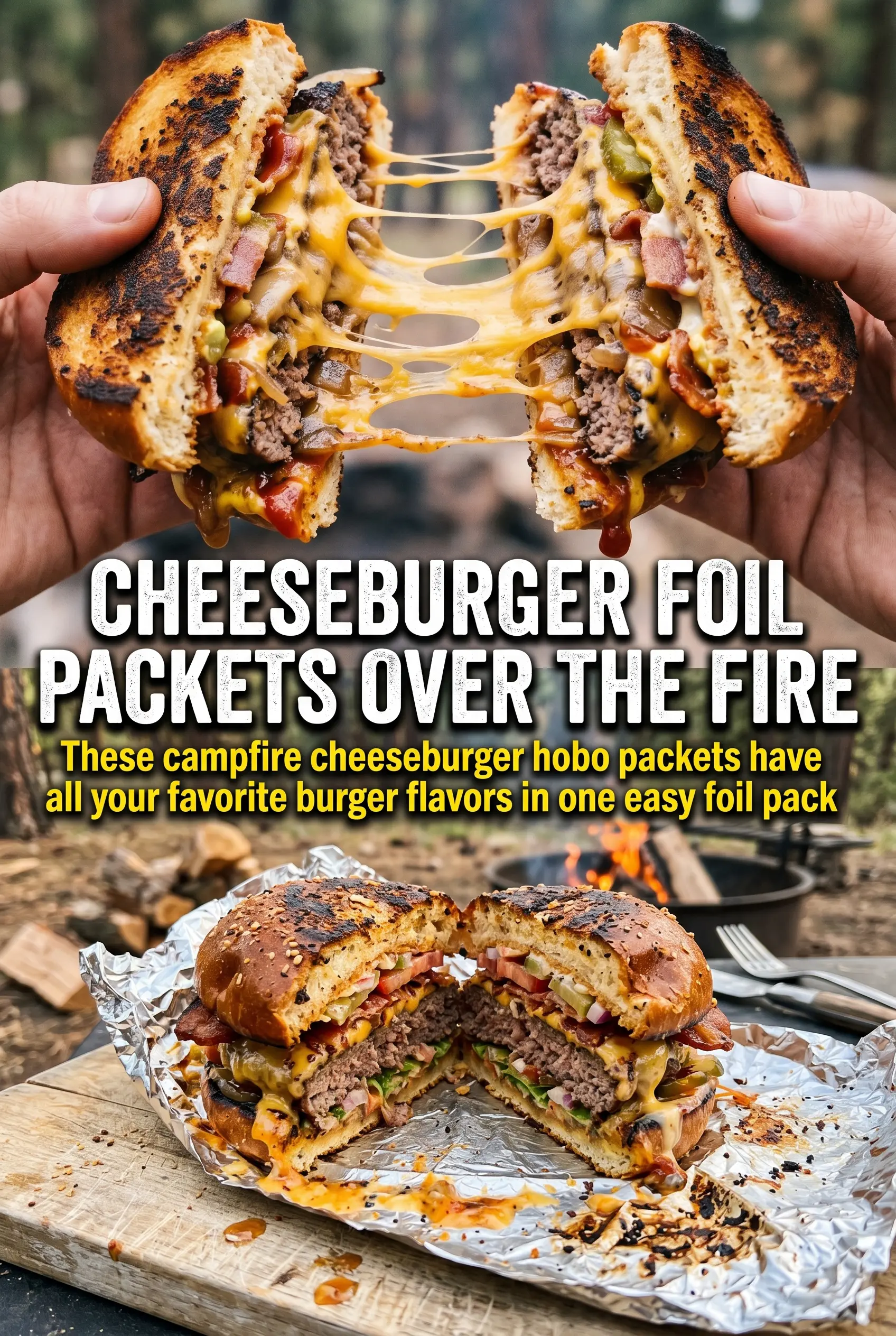
Campfire Cheeseburger Hobo Packets
Ingredients
Method
- Form ground beef into 4 thin patties and season with salt and pepper. Make them thin so they cook through inside the packets.
- On each foil sheet, layer sliced potatoes and onions. Use a single even layer so the potatoes steam tender.
- Place burger patty on top, then add tomato slices. Arrange tomatoes directly over the beef so they release juices.
- Drizzle with ketchup and mustard. You should see sauce streaks across the top layer before sealing.
- Fold foil into sealed packets. Press seams firmly so no juices leak out.
- Place packets on campfire grate over medium heat. Cook until potatoes are tender and meat is cooked through.
- Cook for 25 minutes, flipping halfway through. Look for gentle bubbling at the packet edges and keep the heat steady.
- Open packets, add cheese slices, and reseal briefly to melt. You should see cheddar melt and start to stretch.
- Let packets cool for 5 minutes before opening. This helps the filling set so it doesn’t spill when served.
- Serve in packets or on hamburger buns. Choose buns if you want extra grip for the cheesy filling.