Campfire bread is the kind of thing that disappears before it even has a chance to cool. The outside turns deeply golden and lightly crisp where it faced the heat, while the inside stays soft and fluffy, with just enough chew to feel satisfying. Wrapped around a stick and baked over coals, it has the kind of rustic charm that makes people hover near the fire and ask when the next batch is ready.
The method is simple, but the details matter. The dough needs enough hydration to stay pliable without sliding off the stick, and the fire has to be coals, not open flames, or the outside will scorch before the center cooks. A little sugar and powdered milk help the bread brown and give it a warmer, richer taste than plain flour dough alone.
Below, I’ll show you how to get the dough texture right, what to watch for while it cooks, and a few easy ways to change it up depending on what you’re serving with it.
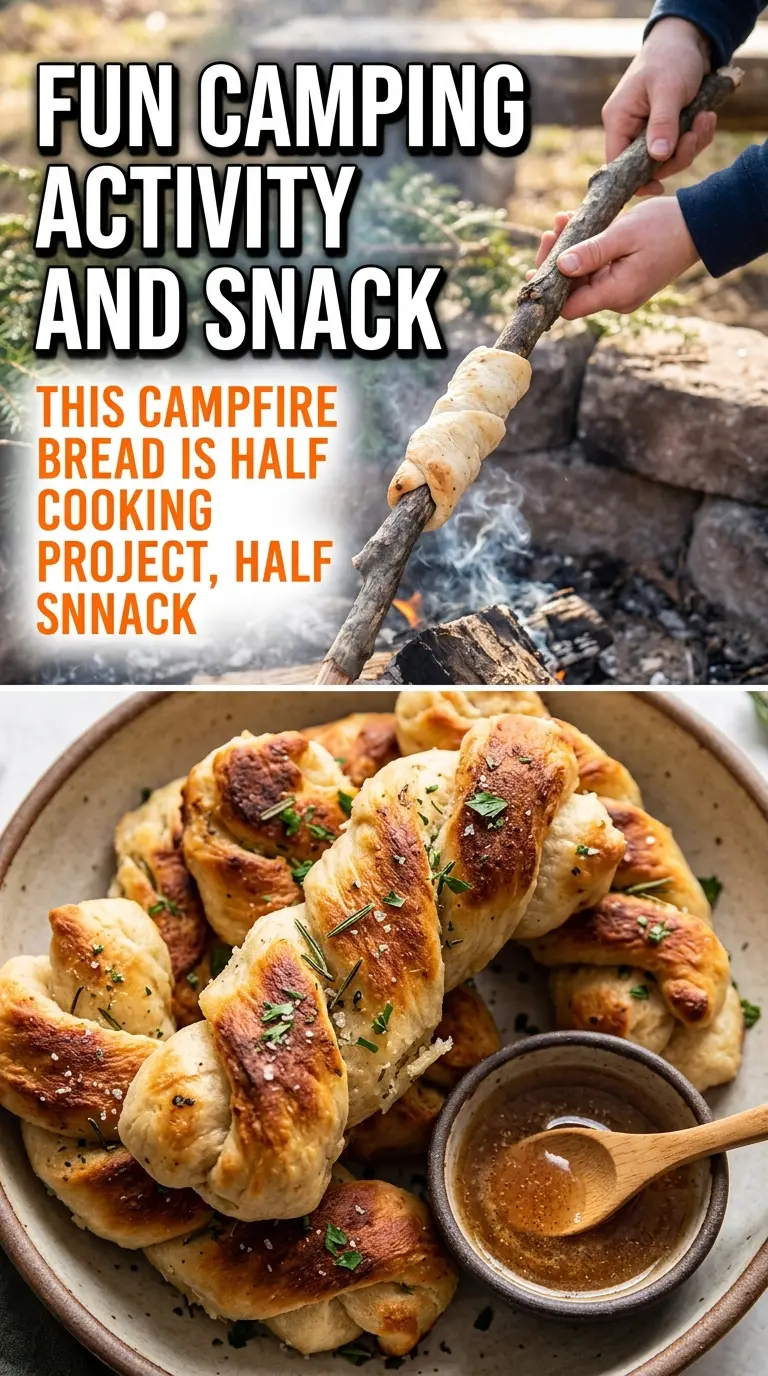
The dough wrapped cleanly around the sticks and browned evenly over the coals. Mine was done right at 14 minutes, and the inside stayed soft instead of doughy.
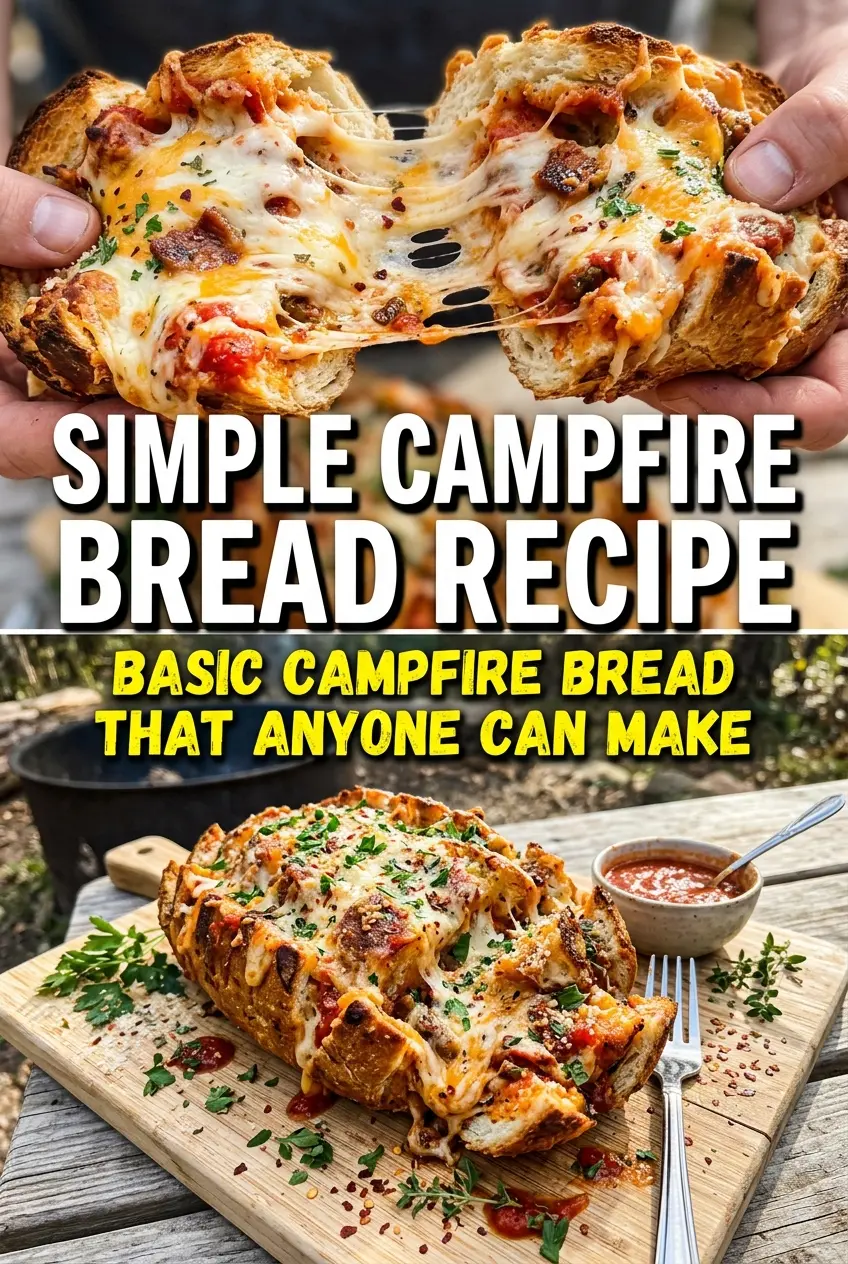
Save this campfire bread for your next cookout when you want warm, golden bread baked right over the coals.
The Difference Between Golden Bread and Burnt Dough Over a Fire
The biggest mistake with campfire bread is treating the flames like an oven. Flames are uneven and fierce, which means the outside of the dough can blacken before the middle has a chance to set. Coals give steady heat and let the bread cook through at the same pace the surface turns golden.
The second mistake is making the dough too dry. A stiff dough tears when you spiral it around the stick, then loosens and slips once it starts warming up. Slightly sticky dough clings better, which is exactly what you want when the only thing holding it in place is gravity and a roasting stick.
What the Powdered Milk and Sugar Are Doing Here
- All-purpose flour — This gives the bread its structure and enough elasticity to wrap around the stick without snapping back. Bread flour would make the texture a little chewier, which isn’t a bad thing, but all-purpose stays lighter and more forgiving.
- Baking powder — This is the lift. Without it, you’d get a denser, flatter wrap that cooks up more like basic dough than bread. Fresh baking powder matters here because the dough has a short cooking time and needs a reliable rise.
- Powdered milk — This adds a subtle dairy richness and helps the surface brown faster. If you don’t have it, you can leave it out, but the bread will taste plainer and color a little less evenly.
- Water — The amount matters more than the exact brand of flour. Add it gradually if your flour is dry, because you’re aiming for a soft dough that just barely holds together without feeling wet.
- Roasting sticks — Use clean, sturdy sticks or food-safe skewers made for campfire cooking. Thin sticks heat up faster and make turning awkward, so a solid handle gives you better control over the bread as it bakes.
How to Wrap, Roast, and Keep the Bread Turning
Mixing the Dough
Stir the dry ingredients together first so the baking powder and powdered milk are spread evenly through the flour. Add the water and mix until you get a shaggy dough that comes together in the bowl or bag. It should feel soft and a little tacky, not wet enough to puddle or so dry that it cracks when pressed.
Shaping the Spirals
Divide the dough into 10 portions and roll each one into a rope about 1 inch thick. Wrap the rope in a spiral around the end of the stick, overlapping slightly so there aren’t gaps where the dough can collapse. If it keeps springing loose, the rope is too dry or too thick, and stretching it gently before wrapping helps it grip better.
Cooking Over the Coals
Hold the bread over glowing coals and rotate it constantly so one side doesn’t get too much heat. You’re looking for a deep golden crust with a dry, set surface that sounds slightly hollow when tapped. If the outside is browning too fast, lift the stick higher; if it’s pale after several minutes, move closer to the coals rather than waiting for flames to do the job.
Sliding It Off and Serving Warm
Once the bread is cooked through, slide it off the stick while it’s still warm and flexible. That’s the moment when it releases cleanly instead of tearing. Serve it right away with butter or jam, because campfire bread is at its best when the crust is still crisp and the center is soft enough to pull apart by hand.
How to Change Campfire Bread Without Losing the Good Part
Dairy-Free Version
Leave out the powdered milk and use water as written. The bread will still cook up well, but it won’t brown quite as deeply or taste as rich, so serving it with butter, honey, or jam helps bring back some of that extra roundness.
Sweet Cinnamon Campfire Bread
Add 1 teaspoon cinnamon to the dry ingredients and sprinkle the shaped ropes with a little cinnamon sugar before cooking. The sugar caramelizes at the surface, so watch the heat a little more closely or the outside can darken faster than the center cooks.
Savory Herb Bread
Swap the sugar for a pinch more salt and add dried rosemary, thyme, or garlic powder to the flour. This version leans more toward a picnic side dish than a snack, and it’s especially good with soup or grilled meat.
Storage and Reheating
- Refrigerator: Store cooled bread in an airtight container for up to 2 days. It will soften a bit, especially if wrapped while still warm.
- Freezer: Freeze the baked bread well wrapped for up to 1 month. Thaw at room temperature before reheating, and expect a slightly less crisp crust after freezing.
- Reheating: Warm in a dry skillet over low heat or back over gentle coals for a few minutes. Don’t use high heat, or the outside will dry out before the center softens again.
Questions I Get Asked About This Recipe
Campfire Bread
Ingredients
Method
- Mix all-purpose flour, baking powder, salt, sugar, and powdered milk in a large bowl or zip-top bag until evenly combined.
- Add water and mix until a dough forms; it should be slightly sticky.
- Divide the dough into 10 portions, keeping unused portions covered so they don’t dry out.
- Roll each portion into a long rope about 1 inch thick.
- Wrap a dough rope around the end of a roasting stick in a spiral pattern, leaving the stick end secure.
- Hold the wrapped sticks over campfire coals (not flames), rotating constantly for 12–15 minutes until golden brown and cooked through.
- Slide the bread off the stick and serve warm.