Warm banana boats turn into a gooey little dessert pocket the second the chocolate melts into the soft fruit and the marshmallows puff up under the foil. The peel holds everything together, so you get that spoonable campfire dessert without needing plates, bowls, or any real cleanup. It’s the kind of treat that disappears fast because every bite tastes like a mashup of banana split, s’mores, and melted candy bar.
What makes this version work is the order and the packaging. A ripe banana gives you sweetness and softness, but not the mushy mess you’d get from an overripe one slipping apart on the grate. The foil traps enough heat to melt the chips and toast the marshmallows from all sides, while the peel protects the fruit so it stays structured long enough to eat straight from the boat. If you’ve ever ended up with scorched toppings and a raw banana center, the fix is simple: use medium heat and give the packets a couple of minutes to rest before opening them.
Below you’ll find the little details that matter, including the best banana ripeness, what to swap when you’re out of one topping, and how to keep the bananas from turning into a leaky foil mess.
The chocolate melted all the way through and the marshmallows got perfectly gooey without burning. I used the peanut butter chips too, and it tasted like a banana split right off the campfire.
Save these gooey campfire banana boats for the nights when you want a no-fuss dessert with melted chocolate, marshmallows, and that spoon-from-the-peel finish.
The Peel Is the Pan Here, So Don’t Rush the Ripeness
The biggest mistake with banana boats is using bananas that are either too firm or too soft. Too firm, and they won’t turn tender enough in the time the chocolate needs to melt. Too soft, and the peel splits open before the toppings are fully warmed, which leaves you with a messy packet and banana mush sliding onto the grate.
Look for bananas with yellow skins and a few brown freckles. That stage gives you sweetness and structure. The peel should still be intact and easy to cut through cleanly with a knife. If the bananas are heavily spotted and squishy, they’ll still taste fine, but the boat shape won’t hold up as well once the filling starts to melt.
What Each Topping Is Doing in the Banana Boat
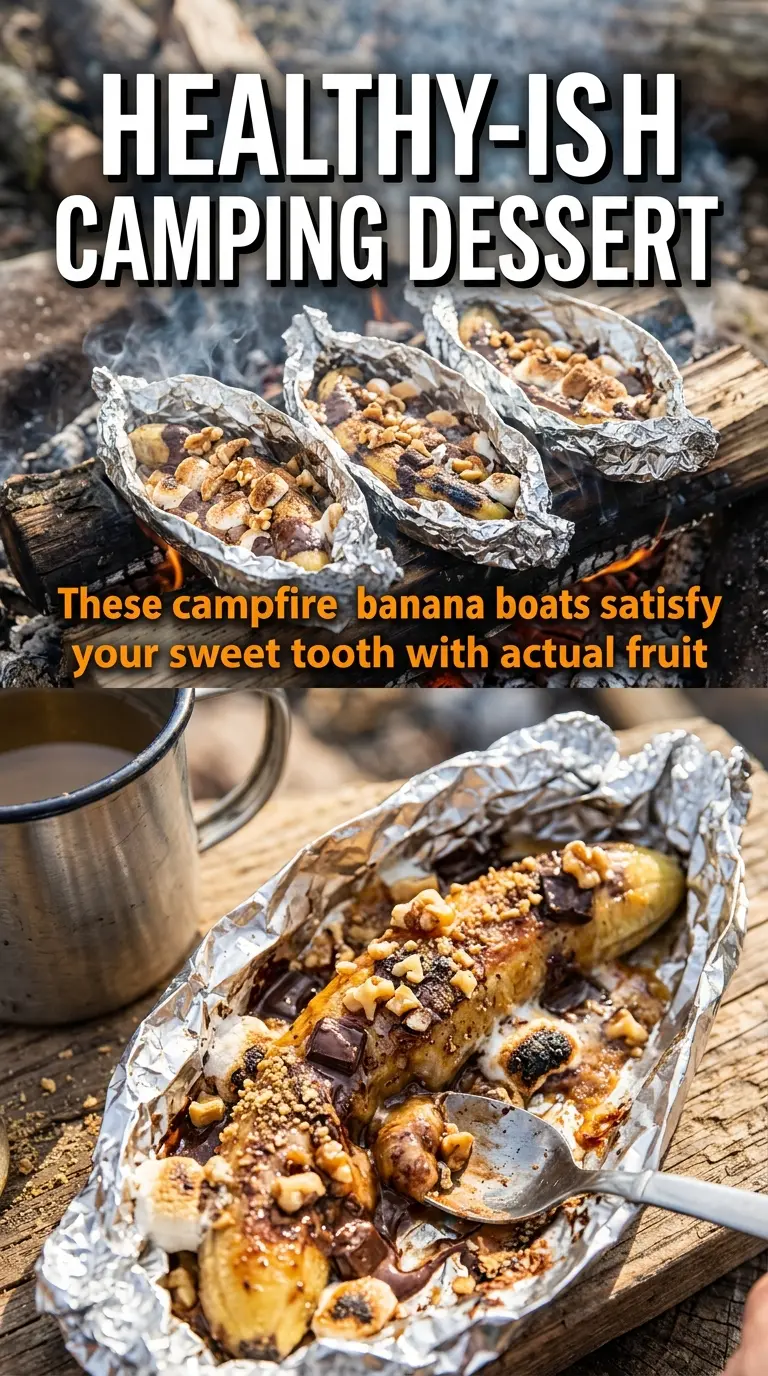
- Bananas — These are the base and the bowl. Ripe bananas give you the best balance of sweetness and structure. Green-leaning bananas stay starchy and don’t soften enough, while overripe bananas collapse.
- Chocolate chips — Chips melt into a thick, glossy filling that pools through the banana instead of running everywhere. Semi-sweet gives the cleanest balance, but milk chocolate works if you want a sweeter, more dessert-like result.
- Mini marshmallows — Mini marshmallows melt faster and more evenly than full-size marshmallows. That matters because the bananas only need a short cook, and larger marshmallows can stay oddly firm in the middle.
- Graham cracker pieces — These add the crunch that keeps the filling from tasting flat. Crush them by hand so you get a mix of fine crumbs and little chunks; that texture reads better than uniform dust.
- Peanut butter chips — Optional, but worth using if you want a salty-sweet finish with a little more depth. They don’t melt as smoothly as chocolate, so sprinkle them in with the chocolate rather than on top where they can dry out.
- Foil — This isn’t just for cleanup. It creates the trapped heat that melts the toppings without scorching the fruit. Thin foil works, but a double layer is smarter if your campfire grate runs hot.
Building the Boats So the Filling Stays Inside
Cutting the Pocket
Slice each banana lengthwise through the peel, but stop before you cut all the way through the bottom. You want a hinge, not two separate halves. Then press the peel open just enough to form a pocket. If you cut too deep, the banana will spread apart in the foil and the toppings will slide out before they melt.
Loading the Filling
Fill the pocket with chocolate chips, marshmallows, graham cracker pieces, and peanut butter chips if you’re using them. Don’t pack the banana so tightly that the peel tears. A generous layer is enough, because the heat softens everything quickly and the toppings settle as they melt. Aim for a full top, not an overstuffed one.
Wrapping for the Fire
Wrap each banana snugly in foil so the seam stays on top. The packet should be sealed well, but not crushed flat. A tight wrap helps trap steam and melt the toppings evenly, while still leaving enough room for the banana to soften instead of steaming into a puree. If the foil is loose, the banana cooks unevenly and the chocolate can set up before the marshmallows fully melt.
Cooking Over the Grate
Place the foil packets on medium heat and let them cook for 8 to 10 minutes. You’re listening for a gentle sizzle and watching for the banana to soften when pressed lightly through the foil. If the fire is roaring hot, move the packets to a cooler edge; direct high heat is how you scorch the peel before the center turns warm and gooey.
The Short Rest That Matters
Let the packets sit for 2 minutes before opening them. That pause lets the molten chocolate settle and keeps the steam from blasting you when you unwrap the foil. Open carefully and eat straight from the peel with a spoon while everything is still soft and glossy.
How to Adapt These Banana Boats for Different Campfire Nights
Make Them More Like S’mores
Swap the peanut butter chips for extra graham cracker pieces and a few more marshmallows. You’ll get a more classic campfire flavor with a little crunch on top, and the banana still keeps it from tasting one-note.
Make It Dairy-Free
Use dairy-free chocolate chips and check that your marshmallows fit your diet, since not all brands do. The texture stays the same, and the banana still carries the dessert even without the dairy-based chocolate.
Go Nutty and Salty
Add a sprinkle of chopped peanuts or use peanut butter chips in place of some of the chocolate. That gives the banana boats a stronger peanut-butter-cup feel and cuts the sweetness just enough to keep each bite interesting.
Storage and Reheating
- Refrigerator: Best eaten right away. You can refrigerate leftovers for up to 1 day, but the bananas soften more and the toppings lose that gooey campfire texture.
- Freezer: I don’t recommend freezing finished banana boats. The banana turns watery and grainy after thawing, and the marshmallows won’t recover their texture.
- Reheating: Warm leftovers in fresh foil over low campfire heat or in a 300°F oven for a few minutes just until heated through. Don’t blast them with high heat or the peel will overcook before the filling turns soft again.
Questions I Get Asked About This Recipe
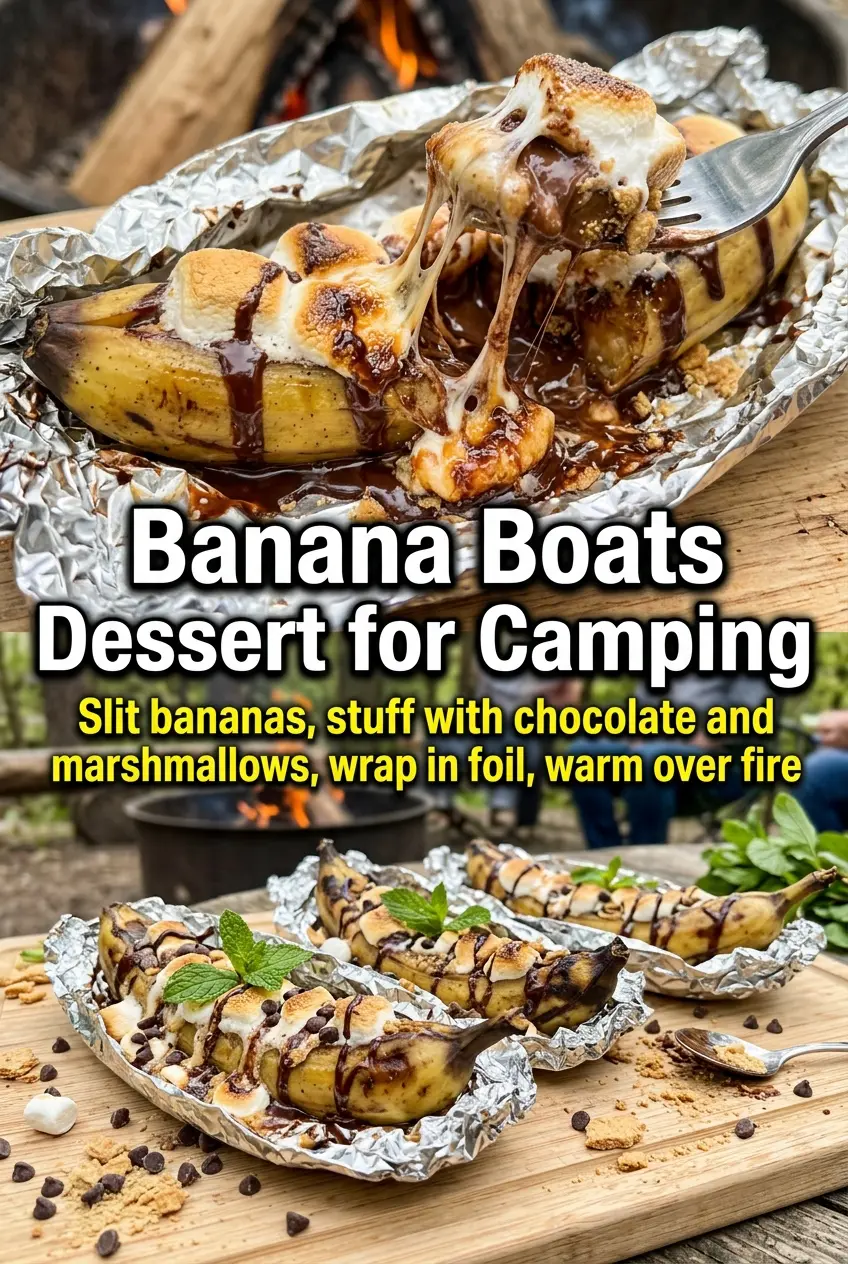
Campfire Banana Boats
Ingredients
Equipment
Method
- Cut each banana lengthwise through the peel, leaving the bottom peel intact, then open slightly to create a pocket with the cut facing up.
- Fill each banana pocket with chocolate chips, mini marshmallows, graham cracker pieces, and peanut butter chips (if using) so the mixture sits in the cavity.
- Wrap each banana tightly in aluminum foil, making sure the top stays accessible for melting.
- Place the foil-wrapped bananas on the campfire grate over medium heat for 8-10 minutes, until the chocolate and marshmallows are visibly melted and bubbling.
- Let the bananas cool for 2 minutes so the melted chocolate thickens slightly.
- Unwrap and eat with a spoon directly from the peel while warm.