Baked beans get a lot better when they’re cooked low and open over live fire, with bacon melting into the sauce and the edges turning glossy and thick. The difference isn’t just the smoky setting. It’s the way the beans simmer uncovered until the liquid reduces into something sticky, savory, and spoonable instead of thin and canned-tasting.
This version leans on a smart balance of sweet, tangy, and smoky ingredients so the beans taste round instead of flat. BBQ sauce and ketchup bring body, brown sugar deepens the finish, mustard sharpens the whole pot, and Worcestershire gives it the kind of background savoriness you notice even if you can’t name it. A Dutch oven helps hold steady heat, but the real trick is keeping the pot at a gentle simmer so the sauce thickens without scorching on the bottom.
Below you’ll find the cue I watch for when the beans are done, plus a few ways to adapt them for the grill, the oven, or a dairy-free camp meal without losing that thick, bubbling finish.
The beans thickened up right in the Dutch oven and the bacon flavor went all the way through the pot. I stirred every few minutes and they came out glossy, not soupy.
Save these campfire baked beans for the next cookout when you want smoky, thick, bacon-rich beans without fuss.
The Reason These Beans Thicken Instead of Turning Watery
The biggest mistake with campfire beans is treating the pot like it’s just reheating canned beans. It needs time uncovered so the sauce can reduce and the starches can do their job. If you cover the pot, the steam stays trapped and you end up with a thinner, looser sauce that never gets that sticky, spoon-coating finish.
Bacon matters here not just for flavor but for the way its fat carries the onion and helps round out the sweetness from the brown sugar and ketchup. The simmer should stay gentle. A hard boil can break the beans down too much and make the bottom catch before the top has had time to thicken.
What Each Ingredient Is Doing in the Pot
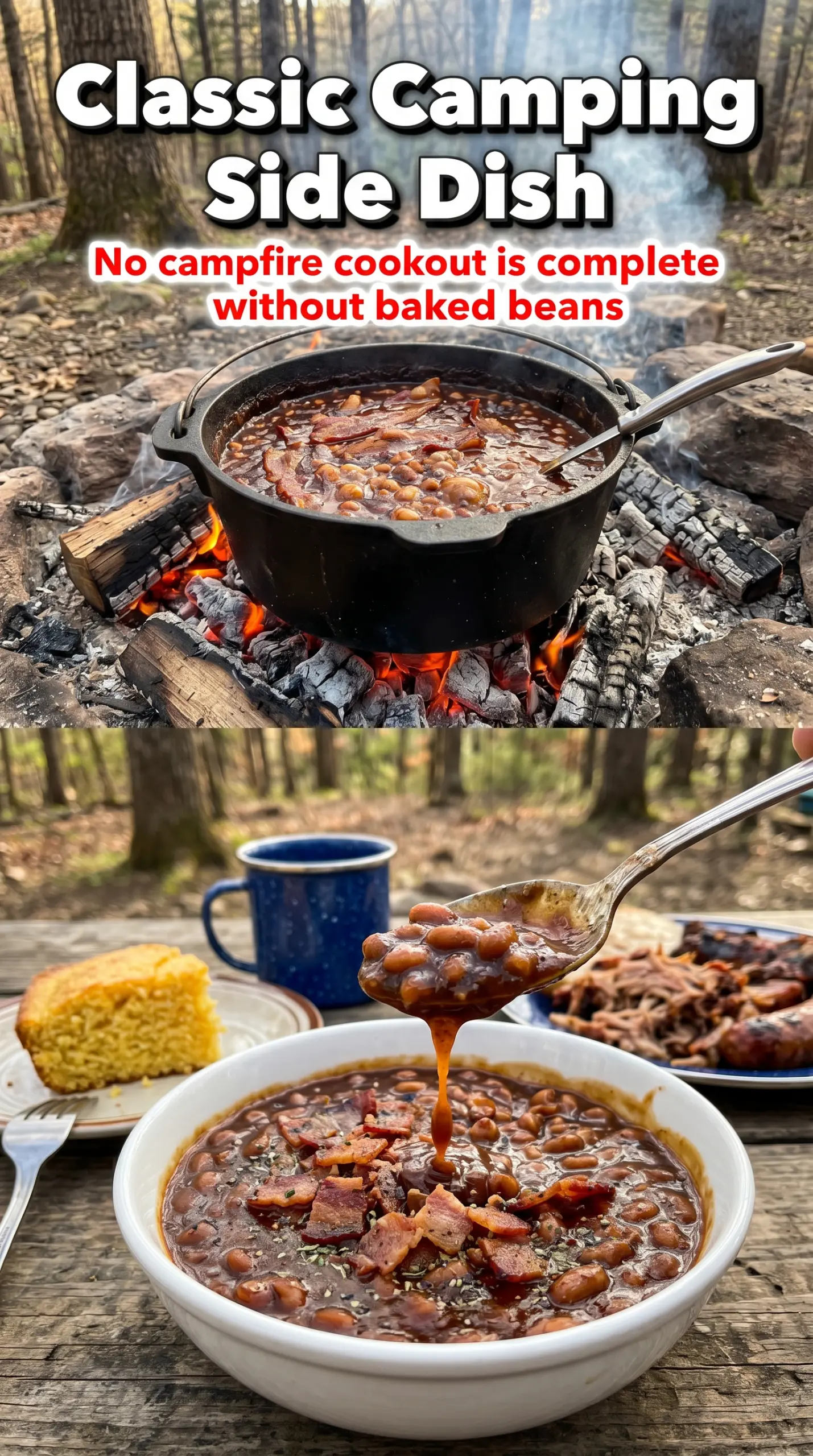
- Baked beans — These give you the soft bean base and the built-in sauce that makes this dish fast. Use two standard cans; the cheaper store brand works fine because the real flavor gets built on top of it.
- Bacon — Cook it first and crumble it in. That keeps the bacon meaty instead of chewy-soft, and the rendered flavor gets spread through the whole pot.
- BBQ sauce — This adds smoke, body, and a little tang. Pick one you already like eating, because its flavor shows up clearly after the beans reduce.
- Brown sugar, ketchup, and mustard — This trio builds the sweet-tart backbone. Brown sugar deepens the sauce, ketchup adds body and acidity, and mustard cuts the sweetness so the beans don’t taste candy-like.
- Onion — Diced onion softens into the sauce and gives the beans a little bite and savoriness. Dice it small so it cooks through in the short simmer time.
- Worcestershire sauce — Just a spoonful adds the kind of background depth that makes the pot taste cooked, not mixed. There isn’t a great substitute for the same salty, fermented note, but soy sauce can stand in if that’s what you have.
How to Keep the Beans Bubbling Without Scorching the Bottom
Getting the Pot Started
Combine everything in the Dutch oven before it goes over the fire so the sugar dissolves and the bacon disperses evenly. Stir until the beans look coated and the onion is tucked throughout the pot, not sitting in one clump. If you dump the ingredients in and walk away, the brown sugar can settle and stick before the mixture starts moving.
Finding the Right Heat
Set the pot over a steady campfire, not directly in roaring flames. You want a lively simmer with small bubbles breaking across the surface, not an aggressive boil. If the fire is too hot, pull the pot to a cooler edge of the grate and keep stirring every few minutes so the bottom doesn’t burn.
Reducing to the Finish
Cook uncovered for 25 to 30 minutes until the sauce looks glossy and clings to the beans when you stir. The pot is ready when a spoon dragged across the bottom leaves a trail for a second or two before the beans flow back together. If the mixture still looks loose at the end, give it another few minutes uncovered rather than cranking up the heat.
Make It Smoked Bacon and Jalapeño Beans
Stir in a diced jalapeño with the onion if you want a little heat and a sharper edge. The beans stay just as thick, but the flavor shifts from sweet-and-smoky to something a little more barbecue-side-with-bite.
Skip the Bacon for a Vegetarian Version
Leave out the bacon and add a teaspoon of smoked paprika plus a little oil or butter for body. You’ll lose some of the meaty depth, but the beans will still taste rich and campfire-friendly.
Use a Different Bean Base
If you can’t find baked beans, start with plain pinto beans or navy beans and add an extra splash of BBQ sauce and a pinch of salt. The texture will be a little less silky than canned baked beans, but the flavor still lands in the same place.
Storage and Reheating
- Refrigerator: Store leftovers in a covered container for up to 4 days. The sauce thickens as it chills.
- Freezer: These freeze well for up to 2 months. Cool completely first, then pack into airtight containers and leave a little space for expansion.
- Reheating: Warm gently on the stovetop or in a covered dish in the oven with a splash of water if needed. Don’t blast them over high heat or the sauce can catch and the beans can split.
Answers to the Questions Worth Asking
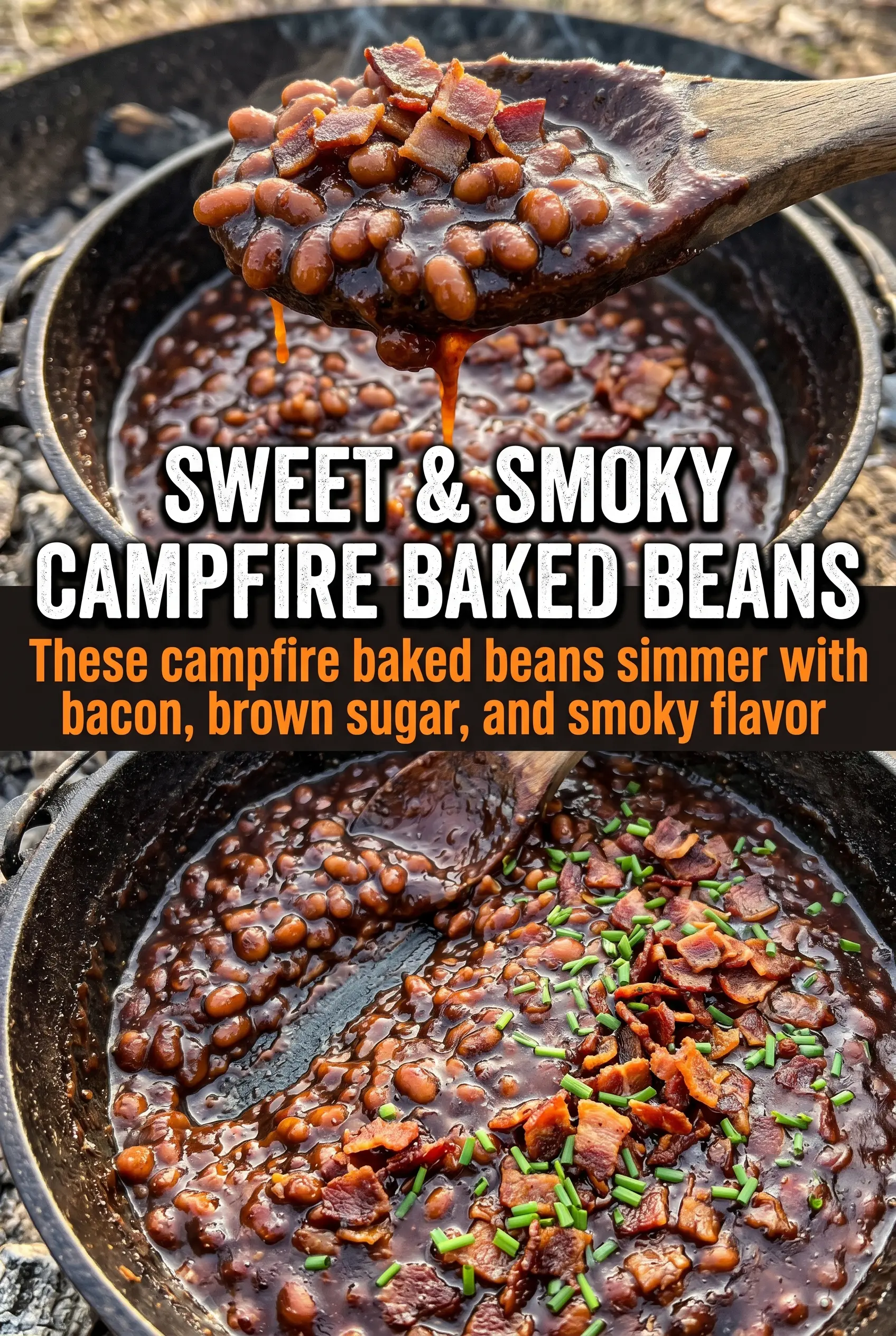
Campfire Baked Beans
Ingredients
Equipment
Method
- Add the baked beans, bacon, BBQ sauce, brown sugar, ketchup, onion, mustard, and Worcestershire sauce to a Dutch oven or large pot and stir until evenly combined.
- Set the Dutch oven on the campfire grate and bring the mixture to a simmer with occasional stirring using a wooden spoon.
- Reduce to a steady simmer and cook uncovered for 25-30 minutes, stirring occasionally, until the beans are thickened and actively bubbling.
- Serve hot as a side dish, spooning the bubbling beans straight from the pot.