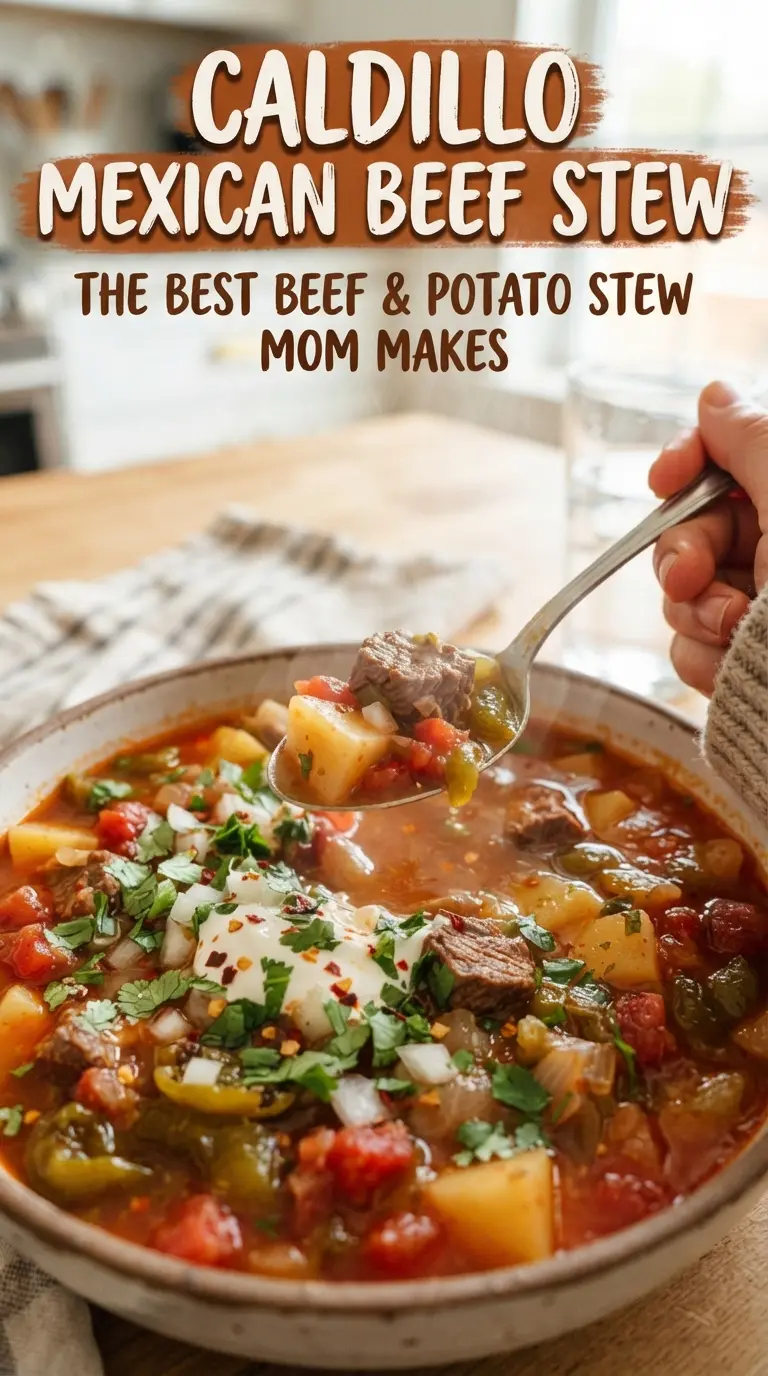
Caldillo Mexican Beef Stew lands in that sweet spot between brothy and substantial. The beef turns tender enough to cut with a spoon, the potatoes soak up the tomato-chile broth, and the roasted green chiles keep every bite bright instead of heavy. It’s the kind of stew that tastes even better after it has had a minute to settle in the bowl, with warm tortillas ready to scoop up the broth at the end.
What makes this version work is restraint. The broth stays light, so the roasted Hatch or Anaheim chiles stay front and center instead of getting buried under too much tomato or spice. Browning the beef in batches gives the stew a deeper base, and adding the potatoes later keeps them intact instead of dissolving into the pot. The result is a clean, savory stew with a little heat, a little smoke, and plenty of room for lime at the table.
Below, I’ve included the timing that matters most, plus the small adjustments that help if your chiles are mild, your broth is salty, or you want to make this ahead for an easy dinner later in the week.
The broth stayed light and clear, the potatoes held their shape, and the roasted green chiles gave it that smoky little kick we were hoping for. We had it with tortillas and lime and wiped the pot out.
Save this Caldillo Mexican Beef Stew for a brothy, chile-forward dinner with tender beef, potatoes, and lime on the side.
The Browning Step That Gives Caldillo Its Depth
The biggest mistake with beef stew is crowding the pan and hoping the meat will brown anyway. It won’t. It will steam, and steamed beef gives you a flat broth no matter how good the chiles are. Brown the chuck in batches until you get real color on the edges, then leave the browned bits in the pot. That fond is what gives the broth its backbone.
The other thing that matters here is timing. The potatoes go in near the end because they only need enough time to turn tender and soak up the broth. Put them in too early and they’ll start collapsing before the beef is ready. Caldillo should have soft potatoes, not mashed ones hiding in a cloudy pot.
- Beef chuck — This cut has enough connective tissue to turn silky during the long simmer. Lean stew meat won’t give you the same texture, and it can end up dry before the broth is fully developed.
- Roasted green chiles — Hatch chiles bring more depth and smoke, but Anaheim chiles work well if that’s what you can find. Freshly roasted and peeled chiles matter here because the stew depends on their clean, green flavor.
- Roma tomatoes — These add body without making the broth heavy. Regular slicing tomatoes can work, but they often bring more water and less concentrated flavor, so the stew may taste thinner.
- Potatoes — Yukon Golds hold their shape especially well, but any waxy potato will do a better job than russets, which tend to break down and cloud the broth.
How to Layer the Broth Without Muddying the Chiles
- Beef broth — Use a broth you’d actually drink on its own, because there isn’t much masking here. If yours is very salty, hold back on some of the seasoning until the end.
- Ground cumin and Mexican oregano — These are support players, not the loudest voice in the pot. Mexican oregano has a sharper, more herbal edge than Mediterranean oregano, but the regular kind still works if that’s what you have.
- Garlic and onion — This base should soften and turn fragrant before the liquids go in. If the onion stays raw-tasting, the stew never quite loses that sharp edge.
- Lime wedges — Don’t stir the lime into the whole pot. Add it at the table so each bowl stays balanced instead of turning overly tart as it sits.
Building the Simmer So the Beef Turns Tender, Not Stringy
Seasoning and Browning the Beef
Pat the beef dry, season it, and brown it in hot oil in batches. You want a deep brown crust, not gray meat with a few pale spots. If the pieces are too close together, wait for them to release instead of forcing them around the pan. That patience is what gives you flavor without burning the oil.
Softening the Onion and Garlic
Cook the onion until it turns translucent and starts to smell sweet, then add the garlic for just a minute. Garlic burns fast, and burnt garlic will throw a bitter note through the whole stew. The pan should smell savory and warm, not sharp.
Adding the Chiles and Tomatoes
Stir in the green chiles, tomatoes, cumin, and oregano and cook them for a few minutes before the broth goes in. This quick sauté wakes up the spices and takes the raw edge off the tomatoes. If your tomatoes are very watery, let this mixture cook until some of that moisture cooks off and the pot looks a little thicker.
Long Simmer, Late Potatoes, Fresh Finish
Once the broth and beef are in, keep the simmer gentle. You want small bubbles, not a hard boil, or the beef can tighten before it softens. Add the potatoes after the beef has had time to tenderize, then cook until they’re fork-tender but still intact. Finish with cilantro right at the end so it stays bright, then serve with lime and warm tortillas.
How to Adapt Caldillo When You Need to Work With What You Have
Use pork shoulder instead of beef
Pork shoulder gives you a different but equally satisfying version with a little more sweetness in the broth. Keep the simmer gentle and give it the same long cooking time so it turns tender instead of dry.
Make it gluten-free without changing the texture
This stew is naturally gluten-free as written, as long as your broth is certified gluten-free. The broth should stay clear and brothy, so avoid any thickener unless you want to lose the lighter caldillo style.
Swap the potatoes for zucchini near the end
If you want a lighter bowl, use zucchini instead of potatoes and add it only for the last 8 to 10 minutes. It won’t make the stew as hearty, but it keeps the broth clean and lets the chiles stay in charge.
Make it ahead for better flavor
Caldillo tastes even better the next day because the chiles and beef have time to meld. Cool it completely before refrigerating, then reheat it gently so the potatoes don’t break apart.
Storage and Reheating
- Refrigerator: Store covered for up to 4 days. The potatoes soften a bit as they sit, but the flavor gets deeper.
- Freezer: It freezes well for up to 3 months. Cool it first, then freeze in portions; the potatoes may be slightly softer after thawing, but the stew still holds up nicely.
- Reheating: Warm it slowly on the stove over medium-low heat until it’s hot all the way through. A hard boil can break the potatoes and make the beef dry at the edges.
Answers to the Questions Worth Asking
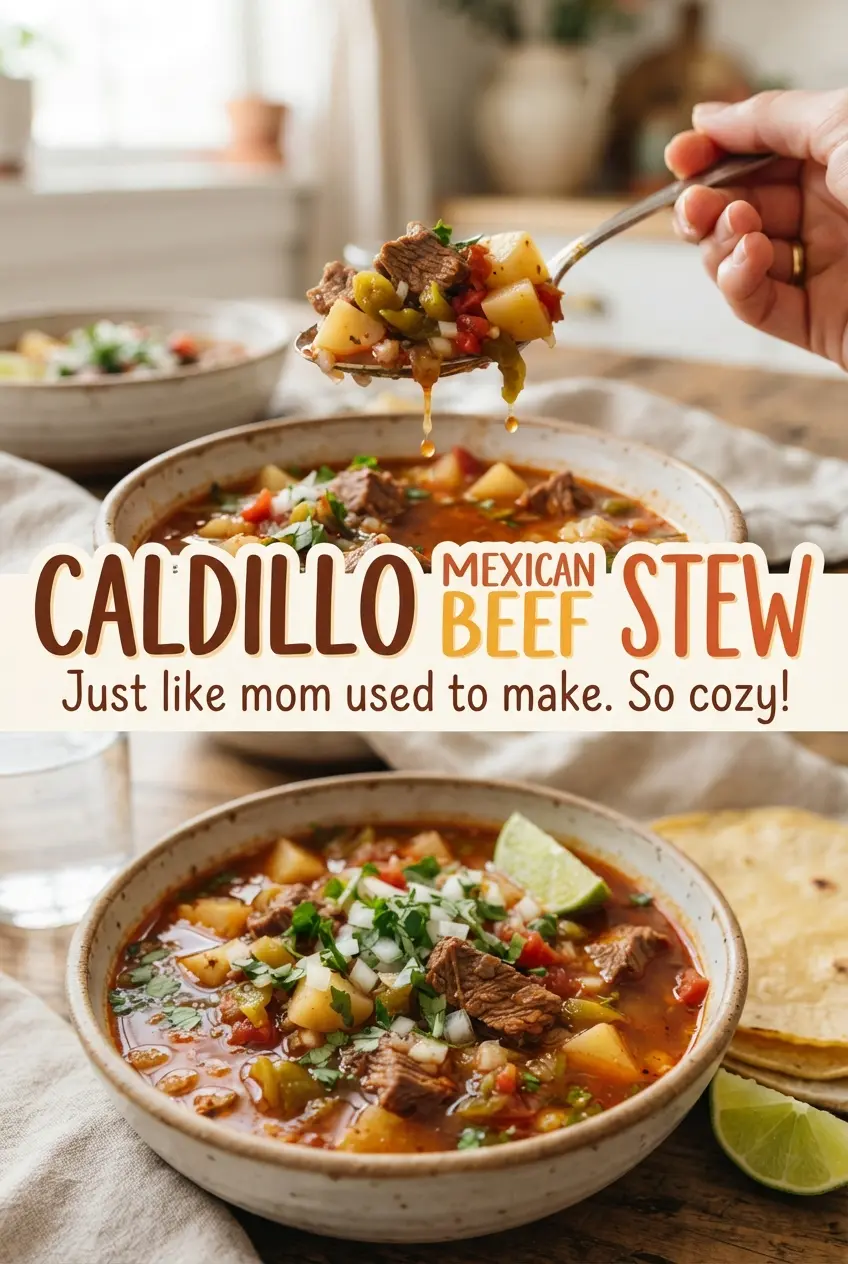
Caldillo Mexican Beef Stew
Ingredients
Equipment
Method
- Season the beef chuck cubes with salt and black pepper. Heat vegetable oil in a Dutch oven over hot heat, then brown the beef in batches until well browned, adding more batches as needed so it doesn’t steam (visual cue: deep brown crust on the edges).
- Add the diced onion to the hot fat and cook for 4 minutes, stirring until softened. Add the minced garlic and cook for 1 minute (visual cue: fragrant garlic without browning).
- Stir in the roasted green chiles, diced Roma tomatoes, ground cumin, and dried Mexican oregano, then cook for 3 minutes (visual cue: tomatoes start to break down slightly and the spices look toasted).
- Pour in the beef broth, add the browned beef, and cover the Dutch oven. Simmer for 1 1/2 hours (visual cue: steady gentle bubbling and the beef is visibly tender when tested).
- Add the cubed potatoes and simmer for 25-30 minutes until tender (visual cue: potatoes offer little resistance when pierced with a fork).
- Turn off the heat and top the caldillo with chopped fresh cilantro. Serve hot with lime wedges and warm tortillas (visual cue: bright green cilantro scattered over the surface).