Buttermilk mashed potatoes land with a tang that cuts through the butter and keeps every bite tasting fresh, not heavy. The texture is what makes them worth repeating: fluffy and smooth, with enough body to hold a little melted butter and a scatter of chives without turning gluey.
The trick is in the temperature and the order. Yukon golds mash into a naturally creamy base, and drying them briefly after draining keeps the potatoes from going watery. Buttermilk goes in at room temperature, the milk is warmed, and the pot stays off the heat once the dairy is added. That keeps the mash silky and prevents the buttermilk from curdling or the starches from turning sticky.
Below, I walk through the small moves that matter most, including how to keep the potatoes light instead of dense and what to do if you want to make them ahead for a holiday table or Sunday supper.
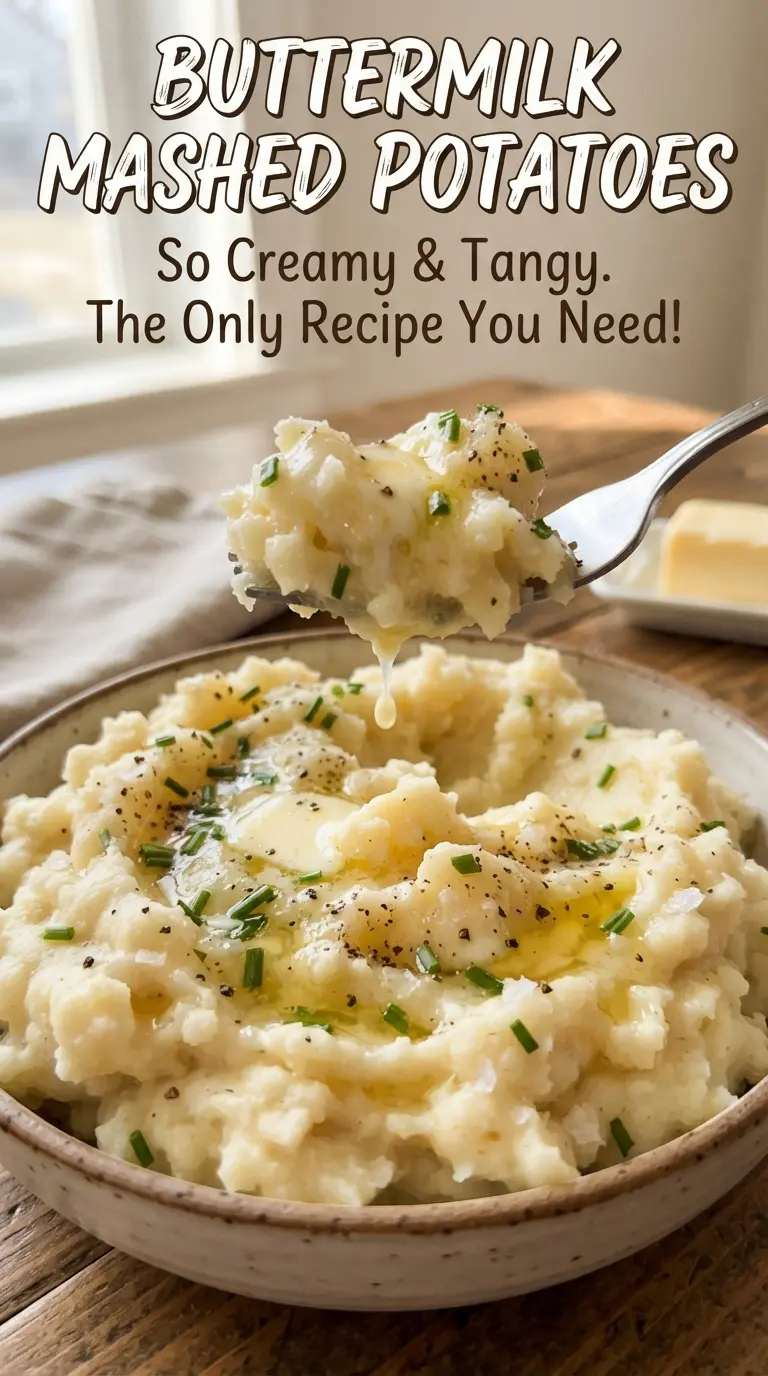
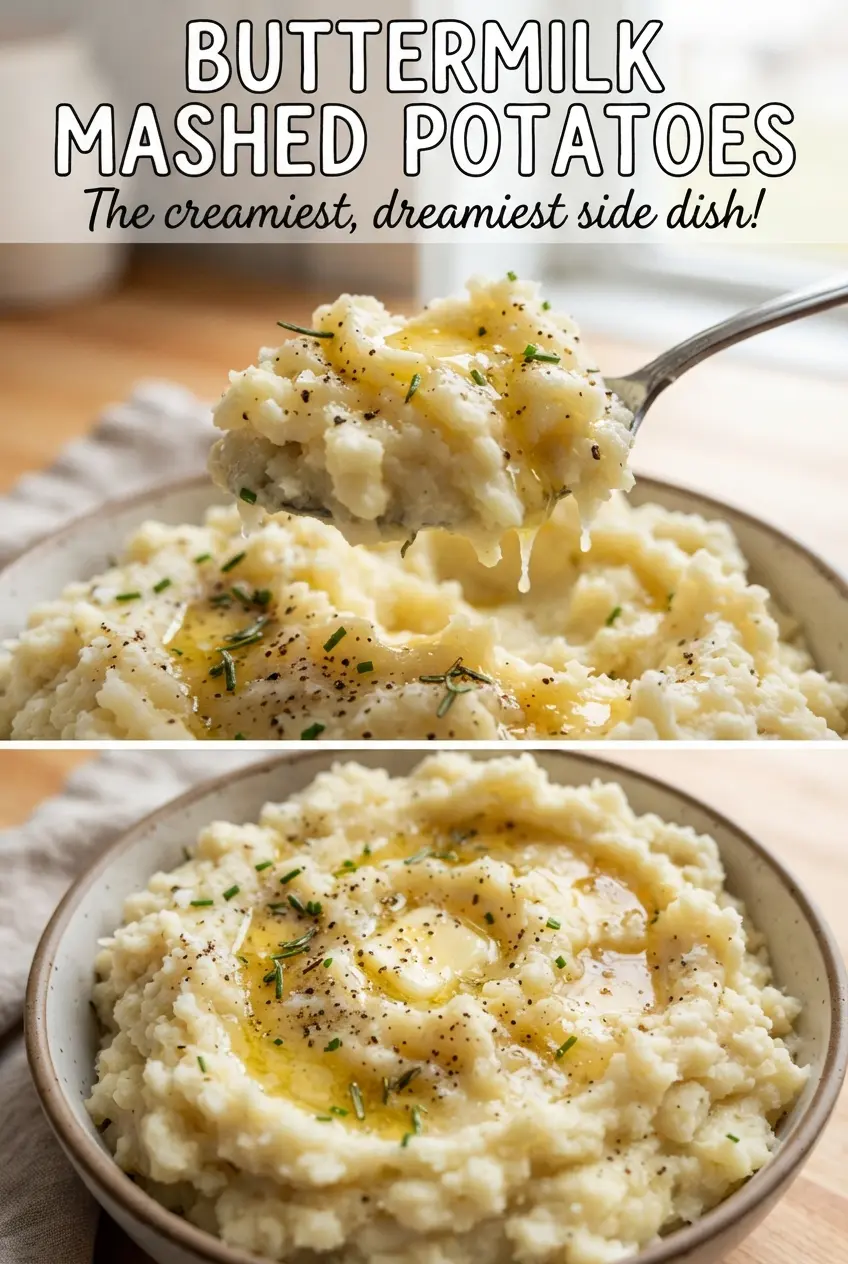
The potatoes stayed fluffy, and the buttermilk gave them a bright tang without making them thin. I also liked that the chives stayed fresh on top and the butter melted into little pools just like the photo.
Save these buttermilk mashed potatoes for the dinner plates that need something fluffy, tangy, and buttery with almost no extra work.
The Reason These Potatoes Stay Fluffy Instead of Turning Gluey
Mashed potatoes go wrong when they’re worked too hard or finished over heat. The starches tighten up, the texture gets pasty, and no amount of butter can pull it back. Yukon golds help because they’re naturally creamy and less prone to that dense, chalky finish than many russets, but the real protection here is what happens after draining: a short dry-out in the hot pot, then gentle mashing with a light hand.
That low-heat minute matters more than it sounds. It drives off surface moisture so the butter and dairy don’t get watered down, which keeps the mash rich without thinning it out. Once the buttermilk goes in, the pan stays off the burner. Heat isn’t helping at that point; it’s only giving you a better chance of breaking the dairy or overworking the potatoes.
What Each Ingredient Is Doing in the Bowl
- Yukon gold potatoes — These are the backbone of the recipe. They mash into a naturally creamy texture with a buttery flavor that holds up to buttermilk better than most potatoes. Russets work in a pinch, but the result is drier and a little more fragile, so they need extra care when mashing.
- Buttermilk — This brings the tang and gives the potatoes their signature lift. It should be room temperature before it goes in so it blends smoothly instead of cooling the potatoes and tightening the texture. Cold buttermilk can seize up the mash and make it harder to incorporate evenly.
- Whole milk — The small amount of milk rounds out the acidity and loosens the potatoes just enough to make them spoonable. Warming it first keeps the mash hot and silky. If you only have 2% milk, it will work, but the final bowl won’t taste as rich.
- Butter — Butter is added before the dairy so it coats the potatoes and helps create a smooth base. That order matters. If you stir cold butter into already-mashed potatoes after the buttermilk, it won’t blend as cleanly and you’re more likely to overmix while trying to fix it.
- Chives — They finish the dish with a fresh onion note that keeps the potatoes from tasting flat. Add them at the end so they stay bright and green. Dried chives won’t give the same clean flavor or the same fresh look.
Building the Mash Without Breaking the Dairy
Cooking the Potatoes Until They Yield Cleanly
Start the potatoes in well-salted water and cook them until a knife slips in with no resistance and the pieces are tender all the way through. If they’re undercooked in the center, you’ll have to mash harder to smooth them out, and that’s where the gluey texture starts. Drain them fully so they’re not sitting in cloudy water, which would dilute the butter and buttermilk later.
Drying the Potatoes Before Mashing
Put the drained potatoes back into the warm pot for a minute over low heat. You’ll hear a little steam and see any leftover moisture evaporate from the surface. That dry step keeps the final mash fluffy instead of wet, and it gives the potatoes a better chance of taking in the butter evenly. Don’t leave them there long enough to start sticking or browning.
Finishing With Butter, Buttermilk, and Milk
Mash the potatoes with the butter first, then stir in the room-temperature buttermilk and warmed milk until the mixture looks creamy and loose but still holds its shape. The key is gentle mixing. If you beat them aggressively, especially after the dairy goes in, the starches will turn paste-like. Keep the pan off the heat once the buttermilk is added; that’s the easiest way to avoid a grainy or broken finish.
Seasoning and Serving
Season at the end with salt and pepper, then finish with chopped chives and a pat of butter if you want that classic glossy top. Taste once the potatoes are fully mixed, because the buttermilk changes how salt reads in the bowl. If the mash tastes flat, it usually needs a little more salt, not more butter.
How to Adjust These Potatoes for Your Table
Make Them Ahead for a Holiday Meal
You can make these a few hours ahead and keep them warm in a covered bowl set over a pan of barely simmering water, or in a slow cooker on low. Stir in a splash of warm milk before serving if they firm up. The main mistake is reheating them over direct high heat, which dries out the edges while the center stays cold.
Dairy-Free Version
Use unsweetened plant-based butter and plain unsweetened oat milk or almond milk instead of the buttermilk and whole milk. You’ll lose the tang, so add a small splash of lemon juice or apple cider vinegar to mimic that sharp finish. The texture will still be creamy, but the flavor will read a little cleaner and less rich.
Extra Tang, Brighter Finish
If you like a sharper bite, replace 1/4 cup of the milk with extra buttermilk. That gives the potatoes a more pronounced Southern-style tang without changing the texture too much. Go slowly, because too much acid can make the mash taste thin instead of balanced.
How to Store and Reheat Leftovers
- Refrigerator: Store in an airtight container for up to 4 days. The potatoes will thicken as they chill.
- Freezer: They freeze well for up to 1 month, though the texture gets a little less silky after thawing. Pack them flat in a freezer-safe container and thaw in the refrigerator before reheating.
- Reheating: Rewarm gently on the stovetop over low heat or in the microwave at medium power, stirring in a splash of warm milk to loosen them. High heat dries out the edges and can make the dairy separate.
Answers to the Questions Worth Asking
Buttermilk Mashed Potatoes
Ingredients
Equipment
Method
- Bring a pot of salted water to a boil, add the Yukon gold potato cubes, and boil for 15-18 minutes until tender (pierce easily with a fork). Drain the potatoes and transfer them to a colander to release steam.
- Return the drained potatoes to the pot over low heat for 1 minute to dry. You should see the surface look less wet and the steam feel lighter.
- Mash the potatoes until smooth, then mash in the unsalted butter until fully incorporated. The texture should look glossy and lump-free.
- Stir in the room-temperature buttermilk and the warmed whole milk until creamy. Do not boil once the buttermilk is in—keep it below a gentle simmer level so it stays silky.
- Season with salt and black pepper, then top with the chopped fresh chives. Serve hot and fluffy, with visible chive flecks on top.