Roasted Brussels sprouts and butternut squash turn this pasta into something hearty enough for dinner, with crisp edges, sweet caramelized pockets, and a browned butter sauce that ties everything together. The vegetables don’t just sit on top here; they become part of the sauce, so every bite gets a little nutty, a little savory, and a little sweet.
What makes this version work is the way the vegetables are roasted separately. Brussels sprouts and squash don’t cook at the same pace, and if you crowd them together they steam instead of browning. Browning the butter with garlic and sage adds depth fast, but the real key is using enough pasta water to loosen the sauce so it clings to the ridges of the rigatoni instead of turning greasy.
Below you’ll find the small details that matter most, including how to keep the butter from going from nutty to burnt, plus a few swaps that still keep the dish balanced and satisfying.
The roasted squash got caramelized edges and the Brussels stayed crisp-tender instead of mushy. I loved how the browned butter and sage coated the rigatoni without drowning the vegetables.
Save this Brussels sprouts and butternut squash pasta for the nights when you want roasted vegetables, browned butter, and pasta in one bowl.
The Reason the Vegetables Need Separate Roasting
Brussels sprouts and butternut squash can both handle high heat, but they don’t give up moisture at the same rate. If they go onto the same pan in a crowded layer, the sprouts soften before they brown and the squash turns tender before it gets those sticky edges you want. Separate pans or at least clearly spaced areas on the sheet tray let each vegetable roast on its own terms.
The other trap is underseasoning before the oven. Salt pulls a little moisture to the surface, and that helps the vegetables caramelize instead of tasting flat. Olive oil gives the edges enough contact with the pan to brown, but too much oil makes them slick and heavy, so keep the coating light and even.
- Brussels sprouts — Halving them gives the cut side a chance to brown deeply. If some outer leaves fall off, leave them on the tray; those little loose pieces turn crisp and almost chip-like.
- Butternut squash — Cut it into even cubes so it finishes at the same time as the sprouts. Smaller pieces brown faster, but if you go too small they’ll collapse before the pasta is ready.
- Butter — Unsalted butter gives you control over the seasoning. Browning it adds a toasted, almost hazelnut note that you can’t get from olive oil alone.
- Hazelnuts or walnuts — Toasted nuts finish the dish with crunch. Hazelnuts are a little sweeter and more aromatic, while walnuts bring a softer, earthier bite.
What Each Ingredient Is Doing in the Bowl
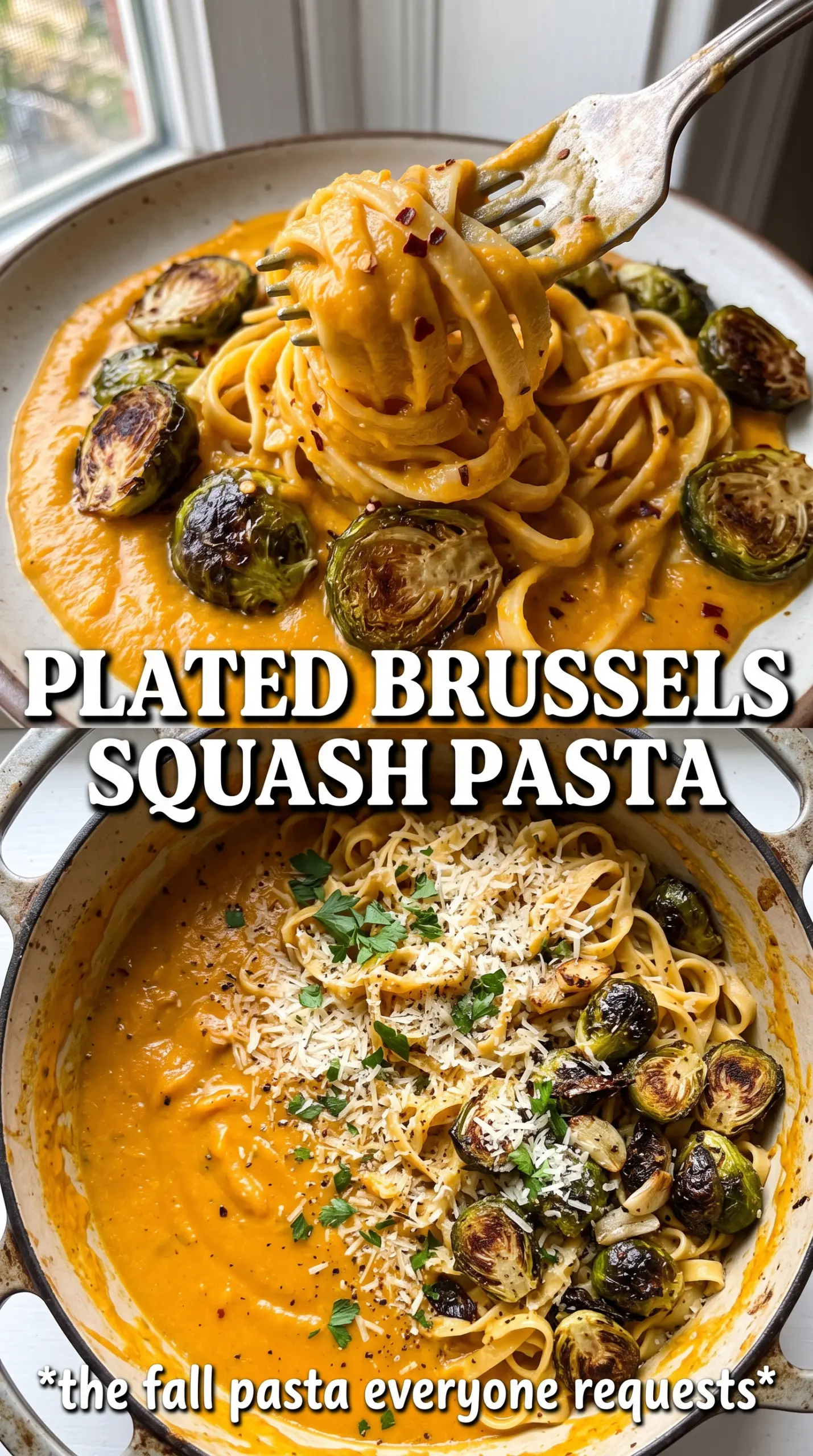
- Rigatoni or penne — Tube pasta holds the sauce in the ridges and catches bits of roasted vegetable. If you use a smoother pasta, the sauce still works, but it won’t cling with the same grip.
- Fresh sage — Sage is the bridge between the sweet squash and the browned butter. Dried sage can work in a pinch, but use less; it turns blunt fast.
- Parmesan — Freshly grated parmesan melts into the sauce and helps it emulsify. Pre-grated cheese can leave you with a grainier finish because it doesn’t melt as cleanly.
- Pasta water — This is what turns browned butter into a sauce. The starch helps everything coat the noodles instead of sliding off the bowl.
Building the Sauce Before It Breaks
Roasting the Vegetables Until They Caramelize
Spread the Brussels sprouts and squash in a single layer and give them space. The cut sides need direct contact with the pan to brown, so if the tray is packed, they steam and stay pale. Roast at 425°F until the squash is tender at the center and the sprouts have deep brown edges, not just a light toast. If the pan starts to look dry before the vegetables are done, that means the heat is right; if they look wet, they need more space.
Cooking the Pasta for the Sauce, Not Just the Bowl
Boil the rigatoni in well-salted water until just al dente, then save more pasta water than you think you’ll need. Pasta that’s too soft won’t hold up once it gets tossed with the vegetables and cheese, and dry noodles won’t help the sauce come together. Drain them quickly, but don’t rinse; that surface starch is part of what helps the sauce cling.
Browning the Butter Without Burning the Garlic
Melt the butter over medium heat and watch for the foaming to settle down, then listen for the gentle crackle as the milk solids begin to toast. Add the garlic and sage when the butter is turning golden and smells nutty, not before, or the garlic will scorch while the butter is still browning. Pull the pan off the heat the moment the butter turns amber with brown specks at the bottom. If it smells sharp or bitter, it has gone too far and you need to start that part over.
Finishing the Pasta in the Pan
Add the hot pasta to the browned butter with a splash of pasta water and stir until a glossy sauce forms. The cheese goes in after the pasta has loosened the butter, because parmesan melts best when the pan isn’t screaming hot. Fold in the roasted vegetables gently so the squash holds some shape and the sprouts don’t break apart. The finished sauce should coat the pasta in a thin sheen, not pool at the bottom.
How to Adapt This Pasta Without Losing the Balance
Make it dairy-free
Use a good olive oil in place of the butter and finish with nutritional yeast or a dairy-free parmesan-style cheese. You lose some of the toasted richness from browned butter, but the roasted vegetables and sage still carry the dish well.
Make it gluten-free
Use a sturdy gluten-free rigatoni or penne and cook it just until tender, because gluten-free pasta can go mushy fast once it hits the sauce. Reserve extra pasta water if the noodles need help loosening the butter.
Swap the nuts for a softer finish
If nuts aren’t your thing, leave them out and add an extra spoonful of parmesan at the end. You’ll lose the crunch, but the dish still has enough texture from the roasted vegetables to feel complete.
Make it a little richer
A handful of baby spinach folded in at the end melts into the sauce without changing the structure. Add it after the pasta is coated so it wilts from the residual heat instead of turning watery in the pan.
Storage and Reheating
- Refrigerator: Store in an airtight container for up to 4 days. The pasta will absorb some of the sauce, so it tightens a bit as it sits.
- Freezer: It freezes okay, though the squash softens after thawing. Freeze in portions for up to 2 months and expect a softer texture when reheated.
- Reheating: Warm gently in a skillet with a splash of water over medium-low heat. The mistake people make is blasting it in the microwave until the parmesan turns greasy and the vegetables dry out.
Questions I Get Asked About This Recipe
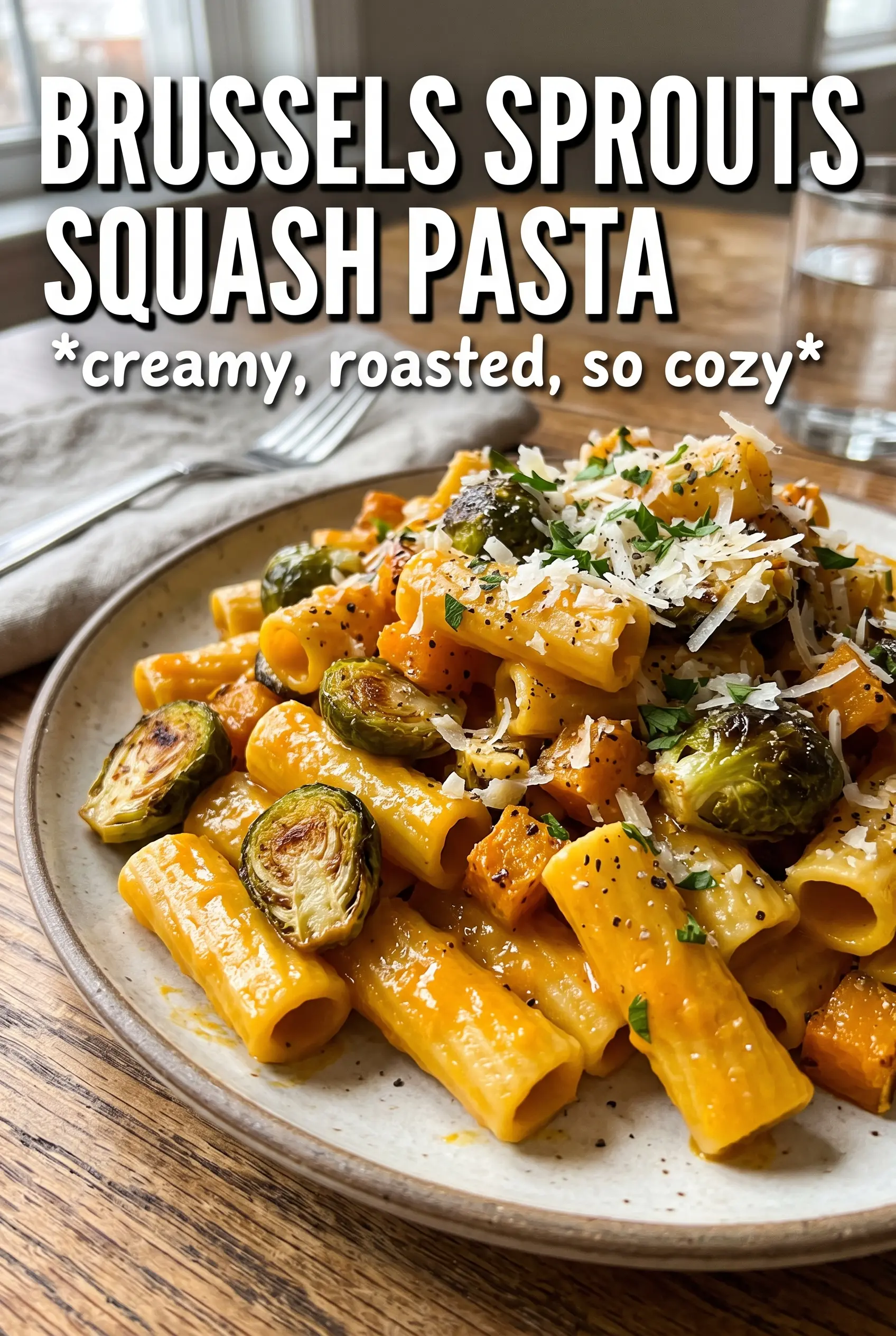
Brussels Sprouts And Butternut Squash Pasta
Ingredients
Equipment
Method
- Heat the oven to 425°F and line a sheet pan. Toss butternut squash cubes with olive oil, salt, and pepper, then roast for 25 minutes until caramelized, flipping once for even browning.
- On a second sheet pan or cleared space, toss halved Brussels sprouts with olive oil, salt, and pepper. Roast for 25 minutes until caramelized and browned at the edges, then set aside while you cook the pasta.
- Cook the rigatoni or penne in salted water until al dente, reserving 1 cup of pasta water for later. Drain and return pasta to the pot.
- In a large skillet over medium heat, melt the unsalted butter and cook until it turns golden and smells nutty. Add the minced garlic and chopped sage and cook for 30 to 60 seconds until fragrant, stirring constantly.
- Add the cooked pasta to the skillet with the brown butter and pour in about 1/2 cup reserved pasta water. Toss until glossy and lightly creamy, adding a splash more pasta water if needed.
- Add the roasted butternut squash and Brussels sprouts to the skillet and toss to coat. Stir in the grated parmesan until melted and evenly distributed.
- Season to taste with salt and pepper, then transfer to bowls. Top with toasted hazelnuts or walnuts for crunch.