Bruschetta pasta salad has the same bright tomato-basil energy as the classic appetizer, but the pasta turns it into something that actually holds up on a buffet table. The rotini catches the balsamic dressing in every twist, the mozzarella stays creamy, and the tomatoes release just enough juice to season the whole bowl without turning it soggy. It’s the kind of side dish that gets scooped up fast because every bite tastes fresh, cool, and balanced.
The trick is in the timing. The pasta needs to be cooked, drained well, and cooled before it meets the tomatoes, or it will steam the herbs and melt the cheese too quickly. I also like a little Dijon in the dressing because it helps the oil and vinegar stay together instead of separating into a slick puddle at the bottom of the bowl. That small detail makes the salad taste dressed, not greasy.
Below you’ll find the part that matters most: how to keep the basil vivid, when to add the glaze, and what to change if you need to make it ahead for a cookout or potluck.
The dressing clung to every twist of pasta, and the tomatoes stayed bright even after chilling. I added the extra balsamic glaze on top right before serving and it made the whole bowl taste finished.
Like this bruschetta pasta salad? Save it to Pinterest for the cookout side that stays glossy, fresh, and basil-scented.
The Dressing Needs to Coat, Not Pool
With a pasta salad like this, the most common mistake is making a dressing that tastes fine in the bowl but falls off the noodles five minutes later. Olive oil and balsamic vinegar need a little help staying together, and that’s what the Dijon gives you here. It acts like a quiet bridge between the fat and acid, so the dressing clings to the rotini instead of sliding to the bottom.
The other thing that matters is balance. Cherry tomatoes bring sweetness and juice, balsamic glaze adds concentrated tang, and the mozzarella softens the edges so the salad doesn’t taste sharp. If your tomatoes are very sweet, hold back a little glaze until the end. That keeps the salad bright instead of syrupy.
What Each Ingredient Is Actually Doing in the Bowl
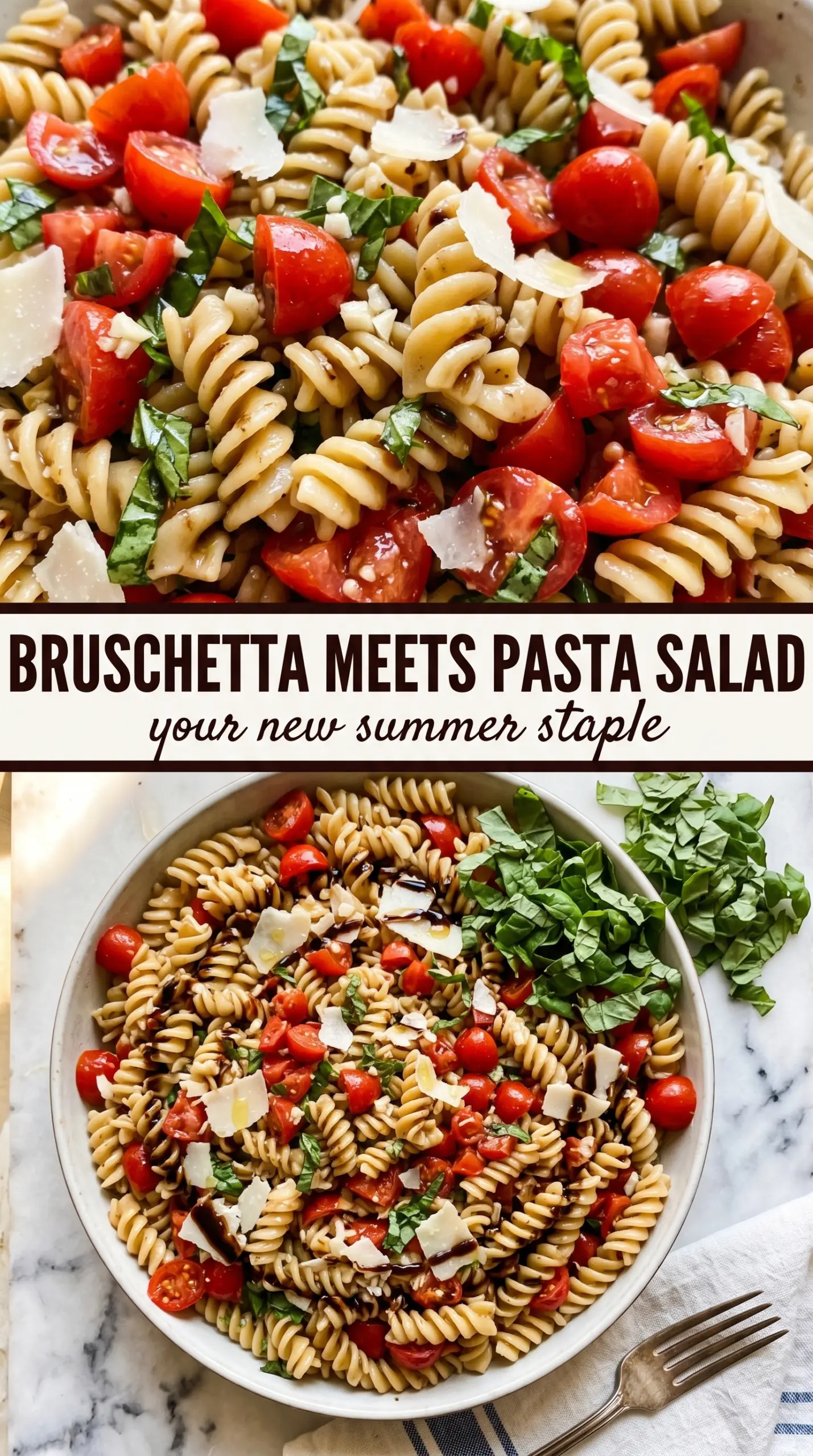
- Rotini or penne — Rotini is my first choice because its twists trap the dressing and bits of tomato. Penne works too, but it gives you a looser bite and a little less sauce in every forkful. Cook it just to al dente, then cool it fully so it doesn’t soak up all the dressing at once.
- Cherry tomatoes — These need to be ripe enough to taste sweet and juicy, because underwhelming tomatoes make the whole salad flat. Halving them exposes the flesh so they season the pasta faster. If your tomatoes are large, dice them small enough that they mingle with the pasta instead of sliding off the fork.
- Fresh basil — This is the ingredient that makes the dish taste like bruschetta instead of just tomato pasta. Slice it right before mixing so it stays fragrant and green. If you need to prep ahead, keep the basil whole and chiffonade it at the last minute.
- Fresh mozzarella pearls — The soft, milky bite cools down the balsamic and rounds out the acidity. Pearls are easier than cubing a larger ball, and they distribute better through the salad. If you can’t find pearls, tear fresh mozzarella into small pieces so it blends instead of clumping.
- Balsamic glaze — A little goes a long way here. The vinegar in the dressing gives brightness, but the glaze is what adds that sticky, finished look on top. You can skip the extra drizzle if you want a lighter salad, but it does a lot for the final presentation and flavor.
How to Keep the Pasta Salad Fresh Instead of Watery
Whisk the Dressing Until It Looks Unified
Start with the olive oil, balsamic vinegar, balsamic glaze, Dijon, honey, salt, and pepper in a small bowl or jar. Whisk until the mixture looks glossy and slightly thickened, not separated into streaks. If you rush this and pour in a broken dressing, the flavor still works, but the oil will coat some bites and leave others under-seasoned. Taste it before it hits the pasta; it should be punchy enough to season all that cold starch.
Dress the Pasta Only After It Has Cooled
Combine the cooled pasta with the tomatoes, garlic, basil, mozzarella, onion, and Parmesan in a large bowl. If the pasta is still warm, the basil dulls and the mozzarella softens too much, which changes the whole texture. Pour the dressing over top and toss until every piece looks lightly lacquered. You want shine, not excess liquid collecting at the bottom.
Let It Chill, Then Toss Again
The 30-minute rest in the fridge is when the flavors settle in and the garlic mellows a little. During that time, the pasta absorbs some of the dressing, so the salad may look slightly tighter when it comes out. Give it another toss before serving, then finish with a drizzle of balsamic glaze and a few whole basil leaves. That last toss wakes everything back up and keeps the bowl from tasting flat after chilling.
Three Useful Ways to Adjust the Salad Without Losing the Point
Make it gluten-free with a sturdy pasta
Use a gluten-free rotini or penne that holds its shape after chilling. Some gluten-free pastas soften quickly, so stop cooking as soon as they’re al dente and cool them under running water before mixing. The salad still tastes the same, but the texture depends on choosing a brand that doesn’t turn crumbly in the fridge.
Make it dairy-free without losing the bright bruschetta feel
Skip the mozzarella and Parmesan, then add a handful of chopped kalamata olives or marinated artichokes for more savory depth. You lose the creamy finish from the cheese, so the dressing needs to do more work; taste and add another pinch of salt or a little extra glaze if it feels thin. The result is lighter, sharper, and still very much in the bruschetta family.
Turn it into a heartier main dish
Add diced grilled chicken, salami, or chickpeas depending on what kind of meal you want. Chickpeas keep it vegetarian and bring a firmer bite, while chicken or salami make the salad feel more like a lunch bowl than a side. Add the protein after the pasta is coated so the dressing doesn’t get lost on the extra ingredients.
Storage and Reheating
- Refrigerator: Store in an airtight container for up to 3 days. The basil will darken a bit and the pasta will absorb more dressing, so refresh it with a splash of olive oil and a small drizzle of balsamic glaze before serving.
- Freezer: I don’t recommend freezing this salad. The tomatoes turn mushy, the basil loses its brightness, and the mozzarella changes texture in a way that can’t be fixed.
- Reheating: This salad is meant to be served cold or at cool room temperature. If it’s been chilled hard, let it sit out for 15 to 20 minutes, then toss again instead of heating it. Warming it will make the cheese soft and the herbs wilt.
Answers to the Questions Worth Asking
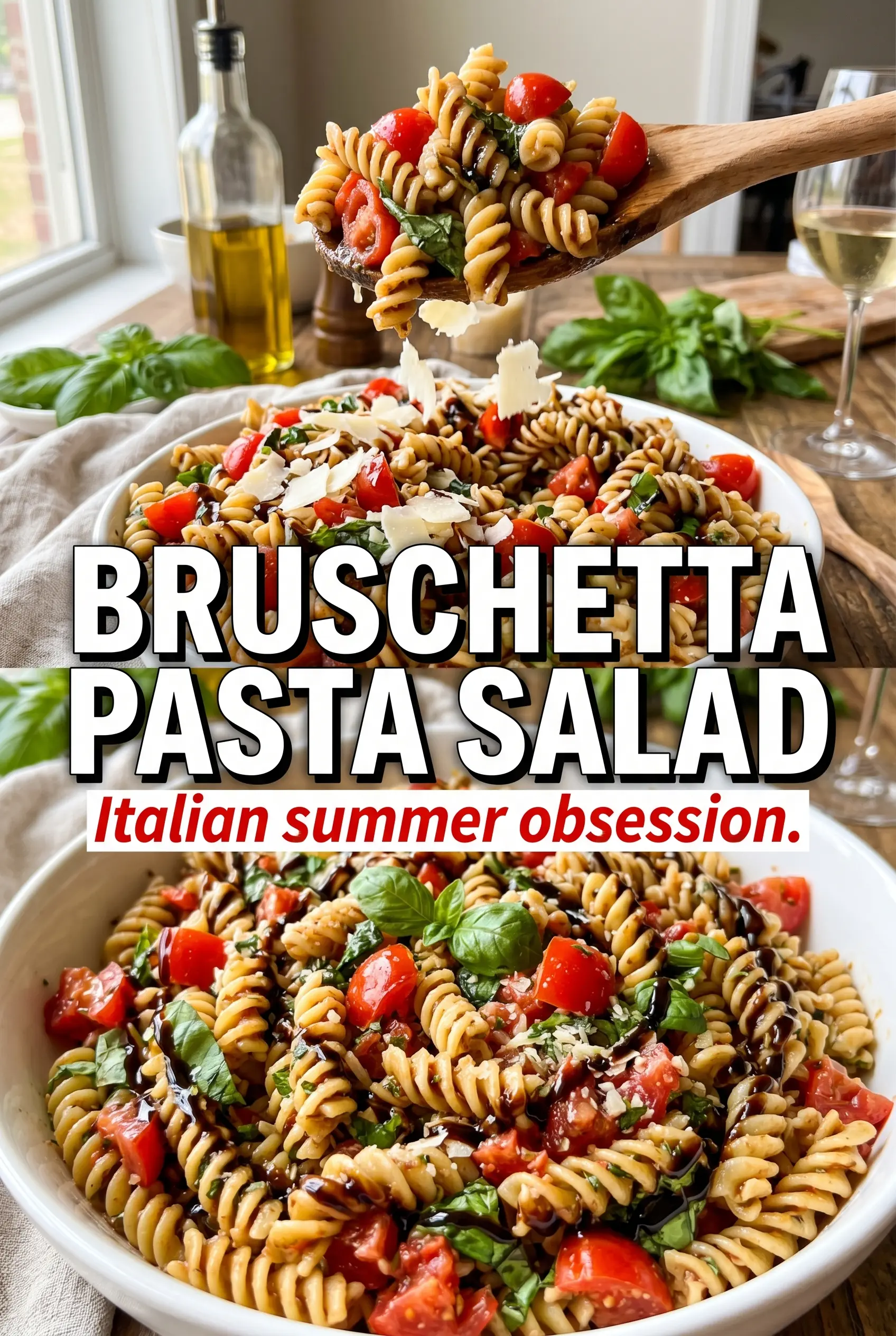
Bruschetta Pasta Salad
Ingredients
Equipment
Method
- Whisk together extra-virgin olive oil, balsamic vinegar, balsamic glaze, Dijon mustard, honey, salt, and cracked black pepper until emulsified, then stop once the mixture looks uniform and glossy.
- Transfer the dressing to a small bowl so it’s ready for coating, letting it sit briefly while you prep the salad ingredients.
- In a large bowl, combine cooled rotini or penne pasta, cherry tomatoes, minced garlic, basil chiffonade, fresh mozzarella pearls, red onion, and Parmesan cheese.
- Pour the dressing over the salad and toss until every ingredient is evenly coated, with a visible sheen on the pasta.
- Refrigerate the salad for 30 minutes to let the flavors meld and the dressing cling to the pasta.
- Toss again before serving, then drizzle with additional balsamic glaze and garnish with whole basil leaves for a fresh, green top.