Pork chops with a crackling brown sugar crust hit that sweet-savory spot that keeps people coming back for seconds. The outside turns sticky and caramelized in the pan while the center stays juicy, which is exactly what you want from a fast weeknight main that still feels a little special.
The key here is a dry chop and a hot skillet. Brown sugar burns if you rush it, but when it hits a properly heated pan with the spices, it melts into a lacquered crust instead of sliding off in a grainy layer. A quick rest at the end keeps the juices where they belong.
Below, I’ve included the little details that matter most: how to keep the sugar from scorching, what to look for when the crust is set, and how to adjust the heat if you want more sweetness or a little more kick.
The brown sugar crust turned deep amber in the skillet and the chops stayed juicy all the way through. I was nervous about the sugar burning, but the timing was spot on and the pan sauce was perfect with a squeeze of lemon.
Brown sugar pork chops with a caramelized crust are perfect for nights when you want big flavor from a short ingredient list.
The Sugar Crust That Catches Fast And Stays On
The biggest mistake with brown sugar pork chops is treating the sugar like a slow braise ingredient instead of a fast-searing glaze. On the heat, the sugar wants to melt, then caramelize, then go from amber to burnt in a narrow window, so the chops need to go into a hot skillet only after they’re fully coated and the pan is ready. That dry rub also pulls a little moisture from the surface, which helps the crust cling instead of clumping in spots.
If your crust looks patchy, the pan probably wasn’t hot enough or the chops weren’t dry before seasoning. Patting them down well is what gives you that tight, crackly surface instead of a wet spice paste. The second key is not moving them once they hit the skillet; let the crust set before you even think about turning them.
- Dry pork chops — Moisture on the surface is the enemy here. A quick pat-down with paper towels makes the sugar rub stick and helps the meat brown instead of steam.
- Brown sugar — Packed brown sugar gives the chops their sticky finish and deep caramel note. Light or dark both work; dark brown sugar brings a little more molasses flavor.
- Smoked paprika — This adds a faint woodsy edge that keeps the sweetness from tasting flat. Regular paprika works in a pinch, but you’ll lose some depth.
- Cayenne — Just enough heat keeps each bite from leaning sugary. If you want a gentler finish, cut it to a pinch rather than leaving it out completely.
What Each Part Of The Rub Is Doing In The Skillet

- Boneless pork chops — The 1-inch thickness matters because it gives you enough time to build a crust without overcooking the center. Thinner chops will still work, but you’ll need to shorten the sear and watch the temperature closely.
- Olive oil — This helps the chops make contact with the pan and keeps the sugar from grabbing too hard in one spot. Any neutral high-heat oil works here if that’s what you have.
- Butter — Added near the end, butter mingles with the caramelized sugar and turns the pan drippings into a glossy baste. If the pan looks too dark when the butter goes in, lower the heat right away so the milk solids don’t scorch.
- Lemon wedges — The squeeze at the table wakes up the whole dish. That bright acid cuts the sweetness and makes the pork taste more savory.
How To Sear First, Then Finish Without Burning The Sugar
Mix The Rub Until The Sugar Is Evenly Distributed
Stir the brown sugar, spices, salt, and pepper together until you don’t see streaks of plain sugar or clumps of paprika. An even mixture matters because any pocket of sugar will melt faster than the rest and can scorch before the chop is done. Once the pork is coated, press the rub into both sides so it forms a thin layer instead of a loose dusting.
Build The Crust In A Hot Skillet
Heat the oil over medium-high until it shimmers, then lay the chops in and leave them alone for about 4 minutes. If you try to move them too early, the crust tears and sticks to the pan instead of staying on the meat. You’re looking for edges that darken and a surface that releases without resistance when you slide a spatula underneath.
Finish With Butter And Temperature, Not Guesswork
Add the butter after the first side is seared, then flip and spoon the melted drippings over the chops as they finish. That baste gives you more gloss and helps the sugar dissolve into a sauce on the surface. Pull the pork when the center reaches 145°F, then let it rest for 3 minutes; if you slice too soon, the juices run out and the chops eat dry even if they were cooked perfectly in the pan.
How To Adapt These Brown Sugar Pork Chops Without Losing The Crust
Make Them Spicier
Increase the cayenne to 3/4 teaspoon or add a pinch of red pepper flakes to the rub. The heat won’t change the crust, but it will pull the sweetness back and give the chops a sharper finish.
Use Boneless Chicken Thighs Instead
This rub works on chicken thighs with the same pan-sear method, though you’ll need to cook them until the juices run clear and the internal temperature reaches 165°F. Chicken browns a little faster than pork, so watch the crust closely once you flip it.
Make It Dairy-Free
Swap the butter for another tablespoon of oil and the chops will still caramelize well. You’ll lose a little of the glossy pan sauce, but the crust and seasoning stay intact.
Storage And Reheating
- Refrigerator: Store leftovers in an airtight container for up to 3 days. The crust softens in the fridge, but the flavor stays good.
- Freezer: These freeze fine for up to 2 months, though the caramelized coating won’t stay crisp. Wrap tightly and freeze with any pan juices to help protect the meat from drying out.
- Reheating: Warm gently in a covered skillet over low heat with a splash of water or broth. High heat will push the sugar from caramelized to bitter before the pork is heated through.
Answers To The Questions Worth Asking
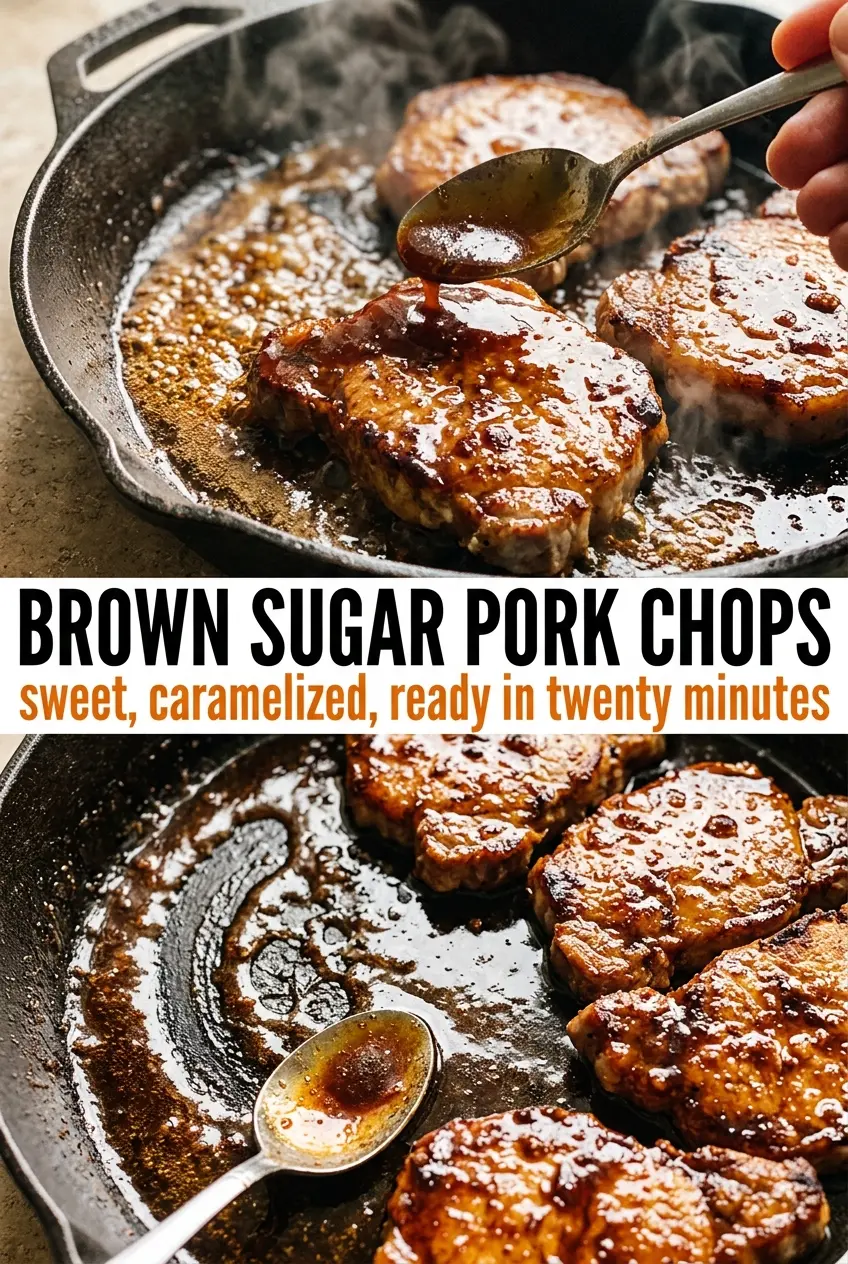
Brown Sugar Pork Chops
Ingredients
Equipment
Method
- In a small bowl, mix brown sugar, garlic powder, smoked paprika, cayenne, salt, and black pepper until evenly combined.
- Pat the boneless pork chops dry, then coat thoroughly on both sides with the brown sugar spice rub so it adheres.
- Heat olive oil in a cast iron skillet over medium-high heat until shimmering.
- Add pork chops and sear for 4 minutes without touching, until caramelized on the bottom.
- Flip the pork chops carefully and cook 3–4 more minutes, adding butter as it melts and basting with the caramelized pan sauce, until the internal temperature reaches 145°F.
- Transfer pork chops to a plate and rest for 3 minutes to let juices redistribute.
- Serve with lemon wedges and drizzle any pan sauce over the top.