Sticky brown sugar pineapple chicken is the kind of skillet dinner that disappears fast because the glaze clings to every bite. The chicken stays juicy under a glossy sauce that’s sweet at first, then pulls in just enough tang from the pineapple juice and soy sauce to keep each forkful moving. The pineapple chunks soften in the pan and pick up little caramelized edges, which makes the whole dish taste like more effort than it actually takes.
This version works because the sauce is built in the same pan as the chicken. Those browned bits from searing become part of the glaze instead of being left behind, and that gives the sauce a deeper, rounder taste. Cornstarch thickens the pineapple juice fast, but only after it’s had a minute or two to simmer; if you rush that part, the sauce stays thin and slippery instead of turning sticky and lacquered.
Below, I’ve included the small timing details that matter most, plus the swaps I’d actually use when dinner needs to flex around what’s in the kitchen.
The glaze thickened up exactly like the photo, and the pineapple chunks soaked up all that smoky-sweet sauce. I let it simmer the full 2 minutes after adding the slurry and it coated the chicken beautifully.
Like this sticky brown sugar pineapple chicken? Save it to Pinterest for the nights when you want a glossy skillet dinner with caramelized edges and almost no cleanup.
The Reason the Glaze Stays Sticky Instead of Turning Watery
The biggest mistake with pineapple chicken is rushing the sauce before it has a chance to reduce. Pineapple juice starts out thin, and if you add the slurry before the liquid is hot and simmering, it can turn pasty on the outside and still taste loose in the pan. Let the juice, brown sugar, soy sauce, ketchup, garlic, and ginger come together first, then add the cornstarch mixture once the pan is at a steady simmer.
The other thing that matters here is the sear. You want browned chicken, not pale poached chicken, because that color gives the glaze a deeper taste and keeps the finished dish from leaning too sweet. If your skillet is crowded, the chicken steams and the sauce has less flavor to work with. Cook in a pan that gives the breasts room to brown, and the glaze will taste like it came from a much longer simmer.
What Each Ingredient Is Doing in the Pan
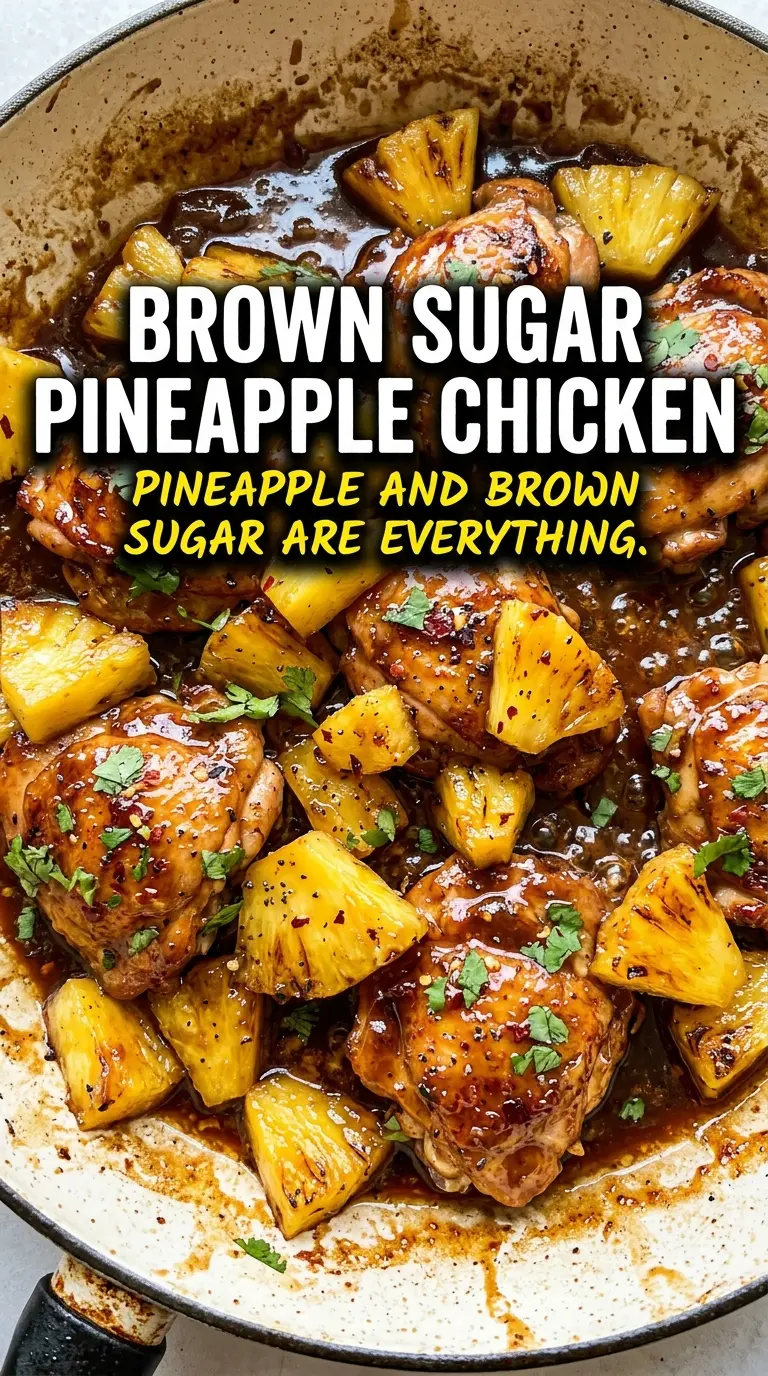
- Chicken breasts — Boneless, skinless breasts keep the cook time short and let the glaze shine. If yours are very thick, pound them to an even thickness so they cook through without drying out at the edges.
- Pineapple juice — This is the base of the glaze, so fresh or canned both work fine as long as it’s 100% juice. Pineapple nectar is sweeter and thicker, which can make the sauce clingy before it reduces.
- Brown sugar — This deepens the color and gives the glaze that sticky finish. Light or dark brown sugar both work; dark will taste a little richer and molasses-forward.
- Soy sauce — This keeps the glaze from tasting flat and brings salt plus umami. If you need a gluten-free version, use tamari in the same amount.
- Ketchup — It adds body and a little tomato tang, which smooths out the pineapple’s sharpness. Don’t skip it unless you replace it with a small spoonful of tomato paste and a splash of water.
- Cornstarch slurry — This is what turns the sauce from thin and glossy to spoon-coating. Mix it with cold water first or it can clump the second it hits the hot pan.
- Pineapple chunks — These give the dish texture and small bursts of sweetness. Canned chunks are convenient and work well; just drain them lightly so they don’t water down the finished glaze.
From Sear to Sticky Finish
Seasoning and Browning the Chicken
Season the chicken on both sides with salt, pepper, garlic powder, and smoked paprika, then add it to a hot skillet with olive oil. You’re looking for a deep golden crust, not just a pale surface with grill marks from a pan. If the chicken sticks when you first try to move it, leave it alone for another minute; it will release once the crust forms. Cook until the center reaches 165°F, then move it out of the pan so it doesn’t overcook while you build the glaze.
Building the Pineapple Glaze
Use the same skillet and whisk in the pineapple juice, brown sugar, soy sauce, ketchup, garlic, and ginger. The pan should bubble gently across the surface, and you’ll notice the browned bits from the chicken lifting into the sauce as you stir. That’s the flavor foundation of the dish. Keep the heat at medium, not high; aggressive heat can make the sugars taste scorched before the sauce has time to tighten.
Thickening Without Going Gluey
Stir in the cornstarch slurry and cook for 2 to 3 minutes until the sauce turns glossy and starts to leave a trail on the spoon. It should coat the back of a spoon and drip slowly, not run like juice. If it gets too thick before you add the chicken back, splash in a little more pineapple juice or water to loosen it. The goal is sticky and clingy, not paste.
Finishing the Dish in the Sauce
Add the pineapple chunks first, then return the chicken and turn it in the glaze until every piece is coated. Let it cook for about 2 more minutes so the sauce clings and the chicken reheats through without drying out. Finish with sesame seeds and sliced green onions while the skillet is still hot so they land on top with a little contrast and don’t sink into the glaze.
How to Adapt This for Different Nights and Different Eaters
Make It Gluten-Free
Swap the soy sauce for tamari or a certified gluten-free soy sauce in the same amount. The glaze still tastes balanced and savory, and you won’t lose the salty edge that keeps the pineapple from tasting one-note sweet.
Use Chicken Thighs Instead
Boneless thighs give you a juicier result and forgive a little extra time in the pan. They take a few minutes longer than breasts, but they hold up especially well if you like a more tender, richer bite under the sticky glaze.
Dial Down the Sweetness
Cut the brown sugar to 2 tablespoons if you want a sharper, more savory glaze. The sauce will still thicken, but the pineapple and ketchup will come forward more, which makes the dish taste less candy-sweet and a little more dinner-focused.
Add Heat Without Changing the Structure
A pinch of red pepper flakes or a small squirt of sriracha fits right into the glaze. Add it with the sauce ingredients so the heat blends into the sweetness instead of sitting on top of it.
Storage and Reheating
- Refrigerator: Store leftovers in an airtight container for up to 4 days. The glaze will thicken a little more as it chills.
- Freezer: This freezes well for up to 2 months, though the pineapple chunks soften after thawing. Freeze in portions with extra sauce so the chicken stays moist.
- Reheating: Warm gently in a skillet over low heat with a splash of water or pineapple juice. High heat dries out the chicken and can make the sugars in the glaze stick too aggressively to the pan.
Answers to the Questions Worth Asking
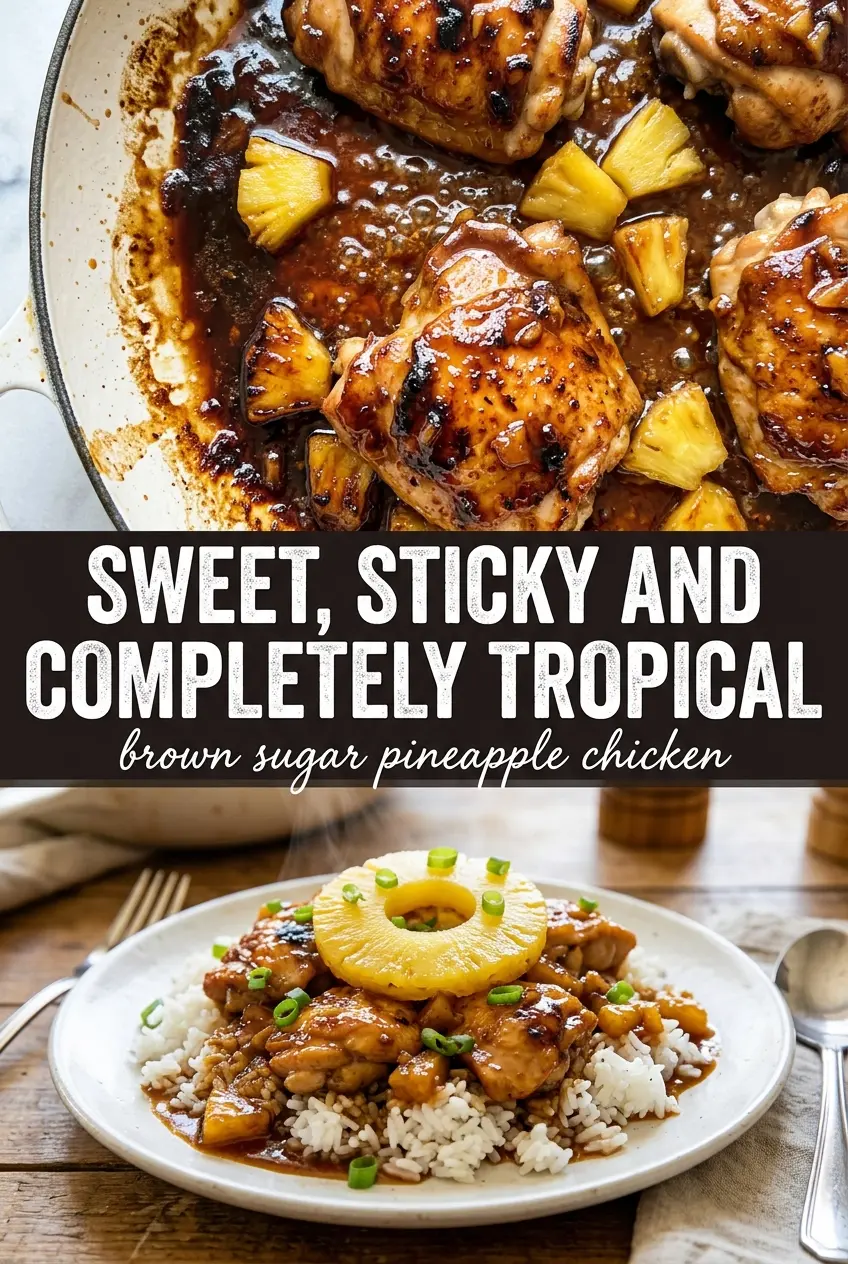
Brown Sugar Pineapple Chicken
Ingredients
Equipment
Method
- Season the chicken breasts all over with salt, pepper, garlic powder, and smoked paprika, then let them marinate 20 minutes for better flavor.
- Heat olive oil in a large cast iron skillet over medium-high heat and sear the chicken for 5-6 minutes per side until golden and cooked through to 165°F, then remove to a plate.
- In the same skillet, whisk pineapple juice, brown sugar, soy sauce, ketchup, garlic, and ginger, then bring to a simmer over medium heat.
- Stir in the cornstarch slurry (cornstarch mixed with water) and cook for 2-3 minutes, until the sauce thickens to a glaze, then stir in the pineapple chunks.
- Return the chicken to the skillet and turn to coat in the thick pineapple glaze, then cook for 2 more minutes.
- Garnish with sesame seeds and sliced green onions, then serve immediately over steamed rice.