Golden seared chicken breasts tucked into a glossy Boursin cream sauce earn their place on the dinner rotation fast. The chicken stays juicy, the sauce turns silky without feeling heavy, and the garlic-herb cheese brings instant depth that tastes like it took a lot more work than it did. Spoon it over mashed potatoes or pasta and you’ve got the kind of meal that disappears before anyone starts talking about what else is for dinner this week.
What makes this version work is the order. The chicken gets a hard sear first so the pan develops those browned bits that flavor the sauce, then the garlic, wine, broth, and Boursin melt together before the cream goes in. That keeps the sauce smooth instead of greasy or grainy. A quick simmer at the end thickens it just enough to cling to the chicken without turning pasty.
Below, I’m walking through the small details that matter here: how to keep the sauce glossy, what to do if you don’t keep wine in the house, and the easiest way to turn this into a full dinner with almost no extra cleanup.
The sauce coated the chicken perfectly and never broke, even after I let it sit a few minutes while I finished the pasta. The Boursin flavor came through in every bite, and the pan sauce was thick enough to spoon over everything.
Boursin Chicken with that silky garlic-herb sauce is the weeknight dinner worth keeping in your back pocket.
The Sauce Breaks When You Rush the Pan
The biggest mistake with Boursin chicken is treating the sauce like a shortcut cream sauce and dumping everything in at once. Boursin melts beautifully, but it needs the help of warm broth and a little patience to turn smooth. If the pan is too hot when the cream goes in, the dairy can separate and the sauce loses that glossy finish that makes this dish work.
The other piece people miss is the fond on the bottom of the skillet. After you sear the chicken, those browned bits are concentrated flavor. Deglazing with wine or broth loosens them into the sauce instead of leaving them stuck to the pan, which is why this tastes rounder and richer than a basic cream chicken.
- Hard sear on the chicken — This builds color and flavor before the sauce even starts. Don’t move the breasts around while they’re searing, or you’ll lose that crust and leave too much behind in the pan.
- Boursin garlic and herb cheese — This is the backbone of the sauce. A different soft herb cheese won’t have the same balance of garlic, herbs, and salt, so the finished dish will taste flatter.
- Dry white wine or broth — Wine adds a little brightness and helps pull the browned bits from the pan. Broth works fine if you don’t cook with wine; the sauce will be a touch softer and less sharp, but still excellent.
- Heavy cream — This gives the sauce its body and keeps it from tasting thin after the cheese melts. Half-and-half can work in a pinch, but the sauce won’t thicken as luxuriously and is more likely to stay loose.
What Each Ingredient Is Actually Doing in This Chicken Dish

- Chicken (the protein foundation) — Cut into uniform pieces so they cook evenly. Room temperature chicken cooks more evenly than cold.
- Butter or oil (the cooking medium) — This browns the chicken and creates pan flavor. Don’t skip browning or the sauce tastes flat.
- Cream or sour cream (the richness) — This creates a luxurious sauce that coats the chicken. Balance with acid so it doesn’t taste one-dimensional.
- Broth or stock (the sauce body) — This dilutes the cream to the right consistency. Use quality broth for better flavor.
- Seasonings (salt, pepper, paprika, garlic) — These build flavor throughout. Taste and adjust before serving.
- Aromatics (garlic, onion, mushrooms) — Cook these with butter to bloom the flavors. They become part of the sauce, not separate elements.
- Acid (vinegar, wine, or lemon juice) — This prevents creamy sauces from tasting flat. Add at the end to preserve brightness.
- Proper heat (low simmer, not boil) — This keeps the sauce smooth instead of breaking or becoming grainy.
Building the Chicken and Sauce in the Right Order
Searing the Chicken First
Season the chicken breasts well with salt, pepper, and garlic powder, then sear them in olive oil over medium-high heat until they’re deeply golden on both sides. You’re looking for a crust that releases cleanly from the skillet before you flip it; if it sticks, give it another minute. Pull the chicken as soon as it reaches 165°F, because overcooked chicken turns the whole dish dry no matter how good the sauce is.
Turning the Pan Drippings Into the Base
Keep the skillet on the heat and add the minced garlic for just 30 seconds. It should smell fragrant, not dark or bitter. Pour in the wine or broth and scrape the bottom of the pan with a wooden spoon until the browned bits dissolve into the liquid. If the pan is scorching hot, the garlic can burn before the liquid goes in, so keep this stage moving.
Melting the Boursin Into a Smooth Sauce
Add the chicken broth and bring it to a gentle simmer, then stir in the Boursin until it disappears into the liquid. The sauce should look creamy and slightly loose at first. Once the cheese is fully melted, stir in the heavy cream and thyme and let it bubble gently for a few minutes. Don’t crank up the heat here; a hard boil can make the sauce separate instead of tightening up.
Finishing the Chicken in the Sauce
Slide the chicken back into the skillet and spoon the sauce over the top. Let it warm through for a couple of minutes so the juices settle and the sauce clings to the meat. This is the point where the sauce should look glossy and nap-ready, not thick like frosting. A final sprinkle of fresh thyme and cracked pepper gives it the fresh finish it needs.
How to Adapt Boursin Chicken Without Losing the Creamy Finish
Use chicken thighs for a richer, juicier result
Boneless skinless thighs stay a little more forgiving than breasts and bring a deeper chicken flavor to the sauce. They may need a few extra minutes to cook through, but the texture stays tender even if you hold them in the pan a bit longer.
Skip the wine and use broth only
If you don’t cook with wine, replace it with the same amount of chicken broth and a small squeeze of lemon at the end. You lose a little acidity, so the lemon helps wake up the sauce and keep it from tasting flat.
Make it lighter with evaporated milk
For a lighter dish, use evaporated milk in place of the heavy cream. The sauce won’t be quite as plush, but it still turns silky if you keep the simmer gentle and avoid boiling after the milk goes in.
Turn it gluten-free without changing the method
This recipe is naturally gluten-free as written, as long as your broth and Boursin package are labeled gluten-free. Serve it over mashed potatoes, rice, or gluten-free pasta and the dish holds together the same way.
Storage and Reheating
- Refrigerator: Store leftovers for up to 3 days. The sauce thickens as it chills, and the chicken can dry out a little if it sits in the pan too long after cooking.
- Freezer: It freezes, but the cream sauce can turn slightly grainy after thawing. If you plan to freeze it, cool it fast, pack it airtight, and thaw it gently in the fridge.
- Reheating: Warm it slowly in a covered skillet over low heat with a splash of broth or water. High heat is the mistake that breaks the sauce and tightens the chicken.
Questions I Get Asked About This Recipe
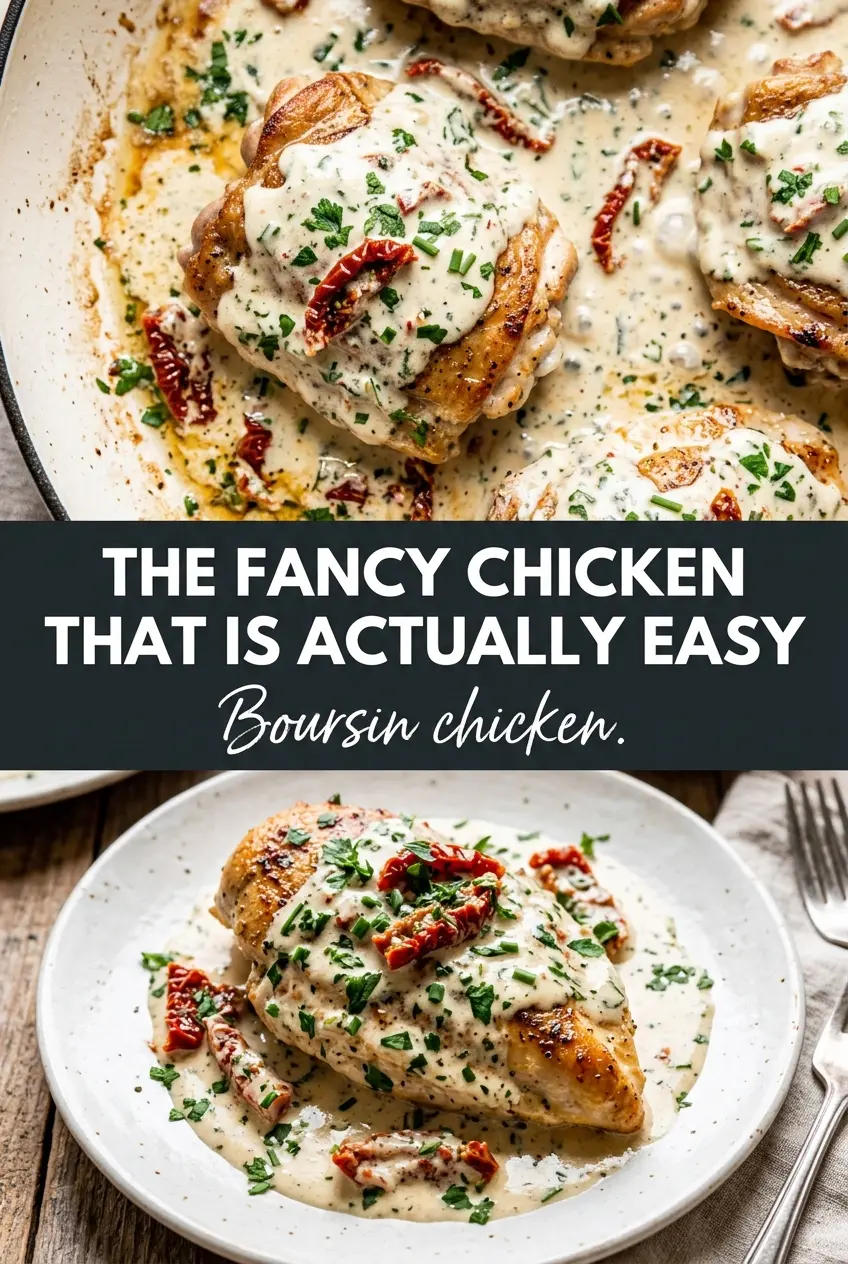
Boursin Chicken
Ingredients
Equipment
Method
- Season the chicken breasts with salt, pepper, and garlic powder to taste, then sear in olive oil in a large skillet over medium-high heat for 5-6 minutes per side until golden. Cook until the internal temperature reaches 165°F, then remove the chicken to a plate.
- Cook the minced garlic in the same pan for 30 seconds until fragrant. Deglaze with the white wine and cook for 2 minutes, scraping up any browned bits.
- Pour in the chicken broth and bring to a simmer, then add Boursin cheese while stirring until completely melted and smooth. Stir in the heavy cream and fresh thyme, then simmer for 3-4 minutes until the sauce thickens slightly.
- Return the chicken to the pan and spoon the Boursin sauce over each breast until coated. Garnish with fresh thyme and serve over mashed potatoes or pasta.