Boneless pork chops earn their keep when they come off the pan with a deep golden crust and a juicy center that still has a little blush to it. The difference between dry, bland chops and the kind people ask for again usually comes down to two things: a hot skillet and the discipline to leave the meat alone long enough to sear properly.
This version leans on a simple seasoning blend that brings color and savory depth before the chops ever hit the pan. Garlic powder, smoked paprika, and onion powder build a seasoned crust fast, while the butter, garlic, and thyme finish in the pan drippings and turn those browned bits into a light sauce that clings to the meat instead of pooling on the plate.
Below, I’ve included the timing cues that matter most, plus a few smart swaps and fixes for the most common pork chop mistakes. If you’ve ever ended up with pale, overcooked chops, this method will feel refreshingly straightforward.
The crust turned out gorgeous and the chops stayed juicy even after the 3-minute rest. I loved how the garlic butter picked up the pan drippings instead of making everything greasy.
Save these skillet boneless pork chops for the nights when you want a fast pan-seared dinner with a real crust and garlicky pan sauce.
The One Thing That Keeps Boneless Pork Chops Juicy
Boneless pork chops dry out fast when the heat is too low or the pan gets crowded. What you want here is a hard sear on the outside before the inside has time to overcook, which is why thickness matters and why a 3/4-inch chop is such a good sweet spot. Thin chops cook too fast to build much crust, and thick chops need a little more attention to avoid burning the outside before the center is done.
The other mistake is moving them too early. The surface needs uninterrupted contact with the skillet to form that deep brown crust; if you nudge the chop and it sticks, it’s not ready yet. Once it releases cleanly, you’re in good shape. From there, the butter baste finishes the meat gently and adds flavor without drowning the crust you worked to build.
What the Seasoning and Pan Drippings Are Doing Here
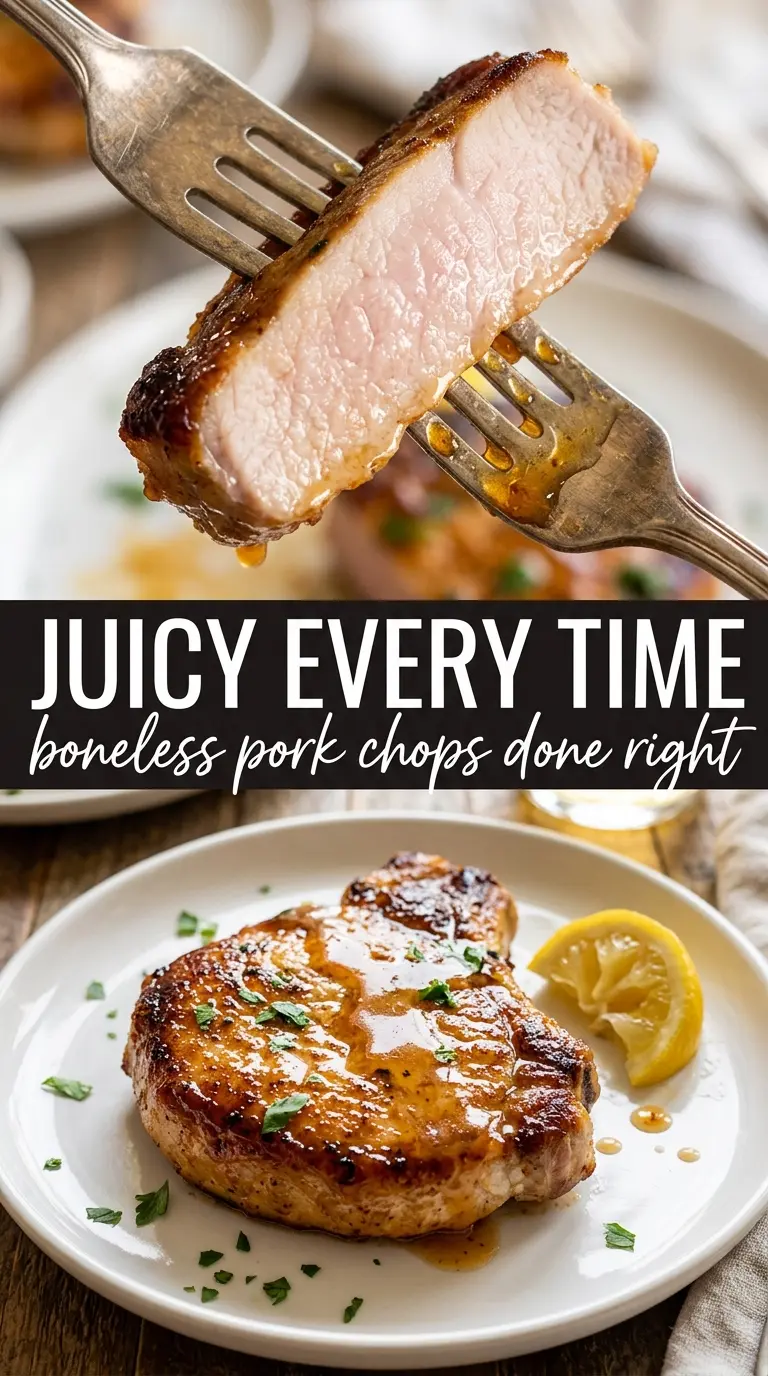
- Boneless pork chops — Three-quarter-inch chops cook evenly and stay tender with a short sear-and-baste method. If yours are slightly thicker, add a minute or two to the butter-basting stage and check the center with an instant-read thermometer rather than guessing by color.
- Smoked paprika — This brings color and a little depth to the crust, which helps the chops look and taste seasoned even though the ingredient list stays short. Regular paprika works, but you’ll lose some of that subtle smoky edge.
- Garlic powder and onion powder — These season the meat directly and won’t burn the way fresh garlic can in the first sear. Keep the fresh garlic for the butter stage, where it can perfume the pan without turning bitter.
- Butter, smashed garlic, and thyme — This is the finish that turns the pan drippings into something worth spooning over the chops. If you swap in dried thyme, use only a pinch; fresh thyme gives cleaner flavor and holds up better in the hot butter.
- Lemon wedges — A squeeze at the end wakes up the butter and cuts through the richness. It doesn’t make the pork taste lemony; it just keeps the whole dish from feeling heavy.
How to Sear First and Baste Last Without Overcooking
Dry the Surface and Season Fully
Pat the chops dry before seasoning them. Moisture on the surface turns into steam, and steam keeps you from getting that deep brown crust. Season both sides evenly so every bite tastes finished, not just the edge you happened to bite into first.
Let the Skillet Get Properly Hot
Add the olive oil and wait until it shimmers before the pork goes in. If the oil looks still or sluggish, the skillet isn’t ready and the chops will sit there soaking up fat instead of browning. Medium-high heat is the right place here: hot enough for color, not so hot that the seasoning burns before the meat has a chance to cook.
Leave the Chops Alone for the First Sear
Once the chops are in the pan, don’t move them for 4 to 5 minutes. That quiet time is when the crust forms, and trying to flip early tears the surface and leaves you with pale spots. You’ll know they’re ready when the underside is a deep golden brown and they release from the pan with very little resistance.
Baste in Butter and Pull at 145°F
After flipping, add the butter, garlic, and thyme, then spoon the melted butter over the chops as they finish cooking. The basting keeps the top from drying out and infuses the pan drippings with garlic and herb flavor. Pull the chops when the center reaches 145°F, then let them rest for 3 minutes so the juices settle instead of running out onto the plate.
Use Bone-In Chops If That’s What You Have
Bone-in chops need a little more time, but they’re forgiving and usually stay juicier. Keep the same sear, then reduce the heat slightly during the finishing stage so the outside doesn’t darken before the middle is done.
Make It Dairy-Free
Swap the butter for a dairy-free butter substitute or a little extra olive oil. You’ll lose some of the round, rich finish that butter gives the pan sauce, but the chops will still sear well and stay flavorful.
Turn It Into a Gluten-Free Dinner With a Pan Sauce Upgrade
This recipe is naturally gluten-free as written. If you want more sauce, splash in a little chicken broth after the butter step and let it reduce for a minute; that picks up the fond in the pan without changing the texture of the chops.
How to Reheat Without Drying Them Out
Refrigerator: Store leftovers in an airtight container for up to 3 days. Freezer: Freeze cooked chops for up to 2 months, wrapped tightly so they don’t pick up freezer burn, though the texture will be a little less tender after thawing. Reheating: Warm them gently in a covered skillet over low heat with a splash of water or broth; high heat is what turns leftover pork leathery.
Answers to the Questions Worth Asking

Boneless Pork Chops
Ingredients
Equipment
Method
- Pat the boneless pork chops dry, then season all over with garlic powder, smoked paprika, onion powder, salt, and black pepper.
- Arrange the seasoned pork chops so they sit at room temperature while you heat the skillet.
- Heat olive oil in a cast iron skillet over medium-high heat until shimmering.
- Add the pork chops and cook without moving for 4–5 minutes until a deep golden crust forms.
- Flip the pork chops and cook the second side briefly while the crust sets, about 1 minute.
- Add butter, smashed garlic, and fresh thyme sprigs to the pan.
- Baste the chops continuously for 3–4 minutes until cooked through and the internal temperature reaches 145°F.
- Transfer pork chops to a plate and rest for 3 minutes.
- Serve with lemon wedges and spoon any pan drippings over the chops.