Sticky, caramelized boneless country-style ribs are the kind of dinner that disappears fast because the meat turns fork-tender before the sauce has time to burn. The outside gets a deep, glossy BBQ crust while the inside stays juicy and pulls apart in soft, tender strands. It’s the sort of rib recipe that feels like it took all day, even though the oven does most of the work.
What makes this version work is the low-and-slow bake under foil, plus a little apple cider vinegar in the pan. That steam keeps the pork from drying out while the ribs soften, and the final blast of heat sets the sauce into a sticky coating instead of a thin glaze. The dry rub leans sweet, smoky, and savory, which gives the meat plenty of flavor before the BBQ sauce ever goes on.
Below, I’ve included the small details that matter most: how to avoid tough ribs, when the sauce should go on, and what to change if you want a sweeter, spicier, or dairy-free-style BBQ dinner without losing that fall-apart texture.
The ribs came out unbelievably tender, and the BBQ sauce thickened into that sticky crust I always want but never get right. I followed the foil step exactly and the meat pulled apart with a fork.
Save these sticky boneless country-style ribs for the night when you want tender pork and a caramelized BBQ crust without babysitting the oven.
The Part That Keeps Boneless Country-Style Ribs Tender Instead of Stringy
Boneless country-style ribs are cut from the shoulder, not the loin, so they need time to relax and soften. The biggest mistake is treating them like quick-cooking chops; that gives you meat that tastes dry even when it looks browned. Covered baking at a low temperature is what turns them tender enough to shred with a fork.
The other mistake is saucing too early. BBQ sauce has sugar in it, and sugar can darken fast in a hot oven before the meat is done. Waiting until the ribs are already tender means the final high-heat stage is all about caramelizing the sauce, not rescuing overbrowned edges.
- Low oven heat gives the connective tissue time to break down before the meat dries out.
- Foil cover traps steam in the dish, which is what keeps the ribs juicy during the long bake.
- Vinegar in the pan adds a little acidity and moisture, helping the pork soften while also balancing the sweetness of the sauce.
- Final sauce glaze should happen only after the ribs are already tender, or the glaze can scorch before it thickens.
What Each Ingredient Is Actually Doing in These Ribs
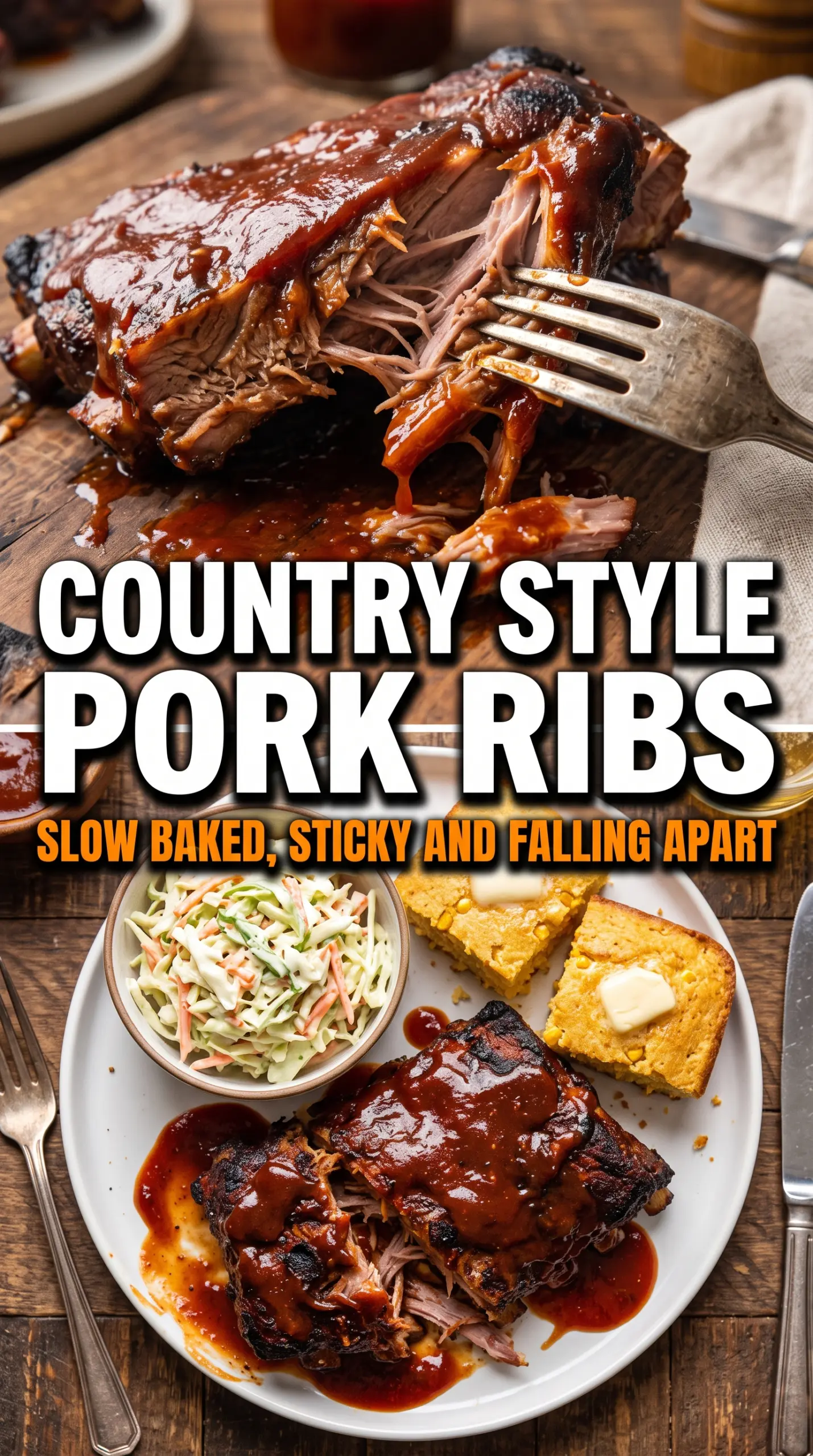
- Boneless country-style pork ribs are the right cut for this method because they hold up to long baking and become tender instead of tough. You can use bone-in country ribs, but the cook time may run a little longer.
- Brown sugar helps the rub cling and gives the sauce a deeper caramel note once the oven heat goes up. Dark brown sugar makes the finish a little richer, but light brown sugar works fine.
- Smoked paprika adds the slow-smoked taste you’d expect from barbecue without needing a smoker. Regular paprika will work in a pinch, but you’ll lose some of that deeper color and smoky edge.
- BBQ sauce matters more than people think because it’s the final coating, not just a condiment. Use one you already like on its own, since the flavor concentrates when it bakes.
- Apple cider vinegar is what keeps the pan from baking dry and adds just enough tang to cut through the sweetness. White vinegar is harsher, so if you swap it in, use a little less.
How to Get the Rib Meat Soft Before the Sauce Ever Hits
Season the Ribs Evenly
Coat every side of the pork with the dry rub and press it on with your hands so it sticks. You want a thin, even layer, not a heavy crust that falls off in the dish. If the ribs look patchy now, they’ll taste patchy later, because the seasoning doesn’t magically spread during baking.
Bake Covered Until the Meat Yields
Pour the vinegar into the baking dish, cover it tightly with foil, and bake at 300°F for about 2 hours. The ribs should look pale and look almost too soft to handle, and a fork should slide in with little resistance. If they still feel tight, give them another 15 to 20 minutes; rushing this stage is what leaves you with chewy ribs.
Caramelize the Sauce at the End
Brush the ribs generously with BBQ sauce, raise the oven to 400°F, and bake uncovered until the sauce turns glossy and sticky. Watch for the edges to darken and the sauce to bubble rather than dry out. If your sauce starts to look burnt instead of lacquered, pull the pan out sooner and brush on a thinner layer next time.
How to Adapt These Ribs Without Losing the Tender Texture
Make Them Spicier
Add cayenne, chipotle powder, or a spoonful of hot sauce to the BBQ sauce before the final bake. That gives you heat that sits on top of the sweet-smoky base instead of replacing it, and it works best if you don’t overdo the sugar in the rub.
Use a Sugar-Free BBQ Sauce
This works well for a lower-carb version, but check the label because some sugar-free sauces brown faster than you expect. The ribs will still get tender from the covered bake; the main difference is a less sticky, slightly less lacquered finish.
Swap in Bone-In Country Ribs
Bone-in ribs need a little extra time because the bone slows the heat from reaching the center. Keep the same method, but check for tenderness rather than clock time alone, since the goal is meat that gives up easily when pressed with a fork.
Make It for a Crowd
Use two baking dishes instead of crowding the ribs into one pan. If they’re stacked or packed too tightly, they steam unevenly and the top pieces won’t brown the same way during the final bake.
Storage and Reheating
- Refrigerator: Store leftovers in an airtight container for up to 4 days. The sauce will thicken as it chills, and the meat stays tender if it wasn’t overcooked the first time.
- Freezer: These freeze well. Cool completely, then freeze with a little extra sauce in a sealed container for up to 2 months.
- Reheating: Reheat covered in a 300°F oven with a spoonful of water or extra BBQ sauce until hot. Microwave reheating works in a pinch, but it can dry the edges before the center warms through.
Answers to the Questions Worth Asking
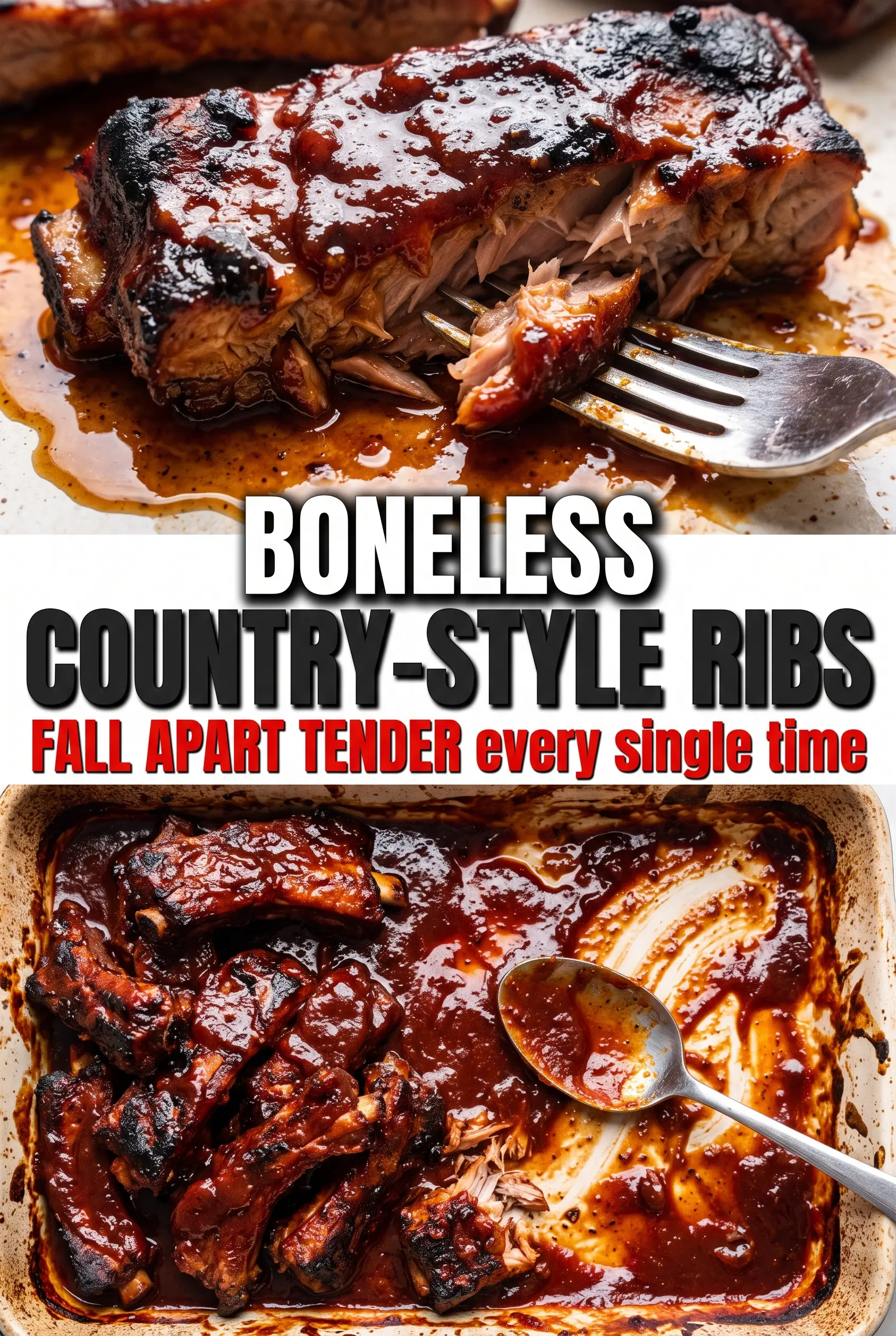
Boneless Country-Style Ribs
Ingredients
Equipment
Method
- Preheat the oven to 300°F. Set a baking dish or sheet pan on the oven rack when ready to bake.
- Mix the dry rub ingredients, then coat the boneless country-style pork ribs on all sides. Arrange the ribs in a single layer in the baking dish so they cook evenly.
- Pour the apple cider vinegar into the bottom of the dish and cover tightly with foil. The ribs should be sealed in so they steam while baking.
- Bake at 300°F for 2 hours until very tender. Look for meat that pulls apart easily when tested.
- Uncover the dish, brush generously with BBQ sauce, and increase the oven to 400°F. Spread the sauce evenly so it forms a glossy surface.
- Bake at 400°F for 20–25 minutes until the sauce caramelizes. Watch for dark brown, sticky spots and a lacquered finish.
- Serve hot with extra BBQ sauce. Garnish with additional sauce to keep the ribs glossy at the table.