Golden-topped blueberry French toast casserole is the kind of breakfast that earns a permanent spot in the rotation because it comes out soft and custardy underneath with a crisp, brown sugar streusel on top. The blueberries burst into the bread as it bakes, and the pockets of cream cheese turn into little tangy, creamy bites that keep every forkful interesting.
The overnight soak matters here. French bread has enough structure to hold the custard without collapsing, but it still needs time to drink in the egg mixture all the way through. The streusel goes on right before baking so it stays crumbly instead of dissolving into the casserole, and the cold butter helps it bake into those nubbly, crunchy bits that make this dish feel finished.
Below, you’ll find the part that makes this casserole work for brunch without stress: how to layer it so the cream cheese doesn’t disappear, what to do if you’re using frozen blueberries, and the timing that keeps the center set without drying out the edges.
The custard soaked through overnight and the top baked up crisp instead of soggy. My kids kept picking out the cream cheese pockets before I could even serve it.
Save this blueberry French toast casserole for a make-ahead brunch with a crunchy streusel top and creamy blueberry layers.
The Overnight Soak Is What Keeps This Casserole Custardy, Not Mushy
French toast casserole fails when the bread only gets a surface soak. The outside turns soft while the center stays dry, or the whole dish collapses into something wet and heavy. The overnight rest fixes that by giving the custard time to work into the bread all the way through, so each cube bakes up tender instead of soggy.
The other piece that matters is the bread itself. A sturdy French loaf holds its shape after soaking, which is what you want here. Soft sandwich bread turns to paste fast, and that leaves you with a dense middle and no texture on top. Pressing the bread down gently after pouring in the custard helps the dry pieces drink it up without crushing everything into a brick.
- Use day-old French bread if you have it. Slightly stale bread absorbs the custard better and keeps more structure. Fresh bread works too, but it needs the full overnight soak.
- Don’t skip the cover before chilling. It keeps the top from drying out while the custard settles in.
- Frozen blueberries are fine. Add them straight from frozen so they don’t bleed as much and stain the whole casserole purple.
- Cut the cream cheese into small cubes. Bigger chunks stay isolated; smaller cubes soften into creamy pockets throughout the bake.
What Each Ingredient Is Actually Doing In This Blueberry French Toast Casserole
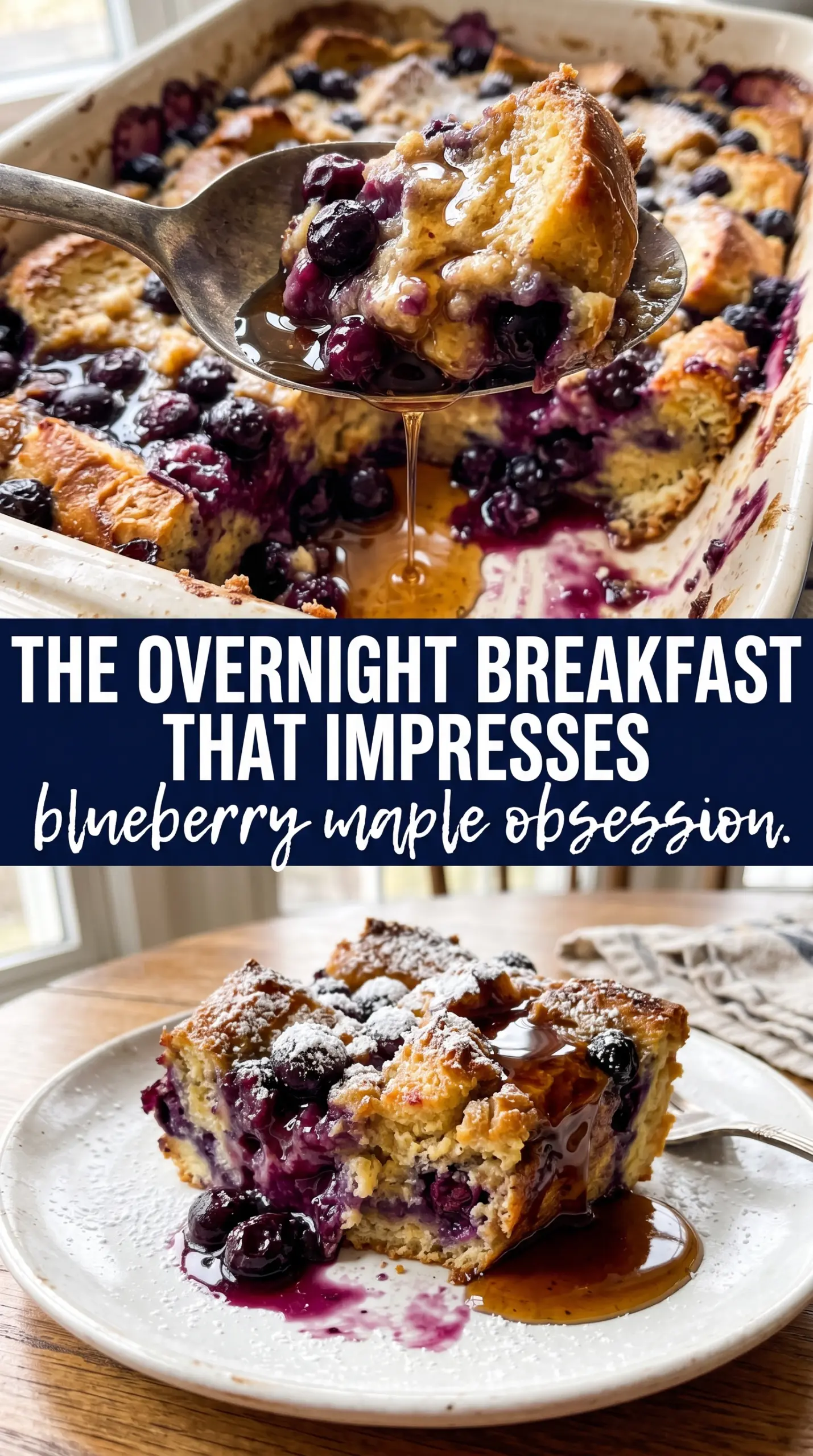
- French bread — This is the structure of the dish. It holds the custard, the berries, and the cream cheese without disintegrating. A soft brioche-style loaf will taste rich, but it bakes up softer and richer than this version.
- Cream cheese — It gives you those tangy pockets that break up the sweetness. Keep it cold and cube it small so it softens into the casserole instead of disappearing into the custard.
- Blueberries — Fresh or frozen both work. Fresh berries stay a little more defined, while frozen berries release more juice and create a saucier bake. If using frozen, don’t thaw them first.
- Eggs, milk, and maple syrup — This is the custard. The eggs set the casserole, the milk keeps it tender, and the maple syrup adds sweetness without making the filling cloying. Whole milk gives the best texture here; lower-fat milk works, but the center will be less lush.
- Brown sugar streusel — This is the crunch. Cold butter is what keeps it crumbly, so don’t let it warm up before baking. If it starts to soften, chill it before it goes on top.
Building The Layers So Every Slice Holds Together
Start With A Bread Base That Catches The Custard
Spread half the bread cubes in an even layer so the casserole has a sturdy base. Scatter the cream cheese and the first cup of blueberries over that layer before adding the rest of the bread. That order keeps the cream cheese buried in the middle instead of melting straight to the bottom, where it can disappear into the baking dish.
Pour The Custard Slowly And Give It Time To Settle
Whisk the eggs, milk, maple syrup, and vanilla until the mixture looks smooth and uniform, then pour it evenly over the bread. Use the back of a spoon or your hand to press down gently so the top cubes contact the custard. If you pour too fast, the liquid pools in one corner and the casserole bakes unevenly.
Chill Before Baking So The Middle Cooks Evenly
Cover the dish and refrigerate it overnight. That rest is what keeps the center from tasting eggy or raw after baking. Right before it goes into the oven, add the streusel straight from the fridge so it stays cold and crumbly while the casserole rises underneath it.
Bake Until The Center Sets, Then Let It Stand
Bake at 350°F until the top is golden and the casserole is puffed around the edges, about 40 to 45 minutes. The center should look set but still soft, not watery. If the top browns too quickly before the middle is done, lay a loose piece of foil over it for the last stretch. Let it rest a few minutes after baking so the custard finishes setting and the slices hold together better.
Three Ways To Adjust This Casserole Without Losing The Good Parts
Dairy-Free Version With Coconut Milk And A Butter Substitute
Use full-fat coconut milk in place of the whole milk and swap in a dairy-free cream cheese and butter. The casserole will still set, but it’ll taste a little richer and more coconut-forward. Choose an unsweetened version so the maple syrup doesn’t tip the dish into overly sweet territory.
Gluten-Free Version With A Sturdy Gluten-Free Loaf
Use a dense gluten-free bread that can stand up to soaking. Very soft gluten-free sandwich bread tends to collapse, so the finished casserole can turn gummy. If the loaf feels especially tender, cube it and let it dry out on the counter for a few hours first.
Extra Bright With Lemon Zest
Add a teaspoon of finely grated lemon zest to the custard or scatter a little over the blueberries. It sharpens the blueberries and keeps the cream cheese from tasting heavy. This is the easiest way to make the casserole feel lighter without changing the texture.
Storage and Reheating
- Refrigerator: Store leftovers covered for up to 4 days. The streusel softens a bit, but the flavor holds up well.
- Freezer: Freeze baked portions tightly wrapped for up to 2 months. The texture softens after thawing, but it still reheats nicely for breakfast.
- Reheating: Warm slices in a 325°F oven or toaster oven until heated through. The microwave works in a pinch, but it can make the bread rubbery and turn the streusel soft.
Answers To The Questions Worth Asking
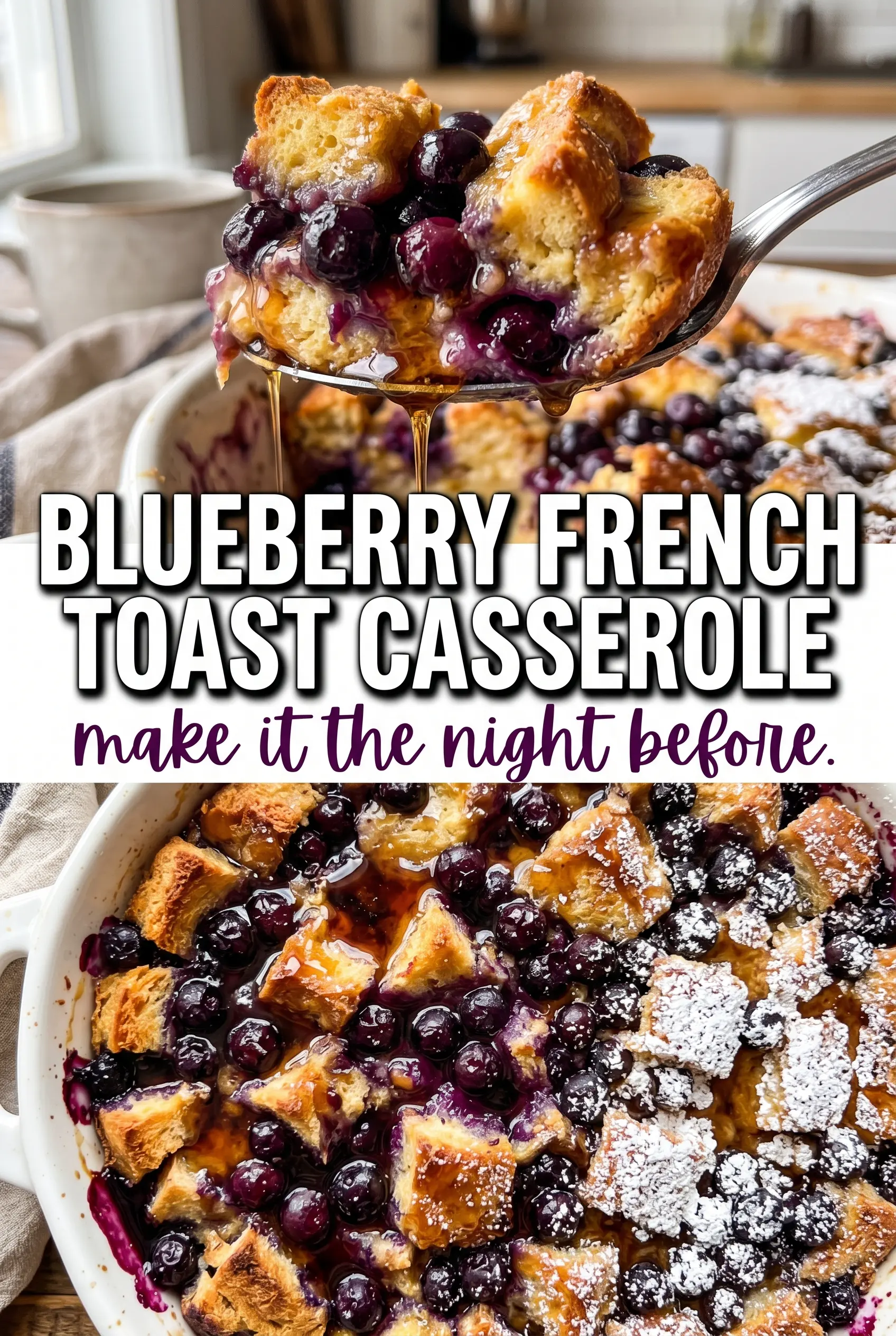
Blueberry French Toast Casserole
Ingredients
Equipment
Method
- Grease a 9x13 dish and spread half the bread cubes on the bottom.
- Scatter the cream cheese cubes and 1 cup blueberries over the bread, then add the remaining bread cubes.
- Whisk eggs, whole milk, maple syrup, and vanilla extract together, then pour evenly over the bread and press down gently.
- Scatter the remaining blueberries on top, cover, and refrigerate overnight.
- Rub flour, brown sugar, cinnamon, and cold butter together until crumbly, then refrigerate.
- Top the casserole with streusel and bake at 350°F for 40–45 minutes until puffed and golden, then dust with powdered sugar.