Thin-sliced ribeye, caramelized onions, and melted provolone tucked into a toasted hoagie roll hit that sweet spot between messy and perfectly controlled. The steak stays juicy, the vegetables turn soft and sweet, and the griddle gives everything a little edge that a skillet just can’t match. It’s the kind of sandwich that disappears fast, then has people hovering near the griddle waiting for the next one.
This version works because the vegetables go first and the steak goes in hot and fast. That keeps the meat from steaming in its own juices and gives the onions and peppers time to soften and brown instead of staying raw and sharp. Ribeye is the right call here because the fat melts into the meat as it cooks, which is what gives a cheesesteak that rich, beefy bite.
Below you’ll find the timing that keeps the steak tender, the trick for getting the rolls toasted without burning the butter, and a few smart swaps if you want to change up the cheese or skip the mayo.
The steak stayed tender, the peppers and onions caramelized instead of turning mushy, and the provolone melted into every bite. My husband said it tasted like a real cheesesteak shop sandwich right off the griddle.
Save these Blackstone Philly Cheesesteak Sandwiches for the nights when you want juicy ribeye, melty provolone, and toasted hoagie rolls from one hot griddle.
The Part Most People Get Wrong: Overcooking the Ribeye
The biggest mistake with a cheesesteak on a griddle is treating the steak like it needs time to develop. It doesn’t. Thin ribeye cooks fast, and if it sits on the heat too long it turns tight and dry before the cheese ever has a chance to melt. The goal is browned edges, not a hard sear like a steakhouse strip.
Chopping the meat while it cooks helps it take on that classic cheesesteak texture, but the chopping has to happen quickly. Use two spatulas and work the steak just until it loses its raw color and starts to brown in spots. Once it’s done, move fast with the cheese so the residual heat does the rest.
- Ribeye — This is the cut that gives you the classic rich, tender bite. Strip steak can work in a pinch, but it won’t have the same buttery finish.
- Onions and green bell peppers — These need the full 8 to 10 minutes first so they soften and sweeten. If you rush them, they taste sharp and the sandwich loses that deep, savory balance.
- Provolone — It melts cleanly and keeps the filling creamy without turning greasy. American cheese melts a little more dramatically if you want a looser, stretchier sandwich.
- Hoagie rolls — A soft roll with enough structure matters here. Toasting the cut sides on the griddle keeps them from going soggy once the steak and cheese hit.
What the Griddle Is Doing That a Skillet Can’t
- Oil — You need enough to keep the vegetables moving and prevent the steak from sticking when it hits the hot surface. Olive oil works, but a neutral oil gives you the cleanest flavor.
- Butter for toasting — This is what gives the rolls their golden edges and that diner-style finish. Don’t skip it unless you want a dry bun.
- Mayo — Optional, but a thin swipe adds a creamy layer that helps keep the bread from soaking up too much juice. Use just enough to coat the inside, not enough to overwhelm the sandwich.
- Salt and pepper — Keep the seasoning simple so the ribeye stays the star. Heavy seasoning or a steak rub can muddy the clean cheesesteak flavor.
Build It Hot, Fast, and in the Right Order
Caramelizing the Vegetables
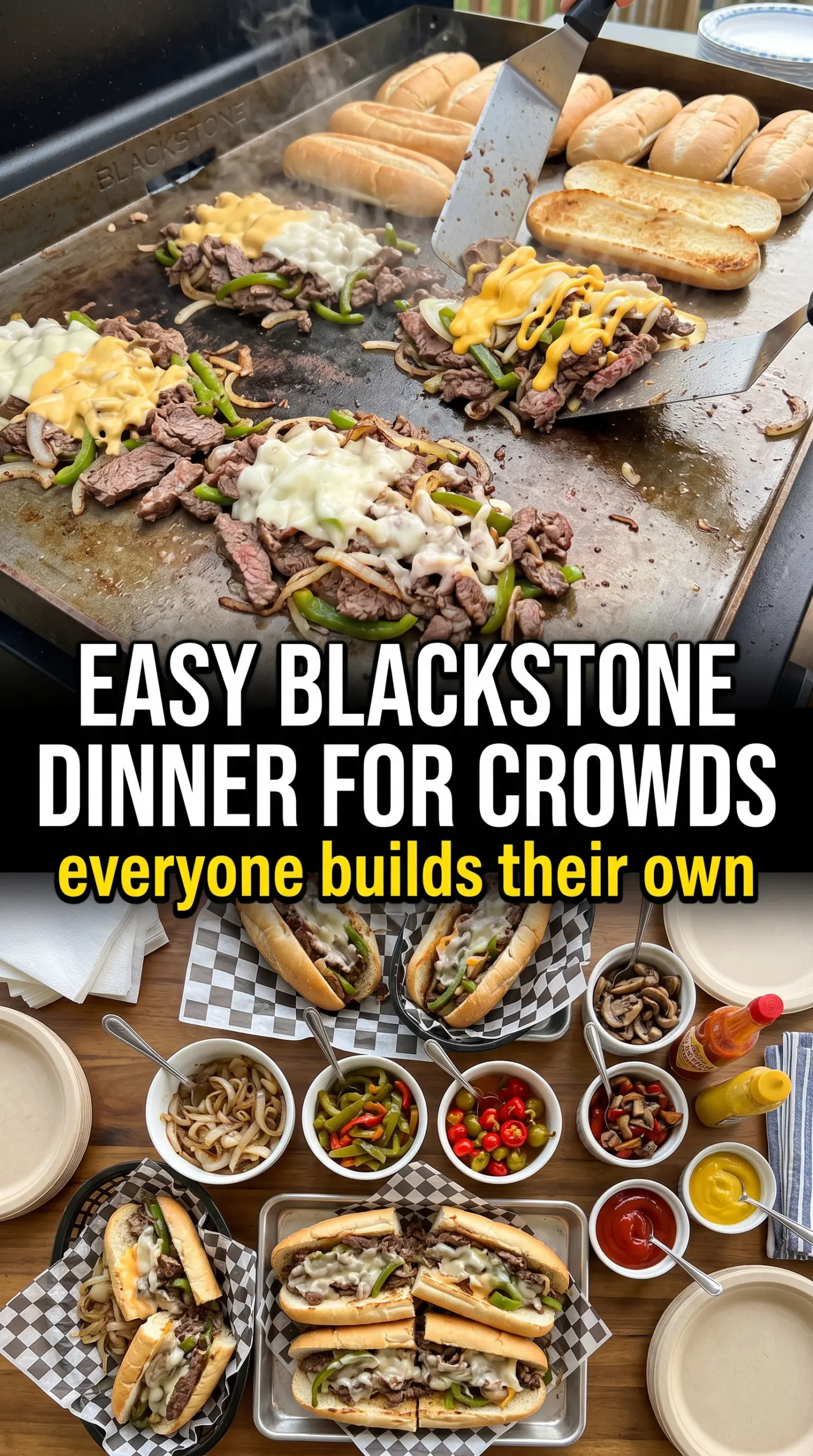
Heat the griddle to medium-high and add the oil, then spread the onions and peppers into a thin layer. Leave them alone for a minute or two so they can catch color, then stir and flip until they’re softened and browned at the edges. If they start to look dry before they’re tender, add a small splash more oil rather than turning the heat up. Pull them off the heat when they’re sweet, glossy, and just starting to collapse.
Cooking the Steak
Season the ribeye lightly with salt and pepper, then lay it on the hot surface and chop it as it cooks. The meat should go from red to brown in just a few minutes, and the pieces should stay small enough to fit neatly in the roll. If the steak is releasing a lot of liquid, the griddle isn’t hot enough, so let it come back up before you keep going. Stop as soon as the pink is gone; carryover heat will finish the job.
Melting and Toasting
Divide the steak into four portions, top each portion with the vegetables and two slices of provolone, and let the cheese soften over the hot meat. While that happens, butter the rolls and toast them cut-side down until they’re golden and crisp at the edges. The bread should smell nutty and toasted, not burnished dark. Spoon the filling into the rolls right away so the cheese stays stretchy and the bread doesn’t sit empty long enough to cool off.
Swap the Cheese for a Sharper Bite
Use white American or a mild cheddar if you want a creamier melt or a slightly sharper finish. White American gives you the smoothest, most classic cheesesteak texture, while cheddar brings more tang but can turn firmer as it cools.
Make It Dairy-Free
Skip the provolone and use a dairy-free melt that softens well over heat, then toast the rolls with oil instead of butter. The texture will still be creamy if you use a brand meant for melting, but it won’t have the same savory richness as provolone.
Skip the Roll for a Lower-Carb Bowl
Serve the steak, vegetables, and cheese over chopped lettuce or cauliflower rice instead of in hoagie rolls. You’ll lose the toasted bread contrast, but the filling itself stays just as satisfying and makes an easy gluten-free option if your cheese is safe.
Turn It Into a Spicy Cheesesteak
Add sliced jalapeños to the griddle with the onions and peppers, or stir a little hot sauce into the mayo before spreading it on the rolls. That gives you heat without changing the cooking method, and it keeps the sandwich balanced instead of just hot for the sake of it.
Storage and Reheating
- Refrigerator: Store the steak and vegetables separately from the rolls for up to 3 days. The filling will taste best if you reheat it before assembling.
- Freezer: The cooked steak and vegetable mixture freezes well for up to 2 months. Freeze it flat in a sealed bag, then thaw in the fridge before reheating.
- Reheating: Warm the filling on a skillet or the griddle over medium heat until hot. Don’t microwave the assembled sandwich or the roll will turn soft and soggy before the cheese melts evenly.
Questions I Get Asked About This Recipe

Blackstone Philly Cheesesteak Sandwiches
Ingredients
Equipment
Method
- Heat a Blackstone griddle to medium-high and add the oil. Spread it thin so the onions and peppers cook quickly without steaming.
- Cook the sliced onions and green bell peppers until caramelized, about 8-10 minutes, then set aside. Stir occasionally and scrape up browned bits for deeper flavor.
- Season the thinly sliced ribeye with salt and pepper. Keep the griddle medium-high so the steak browns fast.
- Cook the steak for 3-4 minutes, chopping with spatulas as it cooks. Move it around frequently to get browned edges.
- Divide the steak into 4 portions and top each with the caramelized vegetables and 2 slices of provolone. Let the cheese melt on top until glossy and flowing.
- Butter and toast the hoagie rolls on the griddle until golden. Press lightly so the cut sides toast evenly.
- Scoop the steak mixture into the toasted rolls, add mayo if desired, and serve immediately. Serve right away so the cheese pull stays hot and stretchy.