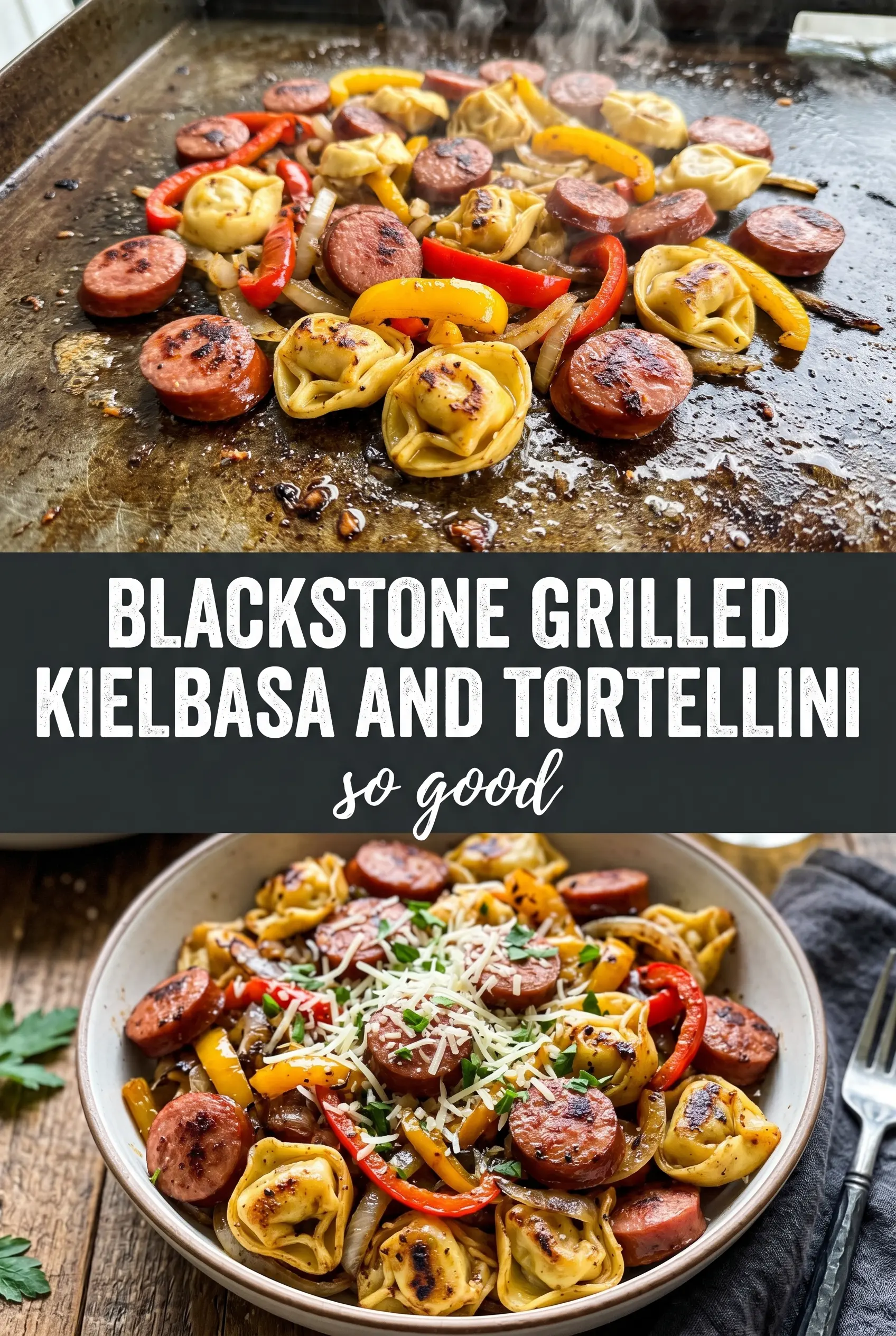
Sizzling kielbasa, golden tortellini, and sweet peppers hit a hot griddle and turn into the kind of dinner that disappears fast. The edges of the pasta pick up a little crispness, the sausage browns deeply, and the tomatoes collapse just enough to coat everything in a light, garlicky sheen. It eats like a full meal but cooks like a weeknight shortcut.
What makes this work is the order. The kielbasa goes first so it can render a little fat and leave behind those browned bits that season the rest of the pan. The vegetables need enough time to soften and pick up color before the tortellini goes in, because cooked pasta only needs a short toss on the griddle to heat through and take on a little texture without turning mushy.
Below you’ll find the timing that keeps the tortellini intact, the ingredient swaps that still give you a satisfying finish, and a few ways to adapt this for different tastes without losing that smoky griddle character.
The tortellini got those crisp edges on the griddle and the kielbasa stayed juicy. I was nervous about the pasta, but it held up and the whole pan tasted like it came from a restaurant flat top.
Save this Blackstone Grilled Kielbasa and Tortellini for the nights when you want crispy sausage, tender pasta, and fast griddle flavor in one pan.
The Trick to Keeping Tortellini Intact on a Hot Griddle
The biggest mistake with griddle pasta is treating the tortellini like it needs a long cook once it hits the surface. It doesn’t. The tortellini should already be cooked and drained before it goes on the Blackstone, because the griddle is there for browning and flavor, not for boiling pasta from scratch. If you toss it in too early or with too much wetness, the pasta turns soft on the outside before it ever picks up those crisp edges.
Drying matters here more than people expect. A few minutes in the colander after draining helps the tortellini hold its shape and brown instead of steam. The same goes for the vegetables: if the peppers and onions are crowded, they sweat and go pale. Give them room, let them pick up color, then add the pasta once the pan has enough heat to sizzle on contact.
What the Kielbasa, Tortellini, and Tomatoes Each Bring to the Pan
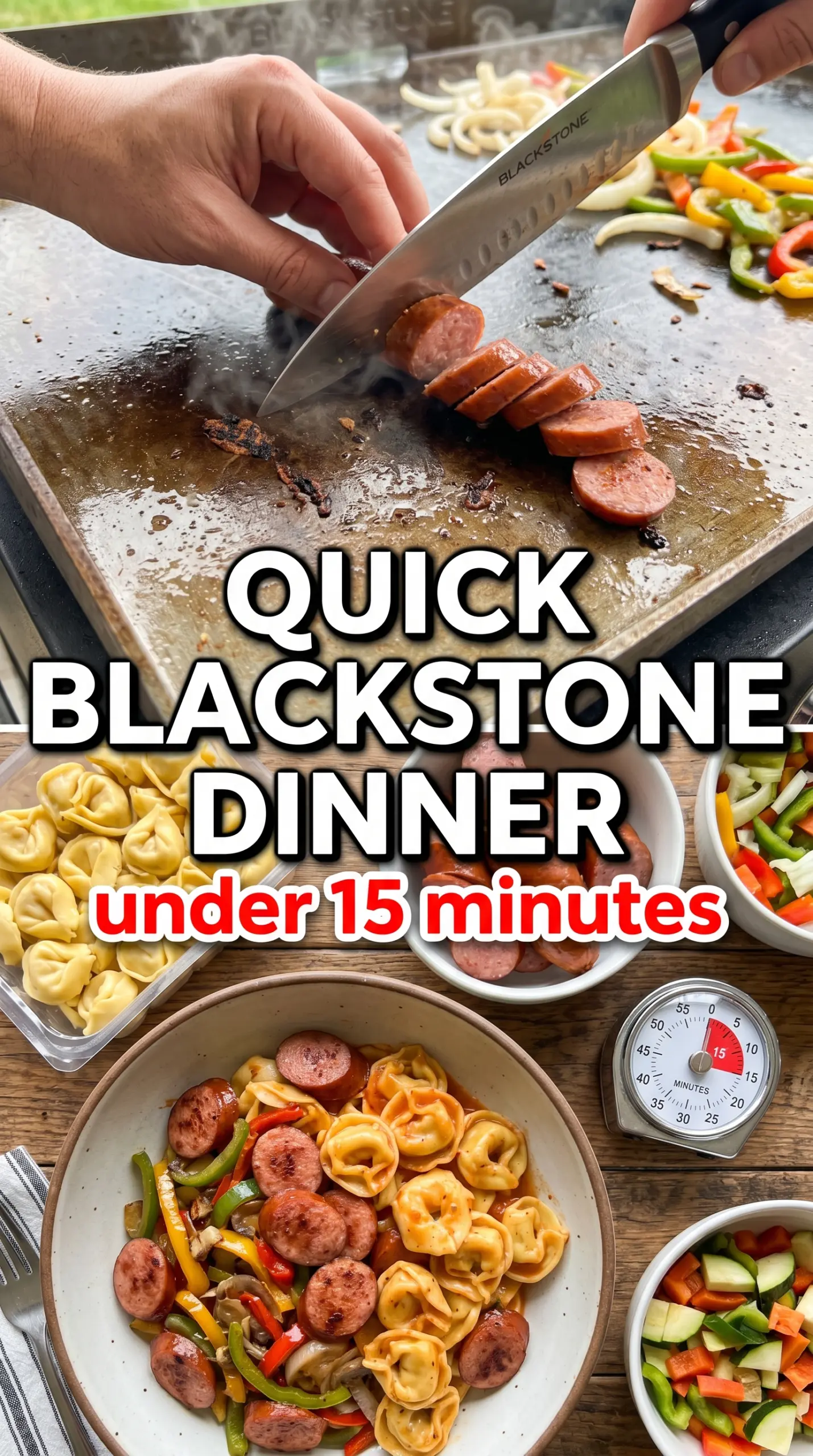
- Kielbasa — Smoked kielbasa already brings salt, fat, and seasoning, which is why it works so well on a griddle. Look for a fully cooked sausage with a firm casing, because it browns cleanly and slices hold their shape better than softer fresh sausage.
- Cheese tortellini — Fresh or refrigerated tortellini gives you the best texture here. It stays tender inside while the outside can pick up a little crust; dried tortellini won’t behave the same way and usually needs a different cooking method.
- Bell peppers and onion — These build the base and keep the dish from tasting heavy. Dice them evenly so they soften at the same rate, and don’t cut them too small or they’ll disappear into the pasta before they caramelize.
- Cherry tomatoes — These break down just enough to make a light pan sauce. Halve them so they blister and release their juices faster; whole tomatoes take too long and don’t coat the pasta the same way.
- Parmesan and basil — Add these at the end, off the hottest part of the griddle, so the cheese stays nutty and the basil stays fresh. Parmesan is one place where the real stuff matters, because the pre-grated version doesn’t melt or finish the dish as cleanly.
Building the Griddle Flavor in the Right Order
Brown the Kielbasa First
Heat the griddle until a drop of oil shimmers, then lay the kielbasa slices down in a single layer. Let them sit long enough to brown before flipping; if they stick, they aren’t ready yet. You want a deep golden crust on the cut sides, not pale rounds with a little color at the edge. That first browning step seasons the whole pan and gives the dish its smoky backbone.
Cook the Vegetables in the Sausage Drippings
Add the peppers and onion next, using the fat already on the griddle to coat them. Stir only enough to keep them moving, because constant flipping stops them from taking on char. If they start to look dry, add a small splash of oil rather than crowding the pan with extra liquid. They should soften and pick up browned edges before the tortellini goes in.
Finish With the Tortellini and Tomatoes
Once the vegetables are tender, add the cooked tortellini, tomatoes, garlic, and Italian seasoning. Toss everything together just long enough for the garlic to smell fragrant and the tomatoes to begin collapsing. The tortellini should be heated through with a few crisp spots, not smashed or greasy. If the pan looks crowded, work in two batches so the pasta fries instead of steaming.
Top and Serve While the Edges Are Still Hot
Season with salt and pepper, then shower on Parmesan and basil right before serving. The cheese clings better when the surface is hot but not raging, and the basil stays bright instead of turning black. If you wait too long, the tortellini softens and loses the contrast that makes this dish stand out.
Ways to Adjust This Without Losing the Griddle Character
Make it dairy-free
Use dairy-free tortellini if you can find it, or swap in a cheese-free stuffed pasta and finish with nutritional yeast instead of Parmesan. The dish will still get plenty of savoriness from the kielbasa and browned vegetables, but the final coating will be a little less rich.
Use smoked sausage instead of kielbasa
Any fully cooked smoked sausage works here. Kielbasa has a garlicky, peppery edge, while andouille or chicken sausage will shift the flavor in a spicier or lighter direction. Keep the slice thickness the same so everything browns at the same pace.
Swap in a different vegetable mix
Zucchini, mushrooms, or broccoli florets can replace part of the peppers and onions if that’s what you have on hand. Choose vegetables that can tolerate high heat and still keep some bite, because watery vegetables can wash out the browning and make the pasta slippery.
Storage and Reheating
- Refrigerator: Store leftovers in an airtight container for up to 3 days. The tortellini softens a bit as it sits, but the flavor holds up well.
- Freezer: I don’t recommend freezing it. The pasta and tomatoes both lose texture once thawed, and the dish turns softer than it should.
- Reheating: Reheat in a skillet over medium heat with a small splash of water or broth, just until warmed through. Microwaving works in a pinch, but it tends to make the tortellini rubbery and the sausage less crisp.