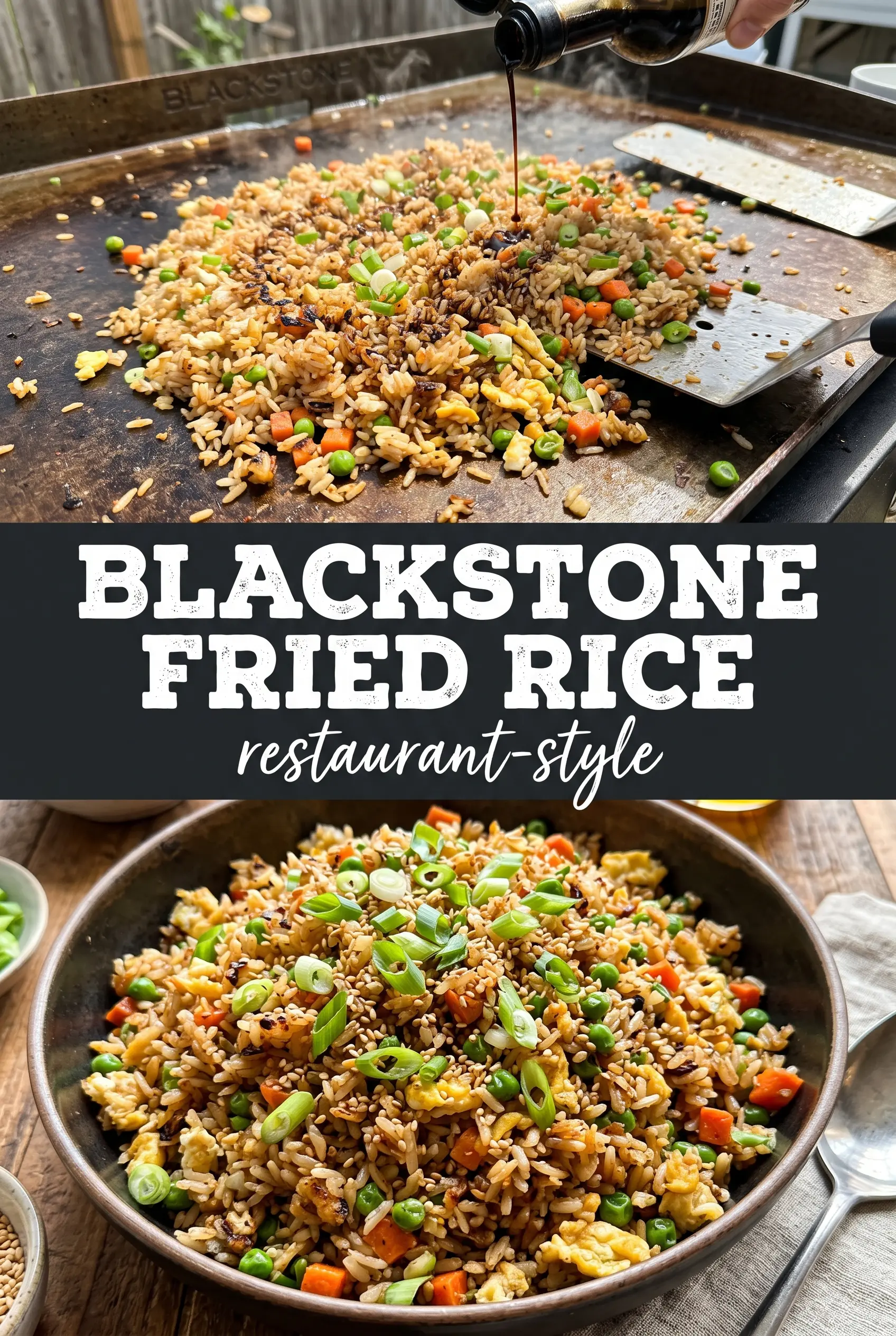
Blackstone fried rice hits the griddle with that fast, smoky sizzle that turns plain cold rice into something golden, savory, and deeply satisfying. The grains stay separate, the vegetables keep a little bite, and the egg gets folded through in soft pieces instead of disappearing into the rice. It’s the kind of meal that makes leftovers feel intentional.
The trick is using rice that’s fully chilled and a griddle that’s hot enough to move quickly. Cold rice dries out just enough to fry instead of steaming, and the wide cooking surface lets you spread everything out so the moisture can cook off. The sauces go in after the rice has had a chance to toast a little, which keeps the finished dish from turning soft or muddy.
Below, I’ll show you how to keep the rice from clumping, when to add the garlic so it doesn’t burn, and a few ways to adapt this for what you have on hand.
The rice got those crisp little edges on the griddle, and the eggs stayed fluffy instead of disappearing. I used leftover jasmine rice and it tasted like takeout in the best way.
Save this Blackstone fried rice for the nights when cold rice, a hot griddle, and ten minutes are all you need.
The Part That Keeps Fried Rice From Going Mushy on the Griddle
The biggest mistake with fried rice is rushing it with warm rice or crowding the pan so the grains steam instead of fry. A Blackstone helps because you have room to spread everything out, but the rice still needs to start cold and a little dry. That’s what gives you those separate grains and the lightly toasted spots that make the whole dish taste finished.
Keep the eggs on the griddle just until they’re set, not browned. Move them out of the way early, then bring them back at the end so they stay soft and visible in the finished rice. If you add the sauces too soon, the rice can go wet before it has a chance to pick up color, and you lose that fried texture.
What Each Ingredient Is Actually Doing in This Fried Rice
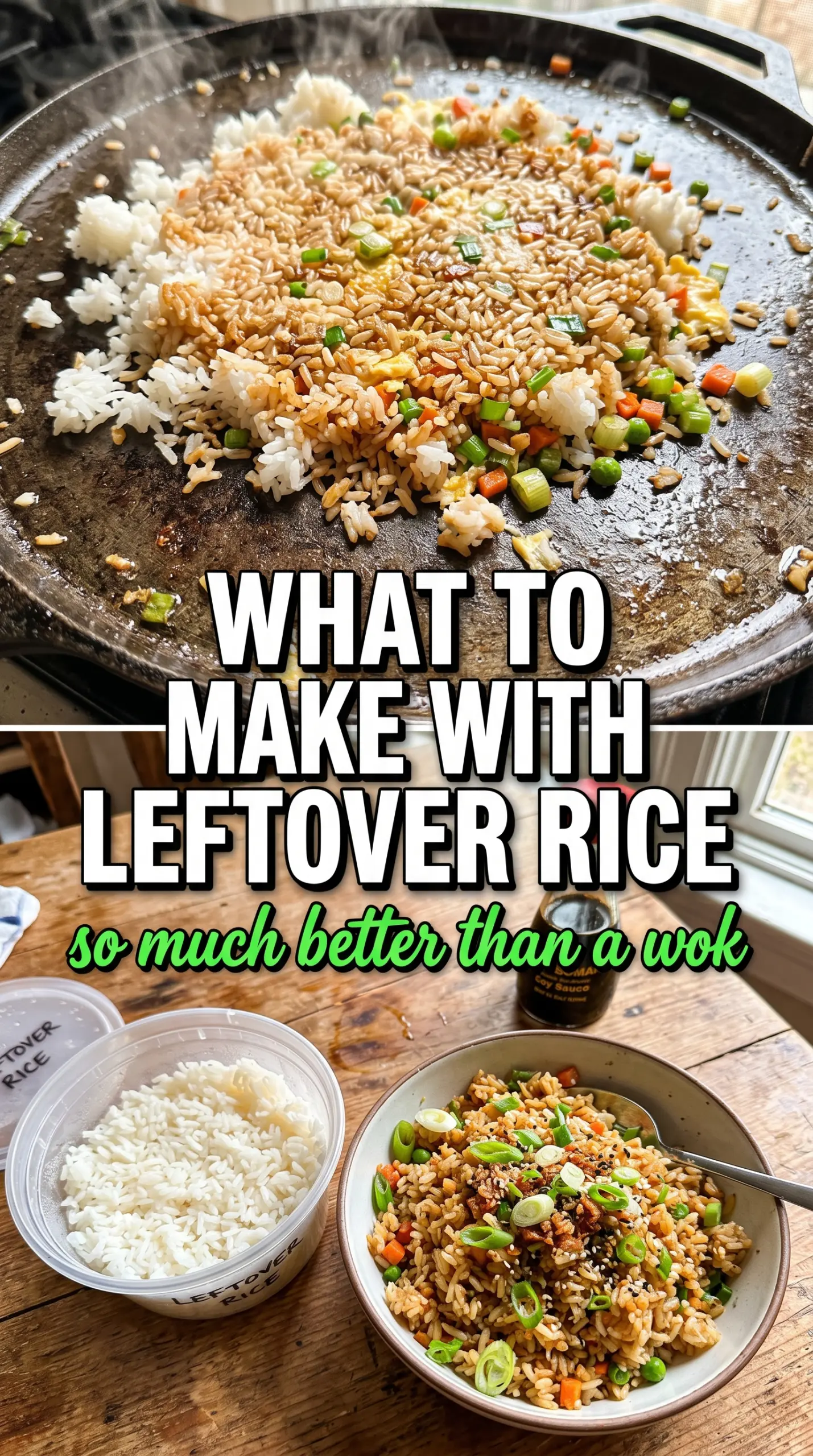
- Cold cooked rice — This is non-negotiable. Fresh rice is too wet and clumps easily, while chilled rice dries out enough to fry cleanly. Day-old jasmine rice is ideal, but any long-grain rice that’s been cooled completely will work.
- Oyster sauce — This adds body and a deeper savory note that soy sauce alone doesn’t give you. If you skip it, the rice still works, but the flavor will taste flatter. For a substitute, use an extra teaspoon of soy sauce plus a pinch of sugar, though it won’t have the same roundness.
- Sesame oil — Add it near the end so the aroma stays strong. It’s more of a finishing flavor than a cooking oil, and too much heat can flatten it. Use the real thing here; a little goes a long way.
- Frozen peas and carrots — These are convenient and dependable. They go straight onto the griddle from frozen and thaw fast without needing separate prep. Fresh diced vegetables work too, but you’ll need to cut them small so they cook at the same pace as the rice.
- Eggs — They give the dish richness and a soft, fluffy contrast to the rice. Scramble them just until set and keep them in larger pieces so they don’t vanish when you toss everything together.
How to Layer the Griddle So Everything Cooks at the Right Speed
Scrambling the Eggs First
Heat the griddle until a drop of water sizzles immediately, then add oil and the beaten eggs. Stir them just until they’re barely set and still soft in the center, then move them to the side. If you cook them all the way through here, they’ll dry out after the final toss.
Softening the Vegetables
Add a little more oil, then cook the onion, peas, and carrots until the onion turns translucent and the vegetables lose their frozen chill. You’re not looking for browning yet. If the griddle temperature is too low, the vegetables will steam and water down the rice later.
Toasting the Rice
Spread the cold rice across the hot surface and break up any clumps with your spatulas. Let it sit in contact with the griddle for a moment before tossing so it picks up a few toasted bits. If you keep stirring constantly, it never gets the chance to develop that fried texture.
Adding the Sauce and Finishing
Stir in the garlic, soy sauce, oyster sauce, and sesame oil once the rice is hot and separated. Toss quickly so the sauce coats the grains instead of pooling underneath. Fold the eggs back in, add the green onions, and season with salt and pepper at the very end because the soy and oyster sauce already bring saltiness.
Three Ways to Make This Blackstone Fried Rice Work With What’s in Your Kitchen
Make it gluten-free
Use gluten-free soy sauce or tamari and check that your oyster sauce is certified gluten-free. The texture stays the same, but the flavor will be a little cleaner and less salty depending on the brand you use.
Skip the oyster sauce
If you don’t keep oyster sauce around, add an extra teaspoon of soy sauce and a small pinch of sugar. You’ll lose some depth, but the fried rice will still taste balanced and savory.
Turn it into a fuller meal
Add diced cooked chicken, shrimp, or small cubes of ham after the vegetables have warmed through. Since the protein is already cooked, it only needs to heat through with the rice, which keeps the texture from getting tough.
Storage and Reheating
- Refrigerator: Store in an airtight container for up to 4 days. The rice firms up a bit more after chilling, but that actually helps it reheat well.
- Freezer: It freezes nicely for up to 2 months. Pack it flat in freezer bags or shallow containers so it thaws evenly.
- Reheating: Reheat in a skillet or on the griddle with a small splash of water or oil over medium heat. The common mistake is blasting it on high heat, which dries out the rice before the center gets hot.