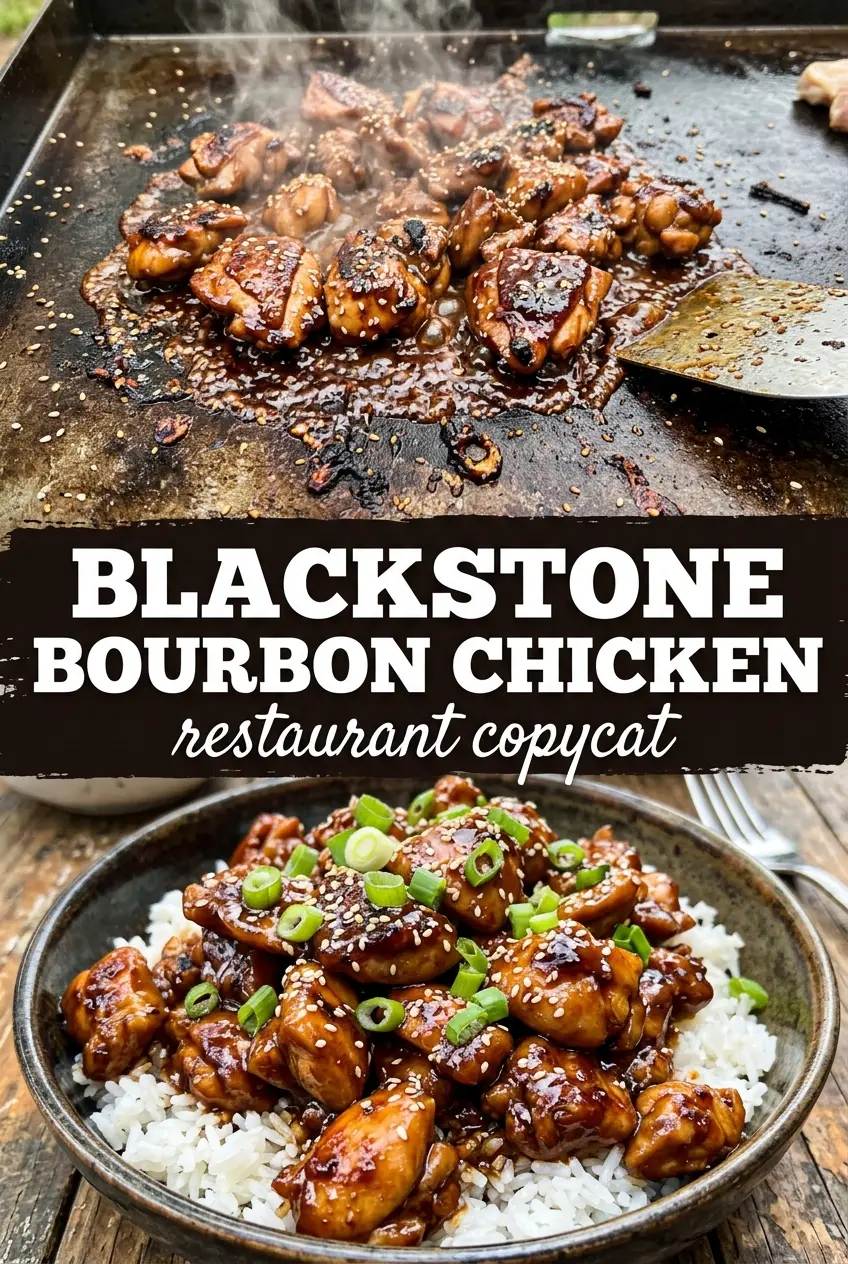
Glossy bourbon chicken on a hot Blackstone griddle gets its appeal from the way the sauce clings to every bite. The chicken turns browned at the edges, the glaze tightens up around it, and you end up with that sticky-sweet finish that tastes like it took much longer than 15 minutes to cook.
The trick is in the marinade split. Part of it seasons the chicken before it hits the griddle, and the reserved portion gets thickened separately so it can turn into a proper glaze instead of just boiling away. Chicken thighs hold up best here because they stay juicy while the sauce reduces, and the griddle gives you more surface area for fast browning than a skillet ever will.
Below, I’m walking through the part that matters most: how to get the sauce to thicken without turning watery or scorched on the flat-top. I’ve also included the swaps and storage notes that make this one easy to pull off on a weeknight.
The glaze thickened up right on the griddle and coated every piece without getting sticky in a candy-like way. I used chicken thighs like you suggested and they stayed tender even with the high heat.
Save this Blackstone Bourbon Chicken for the nights when you want sticky caramelized chicken fast, with that griddle-seared edge.
The Reason the Glaze Sticks Instead of Sliding Off the Griddle
The biggest mistake with bourbon chicken on a flat-top is trying to simmer the whole marinade with the chicken in it. That gives you a thin sauce, pale chicken, and a griddle that steams instead of sears. Splitting the marinade solves that problem: one portion seasons the meat, and the reserved portion gets cooked down separately so it can thicken cleanly at the end.
Chicken thighs matter here because they stay forgiving while the sugars in the sauce caramelize. Breast meat can work, but it dries out faster and needs tighter timing. On a Blackstone, the wider cooking surface lets you keep the chicken moving while still getting a little browning between stirs, which is what gives the glaze that glossy, lacquered finish.
- Reserve part of the marinade. That’s the part you’ll turn into sauce. If you pour raw marinade straight over cooked chicken, it stays loose and tastes flat.
- Use thighs instead of lean cuts. They handle the griddle heat better and stay juicy after the sauce goes on.
- Keep the chicken in one layer when it first hits the griddle. Crowding traps steam, and steam is the enemy of browning.
- Add the cornstarch slurry at the end. It thickens fast once it’s hot, so the sauce goes from thin to glossy in just a couple of minutes.
What the Bourbon, Brown Sugar, and Cornstarch Are Doing Here

- Bourbon — It adds depth and a warm edge that cuts through the sweetness. You don’t need an expensive bottle, but you do want something you’d actually drink, because the flavor concentrates as it cooks.
- Soy sauce — This brings salt and the savory backbone that keeps the glaze from tasting like candy. Low-sodium soy sauce works fine if that’s what you keep on hand.
- Brown sugar — This is what helps the sauce cling and caramelize on the griddle. White sugar can work in a pinch, but you’ll lose some of that molasses note.
- Cornstarch — It’s the thing that turns the reserved marinade into a proper glaze. Mix it with cold water first so it dissolves fully; if you dump it straight in, you’ll get little lumps instead of a smooth sauce.
- Chicken thighs — Their fat keeps the meat tender while the sauce cooks down. If you swap to chicken breast, cut the pieces a little larger and pull them as soon as they’re cooked through so they don’t dry out.
Building the Glaze on the Griddle Without Burning It
Marinating the Chicken Briefly
Combine the bourbon, soy sauce, brown sugar, vinegar, garlic, and ginger until the sugar dissolves as much as it can. Pull out a third of that mixture before the chicken goes in, because that clean portion is what you’ll thicken later. Thirty minutes is enough time for the meat to pick up flavor without getting soft or overly salty.
Getting the Chicken Browned
Heat the oil on the Blackstone over medium-high heat until it shimmers. Spread the chicken out and let it sizzle before you start stirring; if you move it too soon, you’ll miss the browning that gives the final dish its depth. Stir frequently after the first minute or two so the sugar in the marinade doesn’t burn in one spot.
Turning the Reserved Marinade Into Sauce
Mix the cornstarch with water, then stir it into the reserved marinade before it goes onto the griddle. Pour it around and over the chicken, then keep the pieces moving until the sauce turns glossy and lightly thick enough to coat the back of a spoon. If it looks thin after a minute, give it another minute — cornstarch needs heat to activate, but it can go from perfect to too thick fast.
Finishing With the Right Texture
Once the chicken is lacquered and cooked through, pull it off right away and scatter sesame seeds and green onions over the top. The glaze will tighten as it sits for a couple of minutes, so don’t chase a super-thick sauce on the griddle itself. If you reduce it too far, it turns sticky instead of silky.
Make It Spicier With Chili Garlic Sauce
Stir in a teaspoon or two with the marinade if you want some heat. It plays well with the brown sugar and bourbon, but too much will push the sauce away from that sticky-sweet balance and into straight heat.
Gluten-Free With Tamari
Use tamari instead of soy sauce and check that your bourbon is gluten-free if that matters for your kitchen. The flavor stays close, and the sauce still thickens the same way because the cornstarch does the heavy lifting.
No Bourbon, No Problem
Apple juice or chicken broth can stand in for the bourbon if you want to skip the alcohol. You’ll lose the warmth and depth, but the brown sugar, garlic, and ginger still carry the dish.
Storage and Reheating
- Refrigerator: Store leftovers in an airtight container for up to 4 days. The glaze will thicken more as it chills.
- Freezer: It freezes well for up to 2 months, though the sauce may look a little looser after thawing. Freeze in portions so you can reheat only what you need.
- Reheating: Reheat in a skillet over medium-low heat with a splash of water to loosen the glaze. The common mistake is blasting it over high heat, which can harden the sauce and dry out the chicken.
Questions I Get Asked About This Recipe
Blackstone Bourbon Chicken
Ingredients
Equipment
Method
- Combine bourbon, soy sauce, brown sugar, apple cider vinegar, minced garlic, and grated ginger in a bowl until the sugar dissolves, looking glossy and uniform.
- Reserve 1/3 of the marinade in a separate container, then marinate the chicken in the remaining marinade for 30 minutes.
- Heat the oil on a Blackstone griddle over medium-high heat until shimmering.
- Add the marinated chicken to the griddle and cook for 10-12 minutes, stirring frequently, until cooked through and caramelized with browned edges.
- Mix cornstarch with water, then add it to the reserved marinade until smooth and cloudy.
- Pour the cornstarch-thickened reserved marinade over the chicken and cook for 2-3 minutes, stirring, until the sauce thickens and coats the chicken.
- Garnish with sesame seeds and green onions right after the glaze finishes bubbling.