Tender beef strips, crisp-tender broccoli, and a glossy brown sauce are exactly why Blackstone beef and broccoli earns a permanent spot in the weeknight rotation. The griddle gives you the kind of fast, high heat that sears the beef instead of steaming it, and the wide cooking surface keeps the broccoli from going limp before the sauce is ready.
The trick is in the balance of the sauce and the order you cook everything. A short cornstarch marinade helps the beef pick up flavor and gives the sauce enough body to cling to every bite, while the broccoli cooks just long enough to stay bright and a little snappy. Garlic and ginger go in late so they perfume the sauce instead of burning on the hot griddle.
Below, I’m walking through the part that matters most: getting the beef seared in batches, keeping the broccoli tender-crisp, and finishing everything in a sauce that coats without turning gluey. There’s also a few smart swaps and storage notes for making this work again later.
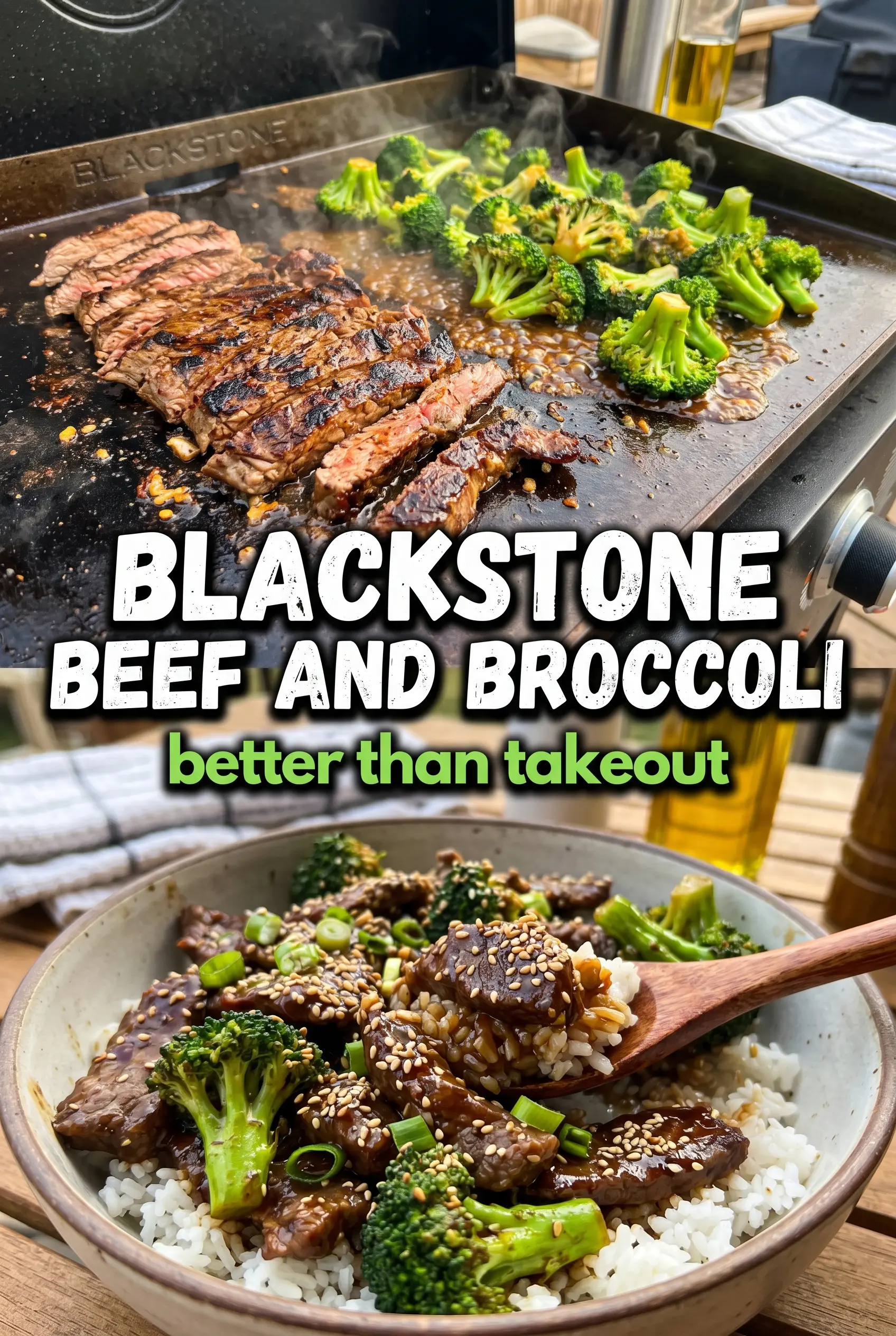
The beef stayed tender and the sauce thickened just enough to coat the broccoli without pooling under the rice. Cooking it in batches on the griddle made a huge difference.
Save this Blackstone beef and broccoli for the nights when you want glossy sauce, seared beef, and broccoli that still has a little bite.
Why the Beef Stays Tender Instead of Turning Chewy
Flank steak only stays tender when it’s sliced thinly against the grain and cooked fast. If you slice with the grain, the beef keeps its long muscle fibers intact, and no amount of sauce will hide the chew. The cornstarch in the marinade also does more than thicken the sauce later. It helps protect the surface of the beef so the high heat sears it instead of drying it out.
The other mistake is crowding the griddle. Beef needs direct contact with the hot surface to brown properly, and if the pieces overlap, they release moisture and start steaming. Work in batches, even if it takes a few extra minutes. You’ll get deeper color, better texture, and a sauce that tastes like it belongs on the meat instead of sitting beside it.
What the Sauce and Marinade Are Each Doing Here
- Flank steak — This is the right cut for quick, high-heat cooking because it has a strong beefy flavor and slices beautifully once it’s cut thin against the grain. If you swap in sirloin, slice it just as thin and pull it from the heat as soon as it’s browned.
- Soy sauce — This brings salt and depth, and it’s doing work in both the marinade and the finishing sauce. Low-sodium soy sauce is fine if that’s what you keep on hand, but don’t replace it with plain salt; you’d lose the savory backbone of the dish.
- Oyster sauce — This is what gives the sauce that dark, glossy, restaurant-style finish. There isn’t a great substitute if you want the same body and savoriness, though hoisin can work in a pinch with a slightly sweeter result.
- Cornstarch — It thickens the sauce and helps the beef keep its surface moisture while it sears. Arrowroot can stand in if needed, but whisk it in well and don’t let the sauce boil hard once it’s added.
- Broccoli florets — Fresh broccoli holds its shape and stays bright on the griddle. Frozen broccoli won’t give you the same crisp edge; it releases too much water and softens before the sauce finishes.
- Garlic and ginger — These need only a few seconds in the heat. If they go in too early, they turn bitter, so add them right before the sauce and keep them moving.
Building the Griddle Sear and Finishing the Sauce
Marinating the Beef for Surface Flavor
Stir the beef with two tablespoons of soy sauce, brown sugar, and cornstarch until every slice looks lightly coated and a little tacky. Thirty minutes is enough for the surface to season without turning the texture mushy. If the beef sits much longer in a wet marinade, it can start to soften unevenly and lose that clean sear you want on the griddle.
Getting the Sear Before the Broccoli Goes On
Heat the Blackstone until it’s hot enough that oil shimmers as soon as it hits the surface. Add the beef in a single layer and leave it alone for the first minute or two so it can brown. If you keep stirring, it won’t sear; it’ll gray out and steam in its own juices. Pull it as soon as the outside is browned and the center is still a little pink, because it finishes later in the sauce.
Cooking the Broccoli to the Right Bite
Use the remaining oil and spread the broccoli out so it has room to char in spots. You want bright green florets with browned edges and a fork-tender stem, not soft, drab broccoli that falls apart when you toss it. If the florets start to scorch before the stems soften, splash a spoonful of water onto the griddle and cover briefly with a dome or metal bowl to steam them for a minute.
Bringing the Sauce Together
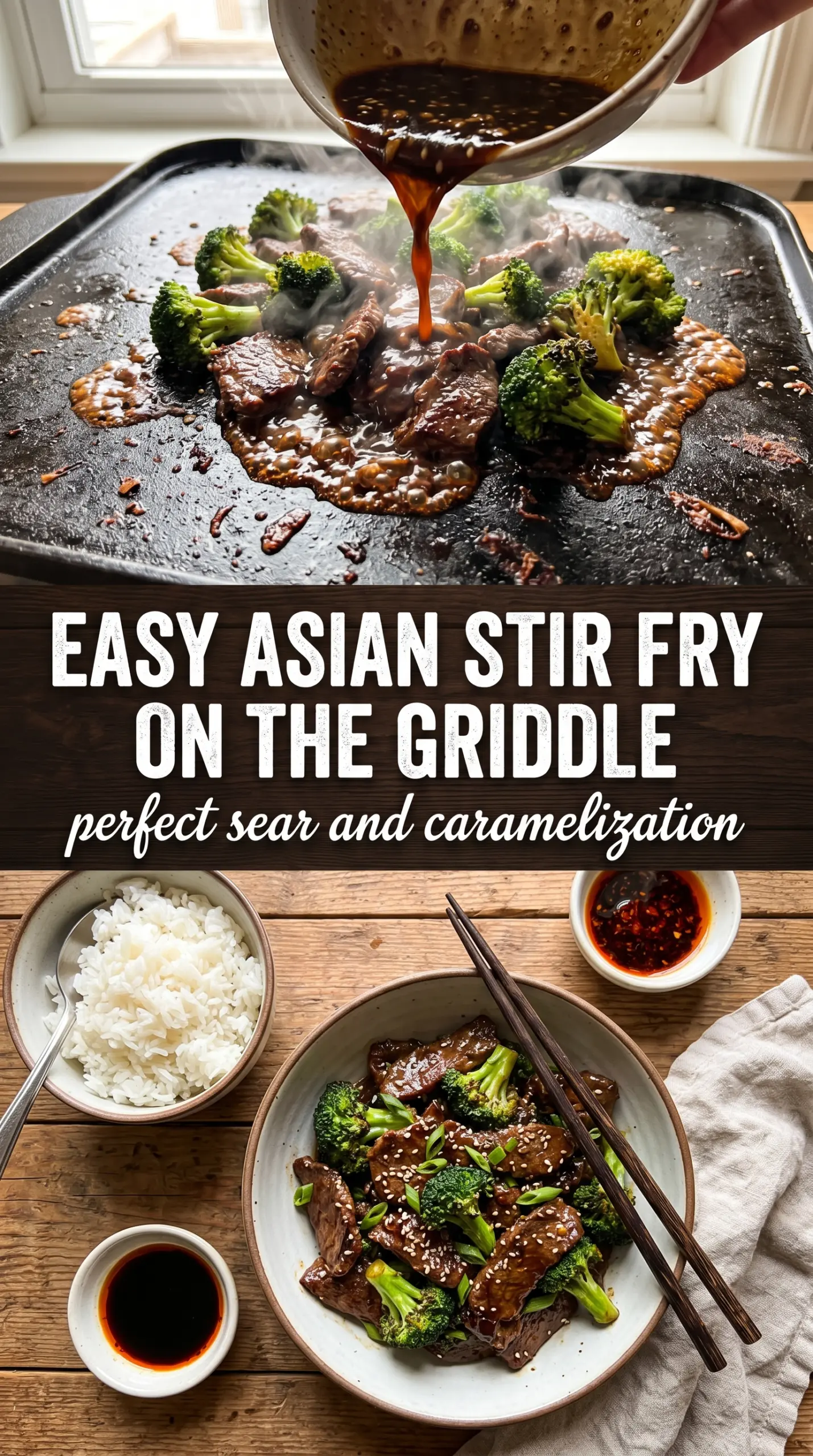
Add the garlic and ginger only after the broccoli is nearly done, then pour in the remaining soy sauce, oyster sauce, brown sugar, and beef broth. The sauce should bubble and turn glossy almost immediately. Return the beef and toss for about two minutes, just until everything is coated and the sauce clings in a thin layer. If it looks watery, let it cook another minute; if it gets too thick, a splash of broth loosens it right back up.
Three Ways to Make Blackstone Beef and Broccoli Fit Your Table
Gluten-Free Version
Use tamari instead of regular soy sauce and check your oyster sauce label, since some brands contain wheat. The flavor stays deep and savory, and the sauce still thickens the same way.
Dairy-Free and Pantry-Friendly
This recipe is naturally dairy-free as written, which is part of why it’s such an easy weeknight option. If you’re short on oyster sauce, swap in hoisin for a sweeter result or use a little extra soy sauce plus a pinch of sugar for a simpler, less rounded sauce.
Extra Sauce for Rice
Add an extra splash of beef broth and another teaspoon of cornstarch if you want more sauce for serving over rice. The dish will taste a little softer and saucier, which works well if you like the broccoli and beef generously coated.
Storage and Reheating
- Refrigerator: Store leftovers in an airtight container for up to 4 days. The broccoli softens a bit, but the flavor stays strong.
- Freezer: It freezes, though the broccoli will be softer after thawing. Freeze in portions and cool it completely first so the sauce doesn’t separate as much.
- Reheating: Reheat in a skillet over medium heat with a small splash of water or broth. The common mistake is blasting it in the microwave until the beef gets tough and the sauce turns greasy.
The Questions People Ask After Their First Batch
Blackstone Beef and Broccoli
Ingredients
Equipment
Method
- Combine 2 tablespoons soy sauce, 1 tablespoon brown sugar, and cornstarch, then coat the sliced flank steak in the mixture. Let it marinate for 30 minutes so the cornstarch helps thicken later.
- Heat the Blackstone griddle to high heat and add 2 tablespoons oil. Wait until the oil shimmers to ensure fast searing.
- Cook the beef in batches for 2-3 minutes per side until seared, then set aside. Keep it in a single layer so strips brown rather than steam.
- Add the remaining oil and cook the broccoli for 4-5 minutes until tender-crisp. Stir occasionally until the florets stay bright green.
- Cook the garlic and ginger for 30 seconds, then immediately add the remaining soy sauce, oyster sauce, brown sugar, and beef broth. Stir to combine until the sauce looks glossy and cohesive.
- Return the beef to the griddle and toss everything in the sauce for 2 minutes. Cook until the sauce clings to the beef strips, then turn off the heat.
- Garnish with sesame seeds right before serving. Use a light sprinkle so you see specks of sesame on the glossy sauce.