Charred blackened chicken tucked into warm tortillas with bright pineapple salsa is the kind of taco that disappears fast. The spice crust gives the chicken a smoky, peppery edge, while the salsa cuts through it with sweet juice, lime, and a little crunch from red onion and bell pepper. Every bite lands with contrast, which is why this combination earns a place in the regular dinner rotation.
The trick is getting the seasoning to cling to dry chicken and then leaving it alone long enough to build that dark crust in the skillet. If the pan is crowded or the heat is too low, the spices steam instead of blacken. The salsa works for the same reason the chicken does: simple ingredients, cut small, tossed right before serving so the pineapple stays fresh and lively.
Below, you’ll find the small details that keep the chicken juicy, the best way to avoid a bitter spice crust, and a few easy swaps if you need to stretch the meal or change up the toppings.
The chicken got that deep char on the outside, but it stayed juicy inside, and the pineapple salsa was the perfect sweet contrast. I used a cast iron pan and the spice crust came out exactly like the photo.
Save these blackened chicken tacos with pineapple salsa for the nights when you want bold char, juicy chicken, and a fresh topping that brightens every bite.
The Secret to a Real Blackened Crust Without Burning the Spices
The difference between a bold, smoky crust and a scorched, bitter one comes down to heat control and how dry the chicken is before it hits the pan. Paprika carries most of the color here, but it needs a hot skillet and enough fat to toast instead of turn harsh. If the chicken goes in wet, the spice mix slides off and you get patchy browning instead of that deep, even coating.
Cast iron helps because it holds heat steady when the cold chicken goes in, which keeps the surface searing instead of cooling off. Don’t move the chicken around once it lands in the pan. Let the crust set, then flip it once. If the spices start smelling acrid before the chicken is cooked through, the heat is too high and the pan needs a quick adjustment, not more time.
What the Spice Rub and Pineapple Salsa Are Really Doing Here
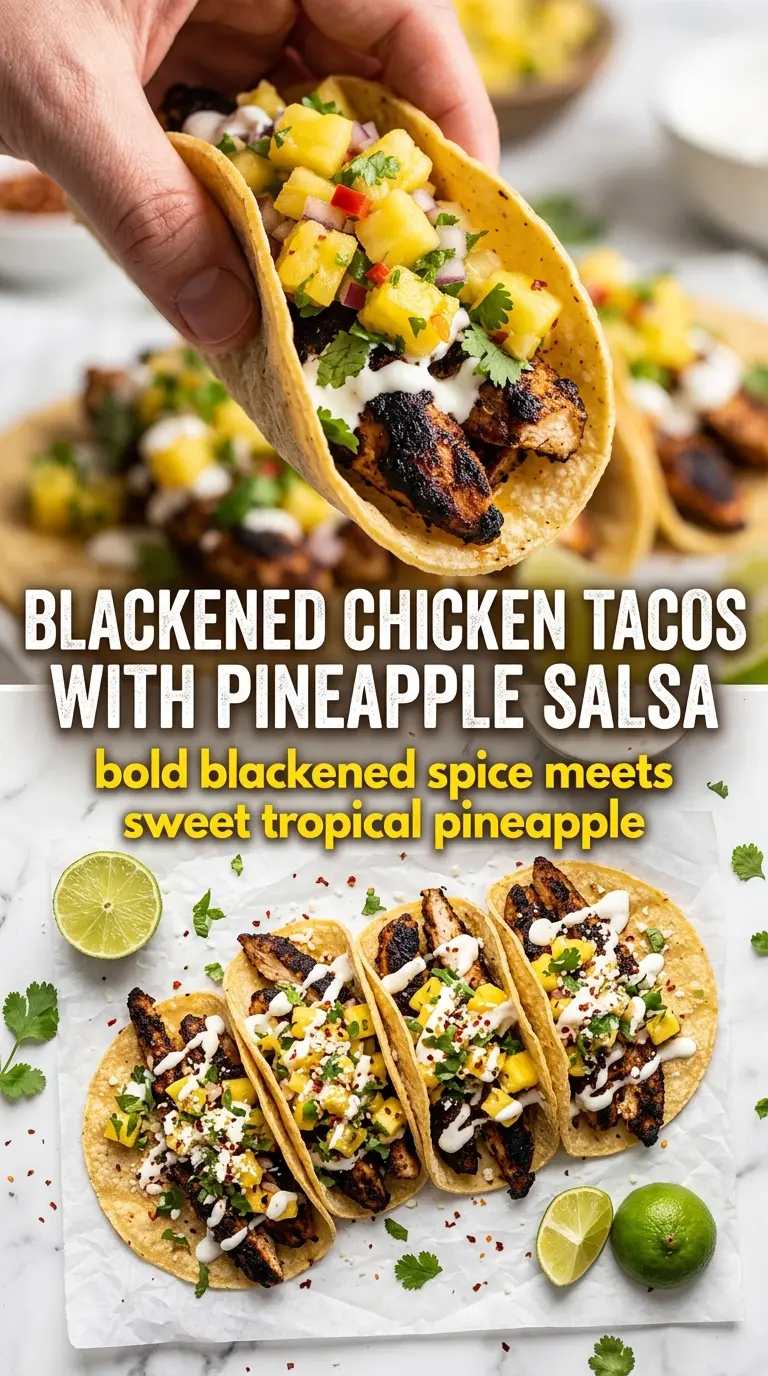
- Paprika — This is what gives the chicken its dark red-brown color and a lot of the smoky depth. Regular paprika works, but if you have smoked paprika, swapping in half of it adds a deeper fire-grilled note without changing the texture.
- Cayenne — This is where the heat comes from, and it’s easy to control. Cut it in half if you want the tacos family-friendly, but don’t skip it entirely or the rub tastes flat against the sweet salsa.
- Chicken breasts — Breasts stay lean and slice neatly for tacos, but they dry out fast if overcooked. Pound them to an even thickness if one end is much thicker; that’s the easiest way to keep the thinner side from overcooking before the center is done.
- Fresh pineapple — Fresh pineapple brings juicy sweetness and a little acidity that canned fruit usually can’t match. If you use canned pineapple in a pinch, drain it well and pat it dry so the salsa doesn’t turn watery.
- Warm tortillas — This part matters more than it gets credit for. Cold tortillas crack and fight the filling, while a warm tortilla bends around the chicken and holds the salsa without tearing.
How to Get the Chicken Charred Outside and Juicy Inside
Mixing the Rub
Stir the paprika, garlic powder, onion powder, cayenne, thyme, salt, and black pepper together until the color is uniform. That keeps the chicken from getting one salty, spicy patch and one bland patch. Pat the chicken dry before seasoning so the rub can grab onto the surface instead of slipping off. The coating should look dusty and even, not wet or pasty.
Building the Crust in the Skillet
Melt the butter in a cast iron skillet over medium-high heat until it foams and then settles. Add the chicken and leave space around each piece so the pan can keep its heat. If you crowd it, the chicken steams and the spices turn muddy. Cook until the underside is deeply darkened and releases cleanly, then flip and cook the other side until the center reaches 165°F.
Resting and Slicing for Tacos
Let the chicken rest for 5 minutes before slicing. That pause keeps the juices in the meat instead of running onto the cutting board. Slice against the grain so the strips stay tender and easy to bite through in a tortilla. If you cut immediately, the juices run out and the chicken tastes drier than it actually is.
Making the Salsa at the Last Minute
Combine the pineapple, bell pepper, red onion, cilantro, and lime juice while the chicken cooks. The salsa should look glossy and bright, not soupy. If you let it sit too long, the pineapple softens and the onion gets sharp in a way that overpowers the tacos. A fresh toss right before serving keeps the contrast crisp.
Small Changes That Still Keep the Tacos Balanced
Make It Dairy-Free
Swap the butter for avocado oil or another neutral high-heat oil. You’ll lose a little buttery richness, but the spice crust still browns well, and the chicken will sear a touch more cleanly because the oil doesn’t brown the same way butter does.
Use Chicken Thighs Instead
Boneless thighs stay juicier and forgive a little overcooking, which makes them a good swap if you’re nervous about dry chicken. They take a couple of extra minutes to cook through, and the higher fat content gives the blackened crust a richer finish.
Turn It Into a Gluten-Free Taco Night
Use certified gluten-free corn tortillas instead of flour tortillas. Corn tortillas are more fragile, so warm them directly in a dry skillet until pliable and stack them in a towel as you work. That keeps them from cracking when you fold them around the chicken.
Adjust the Heat Without Losing the Blackened Flavor
Drop the cayenne to 1/4 teaspoon for a milder taco, or add an extra 1/2 teaspoon if you want more bite. The key is keeping the paprika and thyme in place, because that’s what gives the rub its deep, savory backbone even when the heat changes.
Storage and Reheating
- Refrigerator: Store the chicken and salsa separately for up to 3 days. The salsa softens a bit as it sits, but it still tastes bright.
- Freezer: The cooked chicken freezes well for up to 2 months. Freeze it sliced or whole, wrapped tightly, and make the salsa fresh after thawing.
- Reheating: Reheat the chicken in a skillet over medium-low heat with a splash of water or a little oil. Microwaving works in a pinch, but it softens the crust and makes the spices taste dull.
Questions I Get Asked About This Recipe
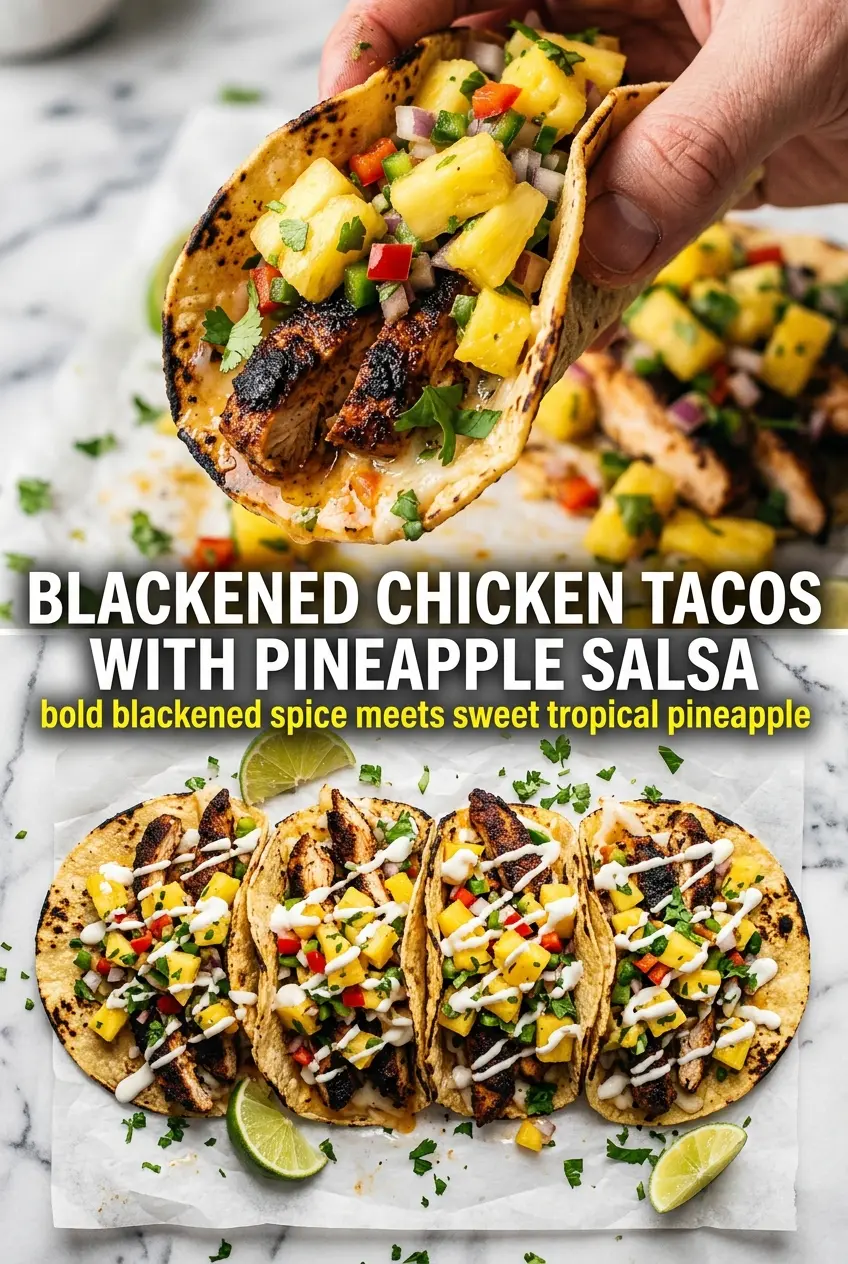
Blackened Chicken Tacos with Pineapple Salsa
Ingredients
Equipment
Method
- Mix paprika, garlic powder, onion powder, cayenne pepper, dried thyme, salt, and black pepper in a small bowl until evenly combined. Pat the chicken breasts dry and coat both sides thoroughly with the spice mixture for a dark, even layer.
- Melt butter in a cast iron skillet over medium-high heat. Cook the chicken for 5-6 minutes per side until deeply charred with blackened edges and cooked through, then transfer to a plate and let rest for 5 minutes.
- Slice the rested chicken into strips so it’s easy to pile into tortillas. If juices pool, spoon a little over the slices before assembling.
- Combine fresh pineapple, red bell pepper, red onion, fresh cilantro, and lime juice in a bowl and stir well. Let stand briefly while the chicken rests so the flavors meld, and look for a glossy, bright mix.
- Warm the flour tortillas until pliable. Fill each tortilla with blackened chicken slices, then top generously with pineapple salsa so the colorful fruit sits on top.