Big Mac pasta salad hits that sweet spot between nostalgic and practical: it tastes like a cheeseburger in bowl form, but it eats like a proper potluck side. The macaroni stays chewy, the seasoned beef gives it heft, and the tangy special sauce ties everything together without turning the whole thing heavy. The last-minute fold-in of lettuce and tomatoes keeps the texture crisp instead of soggy, which is the difference between a salad that disappears fast and one that sits untouched.
The key is cooling the pasta and beef before they meet the sauce. Warm ingredients melt the mayo base and dull the pickles, and that’s how you lose the bright burger-shop flavor this dish is built on. A short chill gives the pasta time to soak up the sauce, but the lettuce still needs to go in right before serving so it stays snappy.
Below, I’ve included the ingredient choices that matter most, the timing that keeps the texture right, and a few easy swaps if you need to stretch it for a crowd or adjust it for what’s in your fridge.
The sauce coated every piece of pasta without getting runny, and the pickles stayed crisp after chilling. I brought it to a cookout and there wasn’t a spoonful left.
Like this Big Mac pasta salad? Save it to Pinterest for the next potluck when you need a cold side with cheeseburger flavor and zero fuss.
The Trick to Keeping It Tasting Like a Burger, Not a Heavy Pasta Bowl
The biggest mistake with pasta salads like this is treating them like a one-bowl dump. If the pasta is warm, the sauce turns greasy. If the lettuce goes in too early, it wilts and disappears into the dressing. The burger flavor depends on contrast: cool pasta, rich sauce, sharp pickles, fresh lettuce, and just enough cheddar to make each bite taste like a cheeseburger without becoming dense.
The second thing that matters is seasoning the beef while it cooks, not after it cools. Ground beef needs salt and a little garlic and onion to taste like more than browned meat. Once it’s cooled, it keeps its seasoning instead of muddying the sauce, and you get little pockets of savory flavor instead of one bland, mixed-together finish.
What Each Ingredient Is Doing in the Bowl
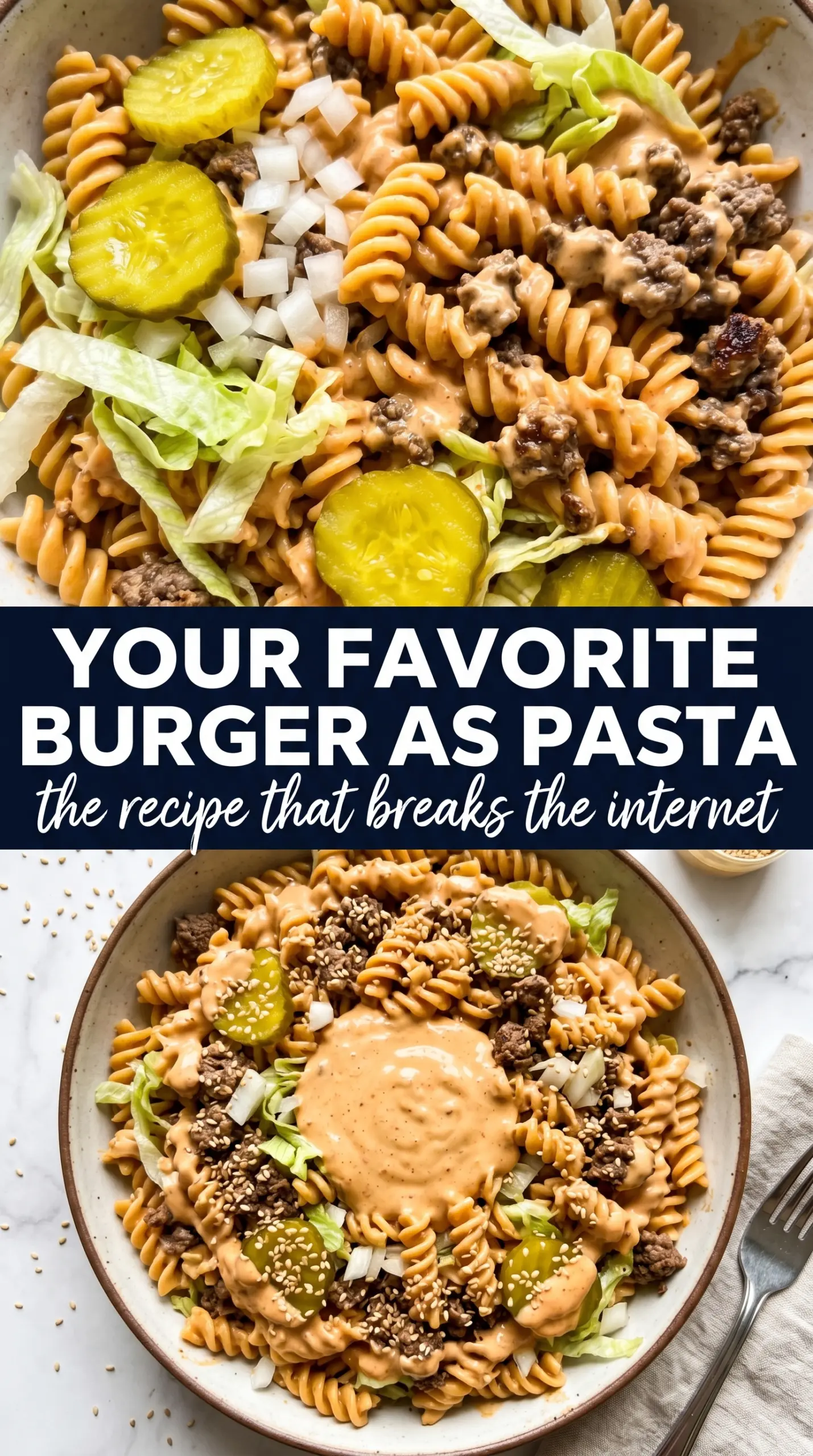
- Elbow macaroni — The shape matters here because the little curves catch the sauce and hold bits of pickle and cheese. Short pasta with some surface texture works best; smooth pasta slides too cleanly and loses that burger-salad bite.
- Ground beef — Use 80/20 if you can. Leaner beef works, but it won’t taste as close to a classic burger, and you may want to add a touch more sauce because there’s less natural richness.
- Iceberg lettuce — This is the crunch that makes the whole salad feel like a fast-food burger. Romaine can work in a pinch, but it has a sharper, greener flavor and won’t give the same clean snap.
- Dill pickles and relish — These are doing two jobs: adding tang and cutting through the mayonnaise so the sauce doesn’t taste flat. Sweet relish is part of the Big Mac effect, but the diced pickles keep the texture more interesting than relish alone.
- Mayonnaise, ketchup, mustard, vinegar — This is the sauce backbone. Mayo gives body, ketchup brings sweetness, mustard adds sharpness, and vinegar wakes everything up so the dressing tastes like special sauce instead of burger spread.
- Cheddar cheese — Shred it yourself if you can. Pre-shredded cheese is coated to prevent clumping, which also makes it less likely to melt into the salad and more likely to stay in distinct bites.
Building the Bowl So Nothing Goes Limp
Cook and cool the base first
Boil the macaroni until just tender, then drain it and cool it completely before it touches the sauce. If the pasta is even a little warm, it will thin the dressing and soften the lettuce later on. I like to spread it on a tray for a few minutes so the steam can escape fast. The pasta should feel dry on the outside, not slick with heat.
Brown the beef with purpose
Cook the beef in a skillet until it’s deeply browned and crumbled fine. Break it up as it cooks so you don’t end up with chunky clumps that eat more like taco meat than burger bits. Season it in the pan with salt, pepper, garlic powder, and onion powder, then let it cool fully before mixing. Warm beef will melt the sauce and blur the flavors.
Coat the pasta before the fresh toppings go in
Toss the cooled pasta, beef, pickles, onion, and half the cheddar with the sauce until everything looks glossy and evenly coated. That first mix is where the flavor gets into the pasta, so don’t hold back with the dressing. Chill it for 30 minutes so the macaroni can absorb the sauce. Fold in the lettuce and tomatoes only at the end, or they’ll collapse and water down the bowl.
Finish with the toppings that sell the burger idea
Right before serving, add the remaining cheddar, a small drizzle of extra sauce, and sesame seeds over the top. That last finish matters because it signals what the salad is meant to taste like before the first bite even lands. Serve it immediately after topping so the lettuce stays crisp and the sauce stays thick.
How to Adapt This for a Bigger Crowd or a Different Table
Make it gluten-free
Use your favorite gluten-free short pasta and cook it just to tender, then rinse and cool it well so it doesn’t keep softening in the sauce. The flavor stays the same, but gluten-free pasta can get fragile if it’s overcooked, so pull it a minute early.
Go lighter on the beef
You can cut the beef back to 3/4 pound and the salad still feels substantial, especially if you keep the cheese and pickles generous. The bowl reads a little more like a pasta salad with burger flavor instead of a full deconstructed cheeseburger.
Swap in ground turkey
Ground turkey works, but it needs the seasoning to carry more of the load because it has less built-in flavor than beef. Add a small splash of oil while browning and don’t skip the salt, or the whole salad will taste flatter than the original.
Storage and Reheating
- Refrigerator: Best within 2 days. The lettuce softens after that, and the pasta keeps soaking up the dressing.
- Freezer: I don’t recommend freezing it. The mayonnaise-based sauce separates, and the lettuce and tomatoes won’t recover.
- Reheating: This salad is meant to be served cold. If it tightens up in the fridge, stir in a spoonful of extra sauce before serving instead of warming it.
Answers to the Questions Worth Asking
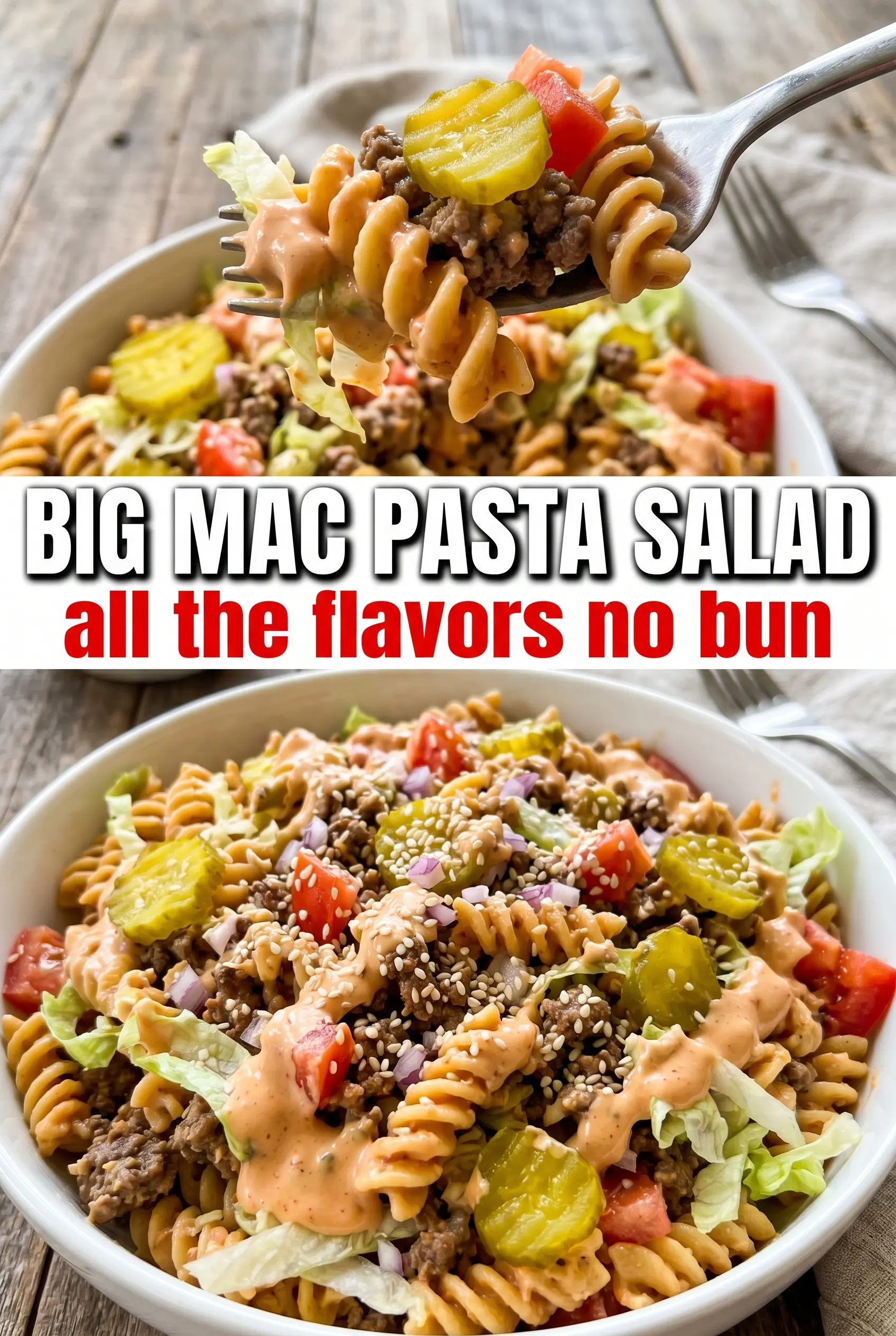
Big Mac Pasta Salad
Ingredients
Equipment
Method
- Whisk mayonnaise, ketchup, yellow mustard, sweet pickle relish, white vinegar, garlic powder, onion powder, salt, and pepper until smooth; taste and adjust seasoning as needed (no heat).
- Heat a cast iron skillet over medium-high heat, add ground beef, and cook until browned while seasoning with salt, pepper, garlic powder, and onion powder; keep crumbling so it cooks evenly (about 10 minutes), then spread on a sheet pan to cool completely.
- In a large bowl, combine cooled elbow macaroni, cooled ground beef, dill pickles, finely diced onion, and half the shredded cheddar until evenly mixed (dry ingredients first for better coating).
- Pour Big Mac sauce over the pasta mixture and toss until everything is generously and evenly coated; scrape the bottom to lift any dry pasta.
- Refrigerate for 30 minutes so the pasta absorbs the sauce and thickens slightly; cover to prevent drying.
- When ready to serve, fold in shredded iceberg lettuce and cherry tomatoes and toss gently so they stay crisp.
- Top with the remaining shredded cheddar, drizzle with extra special sauce, scatter sesame seeds, and serve immediately.