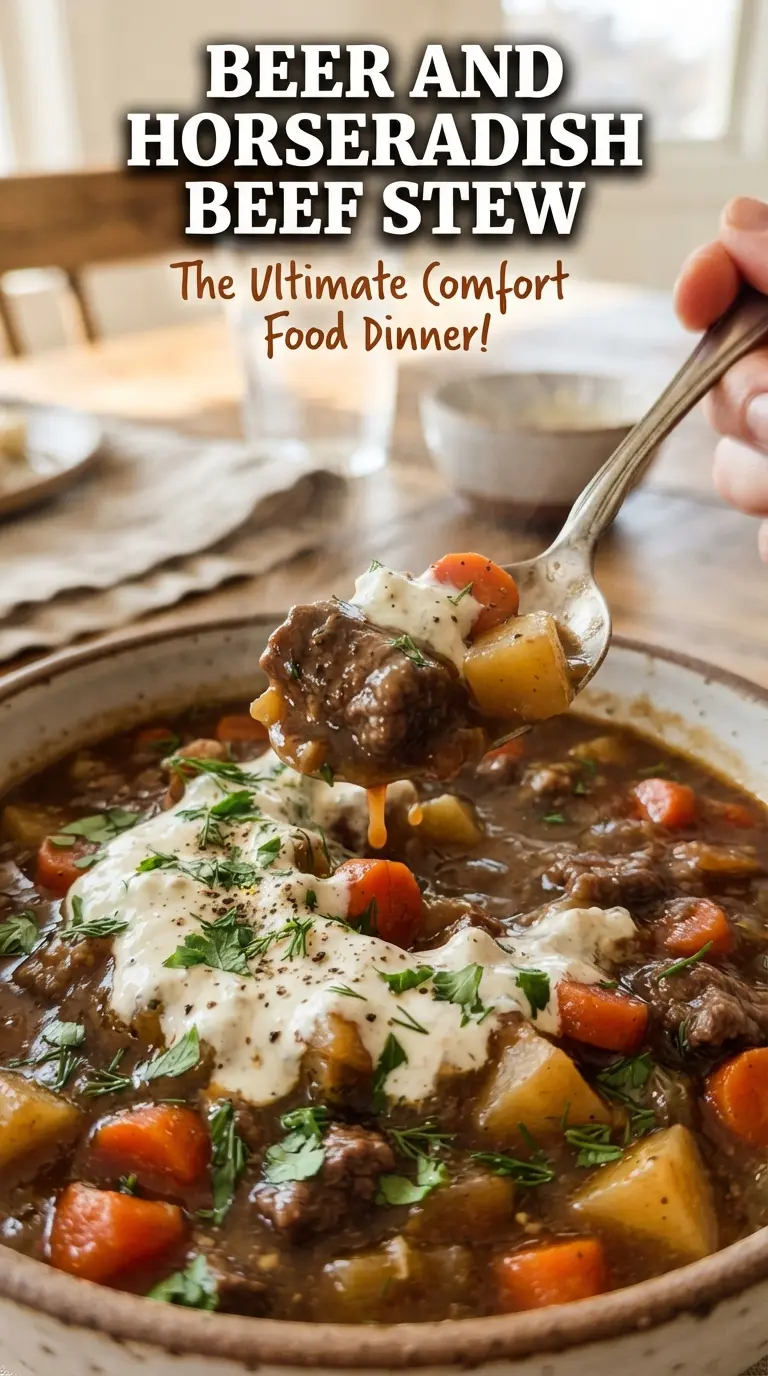
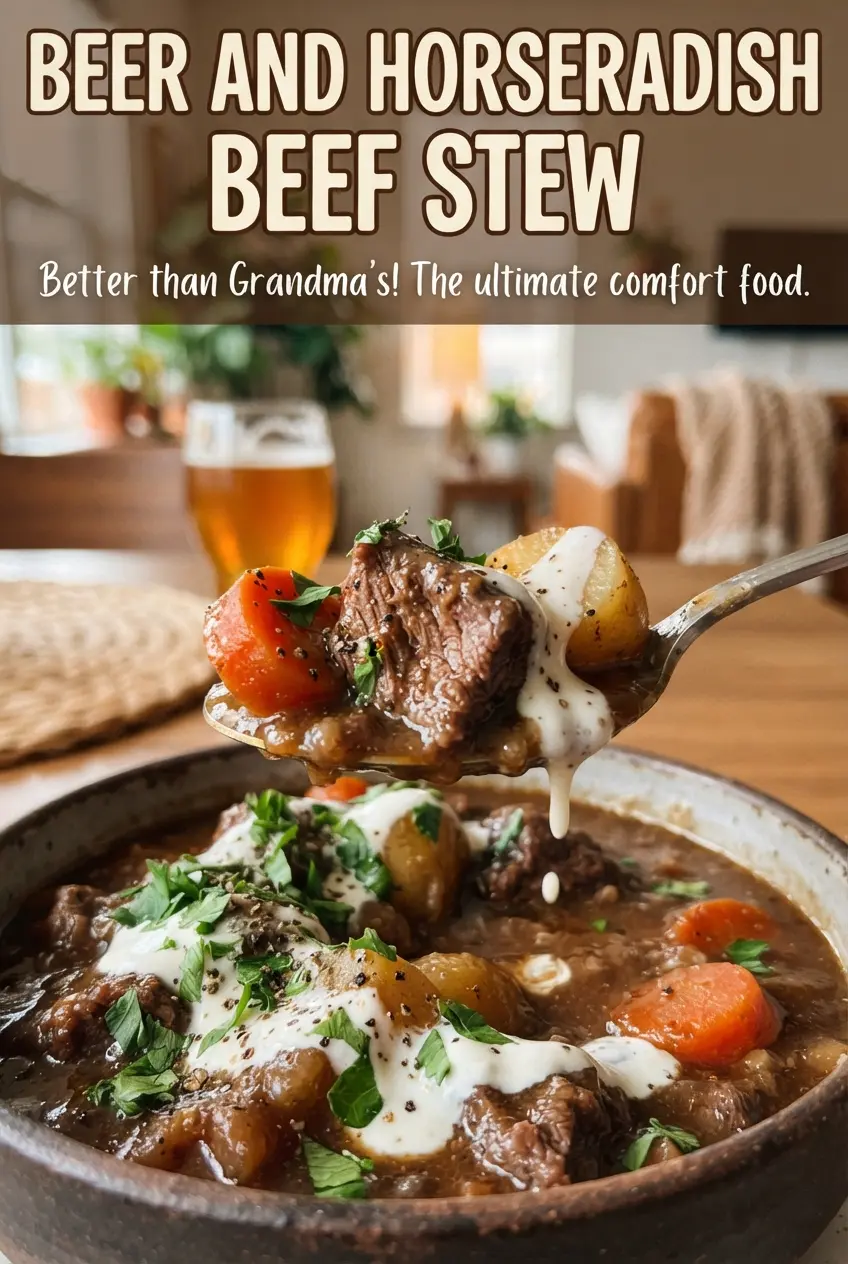
Beer and horseradish beef stew is the kind of pot that gets quiet around the table. The beef turns spoon-tender, the broth cooks down into something dark and savory, and the horseradish cuts through all that richness with a clean little kick at the end. It tastes like it took all day because, in a way, it did — but most of that time is hands-off simmering while the stove does the work.
What makes this version stand out is the balance. Brown ale brings malty depth without making the stew heavy, while a measured amount of prepared horseradish gets stirred into the pot and then again into the sour cream at the finish. That second hit matters. It keeps the horseradish bright instead of muddy, and it gives every bowl a cool, sharp contrast against the beef and potatoes. Browning the meat in batches is worth the extra few minutes too; those browned bits on the bottom become the base of the broth.
Below, I’ll show you how to keep the stew thick without turning it pasty, how to finish it so the horseradish still tastes fresh, and what to change if you want a slightly different beer or a dairy-free topping.
The beef got so tender it broke apart with a spoon, and the horseradish in the sour cream kept each bowl from feeling heavy. My husband went back for seconds and asked if there was enough for lunch tomorrow.
Save this beer and horseradish beef stew for a braise with deep beer flavor and a sharp sour cream finish.
The reason this stew stays rich instead of flat
The difference between a good beef stew and a forgettable one usually comes down to two things: how hard you brown the meat and when you add the horseradish. If the beef goes into a crowded pot, it steams and turns gray before it ever develops the deep flavor you want. Browning in batches gives you a dark crust and leaves the pot coated with browned bits that dissolve into the broth later.
Horseradish is the other place people go wrong. Stir it in too early and the sharp edge fades long before dinner. In this stew, some goes into the simmering pot for background warmth, then the rest gets folded into sour cream right before serving. That gives you both depth and a fresh finish in the same bowl.
- Brown ale or amber beer — Use a beer with some malt backbone. A very bitter IPA will throw the stew off balance, while a light lager can taste thin once it simmers for nearly three hours.
- Prepared horseradish — Jarred horseradish is the right choice here because it disperses evenly and keeps its bite better than freshly grated root once cooked. Look for the kind packed in vinegar, not a creamy horseradish sauce.
- Tomato paste — This small spoonful deepens the broth and gives the browned beef drippings something to cling to. Let it cook for a minute so it loses that raw tinny edge.
- Potatoes and carrots — Add them late. If they go in at the beginning, they’ll collapse before the beef is tender and cloud the broth with starch.
What Each Ingredient Is Actually Doing in This Recipe
- Primary ingredient (the star) — Quality matters most. Choose the best you can find.
- Cooking medium (oil, butter, or broth) — This carries flavors and prevents dryness.
- Seasonings (salt, pepper, spices, herbs) — Layer flavors so nothing overpowers. Build depth gradually.
- Aromatics (garlic, onion, herbs) — Cook with fat to bloom flavors. Become the foundation.
- Supporting ingredients — Complement the main ingredient without overpowering it.
- Sauce or liquid (if applicable) — Brings flavors together. Balance richness with acid.
- Acid (lemon, vinegar, wine, or other) — Brightens and prevents flat-tasting results.
- Final finish (garnish, glaze, or sauce) — Prevents one-dimensional taste and adds visual appeal.
Building the braise so the beef turns fork-tender
Season the beef first, then toss it with flour so the outside gets a light coating. That flour helps the sear cling to the meat and later gives the broth a little body without turning it gluey. Use a hot pan with enough oil to coat the bottom, and brown the beef in batches until each piece has a deep crust and releases easily from the pan. If it sticks hard, it’s not ready yet.
Developing the crust
Let the beef sit undisturbed once it hits the oil. You want dark edges, not pale gray cubes. Crowding the pan lowers the heat fast, which is how you lose both color and flavor, so work in a few batches and keep the browned pieces on a plate while you move through the rest.
Building the base
Cook the onion in the same pot until it softens and picks up some of the browned residue, then add the garlic and tomato paste for just a minute. The paste should darken slightly and smell sweeter, not scorched. Pour in the beer and scrape the bottom well; that’s where the stew gets its depth. If the bottom looks dark but not blackened, you’re in good shape.
Slow simmering
Once the broth, Worcestershire, brown sugar, thyme, and beef go in, keep the heat low enough that you only see an occasional lazy bubble. A hard boil tightens the meat and can make the broth cloudy. Cover the pot and let time do the work until the beef gives easily when pressed with a spoon.
Finishing with the vegetables
Add the potatoes and carrots only after the beef has started to soften. They need the last 45 to 60 minutes so they turn tender without falling apart. Taste the broth near the end; if it feels a little flat, a pinch more salt usually wakes it up better than more horseradish.
How to change the stew without losing its balance
Make it gluten-free
Swap the all-purpose flour for a gluten-free flour blend that’s meant for thickening, or skip the flour on the beef and whisk 1 tablespoon of cornstarch with 2 tablespoons of cold water near the end if you want more body. The stew will still be rich, but the broth will stay a little cleaner and silkier.
Use a different beer
A brown ale gives the most balanced result, but amber beer or a malty lager works too. Keep away from aggressively hoppy beers; once they simmer, the bitterness gets louder and can make the stew taste harsh instead of rounded.
Make the finish dairy-free
Skip the sour cream topping and use a spoonful of dairy-free plain yogurt or a drizzle of good olive oil with chives. You’ll lose the tangy creaminess, but the horseradish in the stew itself still gives the bowl a sharp, lively finish.
Add extra vegetables
Parsnips or celery root fit in naturally here if you want more sweetness and earthiness. Cut them to the same size as the potatoes and add them at the same time so they cook evenly without turning mushy.
Storage and Reheating
- Refrigerator: Store in a covered container for up to 4 days. The broth thickens as it sits, and the potatoes soften a bit more overnight.
- Freezer: This freezes well, but the potatoes can become a little softer after thawing. For the best texture, freeze the stew without the sour cream topping.
- Reheating: Warm it slowly on the stove over low heat, stirring now and then. A hard boil can toughen the beef and break the broth, so gentle heat is the move.
Questions I Get Asked About This Recipe
Beer and Horseradish Beef Stew
Ingredients
Equipment
Method
- Season the beef chuck cubes with salt and black pepper, then toss with the all-purpose flour until lightly coated. Spread into an even layer so the coating stays dry and ready to brown.
- Heat the vegetable oil in a Dutch oven over high heat, then brown the beef in batches. Cook until deeply golden on the outside, with a caramelized surface before removing to a plate.
- Add the chopped onion and cook for 5 minutes, stirring occasionally until softened. Scrape up any browned bits stuck to the bottom.
- Add the minced garlic and tomato paste, and cook for 1 minute. Stir continuously until the tomato paste darkens slightly and smells fragrant.
- Pour in the brown ale or amber beer and scrape the bottom of the Dutch oven to release fond. Bring to a simmer so the liquid reduces slightly.
- Stir in the beef broth, 2 tablespoons of prepared horseradish, Worcestershire sauce, brown sugar, and dried thyme, then add the browned beef back in. Mix until the seasonings are evenly distributed.
- Cover and simmer for 1 hour 45 minutes. Keep the stew at a gentle simmer, with small bubbles around the edges.
- Add the cubed potatoes and sliced carrots, then return to a simmer. Stir carefully so the vegetables settle into the liquid.
- Simmer for 45 to 60 minutes until the potatoes are tender. The stew should thicken slightly as the vegetables soften, and the meat should be fork-tender.
- Mix the sour cream with the remaining prepared horseradish until smooth. Adjust the consistency by stirring well so it stays spoonable.
- Ladle the stew into bowls and top each serving with a dollop of horseradish sour cream and chopped fresh chives. Serve hot so the topping slightly melts into the stew.