Beef stew gets a whole lot better when the mushrooms are browned first and added back near the end. That one move keeps them meaty instead of soft and muddy, and it gives the gravy a deeper, more layered flavor. The beef turns tender, the potatoes soak up the broth, and the carrots keep enough bite to stand up to the richness.
This version leans on a few small decisions that matter: flour on the beef helps the broth thicken as it simmers, tomato paste gets cooked long enough to lose its raw edge, and a splash of red wine pulls up the browned bits from the pot. The soy sauce doesn’t make it taste Asian; it adds the kind of savory depth that makes a stew taste like it simmered all afternoon.
Below you’ll find the browning order that keeps everything flavorful instead of gray, plus a few smart swaps and storage notes for making this stew ahead.
The mushrooms stayed browned instead of getting lost in the stew, and the gravy thickened up beautifully after the flour on the beef cooked in. We had it with crusty bread and my husband asked if there was enough for lunch tomorrow.
Save this beef stew with mushrooms for a rich, red-wine gravy and those golden browned mushrooms that stay meaty in every bowl.
The Trick to Keeping the Mushrooms Meaty, Not Watery
The biggest mistake in beef stew with mushrooms is dumping everything into the pot at once. Mushrooms release a lot of moisture, and if they go in raw with the beef, they steam into soft little sponges instead of taking on color. Browning them first in butter and oil builds a savory base before the liquid goes in, and adding them back near the end keeps that texture intact.
The other thing worth paying attention to is the beef itself. Browning the chuck in batches matters because crowded meat steams, and steamed meat never gives you the deep, browned edges that make the broth taste like more than broth. Once the flour hits the meat and the tomato paste has cooked for a minute, the stew starts building body before the simmer even begins.
What Each Ingredient Is Actually Doing in the Pot
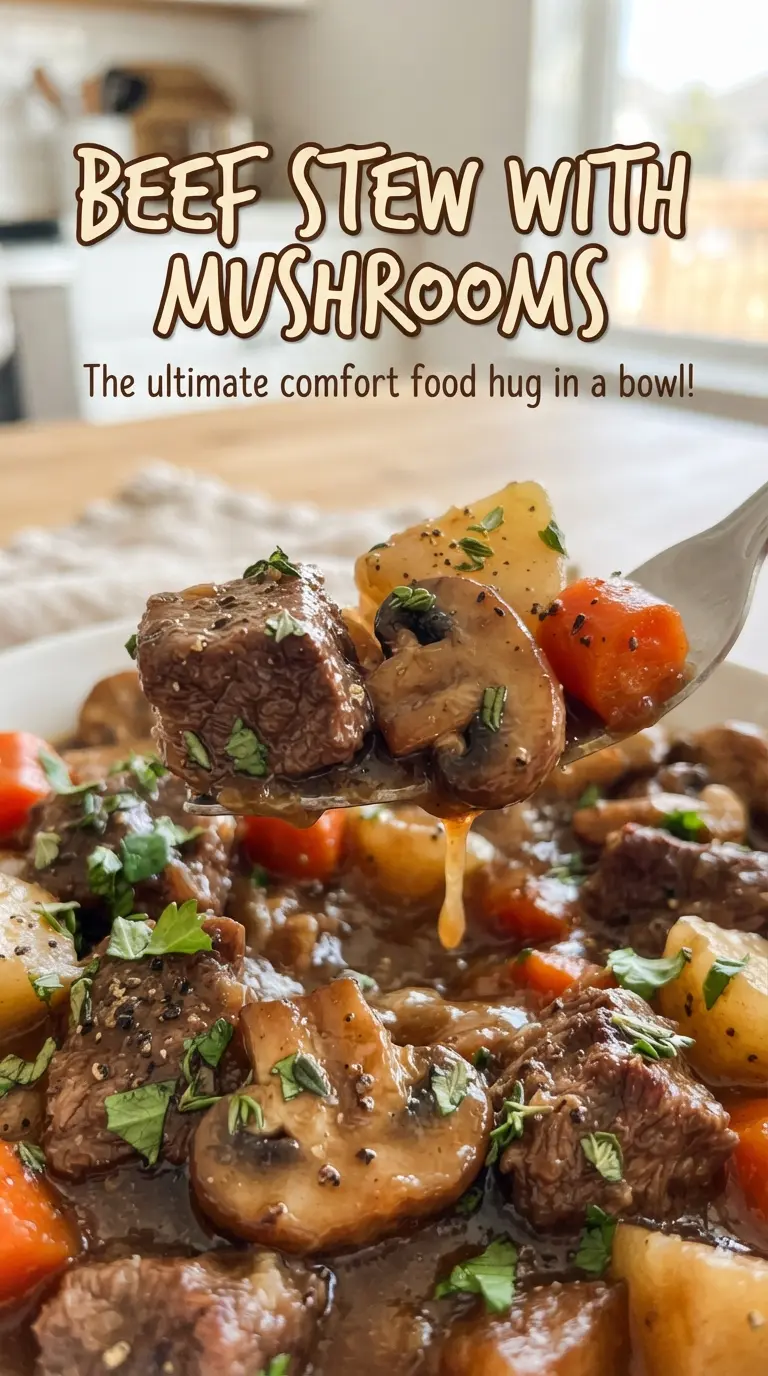
- Beef chuck — This is the cut that turns tender after a long simmer. Leaner stew meat can work in a pinch, but it won’t give you the same rich texture because chuck has the fat and connective tissue that melt into the broth.
- Cremini mushrooms — They bring a deeper, earthier flavor than white mushrooms and hold their shape better once cooked. If you only have white mushrooms, they’ll still work, but they won’t taste quite as savory.
- Dry red wine — This is what lifts the browned bits off the bottom of the pot and gives the stew a little edge. Use a wine you’d actually drink; if you skip it, add a few extra splashes of broth plus a teaspoon of vinegar at the end for brightness.
- Tomato paste and soy sauce — Tomato paste adds concentration and color, while soy sauce deepens the savory base without making the stew taste like soy. Don’t replace both with salt alone; you’d lose the roundness that makes the broth taste finished.
- Flour — Tossing the beef in flour before browning helps the stew thicken naturally as it simmers. If you need a gluten-free version, use a cup-for-cup gluten-free flour blend or thicken at the end with a cornstarch slurry.
Building the Stew in the Right Order
Brown the Mushrooms First
Cook the mushrooms in butter and a little oil until they’ve shrunk, browned, and picked up a deep golden color around the edges. They should smell nutty, not squeaky-wet. If they start releasing liquid, keep going until the pan dries back out and the color returns. That’s the difference between mushrooms that taste roasted and mushrooms that disappear into the stew.
Give the Beef Room to Brown
Season the beef, toss it with flour, then brown it in batches in the remaining oil. Each piece should sit long enough to form a crust before you turn it. If the pan looks crowded, stop and work in smaller batches; the beef needs contact with the hot surface, not a pile of steam.
Cook Down the Aromatics and Deglaze
After the beef comes out, cook the onion until it softens and turns translucent, then add the garlic and tomato paste for a minute. The tomato paste should darken slightly and smell sweeter, not raw. Pour in the red wine and scrape the bottom well; those stuck-on brown bits are packed with flavor, and once they lift into the liquid, the stew tastes fuller almost immediately.
Let the Simmer Do the Heavy Lifting
Add the broth, soy sauce, thyme, bay leaves, and beef, then cover and simmer gently for about 1 3/4 hours. You want small lazy bubbles, not a hard boil. If the heat is too high, the beef tightens up before it has time to soften, and the broth can turn greasy instead of silky.
Add the Vegetables at the End
Stir in the potatoes, carrots, and browned mushrooms for the last 45 to 60 minutes. This keeps the vegetables intact instead of turning them to mush, and it lets the mushrooms stay recognizable in the bowl. When the potatoes are tender and the carrots give easily at the center, the stew is done. Pull out the bay leaves before serving.
How to Adapt This Stew Without Losing the Good Part
Make It Gluten-Free
Swap the all-purpose flour for a gluten-free 1:1 flour blend and brown the beef the same way. The stew will still thicken during the simmer, though the gravy may look a touch looser until it rests for a few minutes off the heat.
Skip the Wine
Use an extra 1/2 cup of beef broth plus 1 teaspoon of red wine vinegar or apple cider vinegar at the end. You’ll lose a little of the wine’s depth, but the vinegar keeps the stew from tasting flat.
Use Different Mushrooms
A mix of cremini, shiitake, or even sliced portobello works well here. The stronger the mushroom, the deeper the stew tastes, but very delicate mushrooms can break down too much during the final simmer.
Storage and Reheating
- Refrigerator: Store for up to 4 days. The flavors deepen overnight, and the broth thickens as it chills.
- Freezer: It freezes well for up to 3 months. Cool it completely first and freeze in airtight containers, leaving a little space at the top.
- Reheating: Warm it gently on the stove over medium-low heat until hot. Don’t boil it hard or the beef can dry out and the potatoes can break apart.
Answers to the Questions Worth Asking
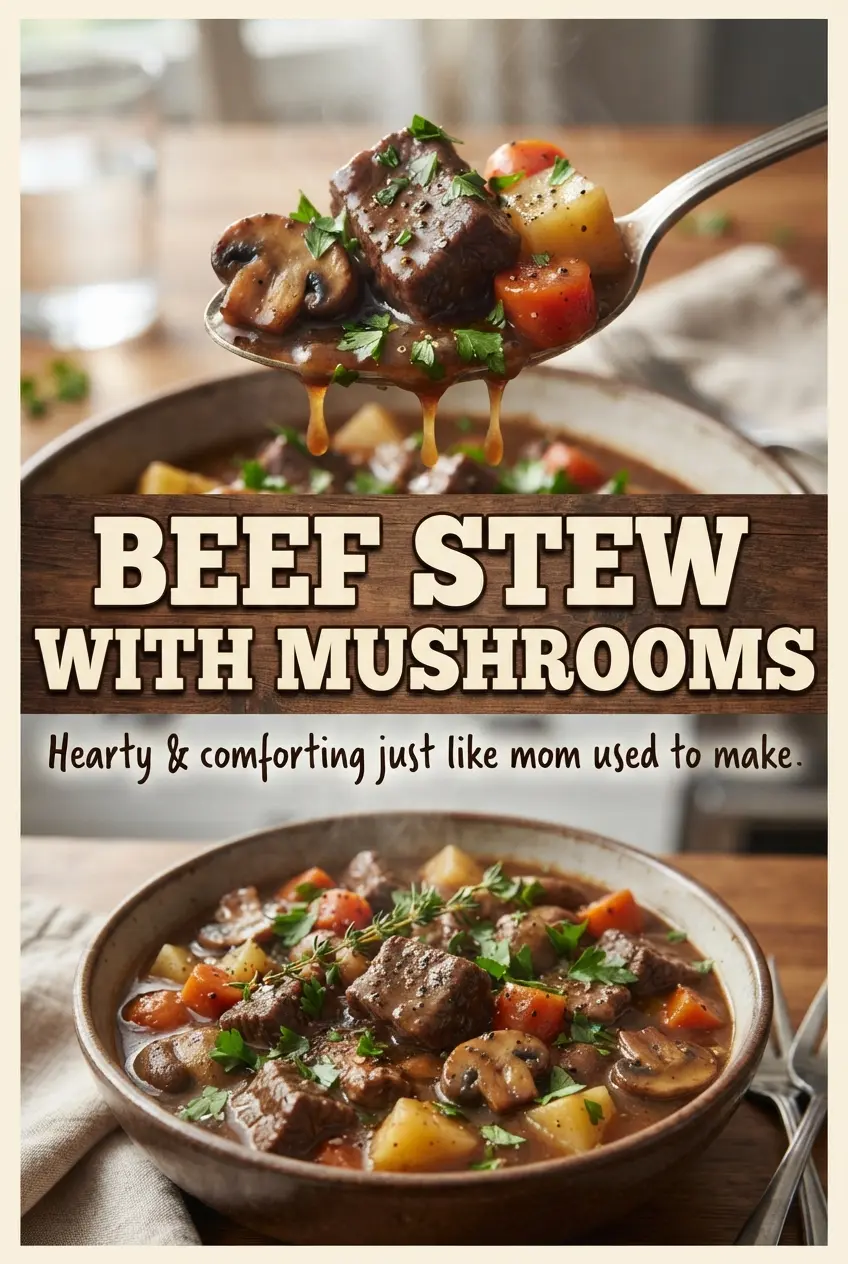
Beef Stew with Mushrooms
Ingredients
Equipment
Method
- Melt the butter with 1 tablespoon of the olive oil in a Dutch oven over medium-high heat and brown the quartered cremini mushrooms for 8 minutes, stirring occasionally, until golden. Visual cue: browned edges and a deeper color in the mushrooms.
- Remove the browned mushrooms to a plate and set aside while you brown the beef. Visual cue: mushrooms should look caramelized, not wet or steamed.
- Season the beef chuck cubes with salt and black pepper, then toss them with the all-purpose flour until coated. Visual cue: the beef looks lightly dusted and matte.
- Heat the remaining 2 tablespoons olive oil in the Dutch oven over medium-high heat and brown the beef in batches for even color. Visual cue: a browned crust forms on the sides before you remove each batch.
- Add the diced onion and cook for 4 minutes, stirring, until softened. Visual cue: onion turns translucent and smells sweet.
- Add the minced garlic and tomato paste and cook for 1 minute, stirring constantly. Visual cue: tomato paste darkens slightly and becomes fragrant.
- Pour in the dry red wine to deglaze, scraping up the browned bits from the bottom. Visual cue: the fond dissolves and the liquid looks glossy.
- Stir in the beef broth, soy sauce, dried thyme, and bay leaves, then return the browned beef to the Dutch oven. Visual cue: liquid covers the beef with visible herbs and bay leaves.
- Cover and simmer for 1 3/4 hours. Visual cue: gentle bubbling with steam building under the lid and the beef becoming fork-tender.
- Add the cubed potatoes, sliced carrots, and the reserved browned mushrooms, then stir to distribute evenly. Visual cue: vegetables sit in the simmering gravy without clumping.
- Simmer uncovered or partially covered for 45-60 minutes until the potatoes and carrots are tender. Visual cue: a knife slides into a potato cube easily and the stew thickens slightly.
- Remove the bay leaves and serve hot. Visual cue: bay leaves are no longer in the pot and the gravy looks cohesive around the meat and vegetables.